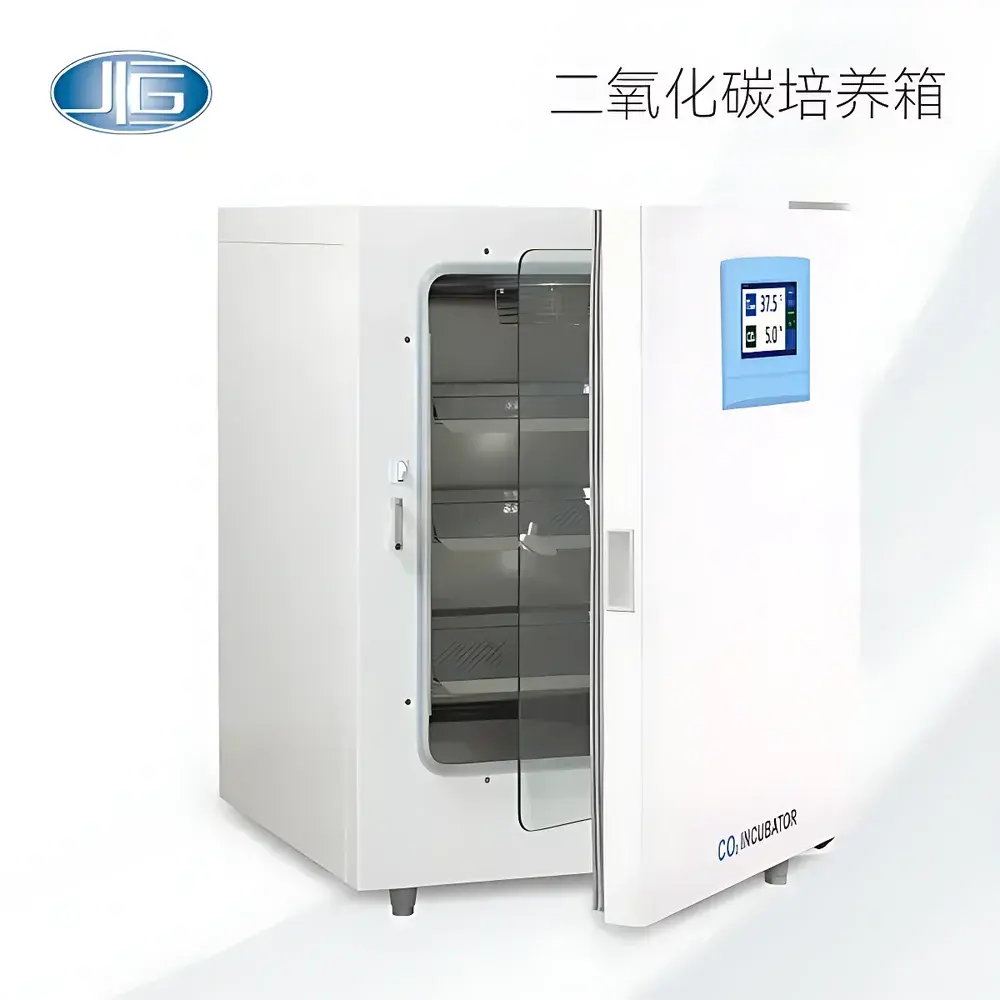
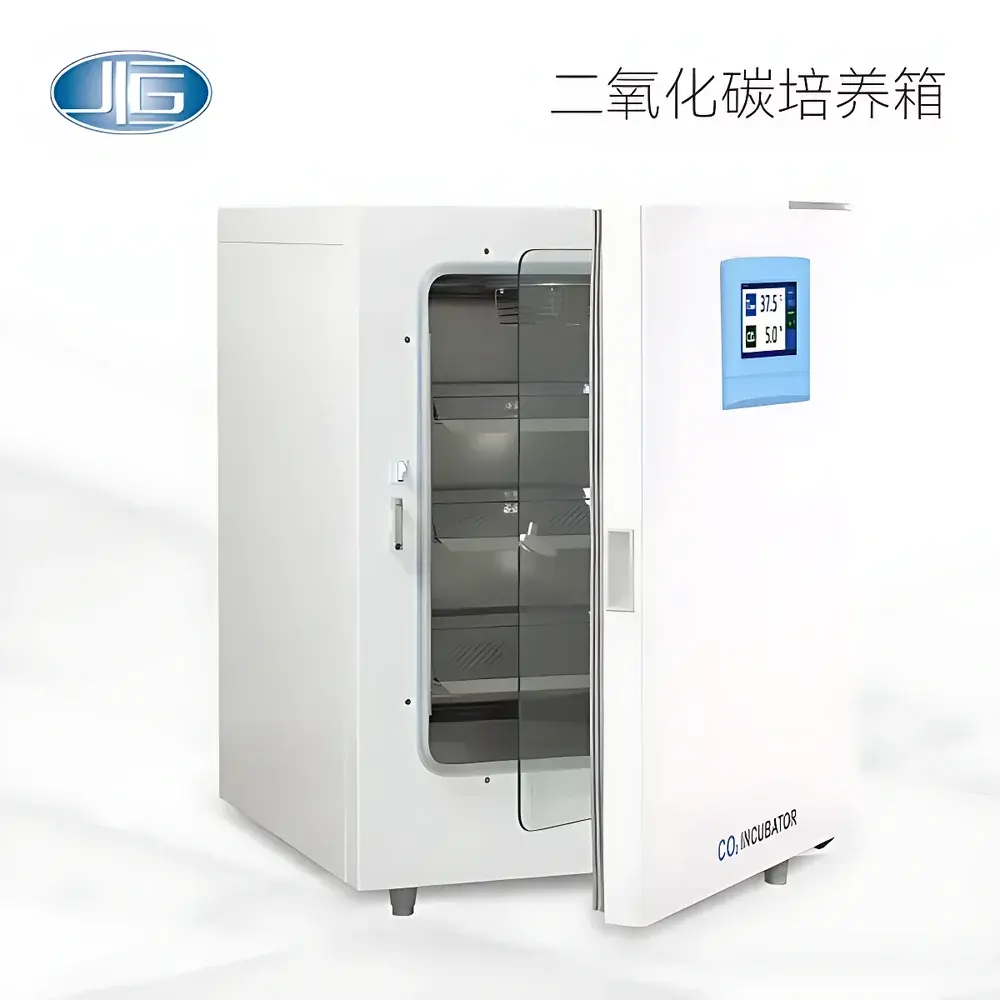
Yiheng BPN-RHP/RWP Series CO₂ Incubator with Color Touchscreen Interface
| Brand | Yiheng |
|---|---|
| Origin | Shanghai, China |
| Manufacturer Type | Direct Manufacturer |
| Regional Category | Domestic (China) |
| Model | BPN Series |
| Instrument Type | Air-Jacketed CO₂ Incubator |
| CO₂ Detection | Infrared (IR) Sensor |
| Temperature Control Range & Accuracy | RT+3°C to 55°C |
| Temperature Uniformity | ±0.3°C (@37°C) |
| CO₂ Concentration Control Range & Accuracy | 0–20%, ±0.1% (IR sensor) |
| Sterilization Method | 90°C High-Temperature Humid Heat Sterilization (RHP) |
| Optional Features | O₂ Control (Zirconia Sensor), External Independent Temp/CO₂ Monitoring, HEPA Filtration, Microbial Gas Filter (≥0.3 µm, 99.99% efficiency), RS-485 Communication, SMS Alarm, Dual-Gas Cylinder Auto-Switch, Multi-Level User Permissions |
Overview
The Yiheng BPN-RHP/RWP Series is an air-jacketed carbon dioxide incubator engineered for precision cell culture environments in academic research laboratories, biopharmaceutical QC facilities, and clinical diagnostic centers. It employs a dual-sensor feedback architecture—Pt100 for temperature and infrared (IR) for CO₂—to deliver high reproducibility in maintaining physiological conditions (37°C, 5% CO₂, >95% RH). Unlike thermal conductivity (TC) sensors, the IR-based CO₂ detection system is unaffected by fluctuations in humidity, temperature, or ambient gas composition, ensuring long-term calibration stability and measurement fidelity per ISO 13485 and ASTM E2916 guidelines. The air-jacket design provides rapid thermal recovery (<3 min to re-stabilize at 37°C after 30-sec door opening) and superior chamber uniformity (±0.3°C at setpoint), critical for sensitive primary cell lines and stem cell expansion protocols.
Key Features
- A 7-inch full-color capacitive touchscreen interface with bilingual (English/Chinese) navigation and programmable user profiles—supporting GLP-compliant audit trails via optional multi-tier permission management (Admin/Operator/Visitor).
- Integrated environmental compensation: independent ambient temperature sensor dynamically adjusts heating output to prevent thermal overshoot under variable lab conditions.
- Dual-stage sterilization strategy: RHP mode delivers validated 90°C humid heat treatment (18-h cycle) across all internal surfaces—including sensors, fan assembly, shelves, and brackets—achieving ≥6-log reduction of mycoplasma, bacteria, and fungi per ISO 14644-1 Class 5 cleanroom requirements.
- RWP ultraviolet irradiation system (254 nm) mounted at rear ceiling, periodically disinfecting recirculated air and condensate water vapor from the sloped humidity pan.
- Redundant safety architecture: independent overtemperature cutoff (separate from main PID controller), door-open duration alarm (>60 sec), power failure alert with audible/visual notification, and real-time fault diagnostics logged with timestamps.
- Gas delivery integrity: CO₂ inlet fitted with 0.3 µm microbial filter (99.99% retention efficiency); optional HEPA filtration (H14 grade) on internal air recirculation loop ensures continuous ISO Class 5-equivalent internal air quality.
Sample Compatibility & Compliance
The BPN series accommodates standard T-flasks (up to 175 cm²), multi-well plates (6–96-well), Petri dishes, and roller bottles without airflow obstruction. Its chamber geometry and fan-assisted convection support uniform gas exchange across heterogeneous sample loads. All models comply with IEC 61010-1 (Safety Requirements for Electrical Equipment for Measurement, Control, and Laboratory Use) and meet essential requirements of EU Directive 2014/30/EU (EMC) and 2014/35/EU (LVD). Optional O₂ control (1–90% range, zirconia sensor) enables tri-gas operation for hypoxia/reoxygenation studies aligned with USP and ISO 13408-2 standards. The sterilization cycle is documented per ISO 17665-1 for moist heat validation.
Software & Data Management
The embedded controller records 72 hours of continuous operational history—including temperature, CO₂, relative humidity, door events, and alarm triggers—with export capability via USB or RS-485. Optional PC software enables remote programming, real-time monitoring, and automated report generation (CSV/PDF) compliant with FDA 21 CFR Part 11 requirements when paired with electronic signature modules. Audit logs capture user login/logout, parameter changes, sterilization initiation, and alarm acknowledgments—supporting GMP traceability and internal QA audits.
Applications
This incubator serves routine mammalian cell culture (HEK293, CHO, HeLa), induced pluripotent stem cell (iPSC) maintenance, organoid development, microbiological co-cultures, and vaccine production workflows. Its fast CO₂ recovery and low-drift IR sensing make it suitable for high-throughput screening platforms where multiple users access the unit daily. The optional O₂ module supports cancer biology models (e.g., tumor spheroids under 1–5% O₂) and regenerative medicine applications requiring precise oxygen tension control.
FAQ
What is the difference between RHP and RWP sterilization modes?
RHP refers to 90°C high-temperature humid heat sterilization—fully validated for complete microbial eradication inside the chamber. RWP denotes periodic UV irradiation targeting airborne and surface-bound microorganisms in the air path and water reservoir.
Is the IR CO₂ sensor calibrated at factory, and can users recalibrate it?
Yes, each IR sensor undergoes NIST-traceable calibration prior to shipment. Field recalibration is supported via built-in zero/span adjustment using certified gas standards, following ISO 17025 procedures.
Does the incubator support integration into a central laboratory monitoring network?
Via optional RS-485 Modbus RTU protocol, the unit can be integrated into BMS or LIMS platforms for centralized alarm aggregation, trend analysis, and preventive maintenance scheduling.
How often should the HEPA and microbial filters be replaced?
HEPA filters require replacement every 6–12 months depending on usage frequency and ambient lab particulate load; microbial inlet filters are recommended for quarterly replacement or after each sterilization cycle if exposed to unfiltered gas sources.
Can the incubator operate continuously during a power outage?
No—however, the integrated power failure detection triggers immediate audible/visual alerts and logs the event timestamp. Optional UPS integration is supported for graceful shutdown or extended runtime.