
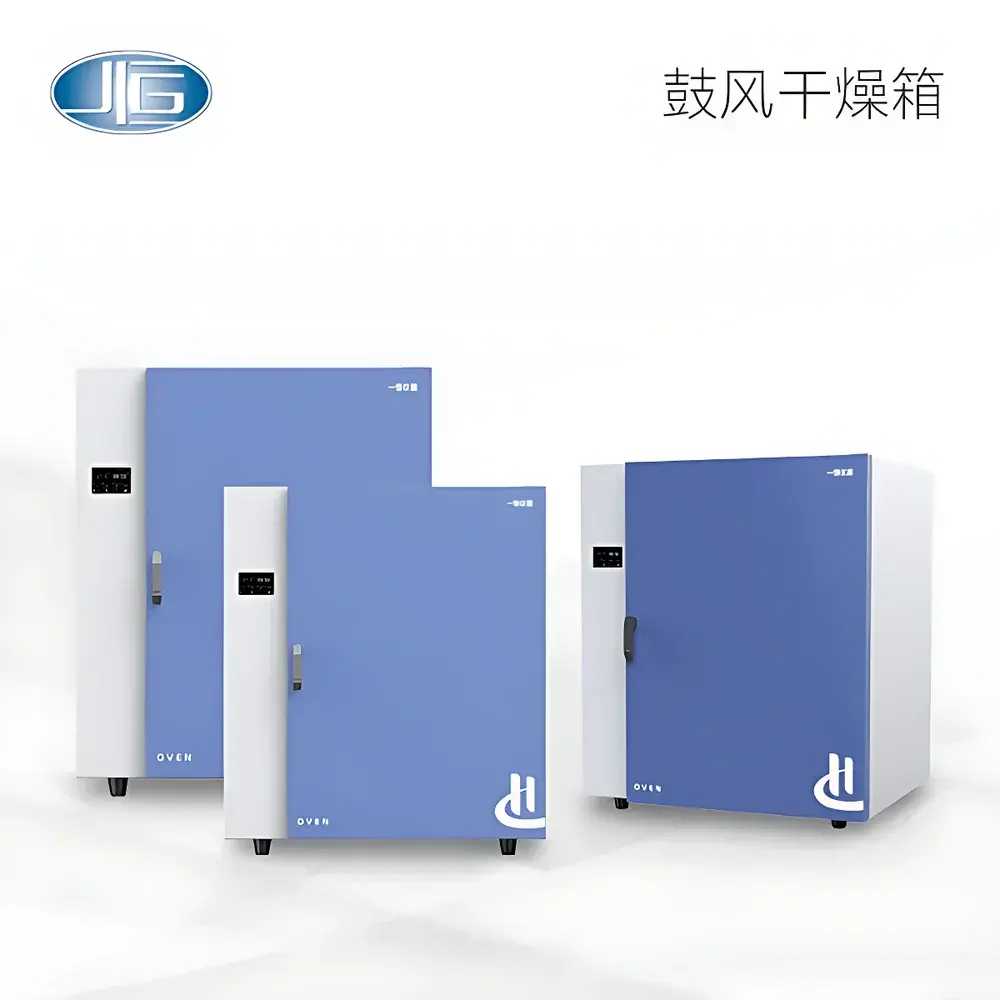
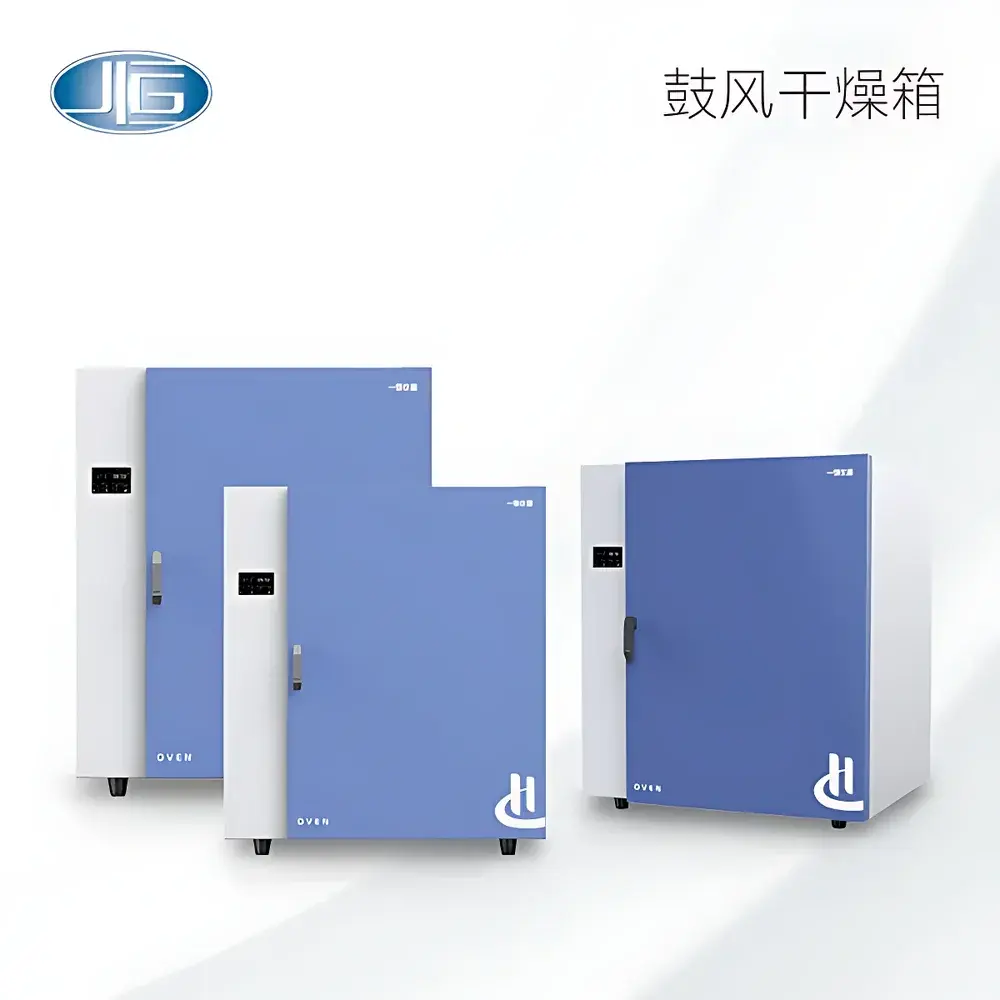
Yiheng DHG-9030T / DHG-9035T / DHG-9050T / DHG-9055T Touchscreen Forced-Air Drying Oven
| Brand | Yiheng |
|---|---|
| Origin | Jiangsu, China |
| Manufacturer Type | Direct Manufacturer |
| Product Category | Domestic |
| Models | DHG-9030T, DHG-9035T, DHG-9050T, DHG-9055T |
| Temperature Range | RT+10°C to 200°C (250°C) / RT+10°C to 300°C |
| Temperature Fluctuation | ±1.0°C |
| External Dimensions (W×D×H) | 620×440×490 mm |
| Internal Chamber Dimensions (W×D×H) | 340×320×320 mm |
| Temperature Resolution | 0.1°C |
| Temperature Uniformity | ±1.5% (at 100°C test point) |
| Control System | 4.3-inch capacitive touchscreen interface with multi-segment programmable logic |
Overview
The Yiheng DHG-T series forced-air drying ovens are precision-engineered laboratory instruments designed for reliable thermal processing of samples requiring controlled, uniform heating environments. Based on convection-driven heat transfer principles, these ovens utilize a high-efficiency axial fan and optimized internal airflow channels to ensure consistent temperature distribution across the entire working chamber. The system operates within two distinct temperature ranges—RT+10°C to 200°C (with optional 250°C capability) and RT+10°C to 300°C—making them suitable for routine drying, curing, sterilization pre-treatment, moisture content determination, and thermal stability testing in QC labs, academic research facilities, and industrial R&D settings. All models comply with fundamental safety and performance expectations outlined in IEC 61010-1 for electrical equipment used in laboratory environments.
Key Features
- 4.3-inch high-resolution capacitive touchscreen interface enabling intuitive real-time monitoring and parameter adjustment—including setpoint temperature, dwell time, ramp rate, and multi-step program execution.
- Microprocessor-based P.I.D. temperature controller with digital display, offering ±1.0°C temperature fluctuation and 0.1°C resolution for precise thermal regulation.
- Stainless steel mirror-finish interior chamber (304 grade) fabricated via argon arc welding; external housing constructed from cold-rolled steel with powder-coated finish for durability and corrosion resistance.
- Independent over-temperature protection circuit that automatically cuts power if chamber temperature exceeds user-defined safety threshold—critical for unattended operation and GLP-compliant workflows.
- Adjustable air inlet and exhaust dampers accessible directly from the control panel, allowing fine-tuning of chamber atmosphere exchange rate to optimize drying kinetics or minimize oxidation.
- Programmable multi-segment controller supporting up to eight user-defined programs, each comprising eight sequential steps with individual time (0–5999 min) and temperature targets—enabling complex thermal profiles such as gradual ramping, hold-and-soak cycles, and scheduled start/stop functions.
Sample Compatibility & Compliance
These ovens accommodate standard laboratory glassware, ceramic crucibles, metal trays, and polymer containers within their 34 L internal volume. The chamber geometry and airflow design support homogeneous heating of both low-mass and high-thermal-mass samples without significant edge-to-center gradients (±1.5% uniformity at 100°C). Units meet essential requirements for ISO/IEC 17025-accredited laboratories when operated under documented SOPs. Optional RS485 communication port enables integration into centralized lab management systems for audit-ready data logging, while optional thermal printer support facilitates immediate hardcopy generation of temperature/time records—supporting traceability needs aligned with FDA 21 CFR Part 11 and EU Annex 11 guidelines where electronic record integrity is mandated.
Software & Data Management
While the embedded firmware does not require external software installation, the RS485 interface supports Modbus RTU protocol for bidirectional communication with third-party SCADA platforms or LIMS systems. When paired with compatible data acquisition software, users can configure automated periodic sampling of chamber temperature, generate time-stamped CSV logs, and trigger alarms upon deviation thresholds. All programmable parameters—including segment sequences, dwell durations, and safety limits—are stored non-volatily and retain configuration after power interruption. Audit trail functionality is available via optional PC-connected logging modules that timestamp parameter changes and operational events—fulfilling basic GLP/GMP documentation requirements for validation and requalification activities.
Applications
- Residual solvent removal from pharmaceutical intermediates and active ingredients prior to analytical testing.
- Drying of filter papers, gravimetric filters, and desiccated biological specimens in environmental and food safety laboratories.
- Curing of coatings, adhesives, and composite prepregs in materials science departments.
- Pre-conditioning of reference standards and calibration weights per ASTM E220 and ISO 5725 protocols.
- Thermal aging studies of polymers and elastomers under controlled isothermal conditions.
- Moisture content analysis by loss-on-drying (LOD) in accordance with USP <731> and AOAC 950.46 methods.
FAQ
What is the maximum operating temperature for the DHG-9055T model?
The DHG-9055T supports continuous operation up to 300°C, verified via calibrated PT100 sensor and validated against internal thermal cutoff limits.
Can the oven be validated for IQ/OQ/PQ qualification?
Yes—the stable temperature control architecture, documented repeatability (±1.0°C fluctuation), and programmable profile capabilities make it suitable for installation, operational, and performance qualification under GxP frameworks.
Is the touchscreen interface compatible with glovebox integration?
The front-panel interface is fully sealed and rated IP54; external control via RS485 allows remote operation from outside containment enclosures without compromising integrity.
Does the unit include calibration certification?
Factory calibration is performed using NIST-traceable reference thermometers; a certificate of conformance is supplied standard; full UKAS/NVLAP-accredited calibration reports are available upon request.
How is airflow uniformity verified during manufacturing?
Each unit undergoes 16-point thermal mapping at 100°C and 150°C using calibrated thermocouples per ISO 14644-3 guidelines before release.



