
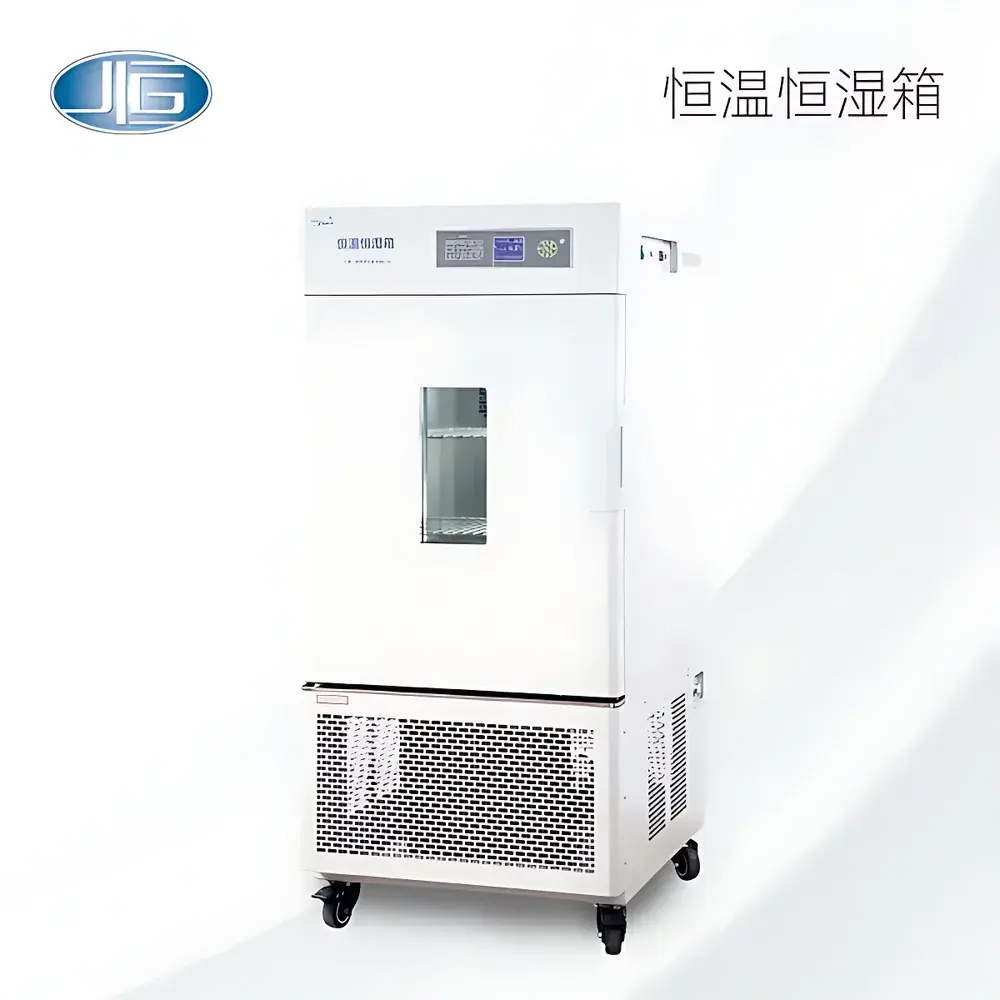
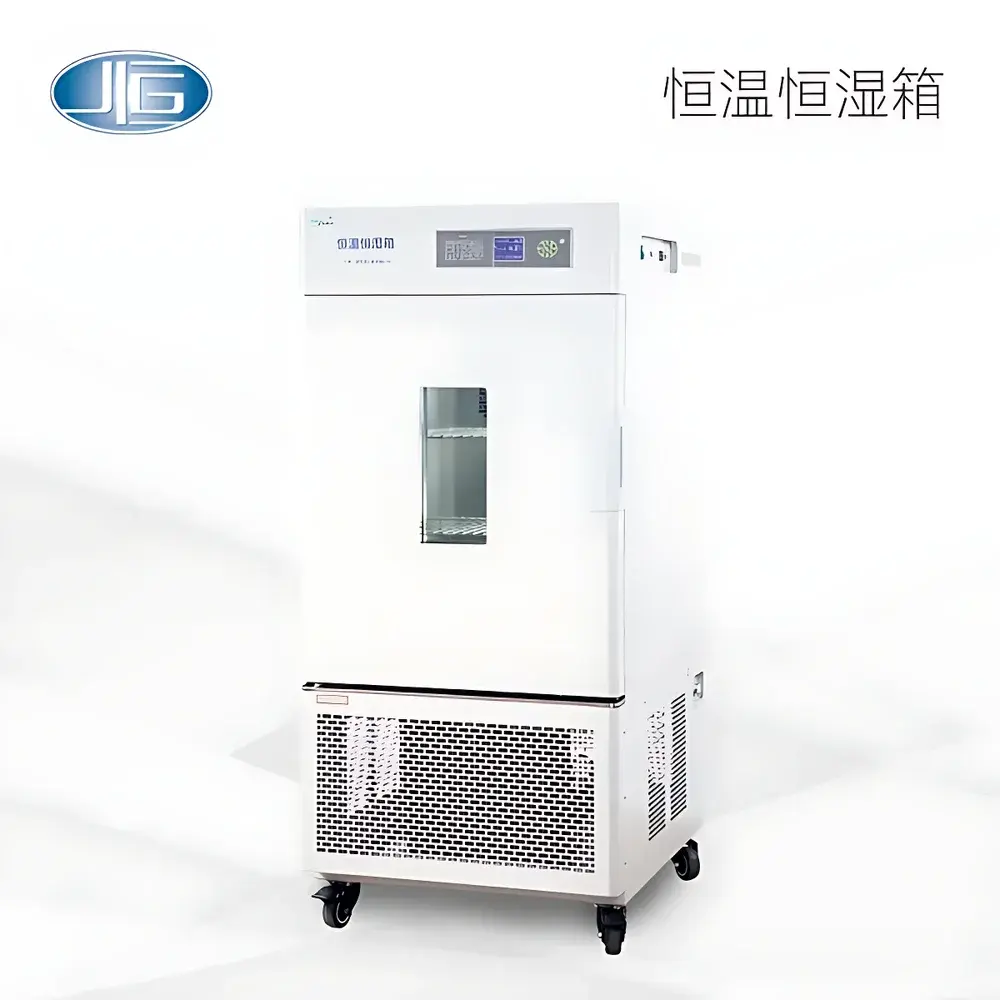
YiHeng LHS-250HC-II Temperature and Humidity Controlled Chamber
| Brand | YiHeng |
|---|---|
| Origin | Shanghai, China |
| Manufacturer Type | Direct Manufacturer |
| Product Category | Domestic |
| Model | LHS-250HC-II |
| Instrument Type | Upright Chamber |
| Temperature Range | −10 °C to 70 °C |
| Humidity Range (Mode I) | 40–85 %RH |
| Humidity Range (Mode II) | 40–95 %RH |
| Temperature Uniformity | ±0.5 °C (high-temp), ±1.0 °C (low-temp) |
| Humidity Deviation | ±3 %RH |
| Heating Rate | ≥1.5 °C/min (typical, 25 °C to 60 °C) |
| Internal Chamber Dimensions (W×D×H) | 600 mm × 500 mm × 830 mm |
| Interior Material | Mirror-finish Stainless Steel (SUS304) |
| Control Method | TMHM Balanced Temperature & Humidity Modulation |
| Safety Features | Independent Over-Temperature Cut-Off Protection |
| Interface Options | RS485 (optional), Thermal Printer Port (optional) |
| Test Port | Ø25 mm on Left Side Wall |
| Humidity Sensor | Imported Capacitive RH Sensor |
| Compressor | Imported Hermetic Scroll Compressor |
Overview
The YiHeng LHS-250HC-II Temperature and Humidity Controlled Chamber is an upright environmental test chamber engineered for precision stability testing, accelerated aging studies, and long-term condition simulation in pharmaceutical, material science, textile, food, and packaging R&D laboratories. It operates on a dual-mode humidity control architecture—supporting both standard (40–85 %RH) and high-humidity (40–95 %RH) operation—to accommodate diverse regulatory and methodological requirements across ISO 14644, ICH Q1A(R2), USP <1151>, and ASTM D4332 test protocols. The chamber employs TMHM (Thermal-Moisture Hybrid Modulation), a closed-loop proportional-integral-derivative (PID) control strategy that synchronizes refrigeration, heating, and steam/humidification subsystems to minimize thermal lag and moisture overshoot. Its thermally insulated double-wall construction with polyurethane foam (≥80 mm thickness) and sealed magnetic door gasket ensures low heat leakage and stable internal gradients—critical for GLP-compliant stability chambers where spatial uniformity must meet ≤±1.0 °C and ≤±3 %RH across the working volume.
Key Features
- Mirror-finish SUS304 stainless steel interior with radius-rounded corners and adjustable multi-position shelving—designed for cleanroom compatibility, ease of disinfection, and resistance to condensate corrosion.
- Imported scroll-type hermetic compressor and high-efficiency finned-tube evaporator/condenser assembly ensure reliable low-noise operation over extended duty cycles (≥10,000 hr MTBF).
- Dual-range capacitive humidity sensor (calibration traceable to NIST standards) enables real-time RH monitoring with <1.5 %RH hysteresis and drift <±0.5 %RH/year under routine use.
- Independent mechanical over-temperature limiter circuit—hardwired separately from the main controller—provides fail-safe interruption at user-defined thresholds (e.g., 75 °C), satisfying IEC 61000-4-11 and UL 61010-1 safety mandates.
- Front-panel microprocessor controller with intuitive LCD interface supports programmable ramp-soak profiles, data logging intervals (1–3600 s), and password-protected parameter locking for audit readiness.
- Standard Ø25 mm access port on left sidewall permits uninterrupted sensor feedthrough, gas purging, or external probe integration without compromising chamber integrity.
Sample Compatibility & Compliance
The LHS-250HC-II accommodates heterogeneous sample loads—including stacked trays, open Petri dishes, sealed vials, and packaged consumer goods—without compromising air circulation homogeneity. Its forced-air convection system (dual axial fans + vertical baffle design) maintains airflow velocity between 0.2–0.5 m/s across the full work volume, minimizing boundary-layer effects during long-duration tests. The chamber meets key regulatory prerequisites for stability-indicating environments: temperature uniformity conforms to ICH Q5C Annex 2 (≤±2 °C at setpoint), while humidity distribution satisfies ISO 2419:2019 Annex B criteria for leather conditioning. Optional IQ/OQ documentation packages support GMP validation per FDA 21 CFR Part 211 and EU Annex 15 guidelines.
Software & Data Management
While the base unit features embedded non-volatile memory storing up to 16,000 timestamped readings (temperature + humidity), optional RS485 serial interface enables bidirectional communication with third-party SCADA platforms or custom LabVIEW-based acquisition systems. When paired with YiHeng’s optional thermal line printer (model TP-250), continuous strip-chart recording meets ALCOA+ data integrity principles—each printout includes date/time stamp, operator ID, chamber ID, and calibration status flag. All digital logs retain metadata such as sensor ID, firmware revision, and alarm event history—facilitating 21 CFR Part 11-compliant electronic records when deployed with validated time-synced servers.
Applications
- Pharmaceutical stability testing per ICH Q1 series (long-term, accelerated, intermediate conditions)
- Polymer aging and moisture absorption kinetics (ASTM D5229, ISO 62)
- Textile shrinkage and dimensional stability under cyclic humidity (ISO 6330, AATCC 135)
- Food product shelf-life modeling under controlled water activity (aw) regimes
- Electronics component reliability assessment (JEDEC JESD22-A101, MIL-STD-810H Method 507.6)
- Biological reagent storage qualification and cold-chain deviation simulation
FAQ
What is the recommended calibration frequency for the LHS-250HC-II?
Annual calibration against NIST-traceable reference standards is advised; however, internal verification using Class II dry-well calibrators and chilled mirror hygrometers should be performed prior to each critical study.
Can the chamber operate continuously at 95% RH and 40°C?
Yes—Mode II operation supports sustained high-humidity conditions; however, ambient room temperature must remain ≤25°C and relative humidity ≤60%RH to ensure consistent condensate management and compressor efficiency.
Is the RS485 interface protocol publicly documented?
Yes—the MODBUS RTU register map (holding registers 40001–40100) is supplied with the optional communication kit and complies with EN 13849-1 for functional safety integration.
Does the unit comply with energy efficiency regulations such as EU Ecodesign Directive 2019/2023?
Yes—its R290 hydrocarbon refrigerant charge (≤120 g), brushless DC fans, and adaptive defrost logic achieve ErP Class A+ rating per Commission Regulation (EU) No 2016/2281.
How is temperature uniformity verified across the working volume?
Per ISO 16785:2017, nine calibrated PT100 probes are placed at defined positions (corners, center, mid-height); deviations are recorded after 2-hour stabilization at three setpoints (−10°C, 25°C, 60°C) and reported in the factory test certificate.



