
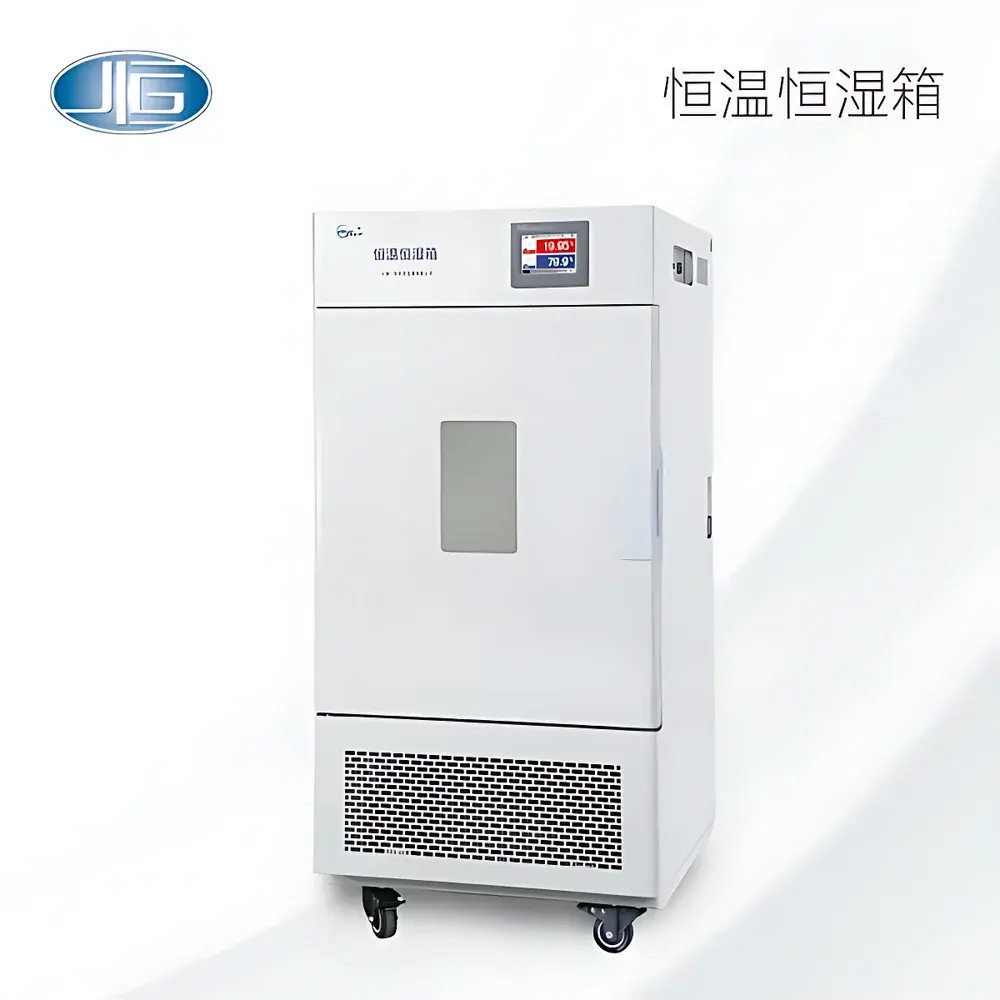
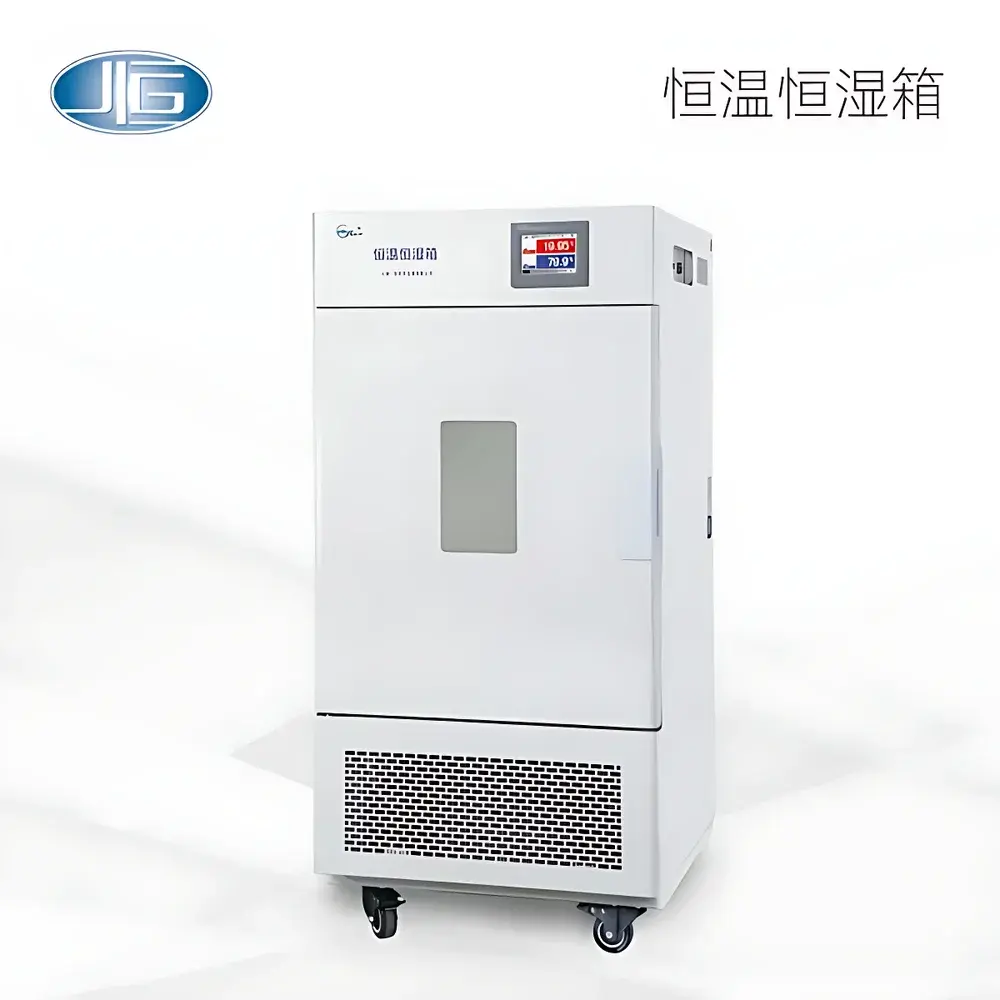
YiHeng BPS-250CL Temperature and Humidity Controlled Chamber
| Brand | YiHeng |
|---|---|
| Origin | Shanghai, China |
| Manufacturer Type | Direct Manufacturer |
| Country of Origin | China |
| Model | BPS-250CL |
| Instrument Type | Upright Vertical Chamber |
| Temperature Range | L: −10 to 100°C |
| A | −20 to 100°C |
| B | −40 to 100°C |
| Humidity Range | 35–95% RH (standard), 80–95% RH (high-stability mode) |
| Temperature Uniformity | ±0.5°C (high-temp), ±1.0°C (low-temp) |
| Humidity Deviation | ±3% RH |
| Internal Chamber Dimensions | As per official specification sheet (W × D × H in mm) |
| Controller | Programmable Touchscreen PID Controller with 100 programs / 1000 segments / 999 cycles |
| Communication Interface | RS-232 or RS-485 (optional), 485 interface for data logging and remote monitoring |
| Safety Protections | Independent over-temperature cut-off, compressor overheat/overcurrent/overload protection, fan overheat protection, low-water alarm, humidity/temperature deviation alarms |
Overview
The YiHeng BPS-250CL is a precision-engineered upright temperature and humidity controlled chamber designed for long-term stability testing, accelerated aging studies, material conditioning, and environmental stress screening in R&D laboratories, quality control departments, and regulatory-compliant manufacturing facilities. It operates on the principle of dual-loop PID-controlled refrigeration and steam-based humidification, integrating TMHM (Temperature & Humidity Mutual Harmonization) balanced control logic to minimize thermal lag and humidity overshoot. The chamber maintains traceable, repeatable environmental conditions across its full operational envelope—critical for ASTM D4332, ISO 22309, IEC 60068-2-78, and GB/T 10586 compliance protocols. Its structural architecture supports GLP/GMP-aligned validation workflows, including IQ/OQ documentation support and audit-ready parameter logging.
Key Features
- Upright vertical design with 250 L internal volume, optimized for space-constrained laboratory environments while ensuring adequate air circulation and sample accessibility.
- Triple-tier temperature range configuration (L/A/B variants) enabled by high-efficiency hermetic compressors and eco-friendly R134a or R404A refrigerant systems—fully compliant with EU F-Gas Regulation and China’s HCFC phase-out roadmap.
- 304 stainless steel mirror-finish interior with radius-rounded corners (R ≥ 25 mm) and removable, adjustable shelf supports—facilitating ISO 14644-1 Class 7 cleanroom-compatible cleaning and residue-free decontamination.
- Advanced touchscreen controller featuring dual-language UI (English/Chinese), real-time graphical trend display, programmable lockout function, and auto-restart after power interruption with full parameter retention.
- Robust safety architecture: independent mechanical over-temperature limiter (non-software dependent), multi-stage compressor protection (thermal, current, pressure), fan thermal cutoff, and continuous water-level monitoring with audible/visual alarm escalation.
- Integrated 25 mm diameter pass-through port (Φ25 mm) positioned at rear wall—enabling external sensor feedthrough, cable routing, or real-time probe insertion without compromising chamber integrity.
Sample Compatibility & Compliance
The BPS-250CL accommodates diverse sample geometries—including stacked PCBs, polymer films, pharmaceutical blister packs, electronic enclosures, and coated substrates—within its uniformly conditioned workspace. Airflow distribution follows ISO 16750-4-defined turbulence profiles, achieving ≤±1.5°C and ≤±4% RH spatial uniformity (per DIN EN 60068-3-5 test method). All electrical components meet CE/GB 4793.1 safety standards; humidity generation system complies with ISO 17025 requirements for metrological traceability. Optional calibration certificates (NIST-traceable Pt100 sensors, capacitive RH probes) are available for 21 CFR Part 11–aligned validation packages.
Software & Data Management
- Standard RS-232 serial interface enables direct connection to PC-based data acquisition platforms (e.g., LabVIEW, MATLAB, or custom Python scripts) for time-synchronized logging of temperature, humidity, and program stage metadata.
- Optional RS-485 Modbus RTU implementation supports integration into centralized facility monitoring systems (BMS/SCADA) with configurable polling intervals and alarm forwarding via SNMP or email gateways.
- Data export formats include CSV and XML; timestamped logs include controller firmware version, sensor ID, and operator login context—supporting ALCOA+ principles (Attributable, Legible, Contemporaneous, Original, Accurate, Complete, Consistent, Enduring, Available).
- Print-capable configurations interface with standard thermal or dot-matrix printers to generate hard-copy validation records meeting FDA ERES (Electronic Records and Signatures) expectations.
Applications
This chamber serves critical roles in multiple regulated and industrial domains: accelerated stability testing of APIs and finished dosage forms per ICH Q1A(R3); moisture barrier evaluation of flexible packaging per ASTM F1249; thermal cycling qualification of automotive ECUs per ISO 16750-4; hygrothermal aging of composite laminates per ASTM D5229; and preconditioning of textile specimens prior to tensile or colorfastness analysis per ISO 139. Its reproducible low-humidity capability (down to 35% RH) also supports corrosion resistance testing of metallic components under controlled saline/moisture exposure per ISO 9223.
FAQ
What temperature and humidity accuracy specifications apply during validation?
Accuracy is verified per VDI/VDE 2655 Sheet 2: ±0.3°C for temperature (at 23°C setpoint) and ±2.0% RH (at 60% RH setpoint) using accredited reference sensors traceable to NIM.
Is the BPS-250CL suitable for GMP-regulated stability storage?
Yes—when equipped with optional 21 CFR Part 11-compliant software add-ons, electronic audit trail, and user access controls, it meets WHO TRS 992 Annex 6 and ICH Q5C requirements for long-term stability chambers.
Can the chamber maintain humidity below 40% RH continuously?
The standard configuration achieves stable operation down to 35% RH; sub-30% RH requires optional desiccant-assisted dehumidification module (sold separately).
How is thermal uniformity validated across the working volume?
Per ISO 16750-4 Annex B: nine-point mapping (3×3 grid at mid-height) with calibrated Class A Pt100 sensors; results documented in factory acceptance test report (FATR).
Does the controller support custom alarm escalation protocols?
Yes—via RS-485 Modbus, users can configure priority-based notification rules (e.g., SMS/email alerts triggered by sustained >5 min deviation from setpoint).



