
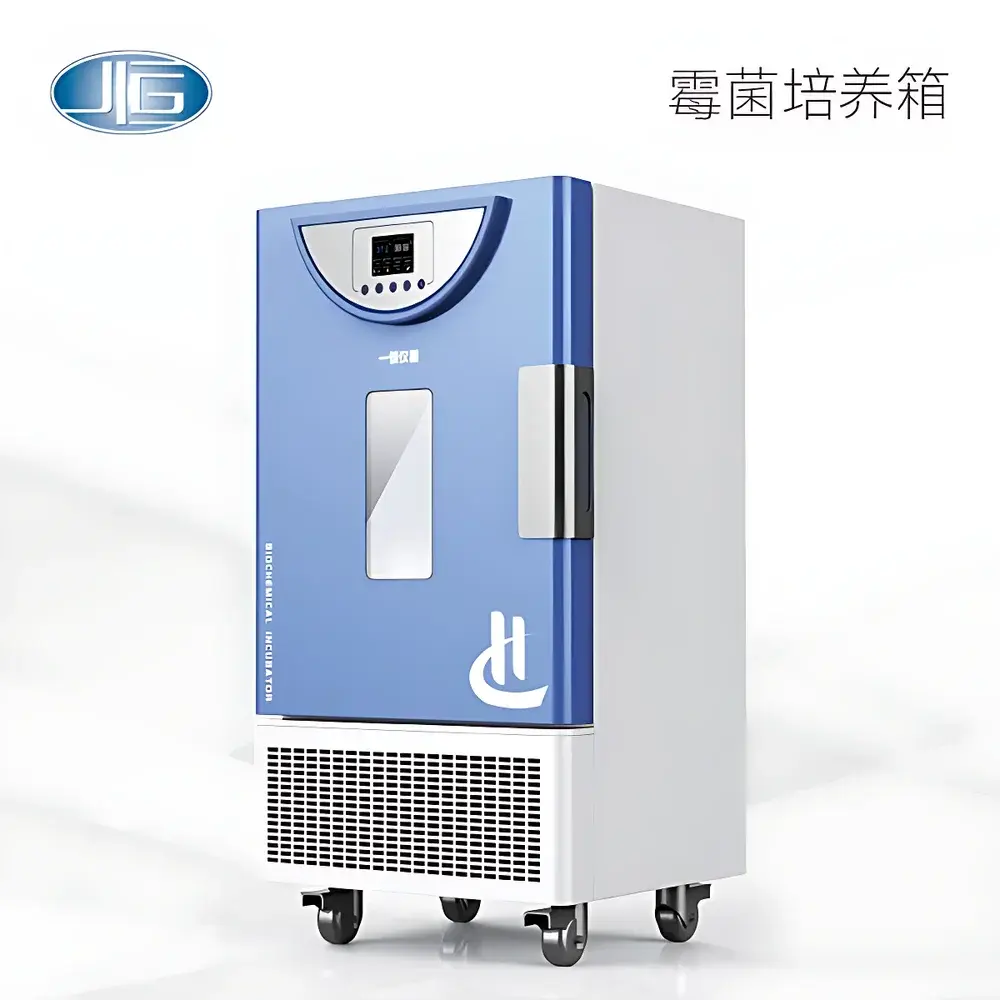
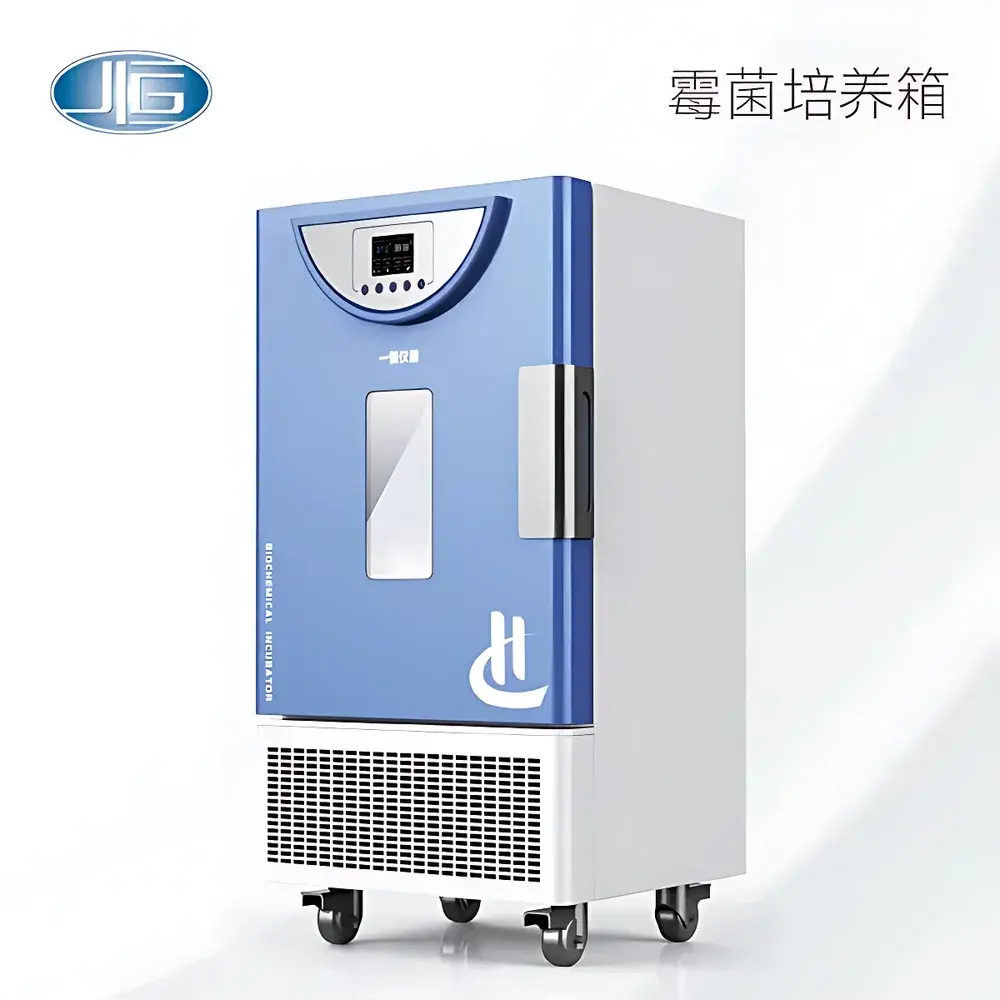
YiHeng BPMJ-Series Intelligent Mold Incubator
| Brand | YiHeng |
|---|---|
| Model | BPMJ-150T / BPMJ-250T / BPMJ-500T |
| Control Interface | 4.3-inch capacitive touch screen |
| Temperature Range | −5 °C to 70 °C |
| Temperature Fluctuation | ±0.3 °C (high-temp mode), ±0.5 °C (low-temp mode) |
| Temperature Uniformity | ±1.5 °C |
| Internal Dimensions (W×D×H, mm) | 500×460×800 |
| Chamber Volume | 184 L |
| Refrigerant | Eco-friendly non-CFC hydrocarbon blend |
| Air Circulation | Triple-speed adjustable centrifugal fan with optimized ducted airflow |
| UV Sterilization | Optional integrated 254 nm UV-C lamp (top-mounted) |
| Safety | Independent over-temperature cut-off with audible/visual alarm |
| Data Connectivity | RS-485 interface and USB data export (optional) |
| Compliance | Designed per IEC 61010-1, ISO 13485-aligned manufacturing processes |
Overview
The YiHeng BPMJ-Series Intelligent Mold Incubator is a purpose-engineered environmental chamber designed specifically for controlled fungal cultivation, mycological research, and long-term stability testing of spore-forming microorganisms under precisely regulated thermal conditions. Unlike general-purpose biochemical incubators, the BPMJ-Series integrates mold-specific operational requirements—including extended low-temperature capability (down to −5 °C), enhanced internal sterilization protocols, and programmable multi-step thermal ramping—into a single robust platform. Its core thermal management system employs a hermetically sealed, high-efficiency compressor coupled with a ducted air circulation architecture that ensures uniform temperature distribution across the entire working volume, critical for reproducible colony morphology and sporulation kinetics. The unit operates on an eco-compliant hydrocarbon refrigerant blend, eliminating ozone-depleting substances while maintaining stable performance across its full operating range.
Key Features
- Intelligent 4.3-inch capacitive touch interface with real-time parameter display, haptic feedback, and password-protected operation lockout to prevent unauthorized configuration changes.
- Multi-segment programmable controller supporting up to 8 user-defined programs, each containing 8 sequential steps with independent temperature setpoints, dwell times (0–5999 min), and ramp rates—enabling precise simulation of natural diurnal or seasonal thermal cycles.
- Fully adjustable triple-speed centrifugal blower system minimizes convective stress on delicate mycelial structures while maintaining ±1.5 °C spatial uniformity throughout the chamber.
- Electropolished mirror-finish stainless-steel interior with radius-corner transitions and tool-free removable shelving facilitates complete decontamination and eliminates microbial harborage zones.
- Dedicated 25 mm Ø access port (left-side mounted) enables seamless integration with external sensors, gas supply lines, or humidity modules without compromising chamber integrity.
- Independent dual-limit thermal protection circuitry triggers immediate power cutoff and simultaneous audible/visual alert upon detection of either sustained deviation (>±3 °C) or absolute exceedance of user-defined safety thresholds.
- Optional 254 nm UV-C germicidal lamp (top-mounted, interlocked with door switch) delivers ≥100 µW/cm² irradiance at 1 m distance for routine bioburden reduction between cycles.
Sample Compatibility & Compliance
The BPMJ-Series accommodates standard Petri dishes (up to 150 mm diameter), slant tubes, multi-well plates, and custom agar-filled vessels across all three capacity variants. Its −5 °C minimum setpoint supports psychrotolerant mold isolation (e.g., Cryomyces antarcticus, Penicillium chrysogenum cold-adapted strains), while the 70 °C upper limit permits thermotolerance profiling and heat-inactivation validation studies. All units are manufactured in accordance with ISO 13485 quality management standards and comply with electrical safety requirements per IEC 61010-1:2010. For GLP/GMP-regulated environments, optional audit-trail-enabled firmware (with time-stamped event logging and user authentication) satisfies FDA 21 CFR Part 11 data integrity expectations when paired with validated USB data export workflows.
Software & Data Management
Standard RS-485 Modbus RTU protocol enables direct integration into centralized laboratory monitoring systems (e.g., LabVantage, Thermo Fisher SampleManager). Optional USB data logger firmware records timestamped temperature readings at user-selectable intervals (1–60 min) onto FAT32-formatted flash drives, generating CSV files compatible with Excel, MATLAB, or statistical process control (SPC) platforms. When connected to a host PC via the included virtual COM port driver, real-time trending and historical playback are supported through YiHeng’s cross-platform desktop utility—providing traceable records for ISO/IEC 17025 accreditation audits. No cloud dependency or proprietary subscription services are required.
Applications
- ISO 11133:2014-compliant fungal purity testing and strain maintenance for pharmaceutical raw material QC.
- ASTM D3273-22 mold resistance evaluation of building materials, coatings, and textiles under accelerated humid-thermal stress.
- USP & EP chapter <61>/<62> environmental monitoring isolate identification workflows requiring extended incubation at sub-ambient temperatures.
- Ecological mycology studies involving temperature-gradient-dependent sporulation phenotyping (e.g., Aspergillus flavus aflatoxin production kinetics).
- Bioburden recovery validation for sterile barrier systems using calibrated spore strips incubated under defined thermal profiles.
FAQ
Can the BPMJ-Series operate continuously at −5 °C without frost accumulation?
Yes—the unit incorporates automatic defrost cycling triggered by evaporator coil temperature differentials, ensuring uninterrupted operation and consistent chamber humidity below 20% RH at sub-zero setpoints.
Is UV-C irradiation dose validated per ISO 15714:2019 for surface decontamination?
The integrated lamp meets minimum irradiance requirements for air-phase disinfection; however, surface dose validation must be performed in situ using calibrated radiometers per ISO/IEC 17025-accredited protocols.
Does the touch interface support multi-language localization?
Firmware v3.2+ includes English, German, French, Spanish, and simplified Chinese language packs—field-upgradable via USB.
What is the maximum allowable ambient temperature for stable operation at 70 °C?
Rated for continuous use at ≤30 °C ambient with ≥100 mm clearance on all sides; derating applies above 32 °C ambient per IEC 60068-2-14.
Are calibration certificates available with NIST-traceable temperature probes?
Factory-installed Class A PT100 sensors include individual calibration reports (−5 °C to 70 °C, ±0.15 °C uncertainty); third-party ISO/IEC 17025 calibration services are offered separately.




