
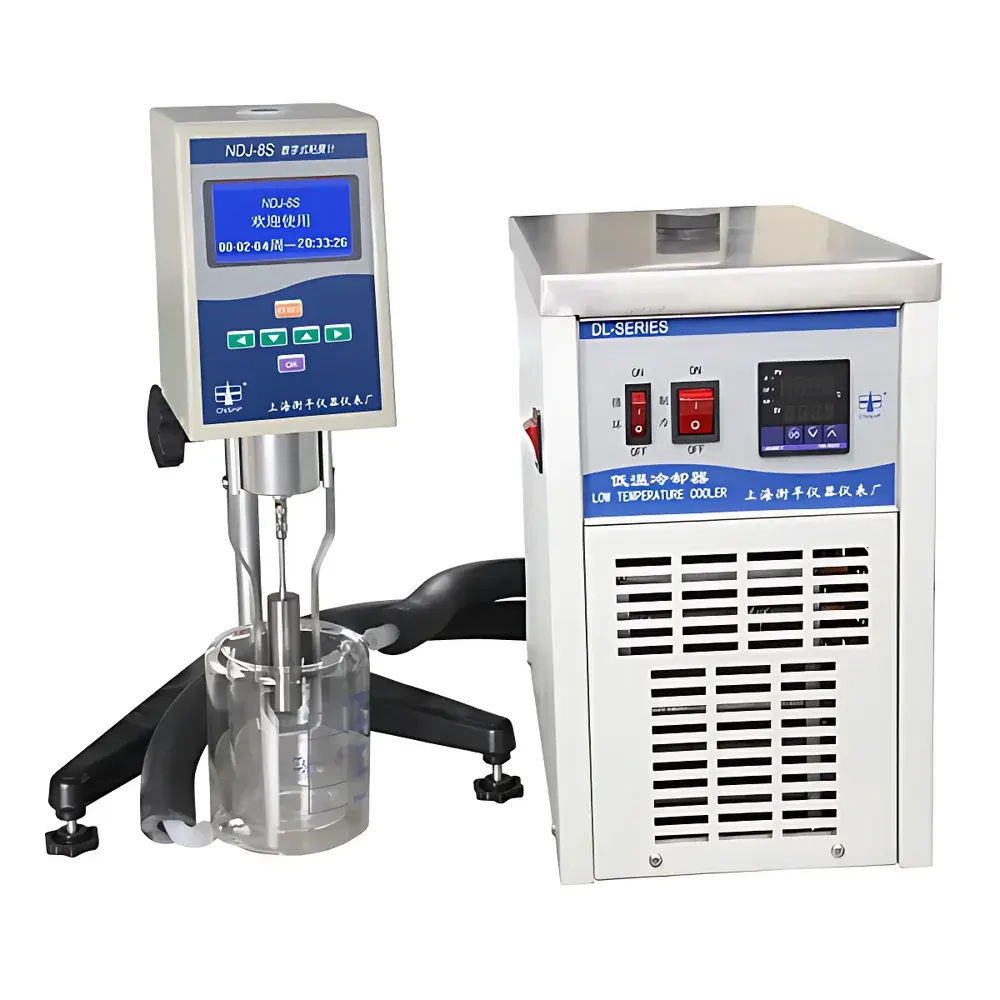
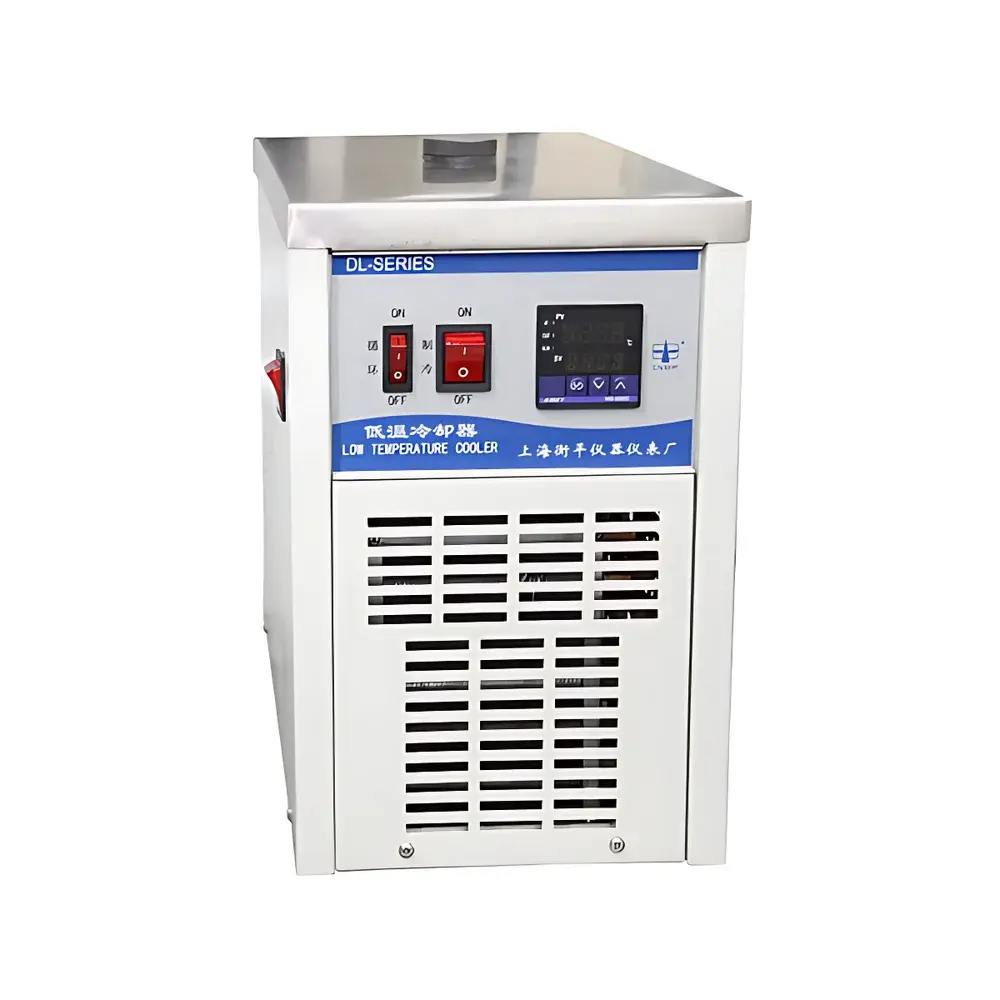
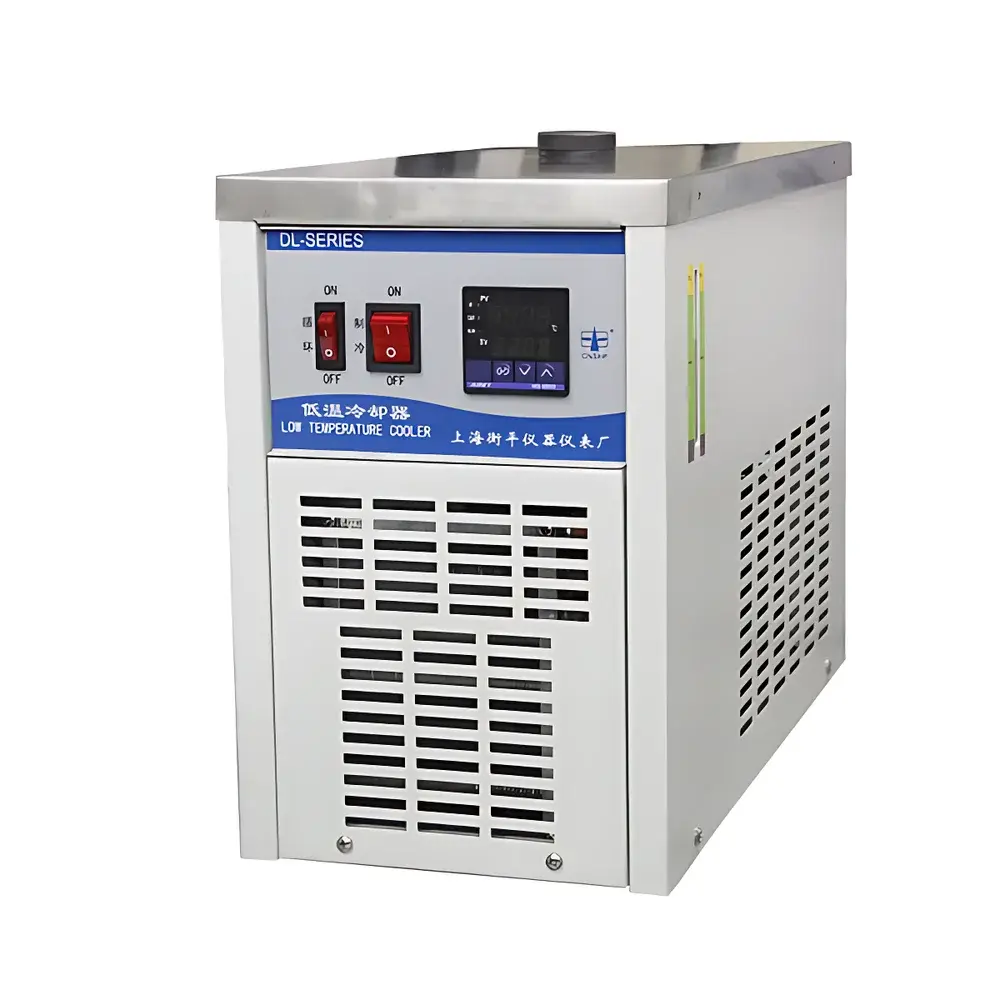
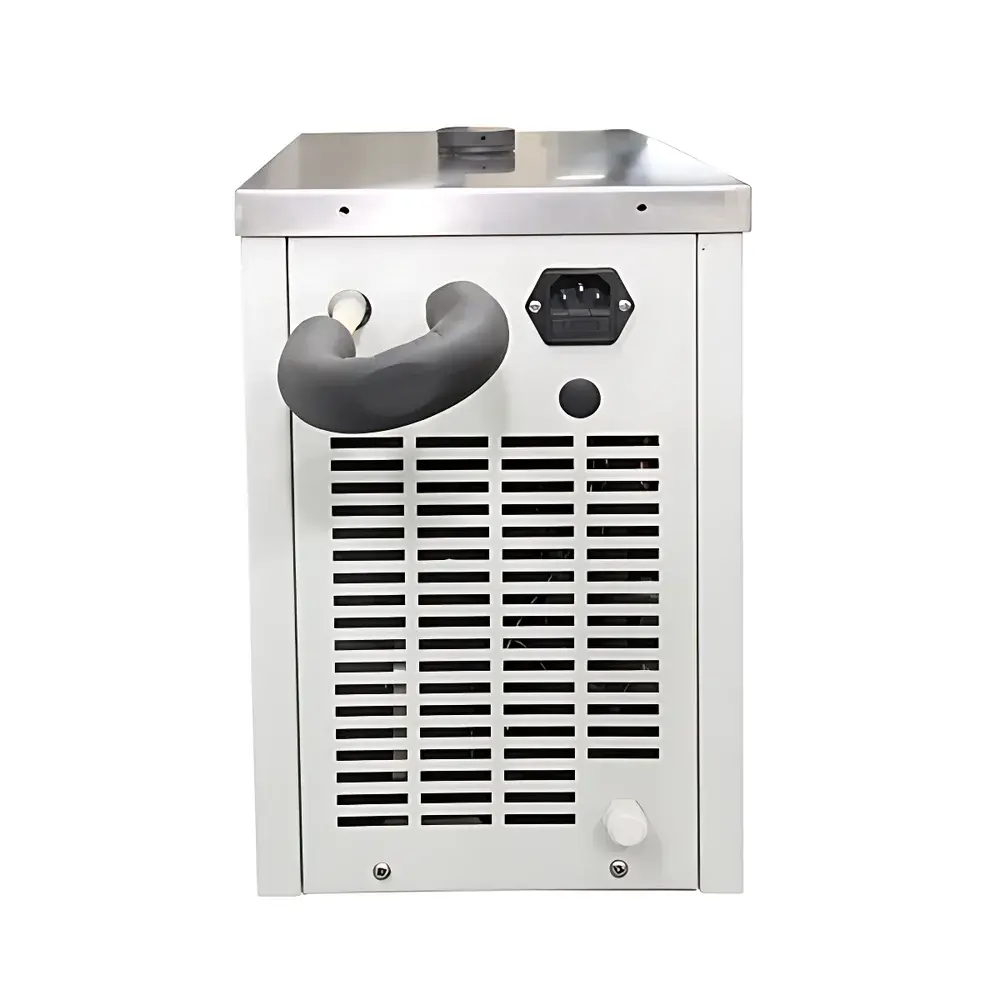
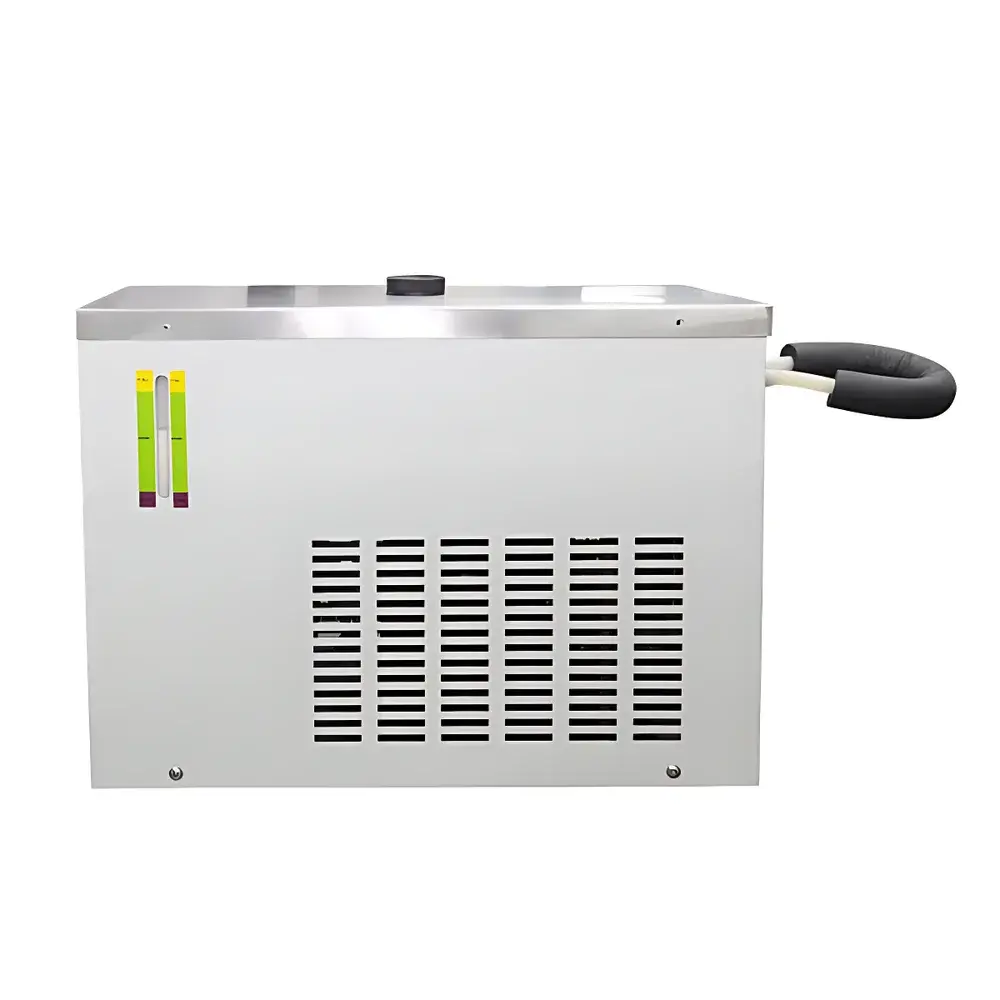
Shanghai Hengping DL-SERIES Low-Temperature Constant-Temperature Circulating Chiller
| Brand | Hengping |
|---|---|
| Origin | Shanghai, China |
| Model | DL-SERIES |
| Type | Integrated Circulating Chiller |
| Cooling Method | Water-Cooled |
| Temperature Range | 5–50 °C |
| Refrigeration Capacity | 550 W |
| Temperature Stability | ±0.1 °C |
| Circulation Pump Pressure | 0 ± 0.1 bar (typical open-loop head) |
| Flow Rate | 4 L/min |
| Bath Volume | 1 L |
| Operating Mode | Continuous |
| Control System | Microcontroller-based PID with Auto-Tuning |
| Sensor | PT100 Platinum Resistance Thermometer |
| Display | Dual LED (Setpoint & Actual Temperature, 0.1 °C Resolution) |
| Power Supply | 220 V ±10%, 50 Hz |
| Dimensions (L×W×H) | 425 × 210 × 315 mm |
| Safety Features | Sensor Fault Protection, Upper/Lower Temperature Limit Alarm, Dry-Run Protection |
Overview
The Shanghai Hengping DL-SERIES Low-Temperature Constant-Temperature Circulating Chiller is an integrated, compact temperature control system engineered for precision thermal management in laboratory-scale analytical and process instrumentation. It operates on a closed-loop refrigeration cycle using a high-efficiency hermetic compressor and R134a refrigerant, delivering stable, uniform cooling across its operational range of 5–50 °C. The unit employs a microcontroller-based PID temperature controller with auto-tuning capability, coupled with a calibrated PT100 platinum resistance thermometer (Class A tolerance), enabling temperature stability of ±0.1 °C under steady-state conditions. Its 1-liter stainless-steel bath serves as both reservoir and heat exchange interface, while the built-in circulation pump (4 L/min flow rate, low-pulsation design) enables external thermal coupling to peripheral devices—such as viscometers, refractometers, surface tensiometers, rotary evaporators, and small-scale reactors—thereby establishing a secondary, precisely regulated temperature field independent of ambient fluctuations.
Key Features
- Integrated architecture with compact footprint (425 × 210 × 315 mm), optimized for benchtop deployment in space-constrained laboratories.
- Microprocessor-controlled PID algorithm with self-tuning function ensures rapid thermal equilibration and minimal overshoot across the full 5–50 °C range.
- Dual digital LED display simultaneously shows setpoint and real-time bath temperature at 0.1 °C resolution, supporting intuitive operation and traceable parameter verification.
- Hermetic compressor system delivers consistent refrigeration capacity of 550 W with low acoustic emission (<55 dB(A)), suitable for shared lab environments requiring quiet operation.
- Robust safety architecture includes PT100 sensor fault detection, upper/lower temperature limit alarms, dry-run protection, and automatic shutdown upon critical fault detection.
- Stainless-steel bath (1 L volume) resists corrosion from common aqueous and mild organic coolant mixtures (e.g., water/ethylene glycol blends).
Sample Compatibility & Compliance
The DL-SERIES chiller is designed for direct integration with low-thermal-mass instruments requiring external liquid cooling or temperature stabilization. Compatible applications include—but are not limited to—Abbe refractometers, rotational viscometers (e.g., Brookfield-type), surface tensiometers, 2-L rotary evaporators, CCD detectors, small bioreactors, and analytical spectrometers (AAS, ICP-OES). While the unit itself does not carry CE, UL, or FDA certification, its electrical design complies with IEC 61010-1:2010 safety requirements for laboratory equipment. When deployed within GLP- or GMP-regulated workflows, users may document temperature setpoints, actual readings, and alarm events manually or via optional analog output (0–5 V or 4–20 mA) for integration into validated data acquisition systems. The ±0.1 °C stability meets typical calibration requirements for ISO/IEC 17025-accredited testing labs performing temperature-dependent physical property measurements.
Software & Data Management
The DL-SERIES operates as a standalone instrument without embedded software or network connectivity. All control logic resides in the onboard microcontroller; no firmware updates, drivers, or proprietary software installation is required. Temperature logging and remote monitoring must be implemented externally—via analog signal interfacing or manual recording. For laboratories requiring audit trails per FDA 21 CFR Part 11, the unit supports integration with third-party SCADA or LIMS platforms through its analog voltage/current output port (configurable), provided the host system implements appropriate user authentication, electronic signature, and change-control protocols. No internal memory or timestamping functionality is present.
Applications
- Biochemical & Pharmaceutical Research: Temperature stabilization of enzyme kinetics assays, protein crystallization rigs, and small-volume fermentation vessels.
- Materials Characterization: Cooling of XRD sample stages, TEM/SEM cold stages, magnetron sputtering targets, and thin-film deposition chambers.
- Analytical Chemistry: Condenser cooling for rotary evaporation, temperature control of AAS graphite furnaces, and thermal regulation of ICP-MS nebulizers.
- Physics & Optics: Stabilization of laser diode mounts, cryocooler pre-cooling loops, and magnetic resonance probe housings (including low-field NMR systems).
- Quality Control & Metrology: Calibration support for thermally sensitive reference standards, viscosity reference oils, and refractive index calibration fluids.
FAQ
What is the recommended coolant mixture for extended operation below 10 °C?
For sub-10 °C operation, a 30:70 (v/v) mixture of ethylene glycol and deionized water is recommended to prevent freezing and minimize viscosity-related flow resistance. Pure water is acceptable between 15–45 °C.
Can the DL-SERIES be used with vacuum-jacketed tubing for long-distance circulation?
Yes—provided total line length remains ≤3 m and inner diameter is ≥6 mm, pressure drop remains within the pump’s head capability (0 ± 0.1 bar nominal). Insulated or vacuum-jacketed lines reduce thermal drift in ambient-exposed segments.
Does the unit support external temperature feedback from the target instrument?
No—the DL-SERIES uses only its internal PT100 sensor for control. External feedback requires a separate temperature controller or PLC-level integration.
Is the stainless-steel bath compatible with 50% methanol/water solutions?
Short-term exposure (<24 h) is permissible; however, prolonged use of methanol-based coolants may accelerate passivation layer degradation. Use only pharmaceutical-grade or ASTM D1384-compliant coolants for routine operation.
What maintenance intervals are recommended for optimal performance?
Compressor oil and refrigerant integrity should be verified annually by qualified service personnel. Filter-drier replacement is advised every 24 months in continuous-use environments. Bath cleaning with 1% citric acid solution is recommended quarterly to prevent scale buildup.



