
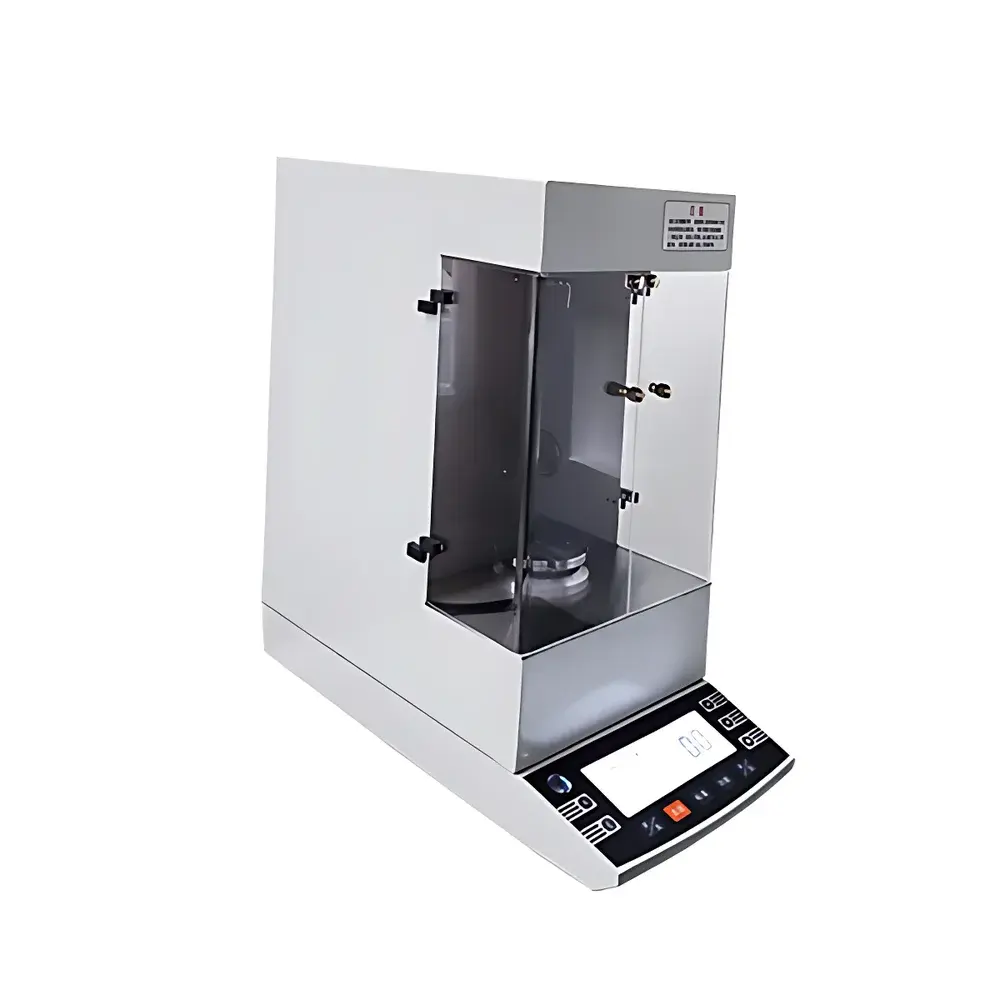
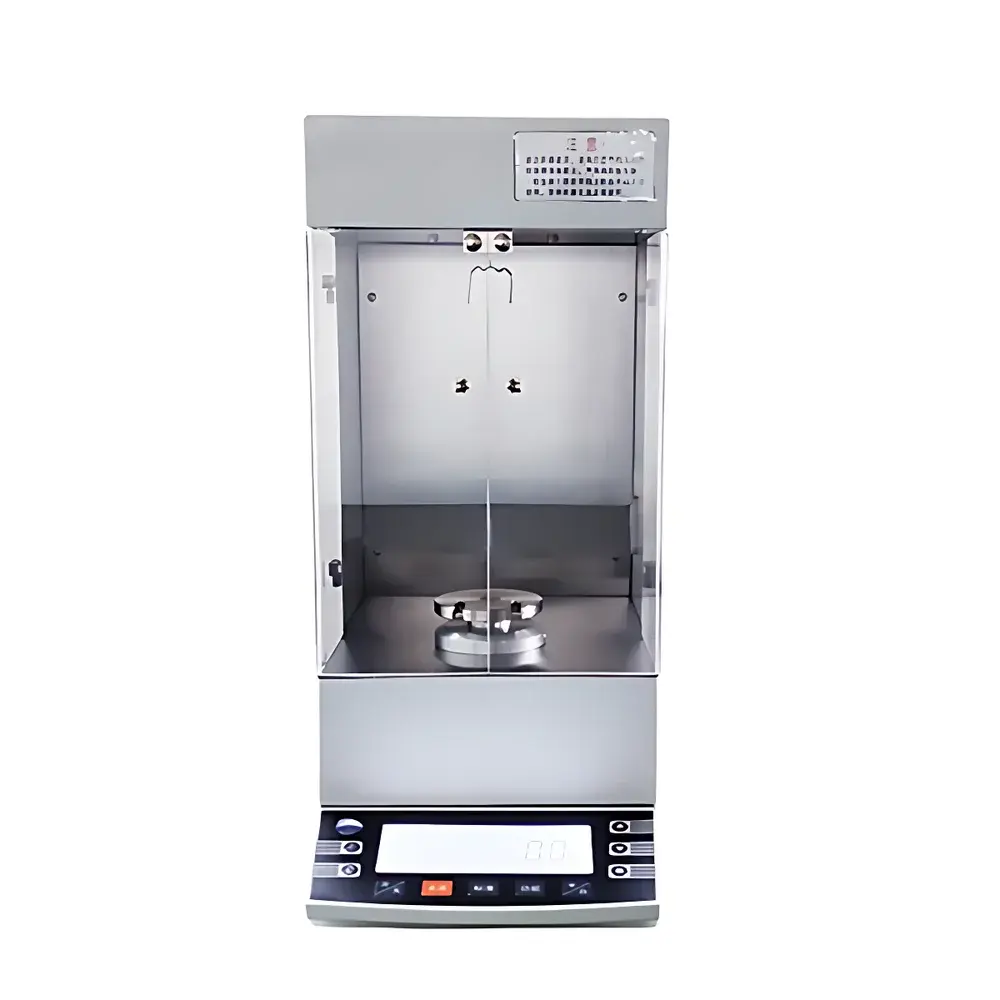
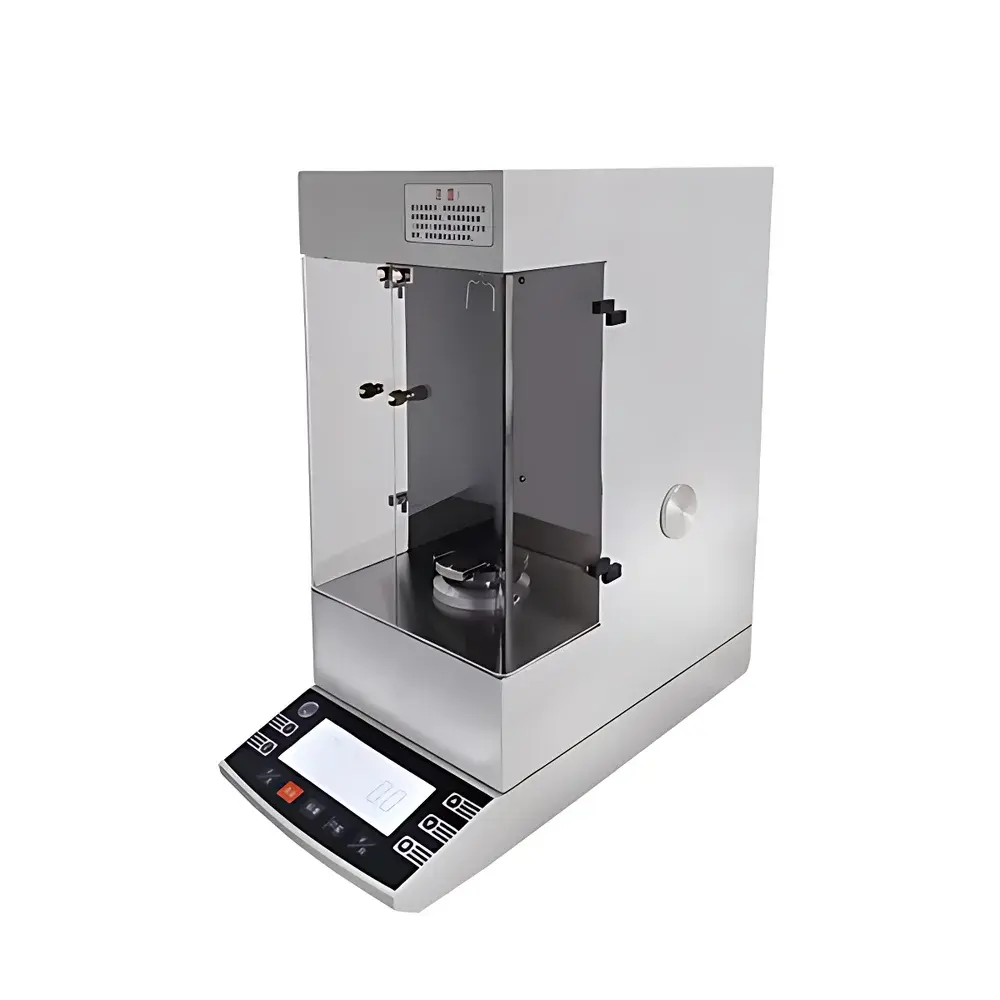
Hengping BZY-1/BZY-1N/BZY-1A Automatic Surface & Interfacial Tensiometer
| Brand | Hengping |
|---|---|
| Origin | Shanghai, China |
| Model | BZY-1 / BZY-1N / BZY-1A |
| Measurement Range | 0–400 mN/m |
| Resolution | ±0.1 mN/m |
| Accuracy | ±0.1 mN/m |
| Temperature Display Range | 0–400 °C |
| Temperature Display Accuracy | ±0.1 °C |
| Measurement Method | Wilhelmy Plate Method (optional Du Noüy Ring Method) |
| Compliance Standards | JB/T 9388-2002, GB/T 6541-1986, ISO 1409:1995, GB/T 22237-2008, GB 11278-1989, GB/T 18396-2001, SH/T 1156-1999 |
Overview
The Hengping BZY-1/BZY-1N/BZY-1A Automatic Surface & Interfacial Tensiometer is a laboratory-grade instrument engineered for precise, reproducible measurement of surface tension at liquid–gas interfaces and interfacial tension at immiscible liquid–liquid boundaries (e.g., oil–water systems). It operates on the fundamental principles of the Wilhelmy plate method—a gravimetric technique wherein the force exerted on a vertically immersed platinum plate is measured as it contacts and withdraws from the test liquid. This method ensures high linearity, minimal hysteresis, and robust performance across a broad range of viscosities and surfactant concentrations. Unlike manual or semi-automated alternatives, the BZY series integrates a closed-loop electromagnetic force transducer with single-chip microprocessor control, enabling fully autonomous acquisition of equilibrium tension values without operator intervention. Its design supports routine QC testing as well as advanced research applications—including dynamic surface tension profiling, critical micelle concentration (CMC) determination, and time-dependent interfacial relaxation studies—under controlled thermal conditions.
Key Features
- Fully automated measurement cycle: automatic immersion, dwell, withdrawal, and equilibrium detection—eliminating operator-induced variability.
- High-stability electromagnetic force sensor with ±0.1 mN/m resolution and ±0.1 mN/m accuracy across the full 0–400 mN/m range.
- Dual-method capability: configurable for Wilhelmy plate mode (standard) or optional Du Noüy ring mode via interchangeable probe assemblies.
- One-touch zeroing function: allows calibration offset adjustment anywhere within the 0–400 mN range, enhancing flexibility during multi-sample workflows.
- Integrated real-time tension vs. time curve acquisition via included software; supports export of raw force-time data for post-processing.
- Modular thermal management: compatible with optional temperature-controlled sample holders (BZY-1/22 standard bath: 0–60 °C; BZY-1/22 HT/LT bath: –5 to 110 °C) and PT100-based in-situ temperature monitoring (BZY-1/23, 0–99 °C, ±0.1 °C).
- No external PC required for basic operation; embedded display and control interface enable standalone use in regulated environments.
Sample Compatibility & Compliance
The BZY tensiometer accommodates aqueous and non-aqueous solutions, polymer melts, crude oils, emulsions, micellar dispersions, and high-viscosity formulations—provided they are chemically compatible with platinum probes and standard glassware. Its measurement methodology conforms to internationally recognized standards including ISO 1409:1995 (plastics and rubber), GB/T 6541-1986 (petroleum products), GB/T 22237-2008 (surfactants), and ASTM D971 (oil–water interfacial tension). While not inherently 21 CFR Part 11 compliant, audit-ready data logging—including timestamped measurements, operator ID fields, and version-controlled calibration records—is supported through optional software modules designed for GLP/GMP-aligned laboratories. All platinum plates and rings meet dimensional specifications per ISO 1409 (plate thickness: 0.2 mm; ring wire diameter: 0.185 mm or 0.3 mm; circumference: 60 mm; radius: 9.55 mm).
Software & Data Management
The included Windows-compatible software provides synchronized real-time visualization of force vs. time profiles, automatic equilibrium detection algorithms, and batch reporting templates aligned with industry-standard formats. Raw datasets are stored in CSV and proprietary binary formats with embedded metadata (date/time, operator ID, probe ID, temperature reading if enabled). Calibration logs—including date, standard mass applied, and deviation from nominal value—are retained separately and exportable for internal audits. Optional add-ons support PDF report generation with digital signatures, LIMS integration via ODBC, and automated pass/fail flagging against user-defined specification limits—facilitating seamless incorporation into quality management systems.
Applications
- Petroleum & Lubricants: Oil–water interfacial tension for enhanced oil recovery (EOR) formulation screening; aging assessment of transformer and insulating oils per IEC 60296.
- Coatings & Inks: Wetting behavior evaluation of pigment dispersions; rheological stability of latex emulsions; printability optimization via surface energy mapping.
- Pharmaceuticals & Agrochemicals: CMC determination for surfactant selection; formulation development for nanoemulsions and liposomal drug carriers.
- Personal Care & Cosmetics: Emulsion stability quantification; surfactant efficiency ranking; viscosity–tension coupling analysis in thickened systems.
- Electroplating & Metal Finishing: Bath wettability validation to prevent pitting, voids, and dendritic growth on substrates.
- Food Science: Protein–lipid interaction modeling; packaging film surface energy characterization; cleaning-in-place (CIP) detergent efficacy verification.
- Academic Research: Fundamental adsorption kinetics; Langmuir isotherm derivation; polymer–surfactant co-assembly thermodynamics.
FAQ
What measurement principle does the BZY series employ?
It uses the Wilhelmy plate method, based on direct force measurement of liquid meniscus adhesion to a vertically oriented platinum plate.
Can the instrument measure interfacial tension between two liquids?
Yes—it is specifically validated for liquid–liquid systems such as hydrocarbon–aqueous phases, provided density contrast permits stable interface formation.
Is temperature control mandatory for accurate results?
Temperature significantly affects surface tension; while ambient measurements are possible, ISO and ASTM standards recommend thermostatted conditions—hence optional baths and PT100 sensors are strongly advised for compliance-critical work.
How often should calibration be performed?
Daily verification using the supplied certified weight is recommended before first use; full recalibration every 3–6 months—or after mechanical shock, probe replacement, or environmental relocation—is advised per GLP best practices.
Does the system support GMP-compliant electronic records?
The base software includes audit trail functionality; full 21 CFR Part 11 compliance requires optional validated software package with role-based access control, electronic signatures, and immutable archival configuration.



