
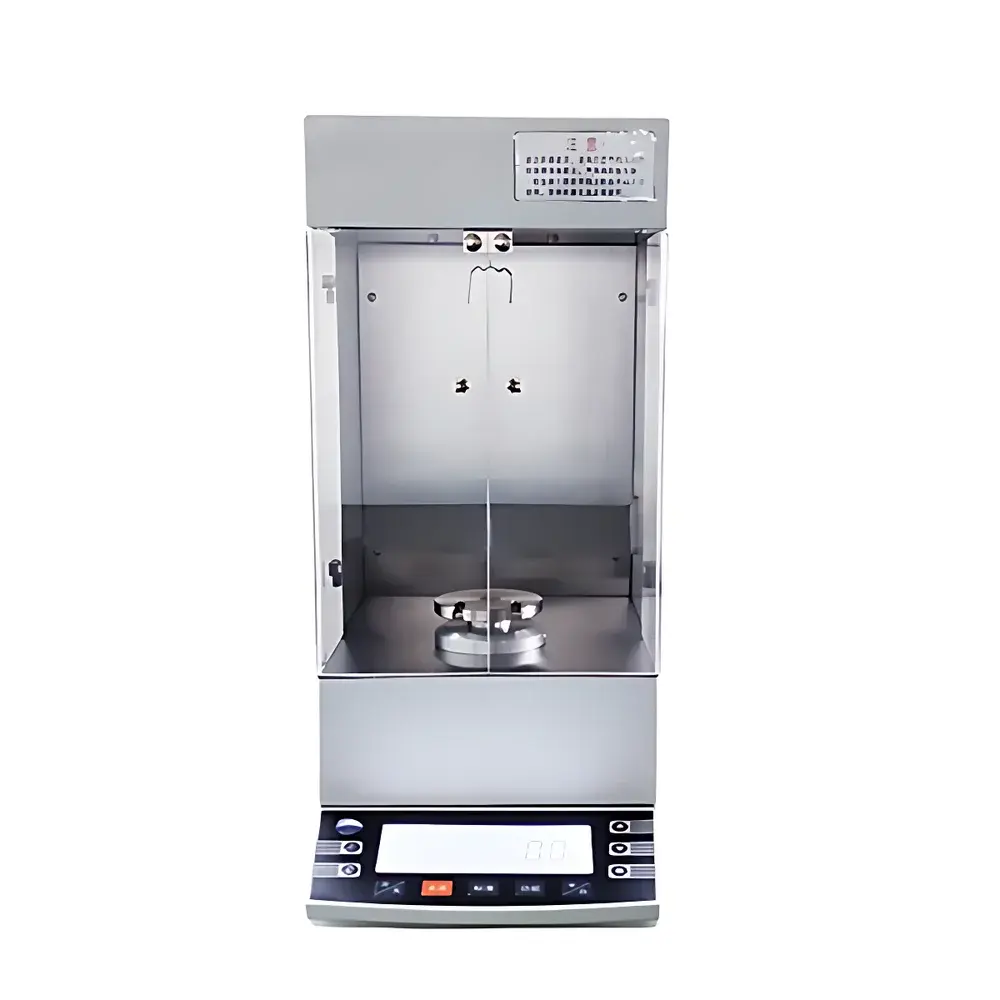
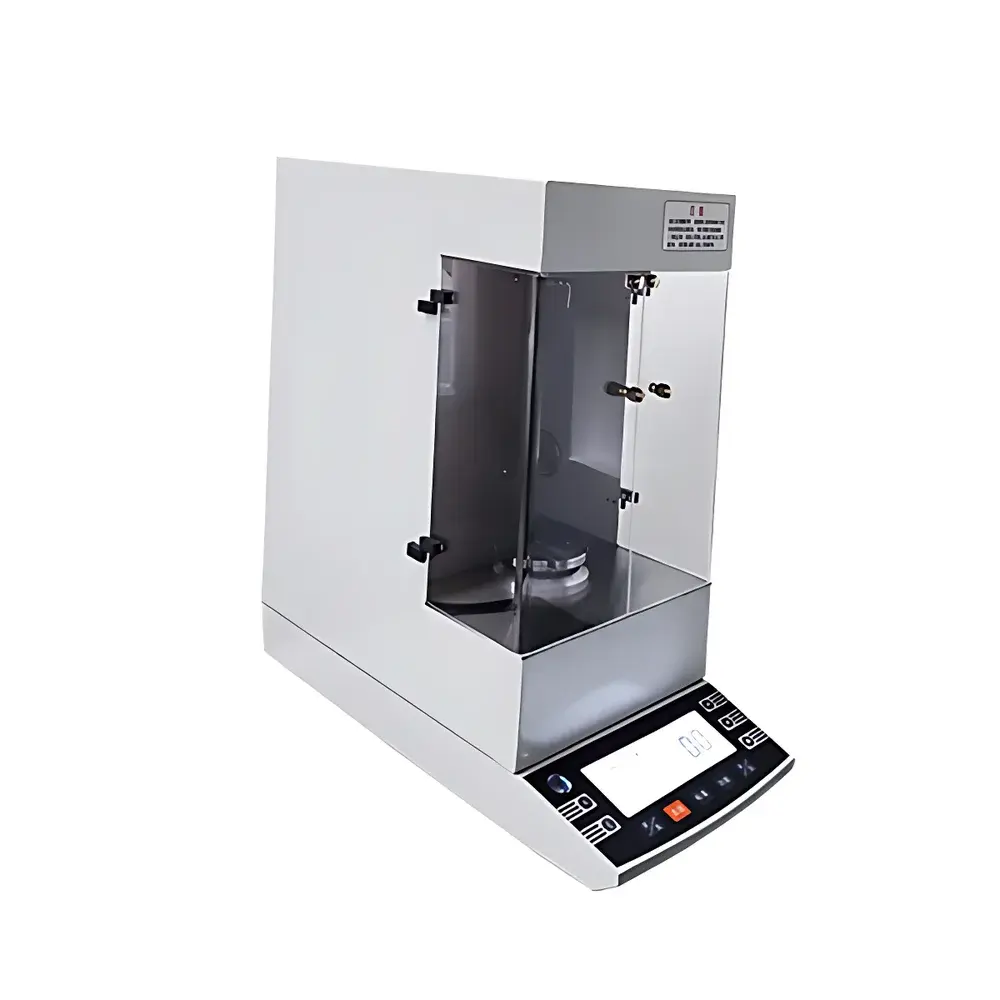
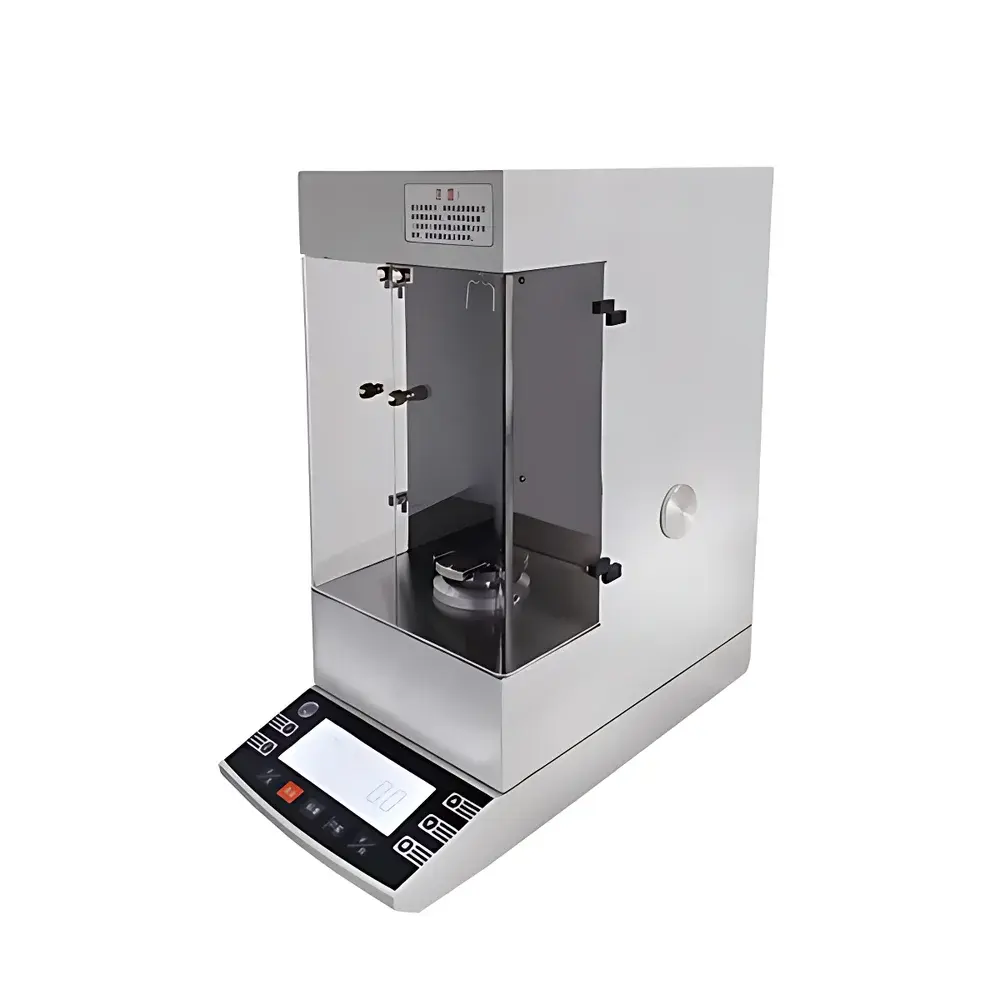
Hengping BZY-2N/2A Automatic Surface & Interfacial Tensiometer
| Brand | Hengping |
|---|---|
| Origin | Shanghai, China |
| Model | BZY-2N/2A |
| Measurement Range | 0–200 mN/m |
| Resolution | 0.01 mN/m |
| Accuracy | ±0.02 mN/m |
| Temperature Display Range | 0–200 °C |
| Temperature Display Accuracy | ±0.02 °C |
| Measurement Method | Wilhelmy Plate Method (optional Du Noüy Ring Method) |
Overview
The Hengping BZY-2N/2A Automatic Surface & Interfacial Tensiometer is a precision laboratory instrument engineered for the quantitative determination of surface tension (liquid–air) and interfacial tension (liquid–liquid) using the Wilhelmy plate principle—based on direct force measurement of the wetting force exerted on a vertically immersed platinum plate. This method complies with ISO 1409:1995, ASTM D971, GB/T 6541–1986, GB/T 22237–2008, and other internationally recognized standards governing tensiometric analysis. The instrument employs a closed-loop electromagnetic force transduction system coupled with a single-chip microprocessor controller, enabling fully automated acquisition of equilibrium surface tension values without manual intervention. Its design prioritizes metrological integrity: high linearity (R² > 0.9999 over full range), repeatability < ±0.02 mN/m, and long-term stability under ambient or controlled thermal conditions. It is intended for routine QC/QA testing and R&D applications where traceable, operator-independent surface energetics data are required.
Key Features
- Fully automated measurement cycle—including automatic immersion, dwell time control, dynamic curve acquisition, and equilibrium value extraction—minimizing operator-induced variability.
- High-resolution electromagnetic force sensor with 0.01 mN/m resolution and certified accuracy of ±0.02 mN/m across 0–200 mN/m range.
- Dual-method capability: configurable for Wilhelmy plate (standard) or Du Noüy ring (optional) operation via interchangeable probe modules and software-selectable calibration protocols.
- Integrated temperature monitoring with PT100-based sensor (BZY-1/23 optional), supporting real-time display from 0 to 200 °C at ±0.02 °C accuracy; compatible with external thermostatic baths (-5 to 110 °C) via silicone tubing interface.
- Zero-point calibration at any value between 0 and 400 mN—enabling rapid offset correction without mechanical adjustment.
- One-button calibration using supplied certified stainless-steel weight (traceable to national metrology institute), eliminating dependency on third-party recalibration for routine verification.
- Self-contained operation: no external PC required for basic measurements; optional real-time curve visualization and data export via included USB-connected software compliant with Windows OS.
Sample Compatibility & Compliance
The BZY-2N/2A accommodates aqueous surfactant solutions, hydrocarbon oils, polymer melts, emulsions, microemulsions, and immiscible liquid pairs (e.g., crude oil/water, silicone oil/aqueous phase). It supports dynamic surface tension profiling for time-dependent systems—such as surfactant adsorption kinetics—and delivers reproducible interfacial tension values even for high-viscosity or low-interfacial-energy systems. All hardware and firmware comply with GB/T 6541–1986 (ring method), GB/T 22237–2008 (plate method), ISO 1409:1995, and JB/T 9388–2002. Optional accessories—including high-precision platinum plates (99.95% Pt, 0.2 mm thickness), calibrated rings (60 mm circumference, 0.185 mm wire diameter), and thermostatic sample holders—enable conformance with GLP documentation requirements and audit-ready test records.
Software & Data Management
The included Windows-based software provides synchronized force–time curve visualization, automatic equilibrium detection algorithms, and user-defined dwell time parameters. Raw data are stored in CSV format with timestamps, temperature metadata, and instrument ID. Audit trail functionality logs all calibration events, zeroing actions, and method changes—supporting compliance with FDA 21 CFR Part 11 when deployed in regulated environments (e.g., pharmaceutical excipient qualification, cosmetic formulation release testing). Export options include PDF reports with embedded calibration certificates and statistical summaries (mean, SD, CV%) for batch validation.
Applications
- Petroleum industry: oil–water interfacial tension for enhanced oil recovery (EOR) surfactant screening and transformer oil aging assessment per IEC 60429.
- Coatings & inks: wetting behavior evaluation on substrates, dispersion stability of pigment suspensions, and rheo-tensiometric characterization of latex emulsions.
- Pharmaceuticals & agrochemicals: CMC determination, formulation optimization of micellar solubilization systems, and wetting efficiency quantification for solid dosage forms.
- Electroplating: bath surfactant concentration control to prevent pitting and ensure uniform current distribution.
- Food science: interfacial activity of natural emulsifiers (e.g., lecithin, polysorbates) and packaging film surface energy mapping.
- Materials research: surface energy analysis of functionalized polymers, biomaterials, and nanocomposite dispersions.
FAQ
What measurement principles does the BZY-2N/2A support?
It primarily implements the Wilhelmy plate method per ISO 1409 and GB/T 22237; the Du Noüy ring method is available as an optional configuration.
Is temperature control integrated or external?
The base unit includes a built-in temperature sensor (PT100); precise thermal regulation requires connection to an external thermostatic bath (compatible with -5 to 110 °C models).
Can the instrument meet GLP or GMP documentation requirements?
Yes—when used with the optional software package, it generates timestamped, user-logged, and version-controlled test records suitable for regulatory audits.
What is the recommended maintenance interval for the platinum plate?
Platinum plates should be cleaned ultrasonically in ethanol or acetone after each use; annual recertification of geometric dimensions and surface purity is advised for critical applications.
Does the system support multi-point calibration across the measurement range?
Yes—the software allows up to five-point calibration using traceable reference standards (e.g., pure water at 20 °C = 72.75 mN/m, 25 °C = 71.97 mN/m).



