
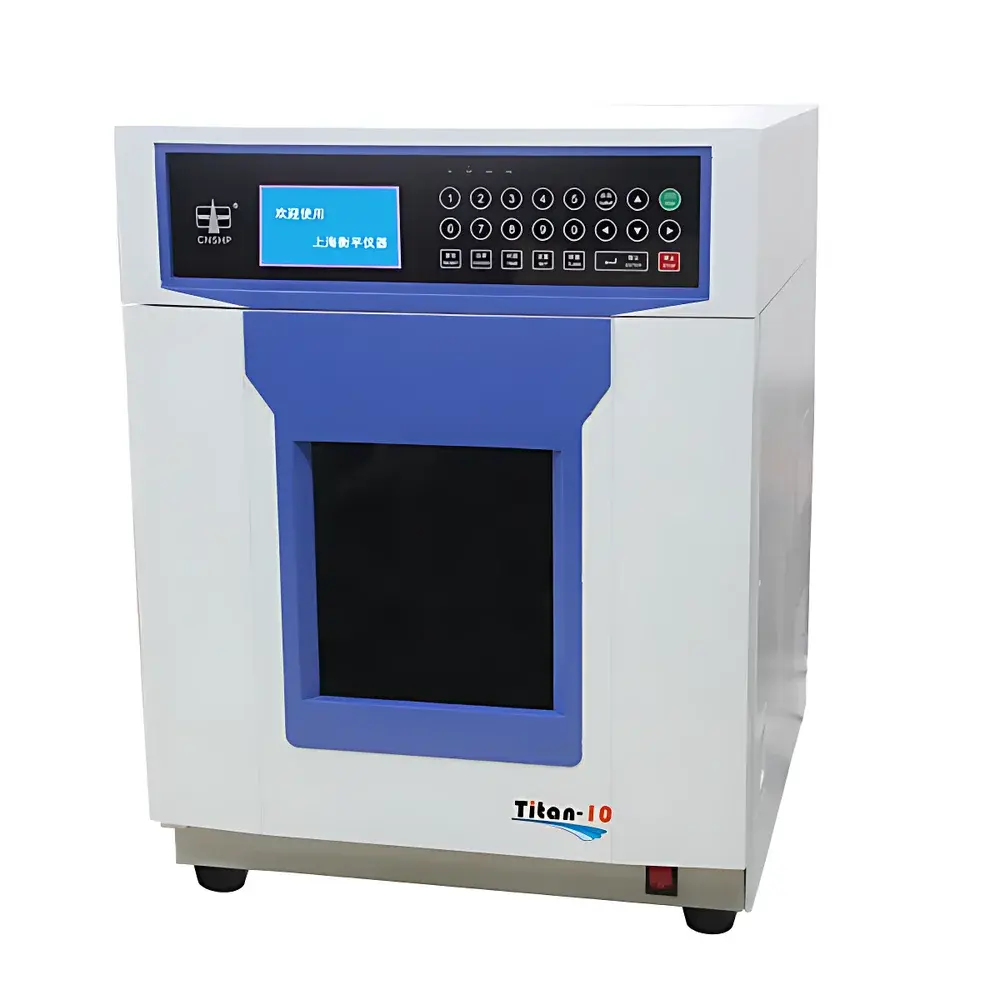
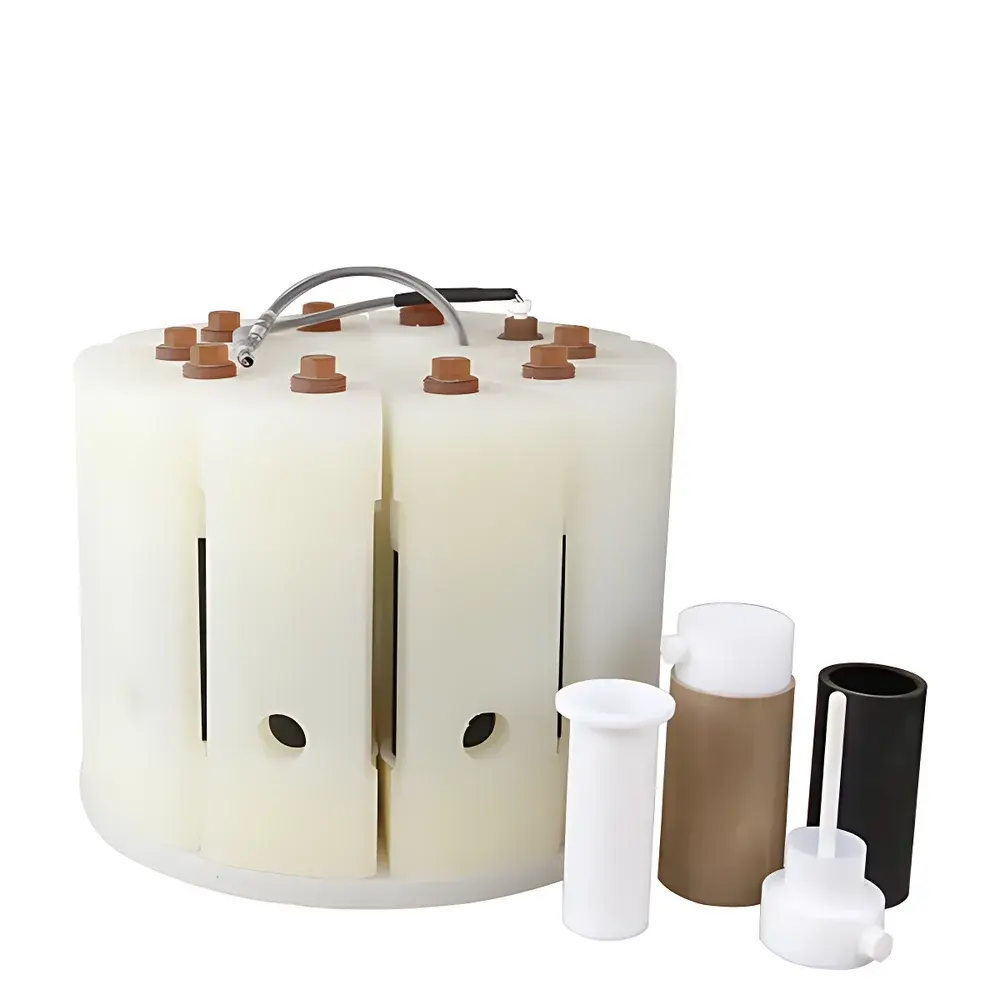
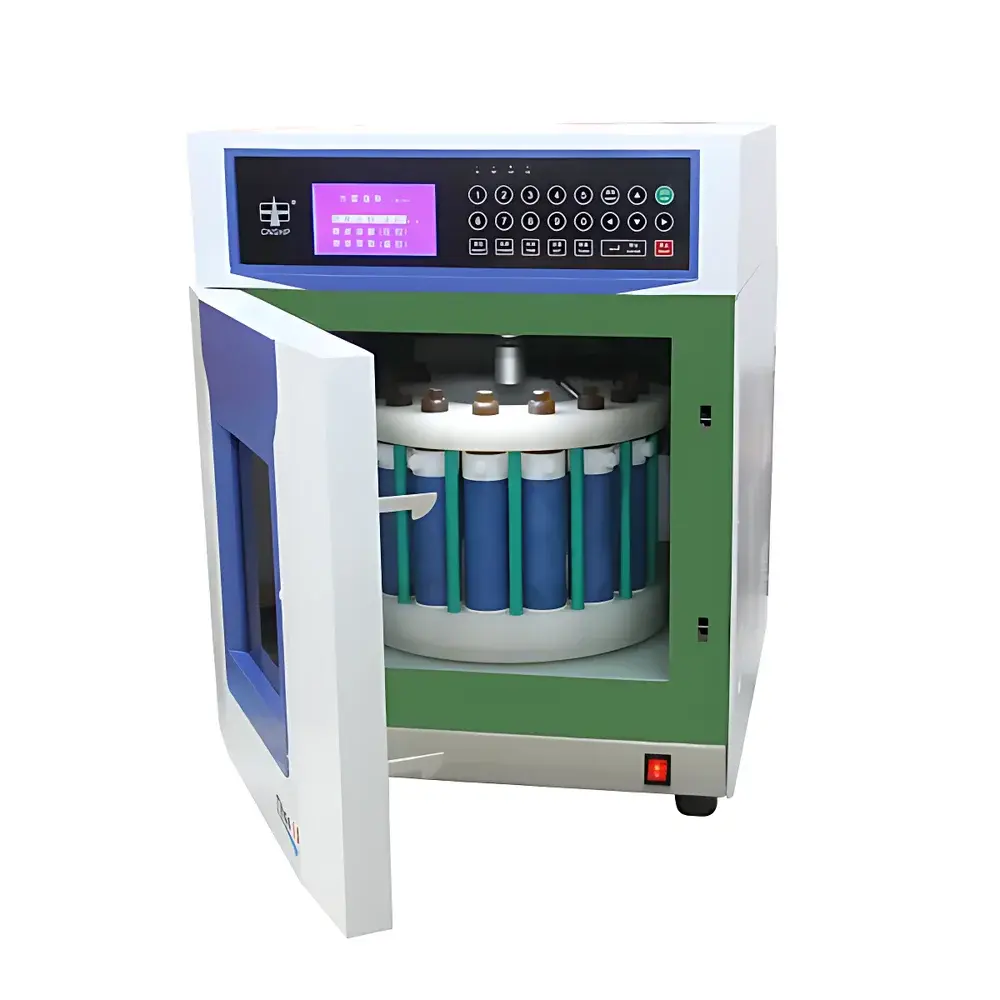
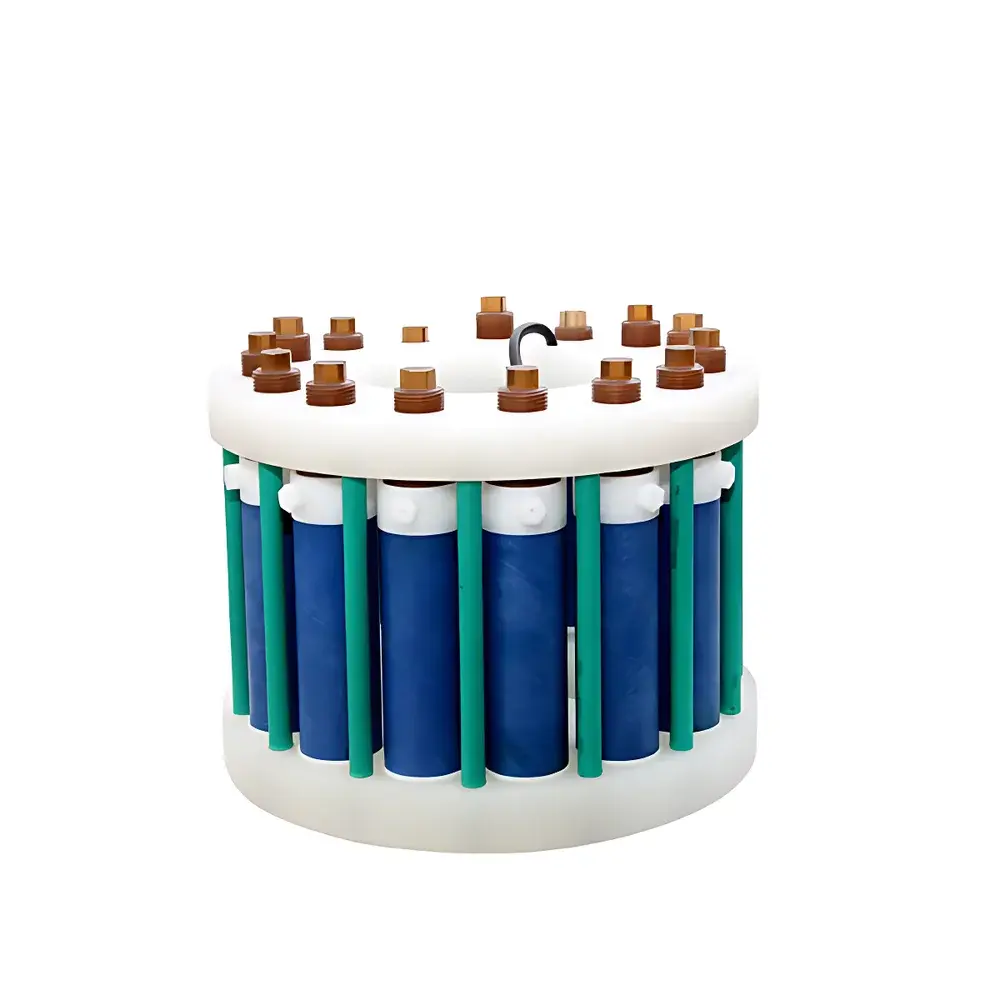
Hengping Titan-10 Closed-Vessel Microwave Digestion and Extraction Platform
| [Brand | Hengping |
|---|---|
| Origin | Shanghai, China |
| Model | Titan-10 |
| Sample Capacity | 10 vessels |
| Microwave Source | Dual Magnetron |
| Max Temperature | 300 °C |
| Max Pressure | 15 MPa |
| Cavity Construction | Industrial-grade 316L stainless steel with 8-layer PFA coating |
| Safety Architecture | Triple-redundant pressure monitoring, bow-spring pressure relief module + burst disc, auto-ejecting safety door, 3D directional explosion containment, aerospace-grade composite outer vessels rated to 80 MPa (12,500 psi) |
| Control System | PID-based closed-loop power regulation with Pt100 temperature sensor (−40–500 °C, ±0.1 °C accuracy) and piezoelectric pressure sensor (0–20 MPa, ±0.01 MPa control precision) |
| Dimensions | 480 × 550 × 630 mm (W × D × H) |
| Net Weight | 57 kg |
| Operating Environment | 15–80% RH, RT–50 °C] |
Overview
The Hengping Titan-10 Closed-Vessel Microwave Digestion and Extraction Platform is an industrial-grade, high-throughput sample preparation system engineered for rigorous trace-element analysis, environmental monitoring, food safety testing, and geochemical research. It operates on the principle of controlled microwave dielectric heating within sealed quartz or fluoropolymer (TFM) reaction vessels, enabling rapid, reproducible decomposition of organic matrices and extraction of analytes under precisely regulated temperature and pressure conditions. Unlike open-vessel or single-magnetron systems, the Titan-10 employs dual magnetrons with frequency-agile non-pulsed power delivery—ensuring uniform energy distribution across all 10 positions and minimizing thermal gradients. Its 316L stainless steel cavity, coated with eight layers of PFA (perfluoroalkoxy alkane), provides exceptional resistance to aggressive acid mixtures (e.g., HNO₃/HF/HClO₄), while integrated top-exhaust cooling reduces acid vapor residence time and extends cavity service life. The platform conforms to core principles of ISO/IEC 17025 method validation and supports GLP-compliant workflows through full audit-trail-capable software logging.
Key Features
- Dual-Magnetron Power Architecture: Delivers up to 1800 W total microwave output with real-time adaptive frequency modulation, eliminating hot spots and ensuring consistent digestion kinetics across all 10 vessels.
- Industrial-Grade Safety Framework: Incorporates three independent physical safeguards: (1) auto-ejecting buffer-shift door that vents excess pressure laterally upon overpressure event; (2) bow-spring pressure relief module coupled with calibrated rupture disc for quantitative pressure release at 15 MPa; and (3) 3D directional explosion containment using multi-layer filament-wound aerospace composite outer vessels (rated to 80 MPa).
- Precision Closed-Loop Control: Integrates Pt100 resistance thermometry (±0.1 °C accuracy, 0–300 °C operational range) and contactless piezoelectric pressure sensing (±0.01 MPa control precision, 0–20 MPa range), both feeding into a PID-regulated microprocessor controller compliant with IEC 61508 functional safety guidelines.
- Real-Time Operational Monitoring: Front-panel LED status array provides continuous visual feedback on door interlock integrity, magnetron emission status, rotor rotation continuity, and keypress registration—each with immediate fault-triggered shutdown.
- Corrosion-Resistant Cavity Design: 316L stainless steel chamber with eight-fold PFA coating resists pitting and etching from halogenated acids; top-mounted forced-air exhaust accelerates post-digestion cooling and minimizes acid condensation.
Sample Compatibility & Compliance
The Titan-10 accommodates standard TFM inner vessels (100 mL capacity) housed in reinforced aerospace composite outer vessels—compatible with EPA Methods 3051A, 3052, and ASTM D5511 for solid waste digestion, as well as ISO 11466 for soil metal extraction. All vessel configurations meet EN 61000-6-3 (EMC immunity) and EN 61000-6-4 (EMC emissions) standards. Pressure and temperature data are timestamped and stored with user ID, method name, and calibration certificate references—supporting 21 CFR Part 11 compliance when paired with validated software modules. The system’s mechanical design satisfies CE marking requirements under the Machinery Directive 2006/42/EC and Low Voltage Directive 2014/35/EU.
Software & Data Management
Control firmware includes embedded method storage (up to 100 protocols), automatic ramp-hold-cool profiling, and real-time graphing of temperature/pressure/power trajectories. Raw sensor data (sampled at 100 Hz) is exported in CSV or XML format with metadata tags aligned to ASTM E2500-22 for analytical instrument qualification. Audit trails record operator logins, parameter modifications, emergency stops, and calibration events—retained for ≥36 months per internal retention policy. Optional network integration enables remote monitoring via HTTPS-secured web interface compatible with LIMS middleware (e.g., LabVantage, Thermo Fisher SampleManager).
Applications
- Environmental laboratories performing heavy metal analysis (As, Cd, Pb, Hg) in soils, sediments, and sludges per EPA 6010D and 6020B.
- Food testing facilities conducting multielement screening (Ca, Fe, Zn, Se) in dairy, cereals, and infant formula under AOAC 999.10 and ISO 17294-2.
- Geochemical labs preparing silicate rock powders for ICP-MS quantification using HF-containing digestions.
- Pharmaceutical QC labs executing residual catalyst analysis (Pd, Pt, Rh) in active pharmaceutical ingredients (APIs) per USP .
- Materials science research groups extracting nanomaterials (e.g., TiO₂, CeO₂ NPs) from polymer composites for size-distribution studies.
FAQ
What safety certifications does the Titan-10 hold?
It complies with CE marking directives (2006/42/EC Machinery Directive and 2014/35/EU Low Voltage Directive), EN 61000-6-3/-6-4 EMC standards, and meets mechanical integrity requirements per ISO 14119 for interlocked access guards.
Can the Titan-10 be validated for GMP environments?
Yes—when operated with documented IQ/OQ/PQ protocols and paired with version-controlled software enabling electronic signatures and audit trail review, it supports FDA 21 CFR Part 11 compliance for regulated pharmaceutical and biotech applications.
Is rotor interchangeability supported across Titan series models?
No. The Titan-10 uses a dedicated 10-position rotor with integral alloy frame and precision-machined bearing assembly. While vessel geometry (TFM 100 mL) is standardized, rotor mounting interfaces and drive coupling are model-specific to ensure torque transmission integrity and rotational balance.
How is cross-contamination prevented during pressure sensing?
The piezoelectric pressure transducer is mounted externally on the vessel cap assembly, with no fluidic or electrical pathway into the reaction zone—eliminating risk of sample carryover or sensor corrosion.
What maintenance intervals are recommended for magnetron performance?
Hengping specifies magnetron replacement after 5,000 hours of cumulative operation or every 24 months under typical laboratory usage (8 h/day, 5 d/week), whichever occurs first. Routine cavity cleaning with dilute NaOH solution is advised after each HF-based digestion batch.



