
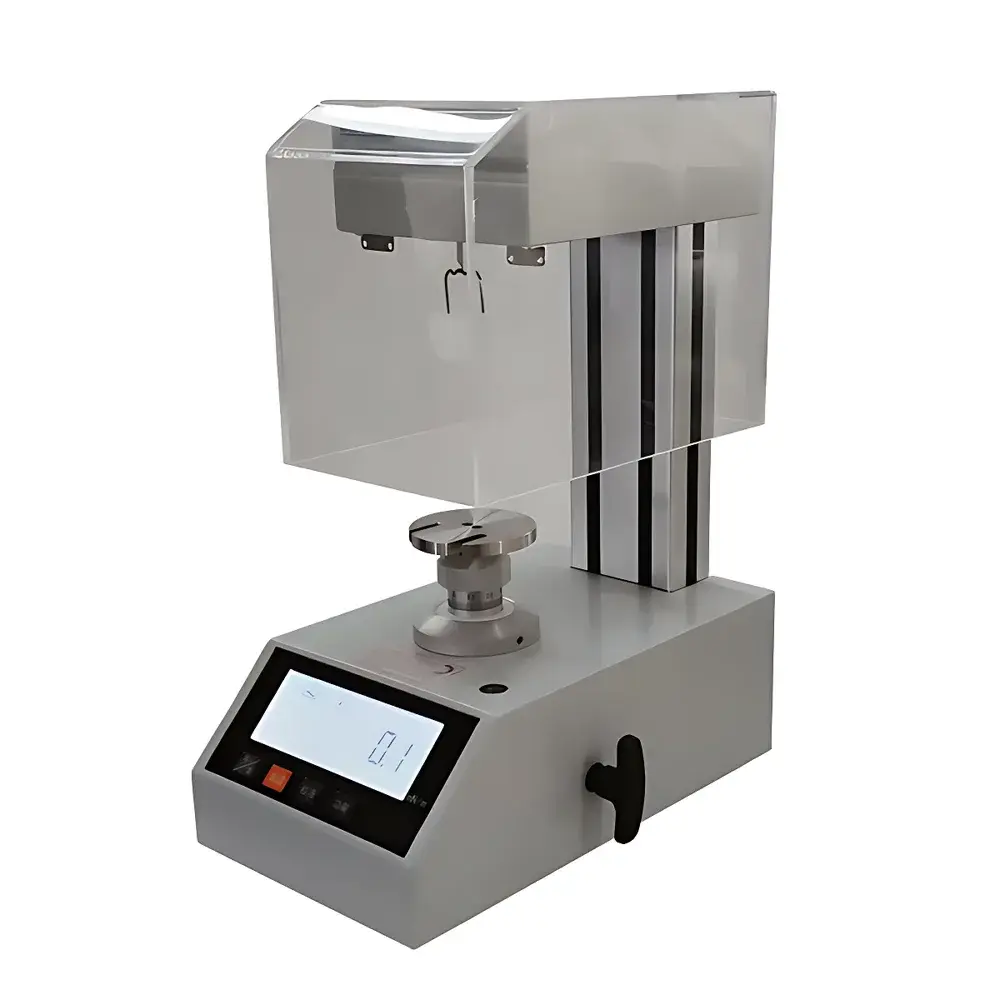
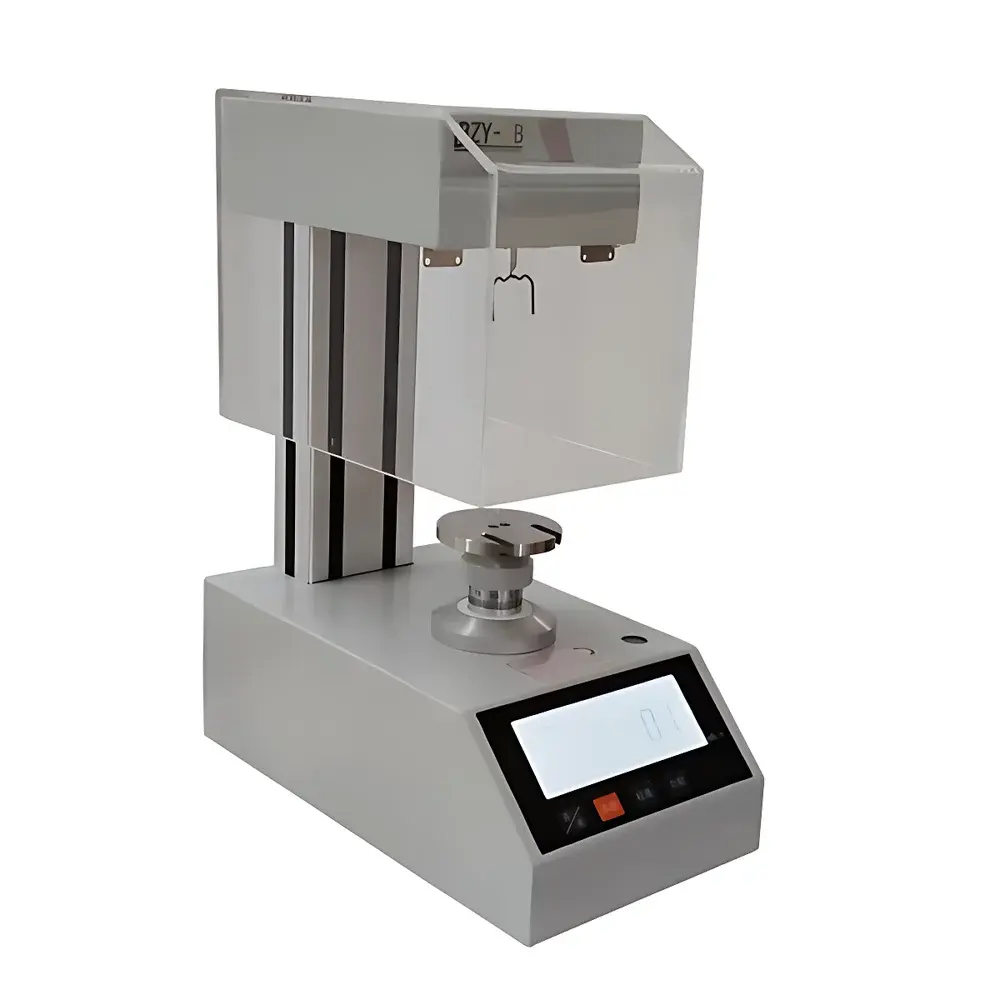
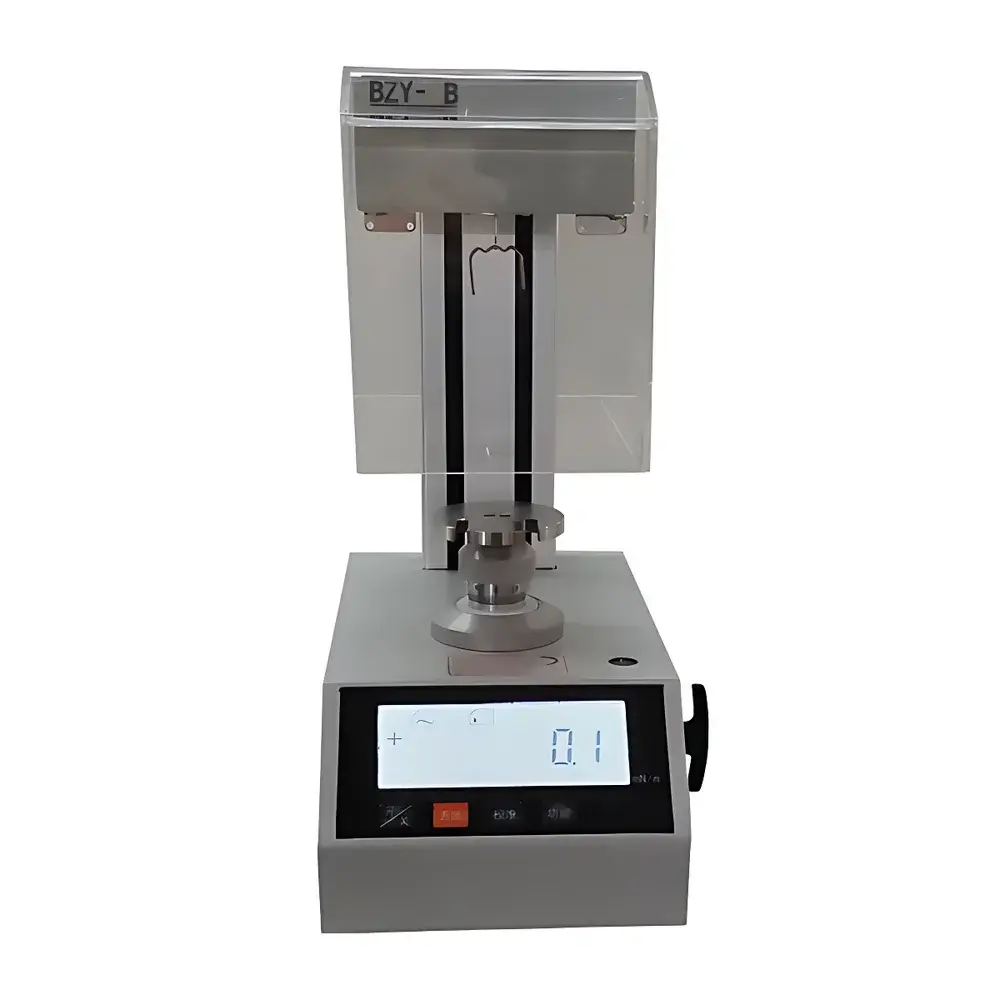
Hengping BZY-3B/4B Manual-Lift Surface and Interfacial Tensiometer
| Brand | Hengping |
|---|---|
| Origin | Shanghai, China |
| Model | BZY-3B / BZY-4B |
| Measurement Range | 0–400 mN/m |
| Resolution | 0.1 mN/m |
| Accuracy | ±0.1 mN/m |
| Temperature Display Range | 0–400 °C |
| Temperature Display Accuracy | ±0.1 °C |
| Measurement Methods | Du Noüy Ring Method & Wilhelmy Plate Method |
| Compliance Standards | GB/T 6541-1986, GB/T 22237-2008, ISO 1409:1995, JB/T 9388-2002, SH/T 1156-1999, GB 11278-1989, GB/T 18396-2001 |
Overview
The Hengping BZY-3B/4B Manual-Lift Surface and Interfacial Tensiometer is a precision instrument engineered for reliable measurement of liquid surface tension and liquid–liquid interfacial tension using standardized physical methods—namely the Du Noüy ring method and the Wilhelmy plate method. Based on the principle of force balance at the liquid–solid interface, the instrument quantifies the maximum pull force exerted on a calibrated platinum ring or plate during vertical detachment from the liquid surface. This force is directly converted into surface or interfacial tension values (in mN/m) via geometric correction factors and real-time calibration routines. While the lifting mechanism is manually operated—featuring coarse and fine adjustment stages—the measurement sequence, data acquisition, equilibrium detection, and digital display remain fully automated. Designed to meet the metrological requirements of routine QC laboratories and academic research environments, the BZY-3B/4B delivers performance comparable to entry-level automated tensiometers at a significantly optimized cost structure—without compromising repeatability, linearity, or long-term stability.
Key Features
- High-sensitivity electromagnetic force transducer with <0.1 mN/m resolution and ±0.1 mN/m accuracy across the full 0–400 mN/m range
- Manual dual-stage lift system: coarse positioning for rapid sample alignment and micrometer-style fine adjustment for precise meniscus engagement
- Auto-equilibrium detection algorithm identifies stable surface tension values without user intervention
- One-touch zeroing and calibration functions—calibration validated using traceable stainless-steel standard weights supplied with the instrument
- Integrated LCD display showing real-time tension value, temperature reading (when equipped with PT100 probe), and status indicators
- Dual-method compatibility: interchangeable platinum ring (60 mm circumference, 9.55 mm radius, 0.185 mm wire diameter) and platinum plate modules
- Optional real-time curve acquisition software enables time-resolved monitoring of dynamic surface tension—critical for surfactant adsorption kinetics, emulsion formation, or aging studies
Sample Compatibility & Compliance
The BZY-3B/4B supports a broad spectrum of Newtonian and non-Newtonian liquids—including aqueous surfactant solutions, hydrocarbon oils, polymer melts, biological fluids, and ionic liquid systems—provided they are chemically compatible with platinum and borosilicate glass components. For temperature-sensitive measurements, optional accessories include the BZY-1/22 ambient-to-60 °C thermostatic cell (with silicone tubing connection to external baths) and the extended-range BZY-1/22 low/high-temperature cell (–5 °C to 110 °C). When paired with the BZY-1/23 PT100 immersion sensor (0–99 °C, ±0.1 °C), the system meets ASTM D971 and ISO 6295 prerequisites for temperature-controlled interfacial tension testing. All configurations comply with national and international standards including GB/T 6541-1986 (ring method for oil–water systems), GB/T 22237-2008 (general surface tension determination), ISO 1409:1995 (polymer dispersion surface characterization), and SH/T 1156-1999 (synthetic rubber surface tension).
Software & Data Management
The optional synchronized real-time curve software operates under Windows OS and acquires tension vs. time data at configurable sampling intervals (1–10 Hz). It supports overlay plotting of multiple runs, automatic CMC (critical micelle concentration) estimation via first-derivative analysis, and export to CSV or Excel formats for further statistical processing. Audit-trail functionality records operator ID, timestamp, calibration event, and environmental parameters—supporting GLP-compliant documentation workflows. While not FDA 21 CFR Part 11 certified out-of-the-box, the software architecture permits integration with laboratory information management systems (LIMS) via standardized COM/ActiveX interfaces. Raw data files retain metadata such as sensor serial number, calibration date, and method selection—ensuring full traceability in regulated environments.
Applications
This tensiometer serves as a foundational tool in formulation science and process quality control across diverse industrial sectors. In petroleum refining, it monitors oil–water interfacial tension to assess demulsifier efficiency and transformer oil degradation. In coatings and ink development, it evaluates pigment wetting dynamics and binder–substrate adhesion potential. Pharmaceutical R&D uses it to optimize drug delivery vehicle stability (e.g., liposomal suspensions, microemulsions), while agrochemical labs rely on it to quantify surfactant efficacy in pesticide dispersion and foliar adhesion. Additional use cases span electroplating bath optimization (wetting angle prediction), textile auxiliaries screening (detergency and leveling behavior), food emulsion design (cream stability index), and biomaterial surface functionalization (protein adsorption kinetics on hydrogels). Academic users apply it to fundamental studies of Langmuir monolayers, Gibbs adsorption isotherms, and polymer–surfactant interactions.
FAQ
What measurement methods does the BZY-3B/4B support?
It supports both the Du Noüy ring method and the Wilhelmy plate method, with interchangeable platinum accessories included as standard.
Is temperature control integrated into the base unit?
No—temperature regulation requires optional accessories: the BZY-1/22 thermostatic cell and/or BZY-1/23 PT100 probe, connected to an external circulating bath.
Can the instrument measure interfacial tension between two immiscible liquids?
Yes—provided the lower-density phase is placed above the denser phase in the sample vessel, enabling stable ring or plate immersion at the interface.
Does the system provide CMC determination capability?
Yes—via the optional real-time curve software, which performs automated inflection-point analysis on concentration–tension titration datasets.
Are calibration certificates traceable to national standards?
Third-party calibration certificates are available upon request, referencing CNAS-accredited laboratories and traceable to SI units through NIM (National Institute of Metrology, China).



