
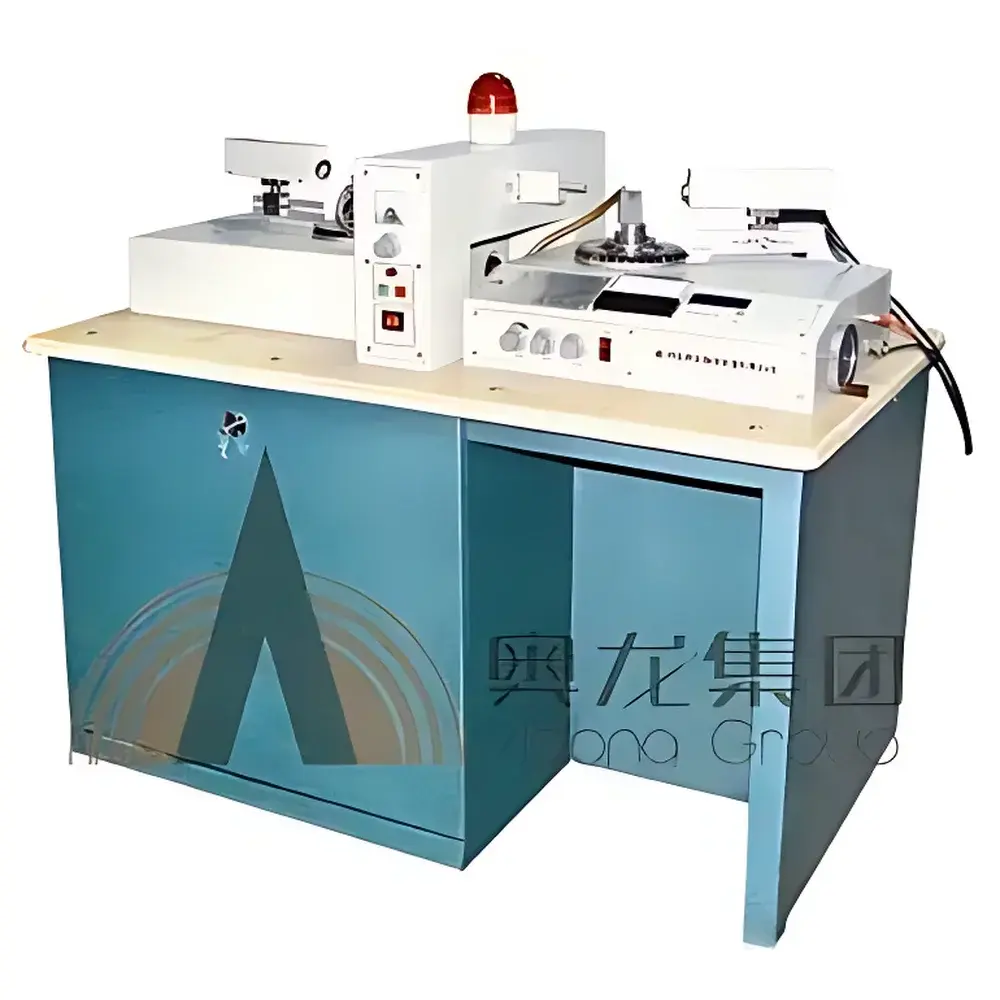
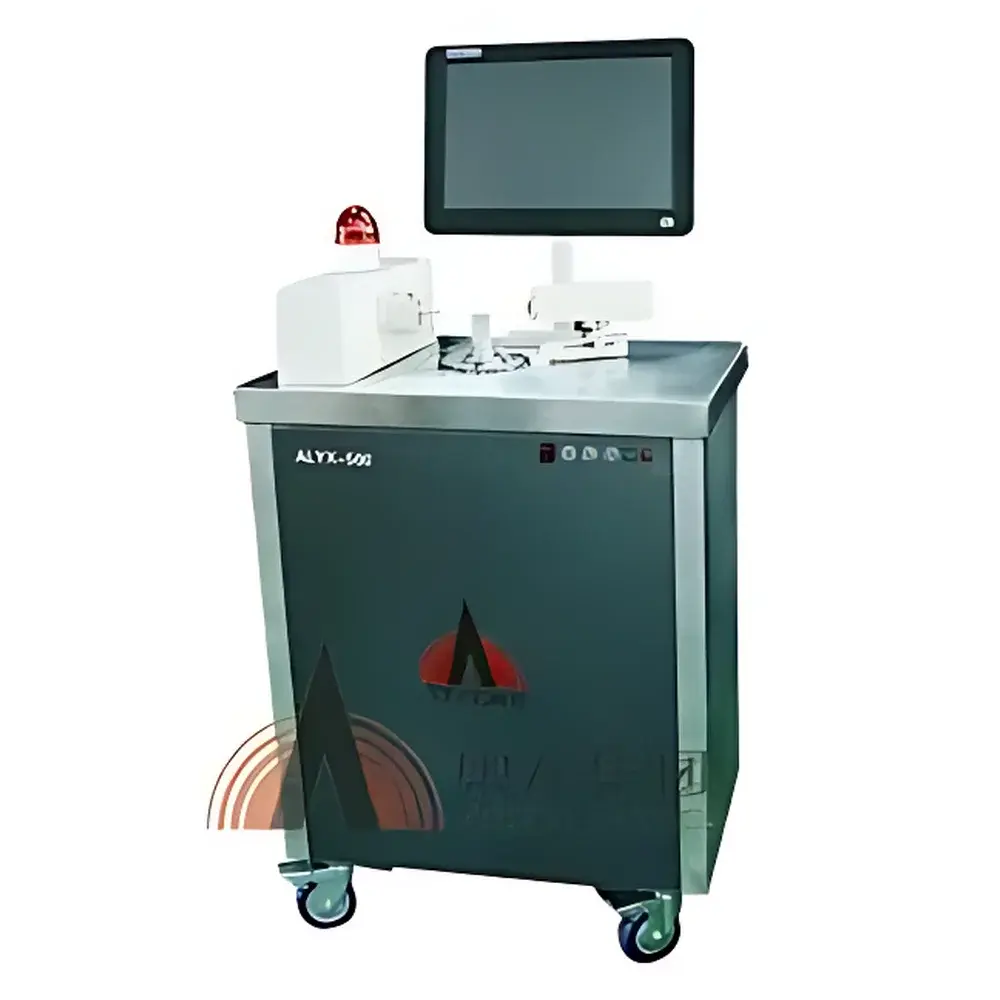
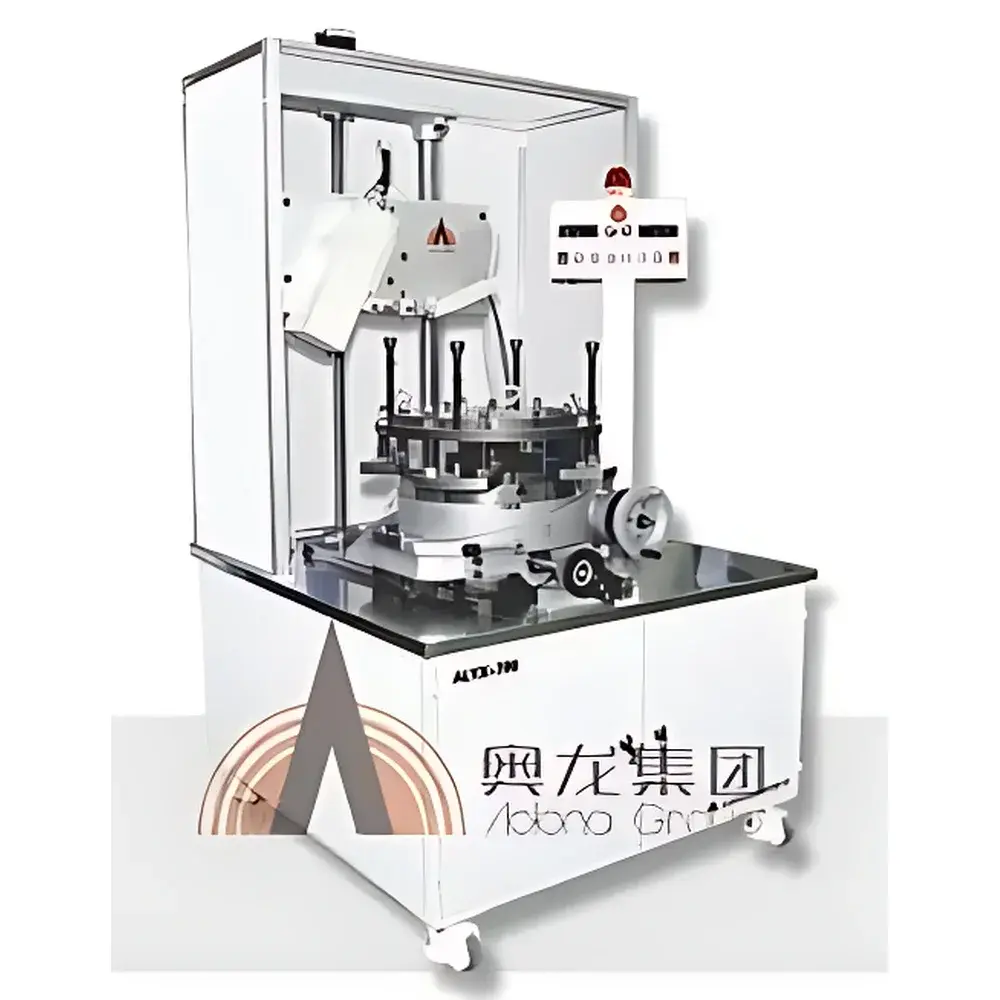
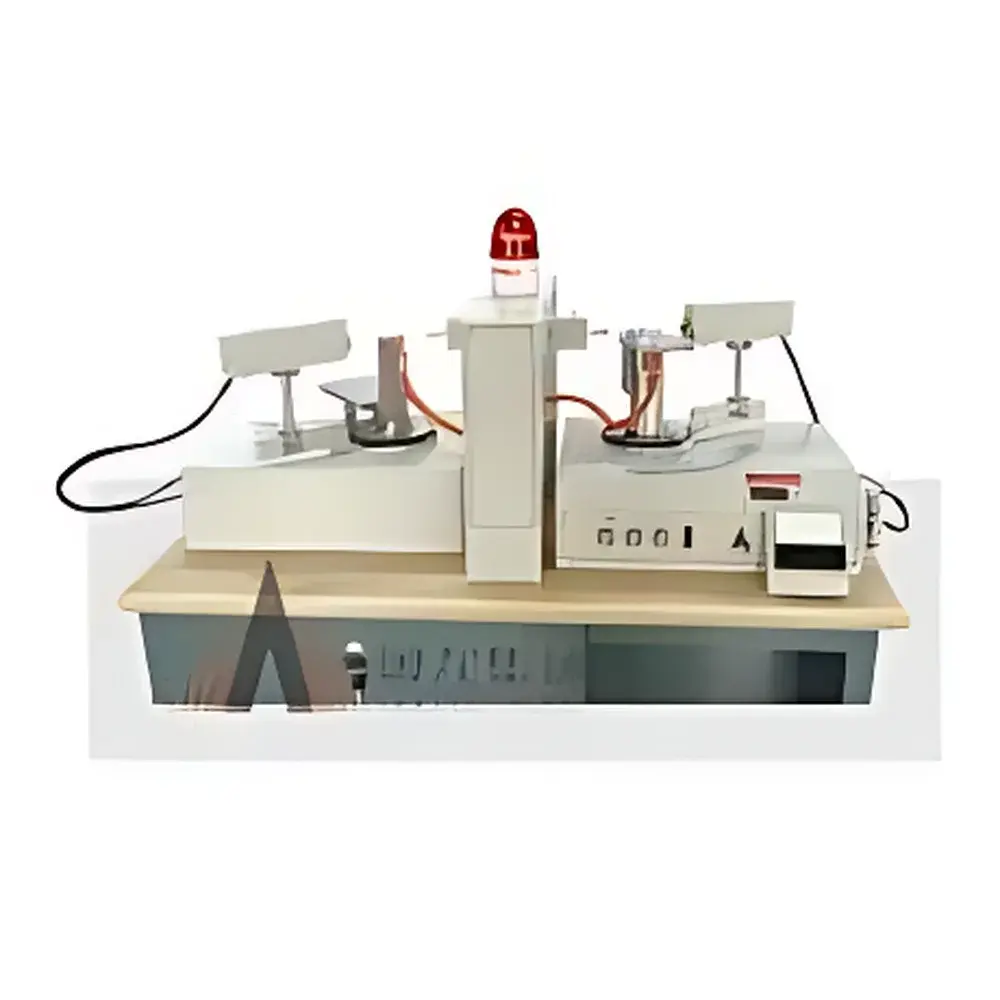
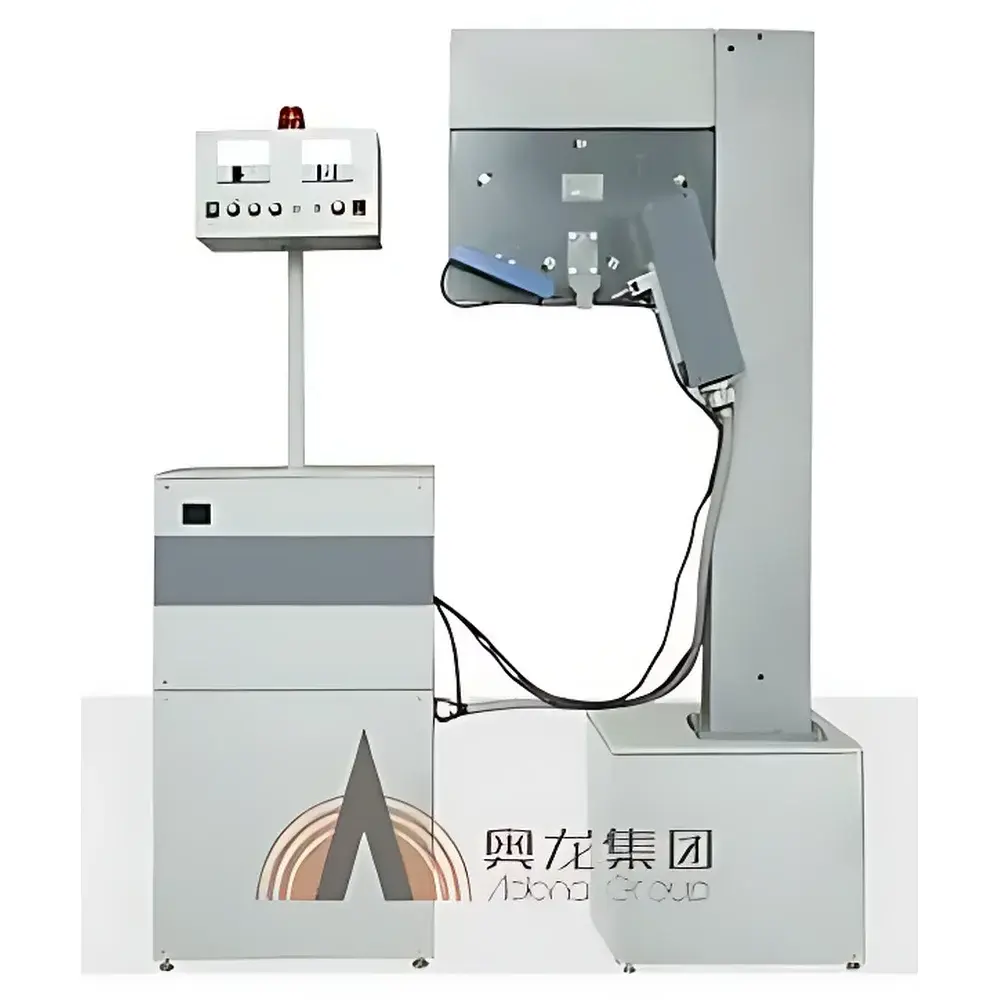
Along YX-2/YX-200/YX-2H8/YX-300/YX-2A-YX-2B X-ray Crystal Orientation Analyzer
| Brand | Along |
|---|---|
| Origin | Liaoning, China |
| Manufacturer Type | OEM Manufacturer |
| Model Series | YX-2, YX-200, YX-2H8, YX-300, YX-2A, YX-2B |
| X-ray Tube | Cu anode, air-cooled, 30 kV, 0–5 mA |
| Detector | Geiger-Müller counter |
| Angular Range | θ = −10° to +50°, 2θ = −10° to +100° |
| Angular Resolution | 10 arcseconds (digital display) |
| Accuracy | ±30″ (YX-2, YX-2H8, YX-2A left channel), ±10″ (YX-200, YX-300, YX-2A/YX-2B right channel), ±3″ or ±1″ (YX-300 & YX-2B right channel, min. readout) |
| Slit Options | 4′, 5′, 6′ |
| Time Constants | 0.1 s, 0.4 s, 3 s |
| Power Supply | 220 V AC, 50 Hz, 0.3 kW |
| Dimensions (L×W×H) | 1140–1150 mm × 650–665 mm × 1030–1100 mm |
| Weight | 150–170 kg |
Overview
The Along YX-series X-ray Crystal Orientation Analyzers are laboratory-grade Bragg diffraction instruments engineered for precise angular alignment and crystallographic orientation determination of single-crystal materials. Based on the fundamental principle of Bragg’s law (nλ = 2d sinθ), these analyzers utilize monochromatic Cu-Kα radiation (λ = 1.5418 Å) generated by a sealed-tube, air-cooled X-ray source to probe lattice plane orientations in crystalline samples. The system operates in either single-crystal (Laue or reflection geometry) or double-crystal (Darwin-type) configuration—enabling users to select between high-intensity, moderate-accuracy measurement (YX-2, YX-2H8, YX-2A left channel) or low-intensity, high-precision angular characterization (YX-200, YX-300, YX-2A/YX-2B right channel). Designed for routine QC in crystal growth facilities and R&D labs, the YX-platform supports rapid identification of crystallographic axes—including , , —in piezoelectric substrates (e.g., quartz, LiNbO₃), optical crystals (e.g., sapphire, CaF₂), and semiconductor wafers (e.g., Si, GaAs).
Key Features
- Modular angular measurement architecture: Dual-channel configurations (YX-2A/YX-2B) integrate independent single-reflection and pre-monochromator double-reflection goniometers—allowing simultaneous operation at ±30″ and ±10″/±3″/±1″ accuracy levels without hardware reconfiguration.
- Heavy-duty sample handling: YX-2H8 variant includes reinforced track-mounted stage and optional interchangeable sample holders (YA, YB, YD, YE) supporting cylindrical rods (2–8 inch diameter, up to 30 kg) and wafer-like specimens (2–8 inch diameter) via vacuum chuck with integrated pneumatic control.
- High-stability goniometric mechanics: Precision-ground brass angle encoders with digital readout (degrees, minutes, seconds) and manual fine-adjustment capability; mechanical repeatability maintained across full angular range (θ: −10° to +50°; 2θ: −10° to +100°).
- Optimized detection chain: Geiger-Müller tube detector with selectable time constants (0.1 s, 0.4 s, 3 s) ensures robust signal-to-noise ratio across varying diffracted intensities—from weak reflections in low-Z crystals to strong signals from highly ordered sapphire or silicon.
- Regulatory-ready design: All models comply with IEC 61000-6-3 (EMC emission limits) and IEC 61000-6-2 (immunity); radiation shielding meets national Class II X-ray equipment safety standards (GBZ 138–2002); electrical safety conforms to GB 4793.1–2007 (equivalent to IEC 61010-1).
Sample Compatibility & Compliance
The YX-series accommodates a broad spectrum of crystalline geometries: rod-shaped ingots (up to 350 mm length), sliced wafers (2–8 inch diameter), and irregularly shaped boules. Sample mounting is facilitated via vacuum chucks (YE, YD), V-groove cradles (YB), or flat-stage fixtures (YA), all compatible with standard crystallographic indexing procedures per ASTM F1739 (Standard Practice for Determining Crystallographic Orientation of Silicon Wafers) and ISO 14407 (Semiconductor materials — Specification of orientation of silicon wafers). Instrument calibration traceability follows NIST-recommended practices using certified Si (111) and quartz (0006) reference standards. For GLP/GMP environments, audit trails for angle settings, exposure duration, and slit selection can be manually logged; optional RS-232 interface enables integration with LIMS for metadata capture.
Software & Data Management
While the base YX-series operates via front-panel digital controls and analog signal processing, optional PC-based acquisition software (sold separately) provides peak search, rocking-curve fitting (Gaussian/Lorentzian convolution), and automatic orientation reporting in Miller index notation. Raw count-rate data is exportable as CSV for post-processing in MATLAB, Python (NumPy/SciPy), or OriginLab. The system supports manual parameter logging aligned with FDA 21 CFR Part 11 requirements when used in conjunction with validated electronic lab notebooks (ELN)—though native electronic signature or audit trail functionality is not embedded in the core hardware controller.
Applications
- Crystal growth facility QC: Verification of cut-angle deviation prior to slicing of quartz resonator blanks or sapphire LED substrates.
- Semiconductor manufacturing: Alignment verification of Si(100) and Si(111) wafers prior to epitaxial deposition or ion implantation.
- Optical component fabrication: Orientation metrology of nonlinear optical crystals (e.g., KDP, BBO) where phase-matching angles depend critically on crystallographic orientation.
- Academic crystallography: Teaching Bragg diffraction principles and lattice parameter estimation in undergraduate solid-state physics laboratories.
- Piezoelectric device R&D: Precise axis alignment in lithium tantalate (LiTaO₃) substrates for SAW filter fabrication.
FAQ
What crystallographic standards does the YX-series support for calibration and reporting?
The instrument is compatible with ASTM F1739, ISO 14407, and JIS C 2101 for silicon wafer orientation; reference standards include NIST SRM 640e (Si powder) and custom-cut quartz (0006) wafers.
Can the YX-2H8 accommodate non-circular samples such as rectangular optical crystals?
Yes—custom fixture adapters (available upon request) enable secure clamping of rectangular or trapezoidal crystals up to 200 mm × 200 mm, provided mass remains within 30 kg and center-of-gravity stays within the stage’s rotational envelope.
Is radiation shielding sufficient for unattended operation in shared lab spaces?
All models feature lead-lined housing and interlocked beam shutters meeting national Class II X-ray device requirements; however, continuous unattended operation requires local radiation safety officer (RSO) approval and periodic leakage testing per GBZ 138–2002.
Does the system support automated scan sequences or only manual point measurements?
Base configuration supports only manual angular positioning and single-point intensity reading; programmable scanning (θ/2θ step scans, rocking curves) requires optional motorized goniometer upgrade and dedicated acquisition software.
What maintenance is required for the Cu-target X-ray tube?
Tube lifetime exceeds 5,000 hours under typical usage (≤3 mA, ≤30 kV); annual inspection of cooling airflow, high-voltage cable integrity, and detector window cleanliness is recommended per manufacturer service guidelines.






