
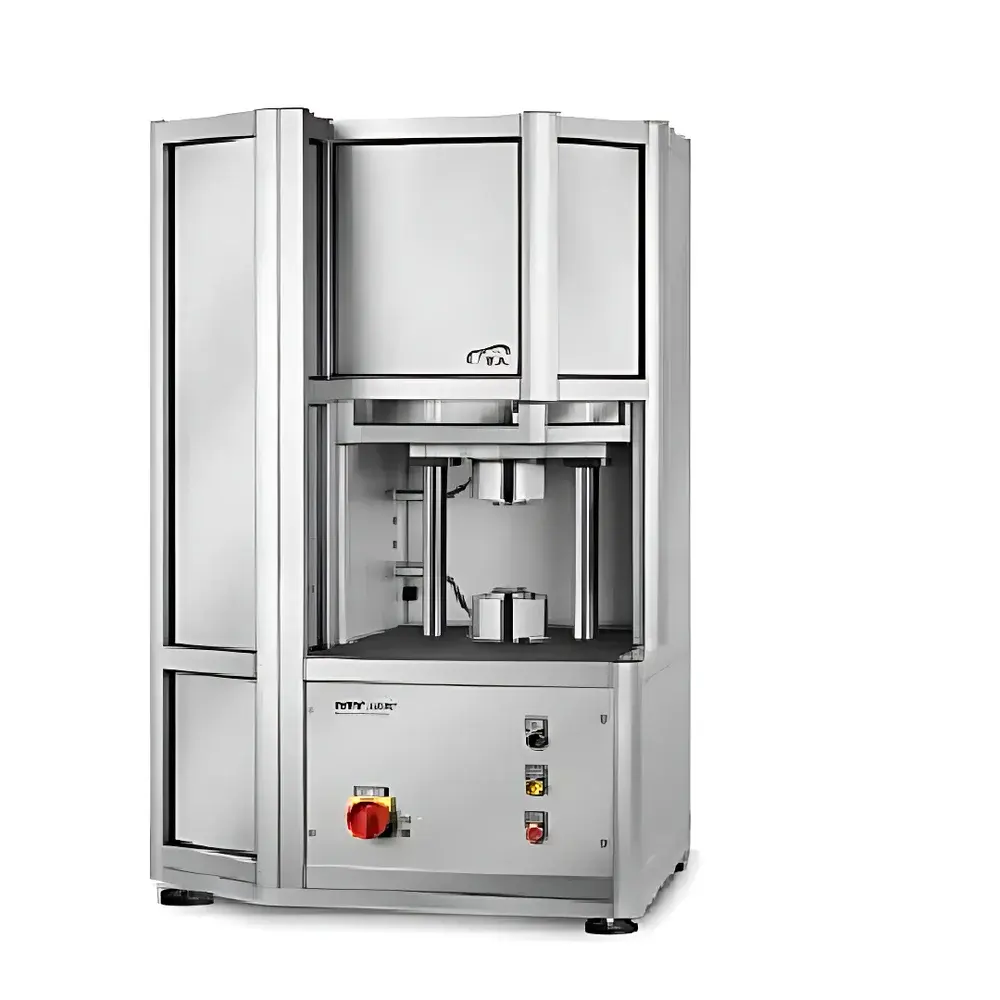
TA Instruments MV one Mooney Viscometer
| Brand | TA Instruments |
|---|---|
| Origin | Germany |
| Model | MV one |
| Motor Speed Range | 0.1–10 rpm (standard test at 2 rpm) |
| Rotor Options | 38.10 mm (large) and 30.48 mm (small) diameter |
| Compliance | ASTM D1646, ISO 289, DIN 53523 |
| Temperature Control | High-precision, PID-regulated, ±0.1 °C stability |
| Torque Measurement | Auto-calibrating, high-resolution digital torque sensor |
| Frame | Ultra-rigid monolithic steel construction |
| Drive System | Direct-drive brushless motor with <0.01 rpm speed resolution |
| Software | Scarabaeus v5.x (multi-language, GLP-compliant audit trail, FDA 21 CFR Part 11 ready) |
Overview
The TA Instruments MV one Mooney Viscometer is a precision-engineered instrument designed specifically for the rubber and elastomer processing industry. It operates on the fundamental principle of Mooney viscosity measurement—quantifying the resistance of uncured rubber compounds to shear deformation under standardized thermal and mechanical conditions. The system applies a defined rotational torque to a calibrated rotor embedded in a heated cavity containing the test sample, while maintaining strict control over temperature (typically 100 °C or 110 °C per ASTM D1646), rotor geometry, and rotational speed (2 rpm standard). The resulting torque is converted into Mooney units (MU), providing a critical processability index used globally for compound consistency, batch-to-batch comparison, and quality assurance in tire, hose, belt, and seal manufacturing. Unlike legacy instruments, the MV one integrates modern metrology architecture—including a low-inertia rotor, ultra-stiff mechanical frame, and real-time digital torque sensing—to eliminate compliance-related artifacts and ensure traceable, repeatable data across laboratories.
Key Features
- Ultra-rigid monolithic steel frame engineered to eliminate mechanical flexure during torque measurement—critical for eliminating instrument-induced error in low-torque regimes.
- Direct-drive brushless motor with <0.01 rpm speed resolution and programmable ramp profiles; supports both standard 2 rpm testing and extended-rate protocols (0.1–10 rpm) via optional adjustable motor module.
- Low-mass rotors (30.48 mm and 38.10 mm diameters) compliant with ASTM D1646, ISO 289, and DIN 53523; interchangeable without recalibration.
- High-precision temperature control system with PID regulation and ±0.1 °C stability over full operating range (typically 30–200 °C), verified by integrated platinum RTD sensors and dual-zone heating.
- Automatic internal torque calibration routine executed prior to each test sequence—no external weights or manual intervention required.
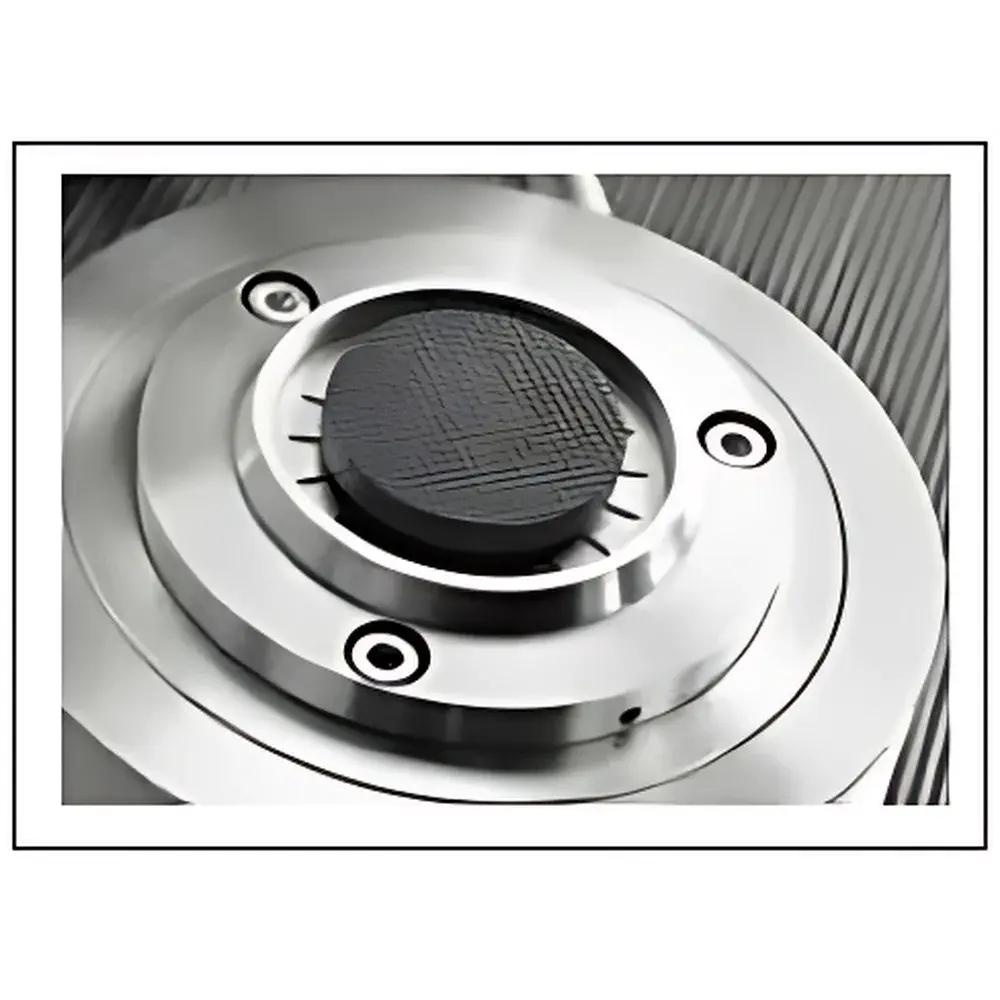
- Durable, field-replaceable die plates with hardened stainless-steel surfaces; optimized for long-term wear resistance under abrasive compound testing.
- Scarabaeus software platform with multi-language GUI (English, German, Chinese, Japanese, Korean), configurable report templates, and full audit-trail logging.
Sample Compatibility & Compliance
The MV one accommodates raw natural rubber (NR), synthetic elastomers (SBR, BR, EPDM, NBR, CR), filled compounds (carbon black, silica), and thermoplastic elastomers (TPEs) in standard 47 g sample mass configuration. Its cavity geometry and rotor clearance meet dimensional tolerances specified in ASTM D1646 Annex A1 and ISO 289-1. All hardware and firmware comply with CE marking requirements and electromagnetic compatibility (EMC) Directive 2014/30/EU. Data integrity features—including user authentication, electronic signatures, and immutable test logs—support compliance with GLP, GMP, and FDA 21 CFR Part 11 when configured with networked domain authentication and encrypted database storage.
Software & Data Management
Scarabaeus v5.x serves as the unified control, acquisition, and analysis environment for the MV one. It enables full method scripting (e.g., Mooney viscosity → scorch delay → stress relaxation in a single run), real-time curve overlay, statistical process control (SPC) charting, and automated pass/fail evaluation against user-defined specification limits. Raw torque-time-temperature datasets are stored in vendor-neutral HDF5 format with embedded metadata (operator ID, instrument serial, calibration certificate ID, environmental logs). Export options include CSV, PDF reports (with company branding), and direct integration with LIMS via RESTful API. Audit trails record all parameter changes, test starts/stops, and software updates with timestamps and user attribution—fully traceable for regulatory inspection.
Applications
- Quality control of incoming raw materials and production batches in rubber compounding facilities.
- Development and optimization of vulcanization systems—correlating Mooney scorch time (t5, t35) with cure kinetics from moving-die rheometers (MDR).
- Process validation of mixing cycles and filler dispersion efficiency through viscosity hysteresis analysis.
- Stress relaxation profiling to assess polymer chain mobility and crosslink density evolution during early-stage curing.
- Technical support for ISO/TS 16949 and IATF 16949 audits requiring documented measurement uncertainty and equipment traceability.
FAQ
What standards does the MV one comply with?
ASTM D1646, ISO 289-1/-2, DIN 53523, and JIS K6300-1—all verified via factory-installed calibration kits and NIST-traceable torque and temperature references.
Can the MV one perform both Mooney viscosity and stress relaxation in one test sequence?
Yes—Scarabaeus allows multi-phase method programming: initial viscosity stabilization, followed by rotor stop/start for stress relaxation decay, then resumed rotation for scorch onset detection.
Is external calibration required after installation?
No—internal auto-calibration routines verify torque zero and span before every test; annual verification using TA-provided reference standards is recommended for ISO/IEC 17025 compliance.
How is temperature uniformity validated inside the cavity?
Each unit undergoes cavity mapping per ASTM E220 using six calibrated thermocouples; certified uniformity ≤±0.3 °C across the rotor zone is provided in the Factory Acceptance Test report.
Does the software support electronic signatures for regulated environments?
Yes—Scarabaeus v5.x includes role-based access control, biometric or token-based e-signature workflows, and 21 CFR Part 11-compliant audit trail generation when deployed on Windows Server with domain authentication.




