
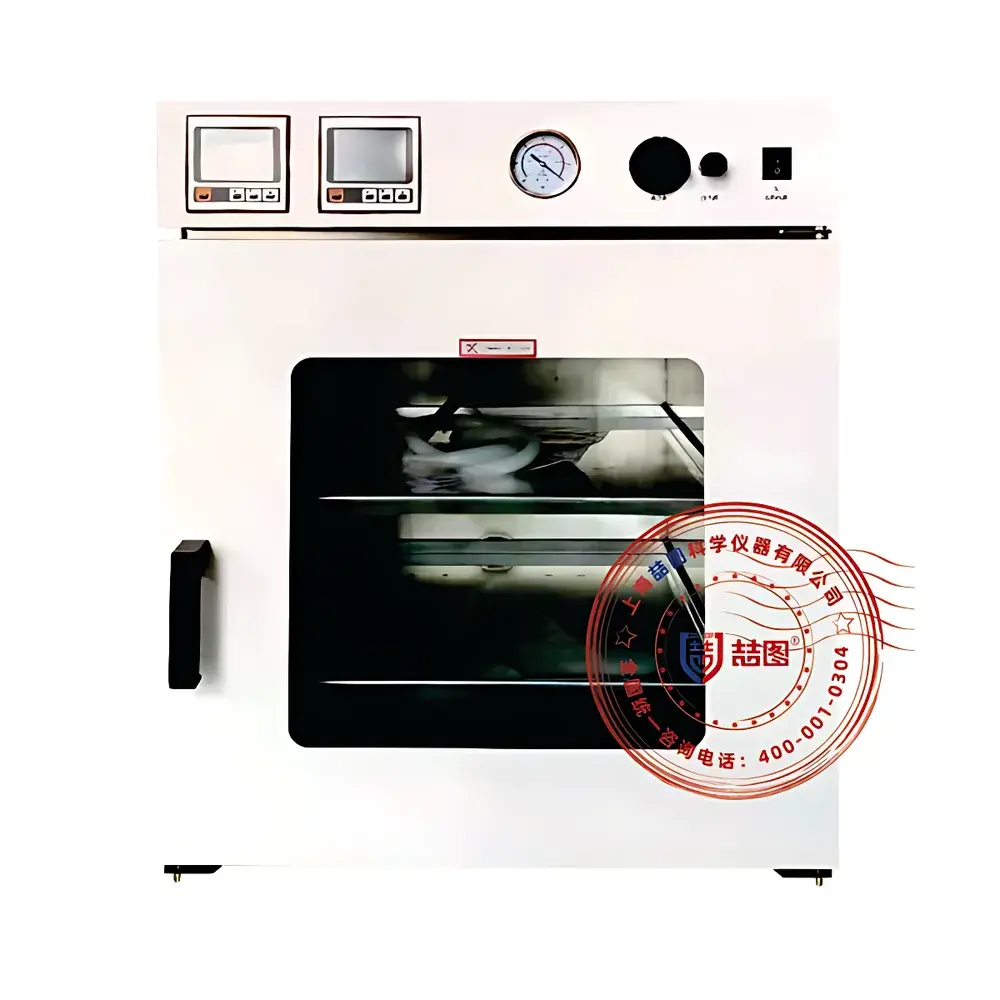
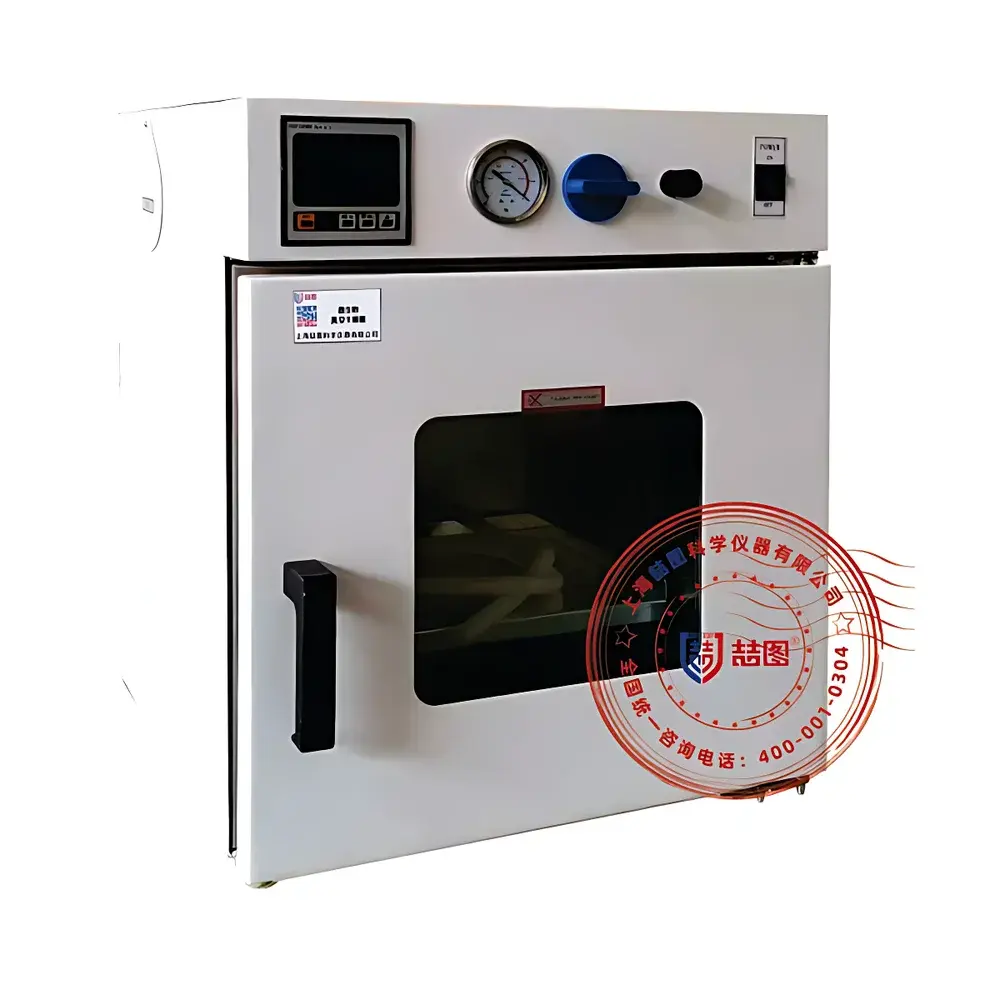
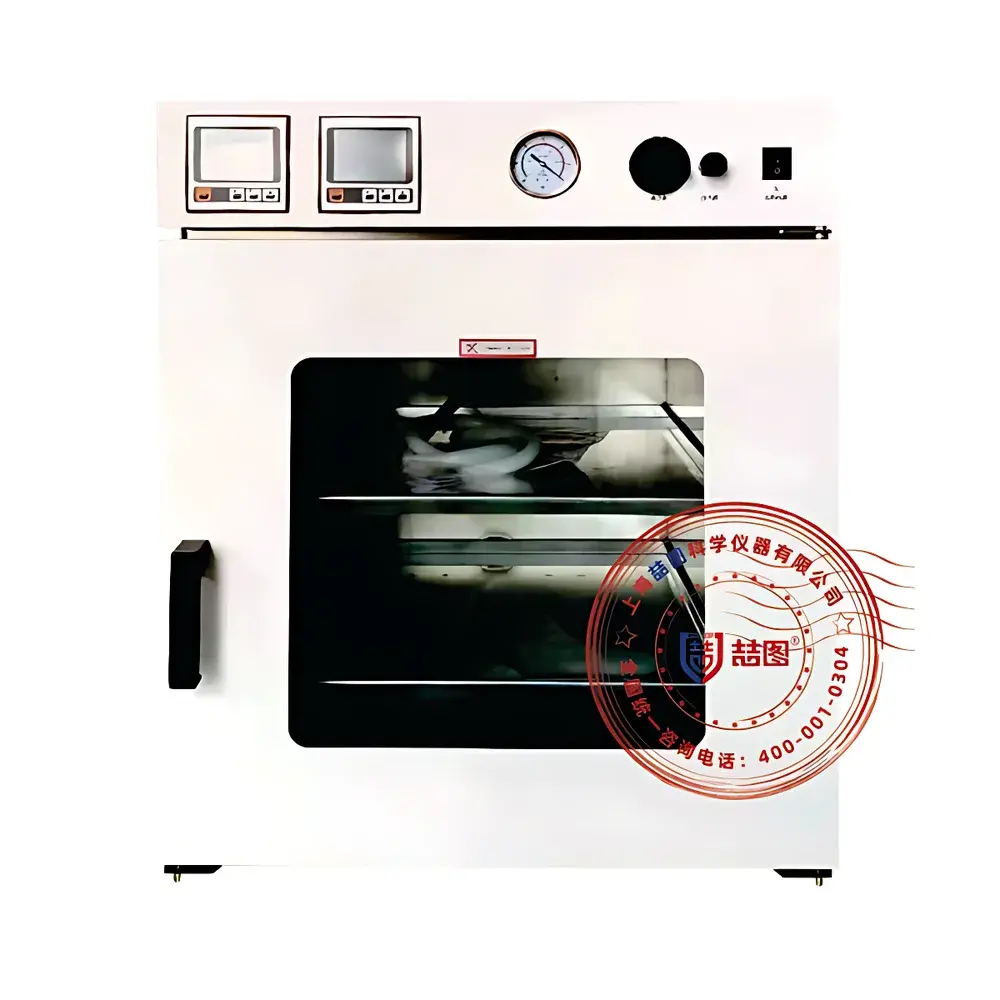
DRETOP TZF-6050WBV Microbial Vacuum Drying Oven
| Brand | DRETOP |
|---|---|
| Origin | Shanghai, China |
| Model | TZF-6050WBV |
| Instrument Type | Vacuum Drying Oven |
| Temperature Range | RT+10°C to 65°C |
| Temperature Uniformity | ±0.5°C |
| Temperature Resolution | 0.1°C |
| Vacuum Degree | ≤133 Pa |
| Inner Chamber Dimensions (W×D×H) | 415 × 370 × 345 mm |
| External Dimensions (W×D×H) | 710 × 550 × 550 mm |
| Inner Chamber Material | 304 Stainless Steel |
| Heating Method | Internal Radiation Heating |
| Operating Ambient Temperature | RT+5°C to 45°C |
Overview
The DRETOP TZF-6050WBV Microbial Vacuum Drying Oven is a precision-engineered laboratory vacuum drying system specifically designed for the gentle, low-temperature dehydration of thermolabile and oxygen-sensitive biological materials. Operating on the principle of reduced-pressure evaporation—where lowering the chamber pressure depresses the boiling point of solvents—the oven enables effective moisture removal at temperatures as low as RT+10°C, thereby preserving structural integrity, enzymatic activity, and microbial viability. Unlike conventional convection or jacket-heated ovens, the TZF-6050WBV employs internal radiation heating, with heating elements directly integrated into the 304 stainless steel inner chamber walls. This configuration ensures rapid thermal response, minimal thermal lag, and direct energy transfer to samples under vacuum—circumventing the inefficiency of convective heat transfer in near-zero atmospheric environments. The system is purpose-built for applications demanding strict environmental control, including sterile sample preparation, biopharmaceutical stabilization, and GLP-compliant drying protocols in regulated laboratories.
Key Features
- Internal radiation heating architecture optimized for vacuum compatibility—eliminates reliance on air-mediated convection and delivers consistent thermal input across the chamber volume.
- PID-based intelligent temperature control system with 0.1°C resolution and ±0.5°C stability over the full operating range (RT+10°C to 65°C).
- Robust 304 stainless steel inner chamber—electropolished finish available upon request—ensuring corrosion resistance, ease of decontamination, and compliance with ISO 14644 cleanroom-compatible surface requirements.
- Integrated safety interlocks including over-temperature cutoff, vacuum loss alarm, and pressure-relief burst disc for fail-safe operation during extended unattended runs.
- Modular design supports optional upgrades: inert gas purge inlet (N₂/Ar), RS485 serial interface for SCADA integration, and programmable multi-segment temperature ramping (via optional digital controller).
- Compact footprint (710 × 550 × 550 mm) with 50 L usable chamber volume—optimized for benchtop deployment in biosafety cabinets, cleanrooms, and QC laboratories with spatial constraints.
Sample Compatibility & Compliance
The TZF-6050WBV accommodates a broad spectrum of microbiological and biomedical specimens without inducing thermal denaturation or oxidative degradation. Compatible sample formats include liquid cultures (bacterial/fungal suspensions), lyophilization-ready enzyme solutions, vaccine intermediates, PCR master mixes, agar-based media plates, and sterilized labware (e.g., Petri dishes, pipette tips). Its sealed chamber and vacuum integrity support ISO 11140–4 (sterilization validation), USP (sterile processing), and ASTM E2994–15 (vacuum drying of biologicals) workflows. When operated with validated vacuum pumps and calibrated pressure transducers, the system meets traceability requirements for FDA 21 CFR Part 11–compliant electronic records—particularly when paired with audit-trail-enabled controllers (optional). Chamber surface finish and material selection conform to EU Annex 1 (Manufacture of Sterile Medicinal Products) guidance for non-shedding, non-reactive interior surfaces.
Software & Data Management
While the base configuration features a standalone LCD temperature/vacuum display with manual setpoint adjustment, the optional RS485 interface enables bidirectional communication with LabVIEW, MATLAB, or custom LIMS platforms. Data logging (temperature, vacuum level, elapsed time) can be synchronized at user-defined intervals (1 s to 60 min) and exported in CSV or XML format. For GxP environments, the optional programmable controller provides full 21 CFR Part 11 functionality—including electronic signatures, role-based access control, and immutable audit trails—supporting inspection readiness for FDA, EMA, and PMDA audits. All firmware updates are delivered via secure USB handshake; no cloud dependency or internet connectivity is required.
Applications
- Low-temperature desiccation of microbial cultures and clinical isolates for long-term cryo-archive stabilization prior to freeze-drying.
- Residual solvent removal from bioconjugates (e.g., antibody-drug conjugates) without compromising epitope binding affinity.
- Drying of diagnostic reagent strips, lateral flow assay components, and microfluidic device substrates under controlled O₂ partial pressure.
- Pre-treatment of tissue scaffolds and hydrogel matrices to remove entrapped solvents while maintaining pore architecture and bioactivity.
- Validation of drying kinetics for novel excipients in oral solid dosage forms under ICH Q5C stability conditions.
- Routine post-sterilization drying of reusable stainless-steel instruments in hospital central supply departments—meeting AAMI ST79:2017 moisture residue thresholds.
FAQ
What vacuum level is achievable, and how is it measured?
The chamber achieves ≤133 Pa (1 Torr) using a standard two-stage rotary vane pump (not included); vacuum is monitored via an analog Bourdon-tube gauge calibrated per ISO 2533.
Can the oven be used for sterilization?
No—it is not a sterilizer. It performs drying only; sterilization requires validated steam, dry heat, or ethylene oxide cycles per ISO 17665 or ISO 11135.
Is the chamber suitable for handling BSL-2 organisms?
Yes—when equipped with HEPA-filtered exhaust and operated within a certified biosafety cabinet, the sealed design prevents aerosol escape during loading/unloading.
Does the internal heating system affect temperature uniformity under vacuum?
Independent validation per ASTM E2876 confirms radial and axial uniformity of ±1.2°C at 45°C/100 Pa—superior to jacket-heated alternatives under identical conditions.
What maintenance is required for long-term reliability?
Annual verification of temperature sensor calibration (traceable to NIST standards) and quarterly inspection of door gasket integrity and vacuum seal compression are recommended.



