
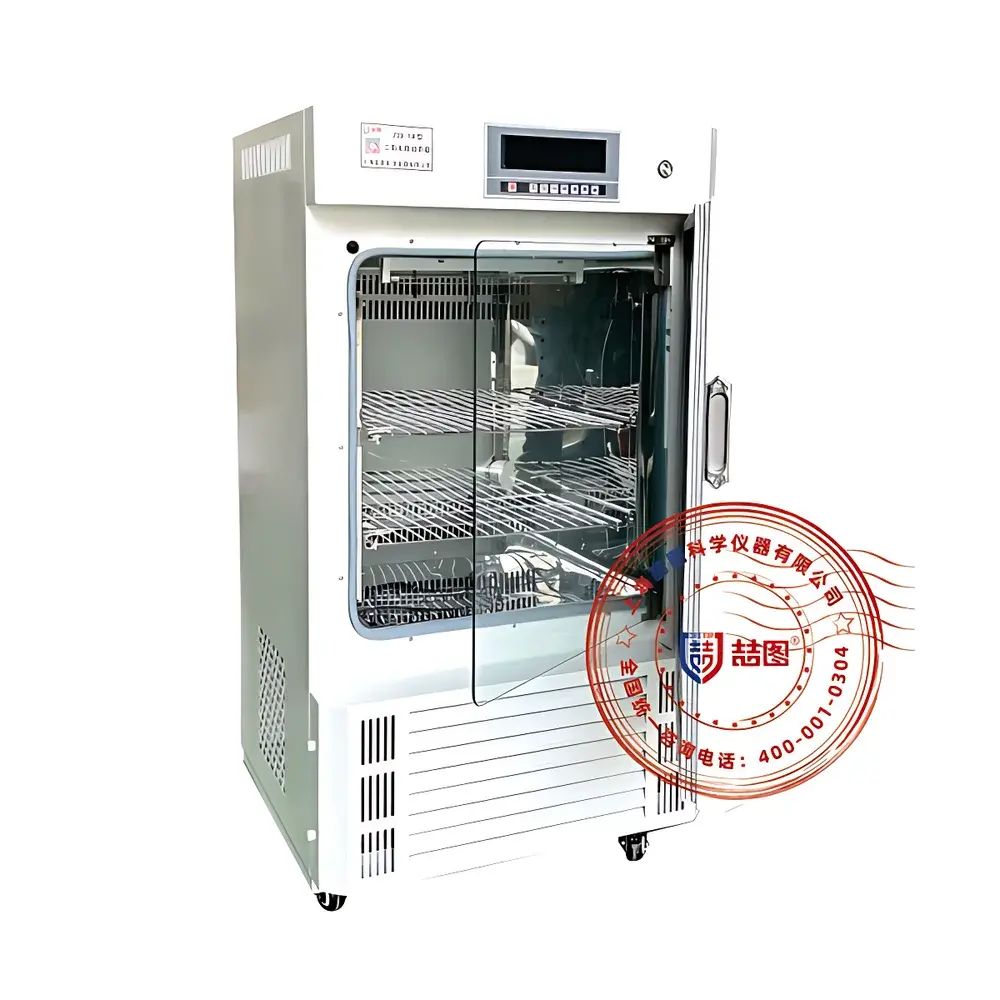
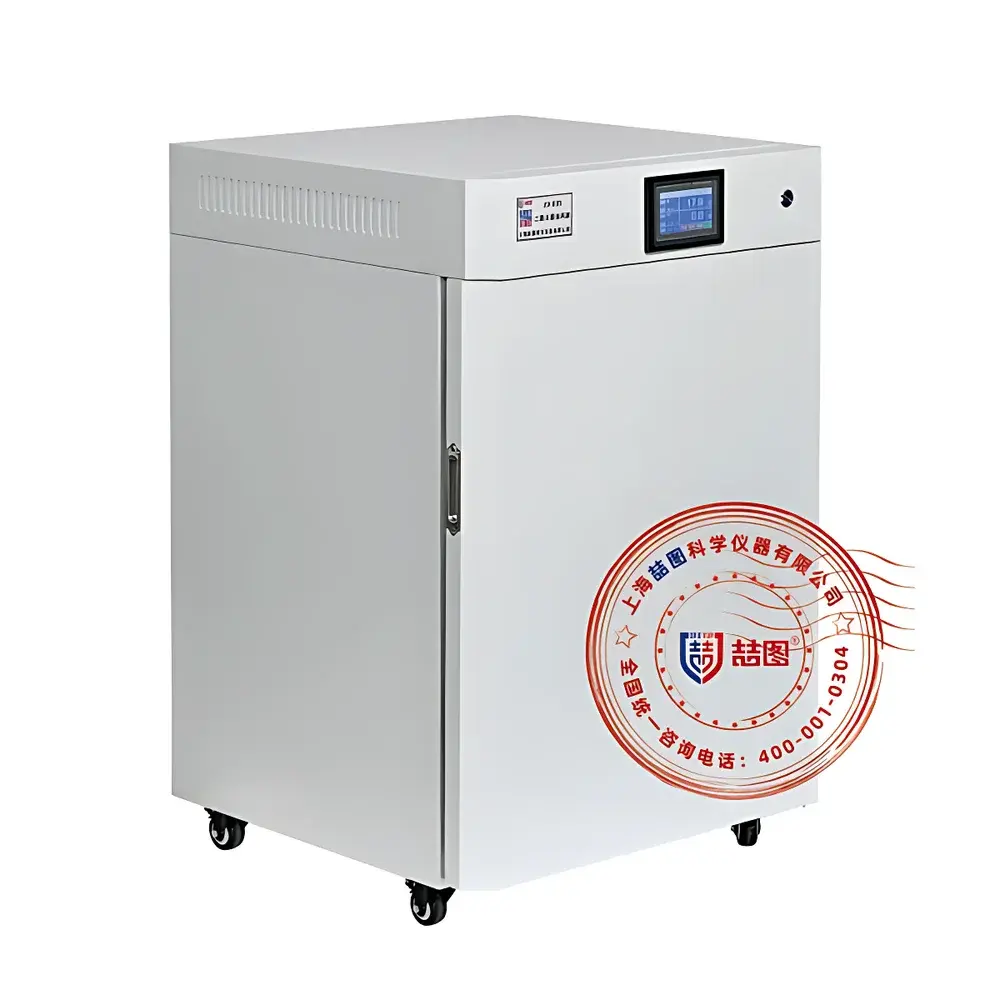
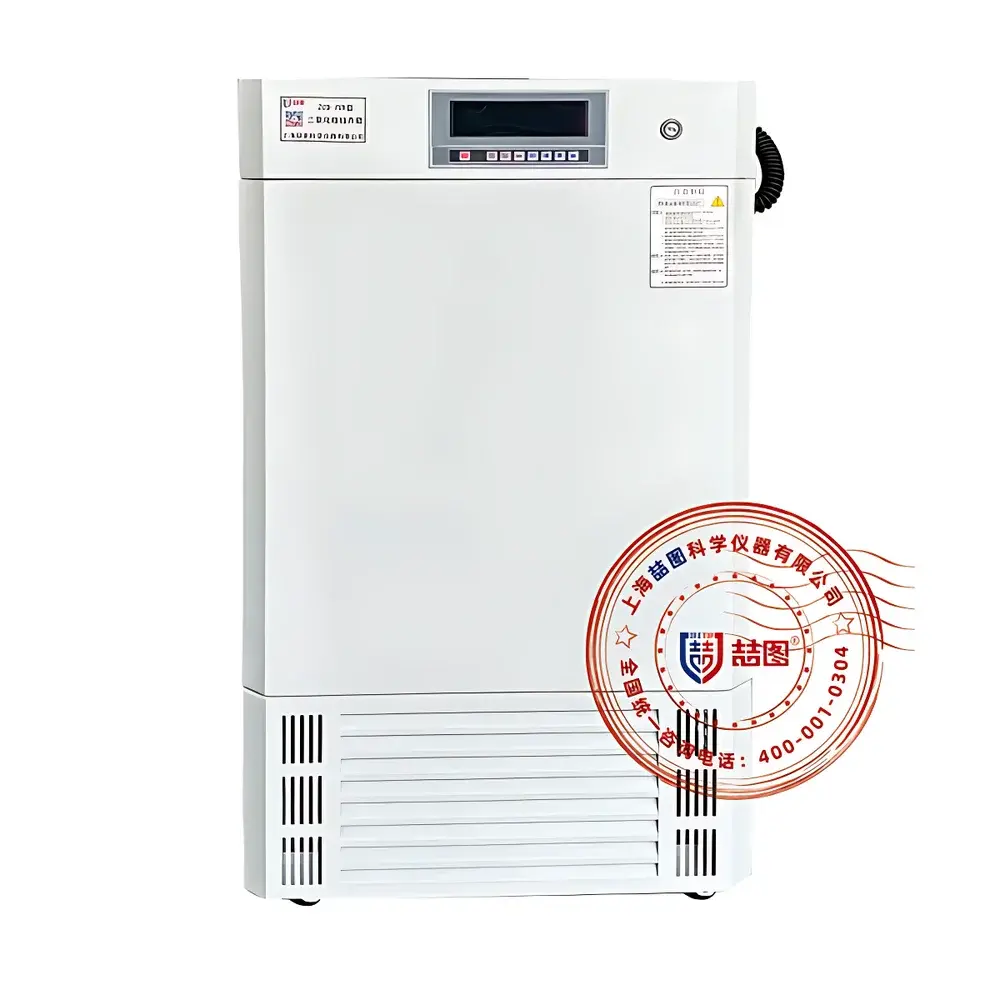
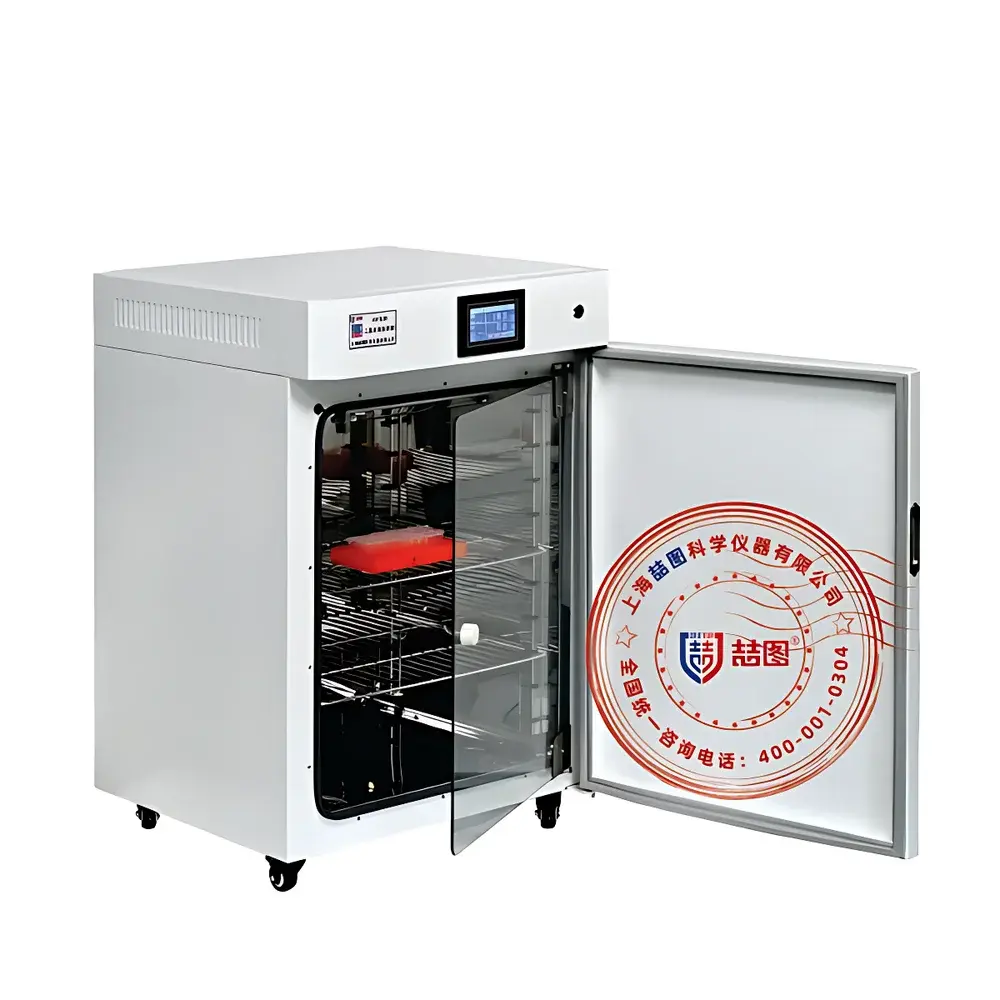
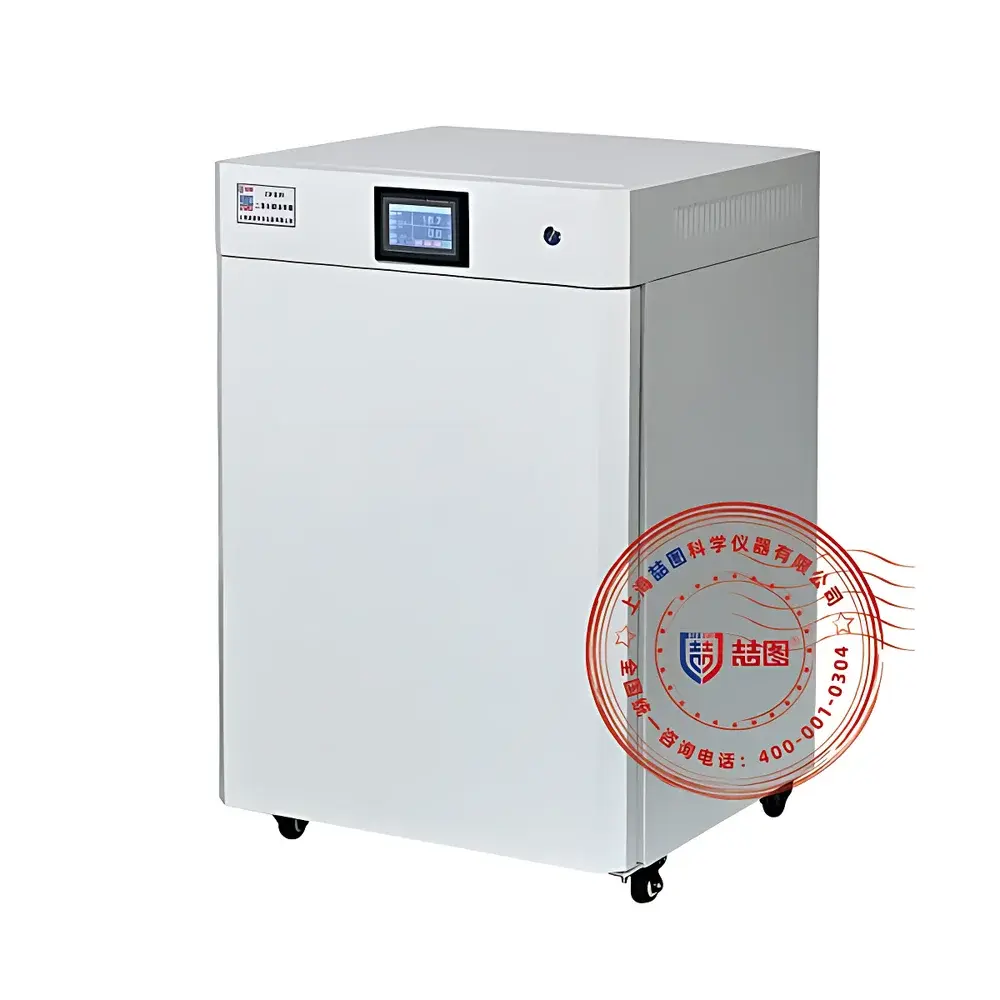
DRETOP ZCP-Q160TD Gas-Jacketed CO₂ Incubator
| Brand | DRETOP |
|---|---|
| Origin | Shanghai, China |
| Manufacturer Type | Authorized Distributor |
| Instrument Type | Gas-Jacketed CO₂ Incubator |
| CO₂ Detection | Infrared (IR) Sensor |
| Temperature Control Range & Accuracy | RT+5°C to 60°C, ±0.1°C |
| Temperature Uniformity | ±0.2°C |
| CO₂ Concentration Control Range & Accuracy | 0–20% vol, ±0.1% vol |
| Humidity Control Range & Accuracy | 95% RH ±3% RH |
| Chamber Capacity | 160 L |
| External Dimensions (W×D×H) | 500 × 500 × 650 mm |
| Standard Features | Access Port for Sampling, Independent Over-Temperature Protector, RS485 Communication Interface, Programmable Controller, Micro-Printer Output, Real-Time Humidity Display System, Integrated Pressure-Reducing Valve |
Overview
The DRETOP ZCP-Q160TD is a precision-engineered gas-jacketed CO₂ incubator designed for reliable, long-term maintenance of mammalian cell cultures under physiologically relevant conditions. It operates on the principle of convective gas heating—where independent heating elements surrounding the chamber rapidly and uniformly regulate internal air temperature—complementing high-fidelity infrared (IR) CO₂ sensing and active humidity management. Unlike water-jacketed variants, this model prioritizes rapid thermal recovery after door openings, making it especially suitable for laboratories with frequent user interaction, short-duration assays, or multi-user workflows. Its core operational parameters—37°C temperature setpoint, 5% CO₂ concentration, and ≥95% RH—are maintained with traceable stability and minimal drift, meeting essential requirements for GLP-compliant cell culture, bioproduction support, and preclinical assay development.
Key Features
- Gas-jacketed thermal architecture ensures fast temperature equilibration (<8 min to recover 37°C after 30-sec door opening) and superior resistance to ambient fluctuations.
- Infrared CO₂ sensor with zero-oxygen dependency and immunity to catalytic poisoning—enabling stable, interference-free measurement across repeated sterilization cycles and extended operation.
- Integrated humidity system featuring a large-surface-area reservoir tray and optimized evaporation geometry; achieves ≤3 min recovery to 95% RH post-door event.
- Electropolished mirror-finish stainless-steel interior with seamless quarter-radius corners and tool-free adjustable shelving—designed for sterility assurance, ease of cleaning, and compatibility with ISO 14644-1 Class 5 laminar flow environments.
- Intelligent door-heating circuit prevents condensation on inner glass, eliminating microdroplet-mediated contamination pathways during routine observation.
- Dual-stage over-temperature protection: primary PID-controlled heating + independent mechanical limiter (adjustable up to 65°C), compliant with IEC 61010-1 safety standards.
- RS485 interface supports Modbus RTU protocol for integration into centralized lab monitoring systems; optional data logging via bundled micro-printer or external SCADA platforms.
- Real-time humidity display with automatic dew-point compensation; calibrated against NIST-traceable hygrometers per ASTM E2654.
Sample Compatibility & Compliance
The ZCP-Q160TD accommodates standard T-25, T-75, and 100-mm Petri dishes, multi-well plates (6–96-well), roller bottles, and Transwell® inserts without spatial interference. Its chamber geometry permits stacking of up to three units vertically (with optional reinforced floor mounting), optimizing footprint in space-constrained cleanrooms. All materials contacting the internal environment—including gaskets, reservoir trays, and shelf supports—meet USP Class VI biological safety requirements. The incubator supports validation protocols aligned with ISO 13485, FDA 21 CFR Part 11 (when paired with audit-trail-enabled software), and EU Annex 1 (for sterile manufacturing support). Optional 90°C humidified heat sterilization cycle complies with EN 285 for steam sterilization efficacy verification.
Software & Data Management
The embedded controller features a 5.7-inch backlit LCD with intuitive menu navigation, multilingual UI (English, German, French, Spanish), and non-volatile memory retaining all setpoints and runtime logs during power loss. Time-stamped event records—including door open/close duration, temperature/CO₂ excursions, alarm triggers, and sterilization cycles—are stored for ≥12 months. Data export is supported via RS485-to-USB converter or direct printer output (thermal paper roll, 57 mm width). For regulated environments, optional DRETOP LabLink™ software provides electronic signature capability, role-based access control, and 21 CFR Part 11–compliant audit trails—including user ID, timestamp, parameter change history, and reason-for-change fields.
Applications
This incubator serves as a foundational platform for applications demanding stringent environmental fidelity: primary and immortalized mammalian cell expansion (e.g., HEK293, CHO-K1, iPSCs); monoclonal antibody production via hybridoma culture; in vitro fertilization (IVF) embryo incubation; 3D organoid and spheroid formation; toxicology screening (OECD TG 491, 492); and GMP-aligned viral vector propagation (lentivirus, AAV). Its rapid recovery kinetics and IR-based CO₂ stability make it particularly suited for time-lapse microscopy setups where repeated door access is unavoidable.
FAQ
Is the ZCP-Q160TD suitable for oxygen-controlled (hypoxic/normoxic) cell culture?
Yes—optional O₂ sensing module (0–21% vol, ±0.2% accuracy) and inert gas inlet valve enable dual-gas control (CO₂/O₂/N₂), supporting hypoxia research per NIH-recommended protocols.
Does the unit include validation documentation for IQ/OQ/PQ execution?
Factory-supplied DQ/IQ templates and calibration certificates (NIST-traceable temperature, CO₂, and RH sensors) are provided; PQ execution requires site-specific mapping per ISO 14644-3.
Can humidity be maintained without manual water refilling during extended unattended runs?
Yes—the reservoir tray holds sufficient deionized water for ≥72 h continuous operation at 95% RH; low-water alarm activates with visual/audible alert and heater cutoff.
What sterilization methods are validated for this model?
Standard 90°C humidified heat cycle (120 min, ≥90% RH) is validated for >6-log reduction of Geobacillus stearothermophilus spores; UV lamp (254 nm, ozone-free) supplements air and water surface decontamination.
How does the gas-jacketed design compare to water-jacketed alternatives in terms of energy efficiency?
Gas-jacketed systems consume ~35% less standby power than equivalent water-jacketed models due to absence of thermal mass and reduced insulation requirements—verified per IEC 62304 Annex C testing.




