
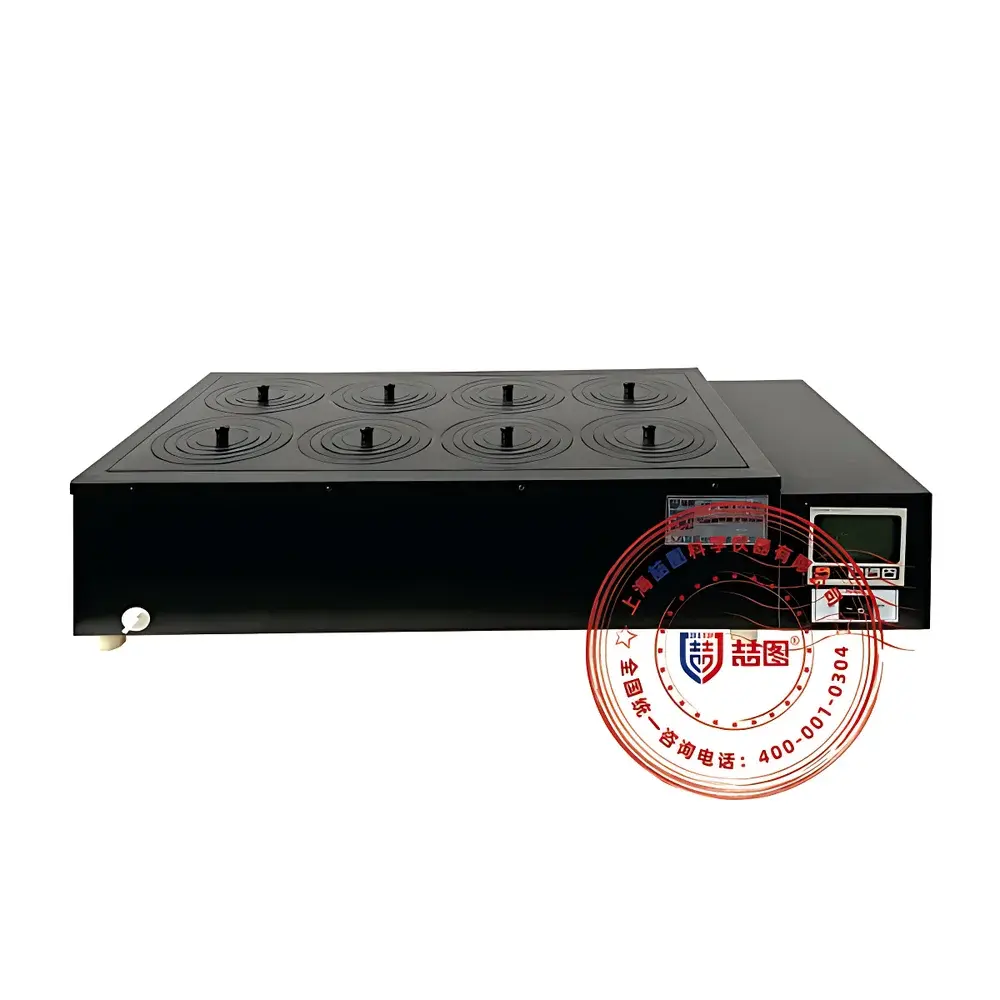
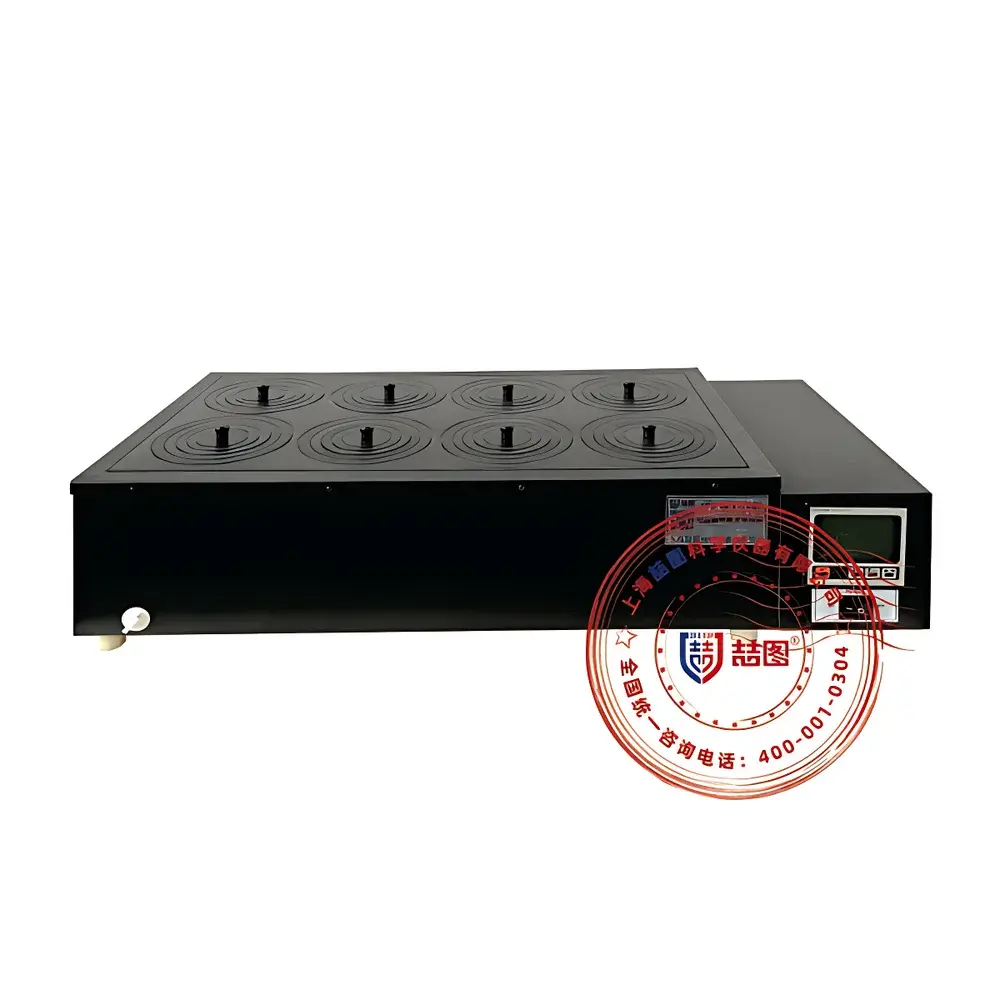
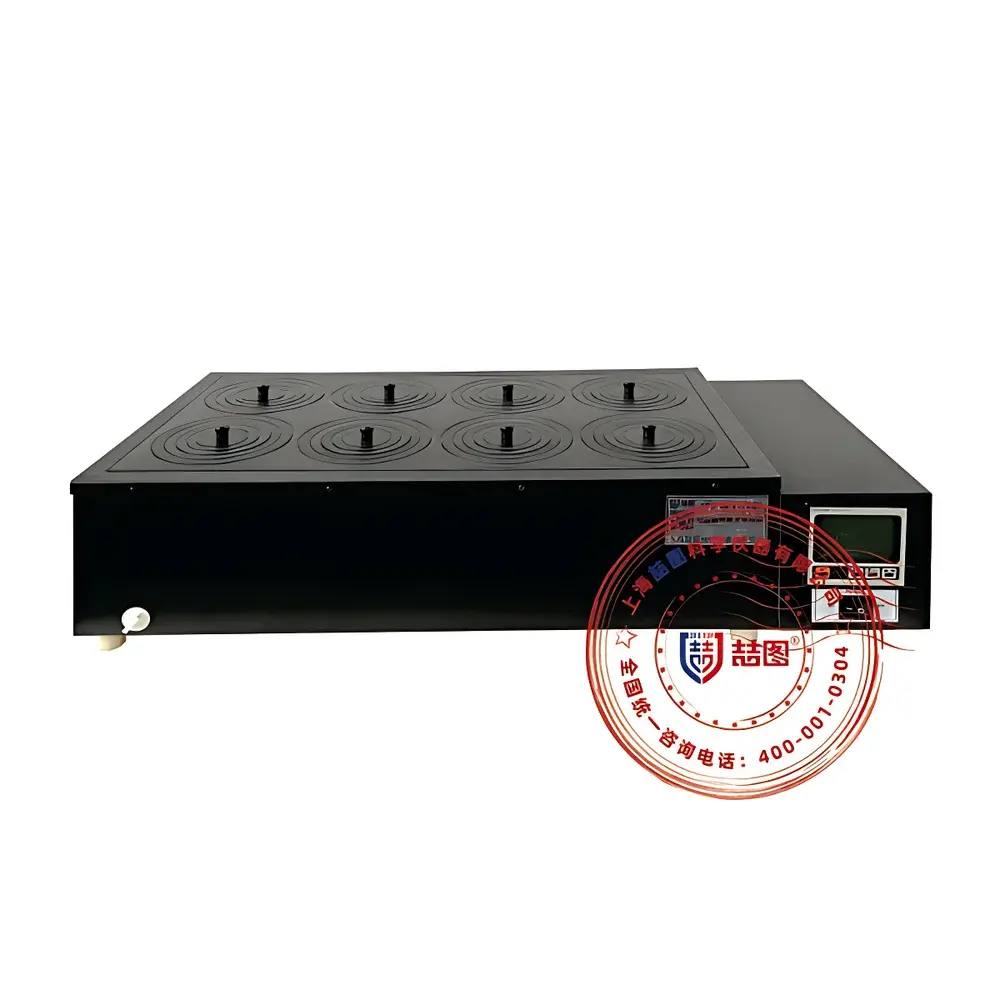
DRETOP PTFE-D8 Acid- and Alkali-Resistant Water Bath
| Brand | DRETOP |
|---|---|
| Origin | Shanghai, China |
| Model | PTFE-D8 |
| Temperature Range | RT+5°C to 100°C |
| Temperature Control Accuracy | ±0.1°C |
| Bath Capacity | 20 L |
| Heating Power | 2000 W |
| External Dimensions (W×D×H) | 750×330×210 mm |
Overview
The DRETOP PTFE-D8 Acid- and Alkali-Resistant Water Bath is a precision-engineered constant-temperature immersion system designed for laboratories requiring long-term thermal stability in chemically aggressive environments. Unlike conventional stainless-steel water baths, the PTFE-D8 integrates a fully fluoropolymer-coated inner chamber—applied via electrostatic spray and thermally cured—to deliver exceptional resistance to concentrated acids (e.g., HCl, HNO₃, H₂SO₄), alkalis (e.g., NaOH, KOH), and organic solvents commonly used in sample digestion, hydrolysis, enzymatic assays, and reagent preparation. Its operational principle relies on resistive heating elements immersed in deionized or distilled water, coupled with PID-controlled thermal feedback to maintain setpoint stability within ±0.1°C across the full range of RT+5°C to 100°C. The unit complies with IEC 61010-1 safety standards for laboratory electrical equipment and is engineered for continuous unattended operation in GLP-compliant and ISO/IEC 17025-accredited settings.
Key Features
- PTFE-coated interior cavity validated per ASTM B117 salt-spray testing (≥500 hr exposure) for sustained corrosion resistance in acidic and alkaline media;
- Microprocessor-based PID temperature controller with dual digital display: real-time bath temperature and user-defined setpoint (0.1°C resolution);
- Integrated dry-run protection: automatic heater cutoff and audible/visual alarm when liquid level falls below safe threshold—no manual calibration required;
- Intelligent power-loss recovery: embedded non-volatile memory retains temperature setpoint, timer status, and program sequence during unexpected outages; resumes operation upon power restoration;
- Configurable over-temperature alarm with adjustable deviation limit (±0.1°C to ±5.0°C), triggering immediate heater disablement and event logging;
- Stainless steel top cover with interchangeable silicone-rubber gasketed collar inserts (multiple diameters) to accommodate round-bottom flasks, test tubes, and digestion vessels;
- Front-mounted drain valve with quick-release coupling for rapid bath fluid exchange; insulated outer housing minimizes surface heat transfer and condensation.
Sample Compatibility & Compliance
The PTFE-D8 accommodates standard laboratory glassware including borosilicate flasks (50–2000 mL), digestion tubes, centrifuge tubes, and sealed reaction vials. Its inert fluoropolymer surface prevents metal ion leaching and eliminates residue adhesion—critical for trace-metal analysis (e.g., EPA Method 3050B), pharmaceutical dissolution testing (USP ), and biopolymer thermal denaturation studies. The device meets electromagnetic compatibility requirements per EN 61326-1 and carries CE marking under the EU Low Voltage Directive. For regulated environments, audit-ready operation logs—including timestamped temperature deviations, alarm events, and power-cycle history—are retained onboard for ≥30 days and exportable via optional RS485 interface (Modbus RTU protocol).
Software & Data Management
While the base model operates via standalone front-panel controls, optional connectivity modules enable integration into centralized lab data systems. The optional 30-segment programmable controller supports time-temperature ramping profiles (e.g., 60°C → hold 120 min → ramp to 95°C → cool at 0.5°C/min), with cycle repetition and end-of-program output signaling. All critical parameters—including actual vs. setpoint deviation, heater duty cycle, and alarm status—are recorded internally at 10-second intervals. Data export is supported via USB flash drive (CSV format) or serial communication, facilitating compliance with FDA 21 CFR Part 11 requirements when paired with validated electronic signature software. Audit trails include operator ID, parameter change timestamps, and reason-for-change annotations.
Applications
- Controlled hydrolysis of polymers and biomaterials under acidic/alkaline conditions;
- Standardized dissolution testing of oral solid dosage forms per USP apparatus II;
- Preparation of calibration standards for ICP-MS and AAS without container-induced contamination;
- Enzyme kinetic assays requiring precise thermal incubation (e.g., protease activity at 37°C ±0.1°C);
- Accelerated aging studies of packaging materials exposed to simulated gastric/intestinal fluids;
- Sample equilibration prior to GC-MS or HPLC analysis where solvent volatility demands stable bath temperature;
- Environmental testing of wastewater sludge digestibility using standardized acid digestion protocols (ISO 11466).
FAQ
Is the PTFE coating applied to both the bath tank and the lid?
Yes—the entire wetted surface, including the removable stainless steel lid and internal support grid, is uniformly coated with medical-grade PTFE (polytetrafluoroethylene) to ensure full chemical inertness.
Can this unit be used with organic solvents such as acetone or chloroform?
No. While PTFE exhibits excellent resistance to most acids and bases, it is not recommended for prolonged contact with halogenated or aromatic solvents due to potential swelling and reduced coating longevity.
Does the dry-run protection require periodic sensor calibration?
No. The capacitive-level detection system is factory-calibrated and requires no user maintenance or recalibration throughout the product lifecycle.
What is the maximum allowable ambient temperature for continuous operation?
The unit is rated for continuous use in ambient environments up to 35°C with ≥15 cm clearance on all sides for convection cooling.
Is validation documentation (IQ/OQ/PQ protocols) available?
Yes—DRETOP provides customizable qualification templates aligned with ISO 9001 and GMP Annex 15 guidelines, including temperature mapping procedures and uncertainty budgeting for calibration traceability to NIST-certified references.



