
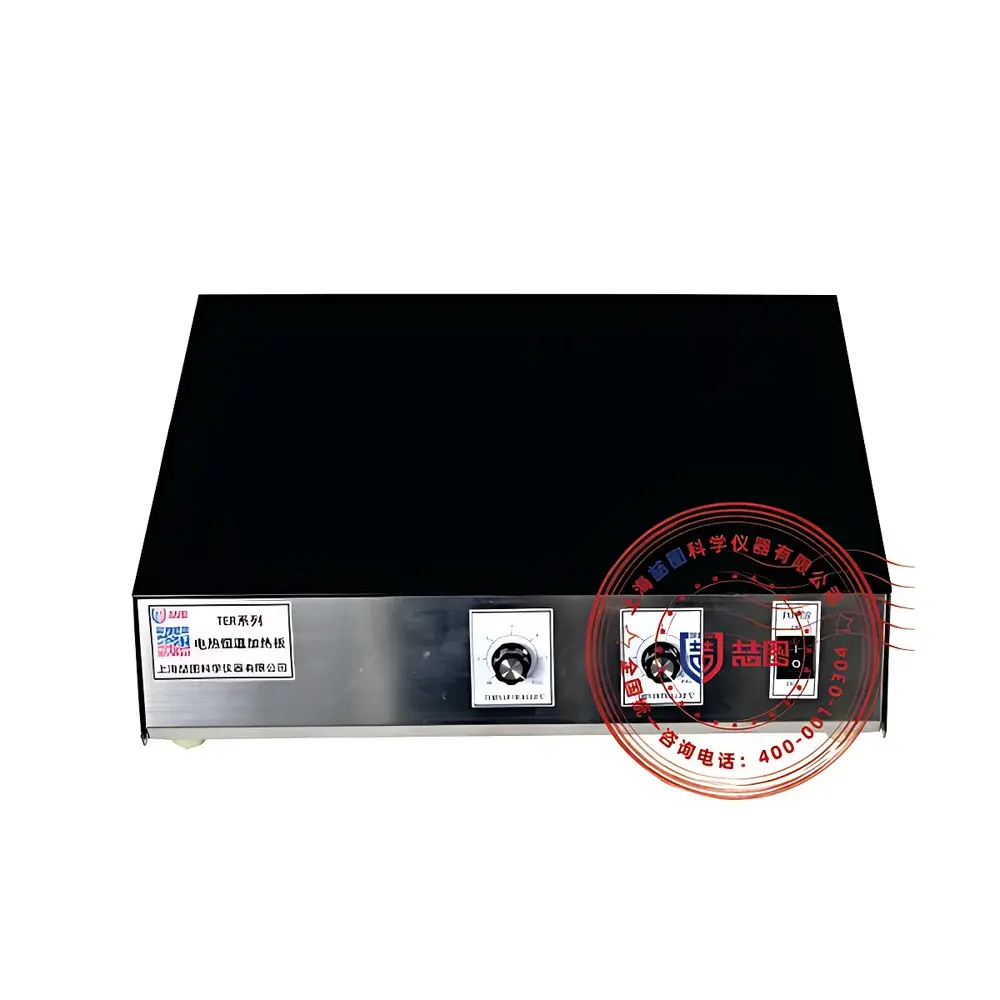
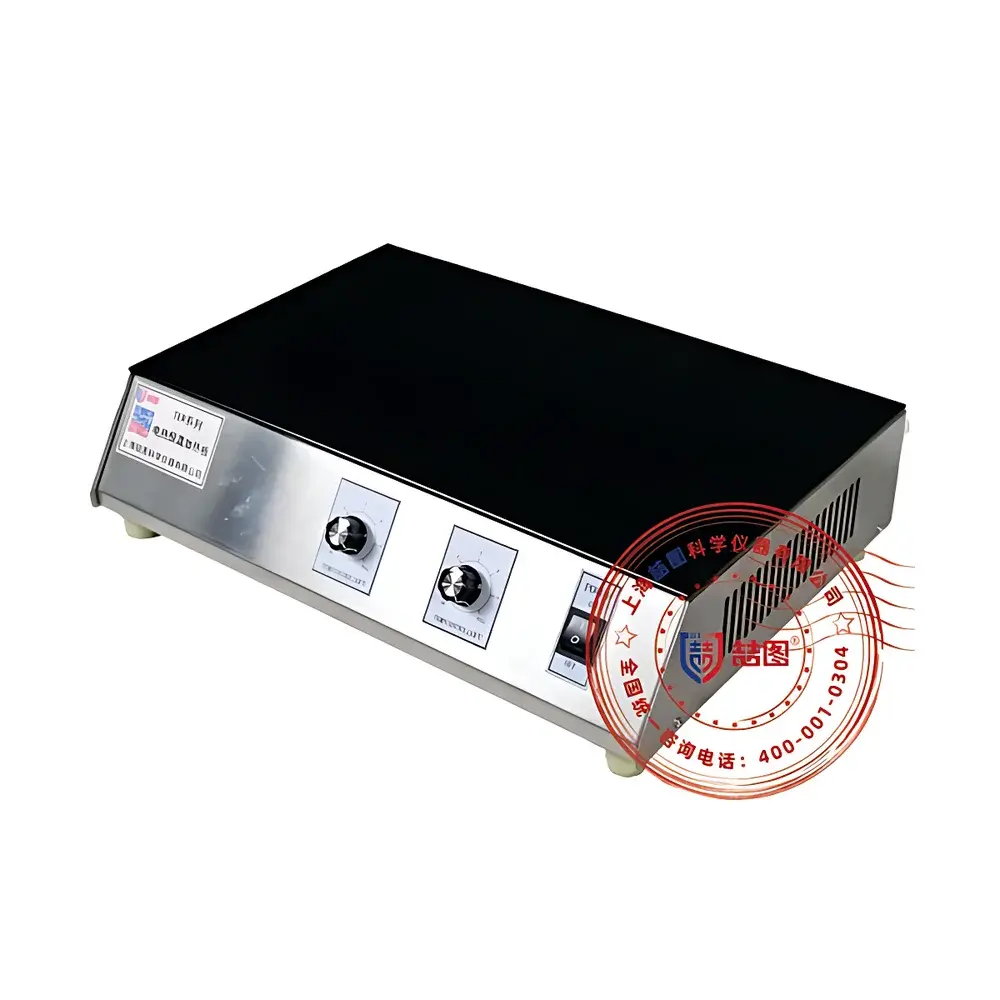
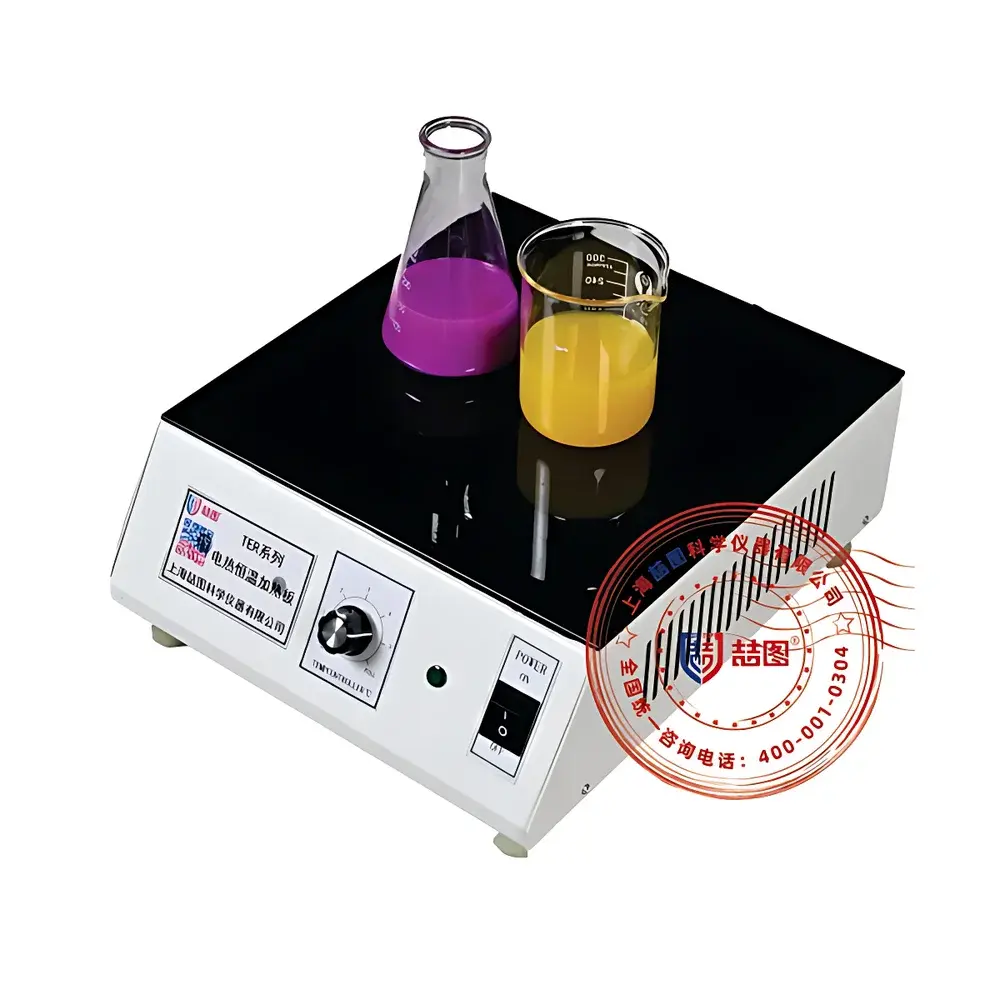
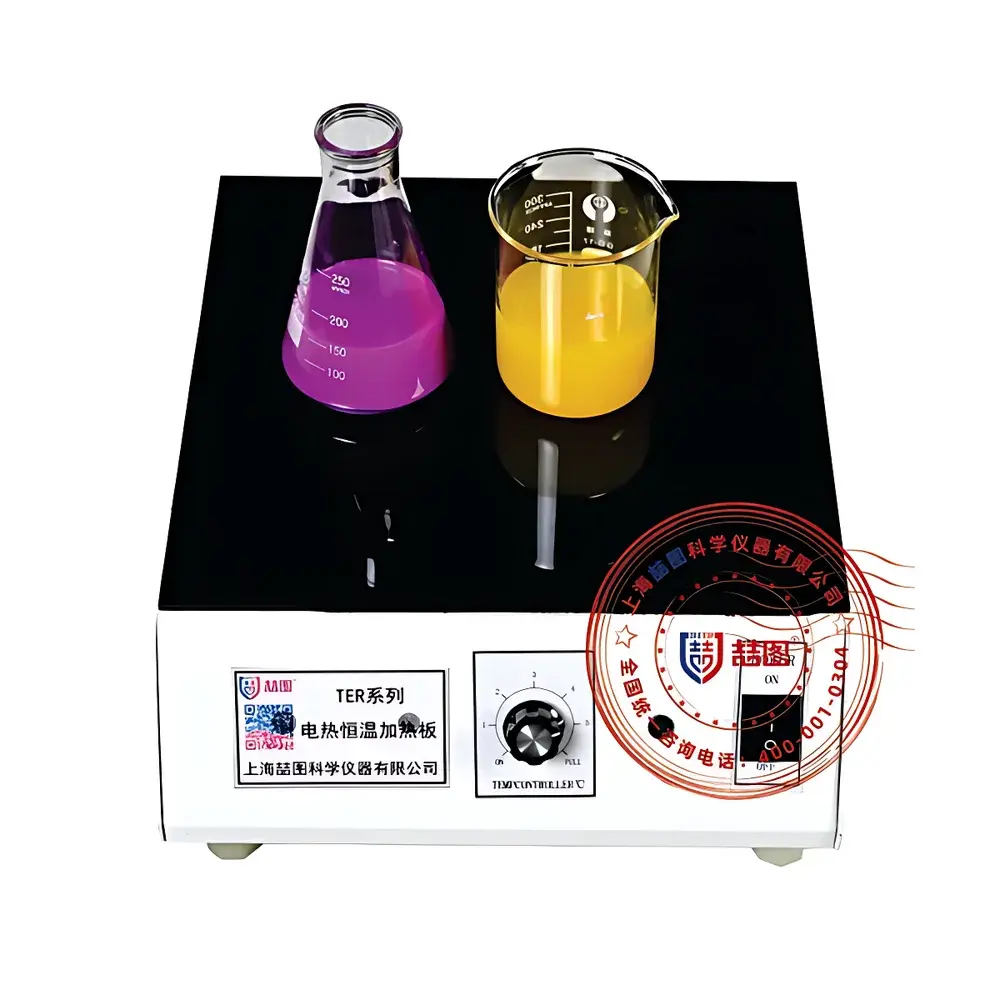
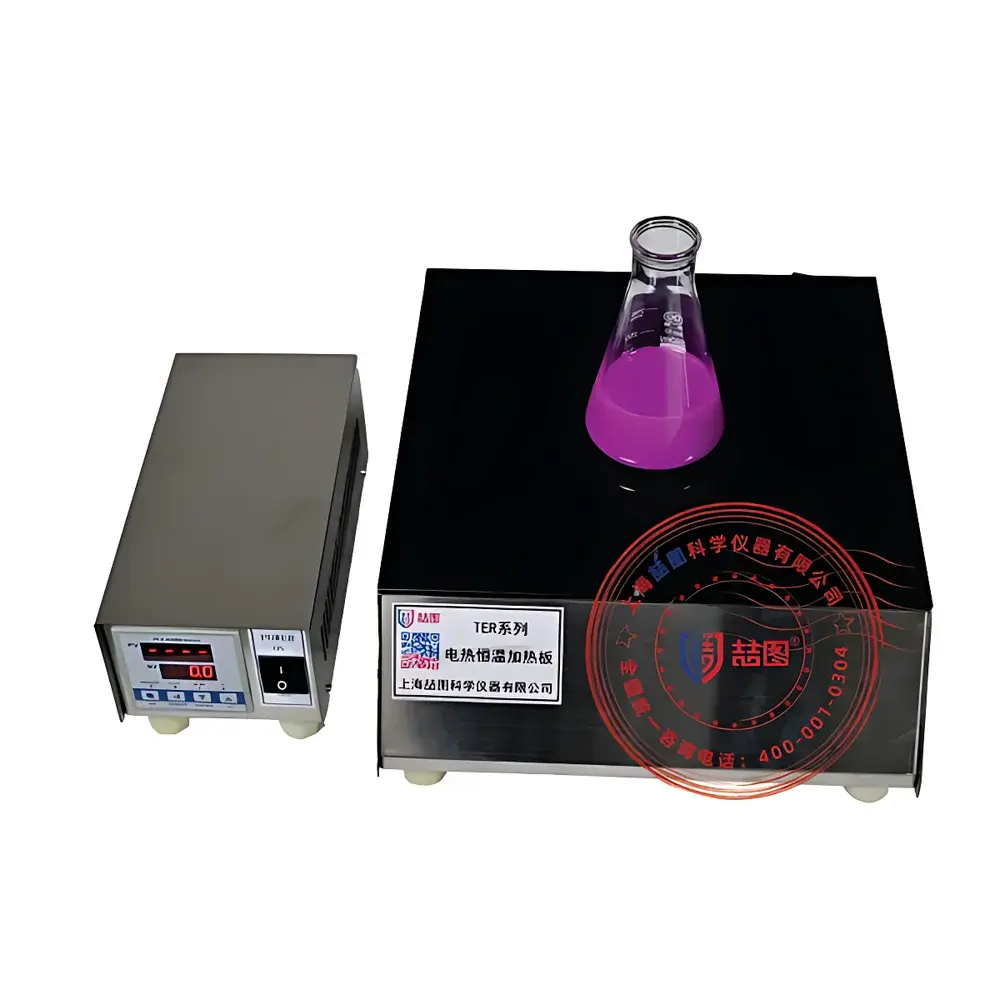
DRETOP TER-35S-I Electric Heating Plate with Ceramic-Glass Surface
| Brand | DRETOP |
|---|---|
| Origin | Shanghai, China |
| Model | TER-35S-I |
| Heating Power | 2400 W |
| Controller | PID Microprocessor-Based Temperature Controller |
| Max. Operating Temperature | 400 °C |
| Surface Dimensions | 500 × 300 mm |
| Heating Zone Dimensions | 500 × 300 mm |
| Display | Digital LED |
| Construction | Integrated All-in-One Design (Heating Module + Controller) |
| Panel Material | Chemically Resistant Ceramic-Glass (Microcrystalline Glass) |
| Frame Material | 316L Stainless Steel (Corrosion-Resistant Variant) |
| Thermal Uniformity | ±1.5 °C (Typical, Measured at 5 Points per ASTM E2207-22) |
| Temperature Stability | ±0.5 °C (Over 8 h at 300 °C, Load: 3 × 500 mL Beakers) |
Overview
The DRETOP TER-35S-I Electric Heating Plate is an integrated, microprocessor-controlled laboratory heating system engineered for precision thermal management in sample preparation workflows. It operates on resistive heating principles, delivering uniform surface temperature via embedded high-stability heating elements beneath a chemically inert ceramic-glass (microcrystalline glass) top plate. Unlike open-coil or aluminum-block heaters, this design eliminates direct flame exposure, suppresses electromagnetic interference (EMI), and enables safe, stable operation in corrosive environments—particularly during acid digestion, solvent evaporation, catalyst activation, and thermal stability assays. Its all-in-one architecture integrates the heating module, PID controller, and digital display into a single robust housing, minimizing cable clutter and reducing risk of controller contamination from acid vapors or condensate ingress.
Key Features
- Microcrystalline glass surface (ceramic-glass composite) with low thermal expansion coefficient (≈1.5 × 10⁻⁶ /°C), enabling rapid thermal cycling without cracking and resisting thermal shock up to 500 °C.
- PID-based digital temperature control with ±0.1 °C setpoint accuracy and automatic power modulation—full-power ramping to target temperature followed by dynamic duty-cycle regulation to maintain stability within ±0.5 °C over extended periods.
- 316L stainless steel perimeter frame and fully encapsulated internal circuitry provide resistance to HNO₃, HCl, HF, and aqua regia vapors—validated per ISO 9227 salt spray testing protocols for corrosion resistance.
- Closed-loop heating architecture with no exposed coils or grilles; surface remains electrically insulated and chemically passivated—eliminating ignition risks and simplifying decontamination between samples.
- Ergonomic design includes a 3–5 cm non-heated border zone around the active area to reduce operator burn risk and accommodate clamp stands or thermocouple probes without thermal interference.
- Integrated thermal isolation feet (20 mm height) ensure airflow beneath the unit, preventing heat accumulation in base electronics and preserving long-term reliability under continuous 2400 W load.
Sample Compatibility & Compliance
The TER-35S-I accommodates standard laboratory vessels—including borosilicate glass beakers (up to 1000 mL), PTFE digestion vessels, quartz crucibles, and ceramic petri dishes—without adhesion or residue buildup, thanks to the non-porous, low-surface-energy ceramic-glass interface. Its uniform heating profile meets ASTM E2207-22 requirements for thermal uniformity assessment in benchtop heating devices. For regulated environments, the unit supports GLP-compliant documentation when paired with external data loggers (e.g., calibrated Pt100 sensors with timestamped output). While not intrinsically compliant with FDA 21 CFR Part 11, its digital controller outputs analog signals compatible with validated SCADA or LIMS integration pathways for audit-trail-enabled workflows.
Software & Data Management
The TER-35S-I operates as a standalone instrument with no embedded software stack or network interface. Temperature setpoints, real-time readings, and status indicators are managed exclusively via the front-panel digital LED display and rotary encoder knob—ensuring deterministic behavior, zero firmware dependencies, and immunity to cybersecurity vulnerabilities. For traceable data capture, users may connect optional third-party USB or RS-485 data loggers (e.g., Omega OM-DAQPRO-5300) to monitor and record temperature profiles over time. The controller’s analog voltage output (0–5 V DC proportional to setpoint) allows synchronization with programmable logic controllers (PLCs) in automated digestion stations or multi-step thermal protocols.
Applications
- Environmental Analysis: Acid digestion of soil, sediment, and sludge matrices (EPA Method 3050B, 3051A); evaporation of organic extracts prior to GC-MS analysis.
- Food & Agriculture Testing: Kjeldahl digestion for protein quantification; fat extraction via Soxhlet pre-concentration; pesticide residue cleanup using solvent evaporation.
- Materials Science: Controlled thermal curing of polymer composites; sintering of metal-organic frameworks (MOFs); annealing of thin-film precursors on quartz substrates.
- Pharmaceutical R&D: Solvent removal from API intermediates; moisture content determination per USP ; excipient compatibility screening under isothermal stress conditions.
- Academic Research: Kinetic studies of solid-state reactions; catalyst deactivation profiling; thermal gravimetric method development requiring reproducible ramp-and-hold cycles.
FAQ
What is the maximum recommended load weight for the TER-35S-I surface?
The ceramic-glass plate supports up to 15 kg distributed load; however, for optimal thermal uniformity and longevity, loads exceeding 8 kg should be evenly distributed across the 500 × 300 mm zone.
Is the unit suitable for use with hydrofluoric acid (HF) digestion vessels?
Yes—the 316L stainless steel frame and hermetically sealed electronics are rated for intermittent HF vapor exposure; however, direct liquid contact with the panel must be avoided, and post-use neutralization with calcium gluconate gel is advised per OSHA guidelines.
Does the TER-35S-I meet CE or UL safety certification standards?
The device complies with IEC 61010-1:2010 for laboratory electrical equipment; full CE marking documentation is available upon request for EU market deployment.
Can the heating plate be operated inside a fume hood without performance degradation?
Yes—its convection-independent heating mechanism and sealed construction ensure stable operation under negative pressure; ambient air cooling remains effective provided minimum clearance (10 cm) is maintained around ventilation slots.
How frequently should calibration verification be performed?
Per ISO/IEC 17025 recommendations, verify temperature accuracy biannually using NIST-traceable PT100 probes placed at center and four quadrants; recalibration is required if deviation exceeds ±1.0 °C at any point.



