
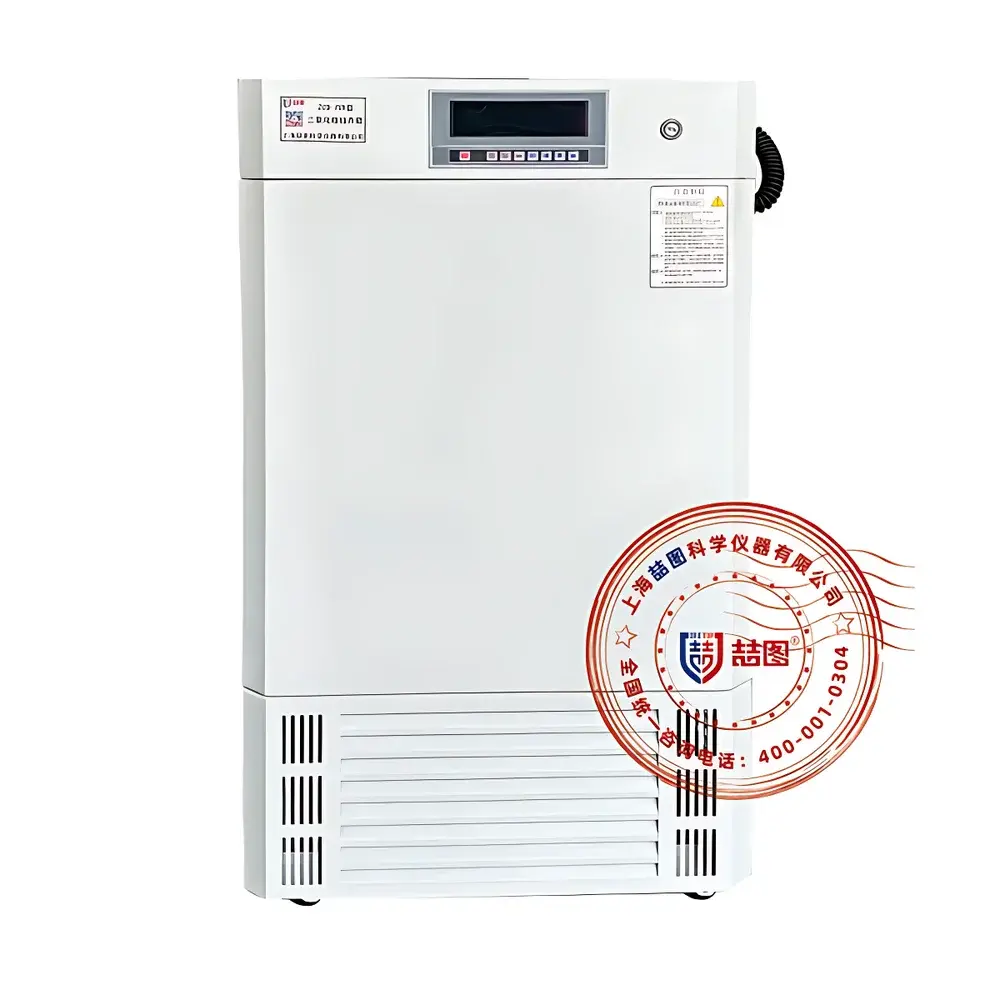
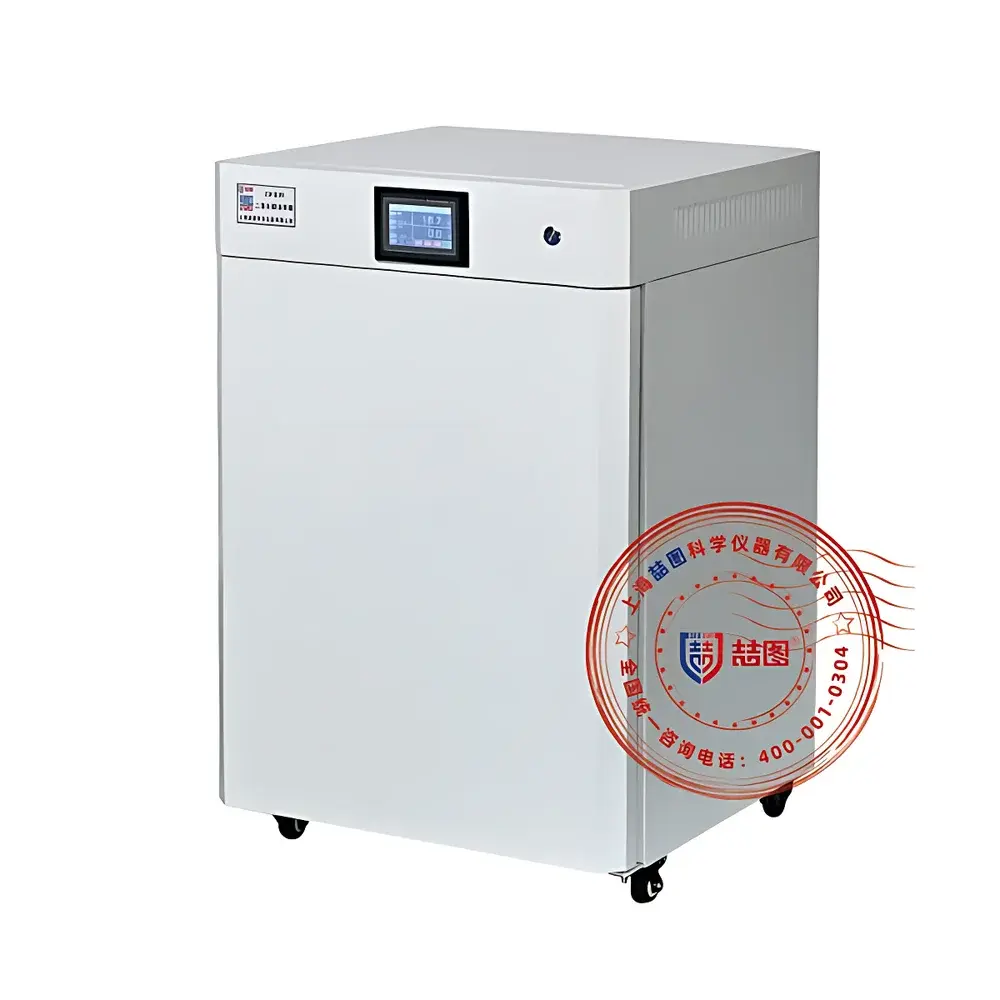
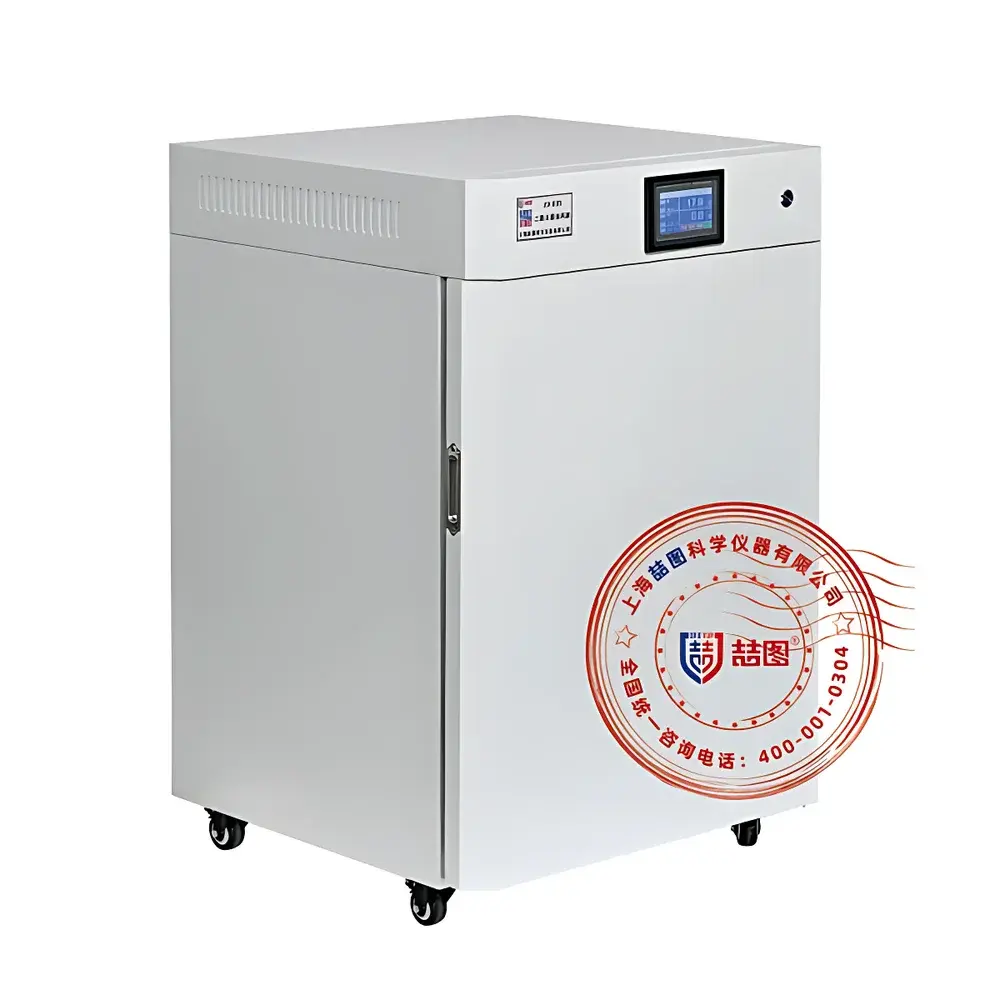
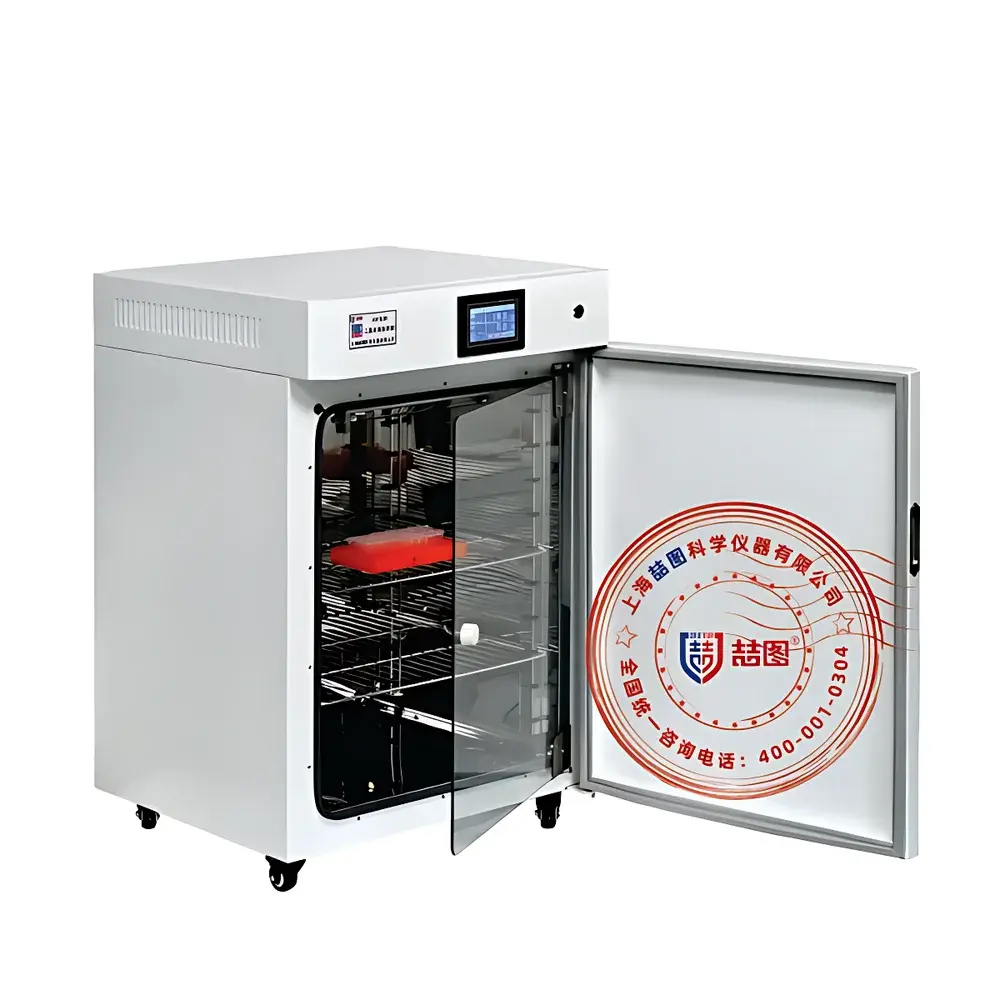
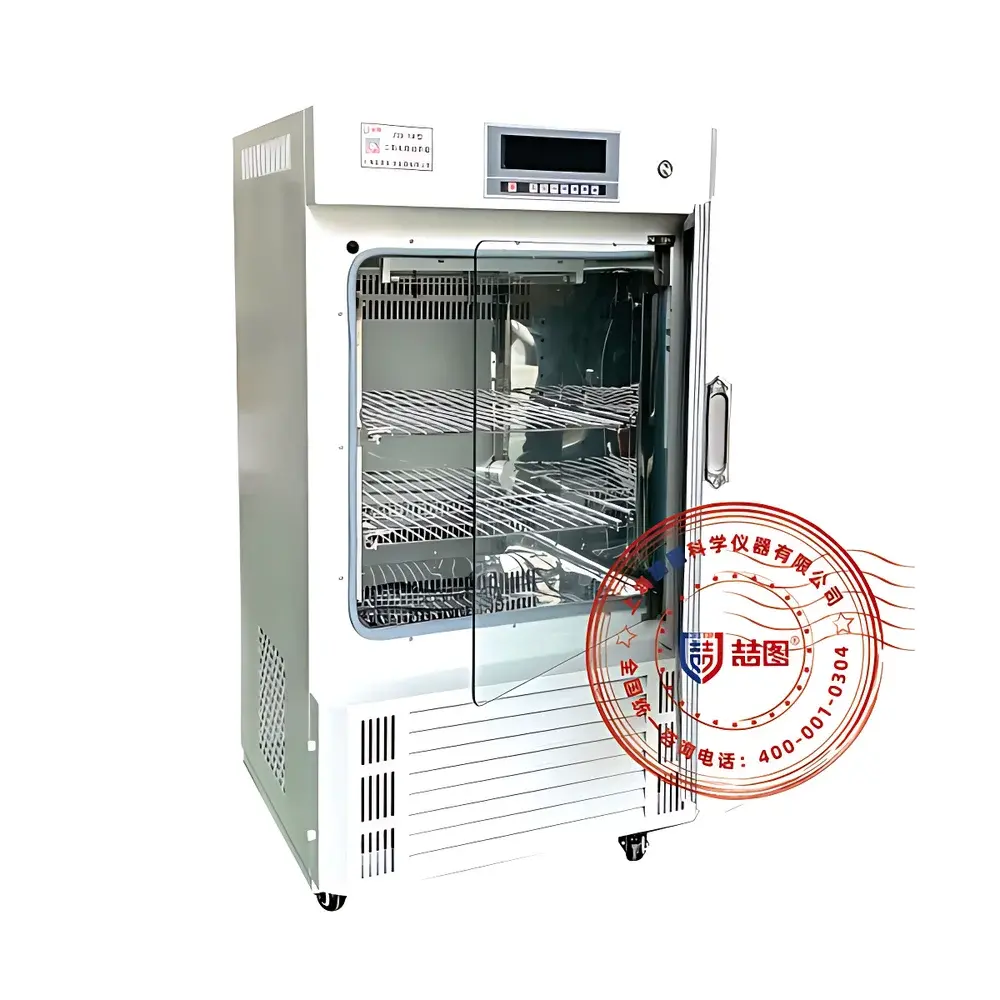
DRETOP ZCQ-270 Gas-Jacketed CO₂ Incubator
| Brand | DRETOP |
|---|---|
| Origin | Shanghai, China |
| Instrument Type | Gas-Jacketed CO₂ Incubator |
| CO₂ Detection | Thermal Conductivity (TC) Sensor |
| Temperature Control Range & Accuracy | RT + 5°C to 60°C, ±0.2°C |
| Temperature Uniformity | ±0.2°C |
| CO₂ Concentration Control Range & Accuracy | 0–20% vol, ±0.1% vol |
| Humidity Control | 95% RH ±3% RH (natural evaporation via reservoir-based humidification) |
| Capacity | 270 L |
| Internal Dimensions (W×D×H) | 600 × 590 × 750 mm |
| Standard Configuration | UV Germicidal Lamp (ozone-free) |
Overview
The DRETOP ZCQ-270 is a precision-engineered gas-jacketed CO₂ incubator designed for reliable, long-term maintenance of mammalian cell cultures under physiologically relevant conditions. It operates on the principle of active CO₂ concentration regulation combined with independent thermal control and passive humidity stabilization—mimicking key parameters of in vivo microenvironments: stable temperature (typically 37°C), tightly regulated CO₂ levels (commonly 5% for bicarbonate-buffered media), and high relative humidity (>95% RH) to prevent medium evaporation. Unlike water-jacketed models, the ZCQ-270 employs a convection-heated gas jacket surrounding the inner chamber, enabling rapid thermal recovery after door openings—a critical performance attribute in high-throughput or multi-user laboratory settings where access frequency is elevated. Its architecture integrates ISO 13485-aligned manufacturing practices and complies with general safety standards for laboratory equipment (IEC 61010-1), supporting GLP-compliant workflows when paired with appropriate documentation protocols.
Key Features
- Gas-jacketed heating system with PID-controlled resistive heaters ensures fast temperature equilibration—≤6 minutes to recover 37°C after a 30-second door opening.
- Thermal conductivity (TC)-based CO₂ sensor with automatic zero-point calibration and temperature compensation delivers stable, oxygen-independent measurement across 0–20% vol range (±0.1% vol accuracy), unaffected by ambient humidity fluctuations.
- Reservoir-style humidification system featuring large-surface-area stainless steel water pan enables rapid humidity recovery (95% RH ±3% RH) and minimizes condensation risk during frequent use.
- UV germicidal lamp (ozone-free) installed in the air circulation path sterilizes recirculated air and evaporative water vapor, reducing airborne microbial load without generating hazardous ozone byproducts.
- Electropolished mirror-finish stainless steel interior with seamless quarter-radius corners facilitates cleaning, inhibits biofilm formation, and supports routine decontamination procedures.
- Anti-tilt shelf design maintains horizontal orientation even when extended halfway—preventing culture vessel spillage and ensuring consistent exposure to environmental parameters.
- Door heating circuit eliminates inner glass door condensation, mitigating contamination risks associated with surface moisture accumulation.
Sample Compatibility & Compliance
The ZCQ-270 accommodates standard T-flasks (up to T225), Petri dishes, multiwell plates, roller bottles, and custom culture vessels within its 270 L working volume. Its chamber geometry and airflow pattern are optimized to minimize thermal and gaseous stratification, supporting uniform growth conditions for adherent and suspension cultures alike. The unit meets essential electrical safety requirements per IEC 61010-1 and incorporates fail-safe mechanisms including overtemperature cutoff, low-water-level interlock (for optional humidification monitoring), and configurable alarm thresholds for temperature, CO₂, and door status. While not pre-certified to FDA 21 CFR Part 11, the incubator’s operational logs—when recorded externally via RS485 interface—can be integrated into validated data management systems compliant with GMP/GLP audit trails.
Software & Data Management
The ZCQ-270 features an intuitive LCD interface with menu-driven navigation, real-time parameter display (temperature, CO₂, elapsed time), and multiple timing modes: run timer, hold timer, and combined temp/humidity dwell timers. Though it lacks embedded data logging, optional RS485 connectivity allows integration with third-party SCADA or LIMS platforms for remote monitoring and event-triggered data capture. All user-set parameters—including alarm limits, setpoints, and timer configurations—are retained through power interruption via non-volatile memory. Calibration offsets for temperature and CO₂ sensors can be entered manually, supporting traceable instrument verification against NIST-traceable reference standards.
Applications
This incubator serves core functions in academic, clinical, and industrial life science laboratories. It is routinely deployed in: primary and immortalized mammalian cell line maintenance; hybridoma culture for monoclonal antibody production; stem cell expansion under defined atmospheric conditions; in vitro fertilization (IVF) embryo culture; toxicology and pharmacodynamics assays requiring precise environmental control; and bioprocess development for recombinant protein expression. Its robustness and repeatability make it suitable for regulatory submissions where environmental consistency must be demonstrably maintained across experimental replicates and longitudinal studies.
FAQ
What is the difference between gas-jacketed and water-jacketed CO₂ incubators?
Gas-jacketed models like the ZCQ-270 heat the chamber air directly via perimeter heaters, offering faster temperature recovery and lower maintenance than water-jacketed units—but with reduced thermal inertia during power loss.
Does the ZCQ-270 support humidity monitoring?
It maintains humidity passively via reservoir evaporation and specifies output as 95% RH ±3% RH; however, it does not include a built-in RH sensor or digital readout—humidity verification requires external hygrometry.
Can the CO₂ sensor be recalibrated in-house?
Yes—the TC sensor includes manual zero-point adjustment and automatic temperature compensation, allowing field recalibration using certified 0% and 5% CO₂ reference gases.
Is UV sterilization continuous or cycle-based?
UV irradiation is manually activated/deactivated via the control panel and operates only when the chamber door is closed and the incubator is idle—ensuring operator safety and lamp longevity.
What materials are used in the internal construction?
The chamber is fabricated from electropolished 304 stainless steel with fully radiused internal corners; shelves are adjustable, autoclavable stainless steel; all seals are silicone-based and resistant to repeated alcohol or hydrogen peroxide decontamination.
Related Products




