
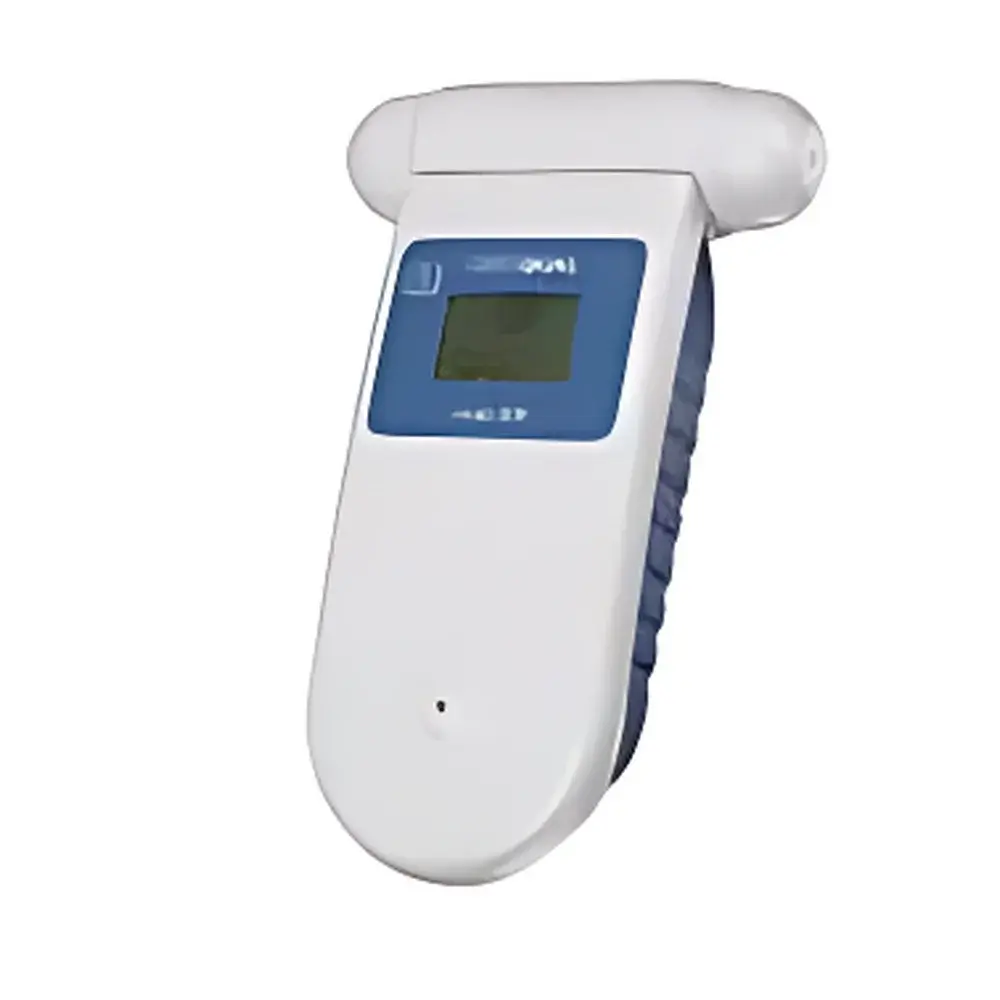
Gas Detector Model 200 – Portable & Fixed-Mount Tetrachloroethylene (PCE) Analyzer
| Origin | Imported |
|---|---|
| Manufacturer Type | Authorized Distributor |
| Model | 200 |
| Price | Upon Request |
Overview
The Gas Detector Model 200 is a dual-mode, field-deployable tetrachloroethylene (C2Cl4, also known as perchloroethylene or PCE) analyzer engineered for real-time ambient air monitoring in industrial hygiene, environmental remediation, and regulatory compliance settings. It operates on the principle of semiconductor gas sensing—specifically utilizing GSS (Gas Sensing Semiconductor) technology—to deliver rapid, stable detection of PCE vapor across a defined concentration range. Unlike electrochemical or PID-based detectors, the GSS sensor provides robust performance in variable humidity and moderate temperature environments without requiring frequent calibration drift correction. The instrument supports both handheld survey operations and semi-permanent fixed-point installation via optional FRP (fiberglass-reinforced polymer) mounting hardware, making it suitable for continuous leak detection near dry-cleaning facilities, solvent storage areas, soil vapor extraction systems, and indoor air quality assessments where PCE exposure risk is regulated under OSHA PEL (100 ppm TWA) and ACGIH TLV (20 ppm TWA).
Key Features
- True dual-mode operation: functions as a portable survey instrument or fixed-mount monitor with FRP enclosure upgrade
- Modular architecture—main unit accepts interchangeable gas sensor cartridges, enabling future expansion to other VOCs without hardware replacement
- High-visibility backlit LCD display showing real-time PCE concentration in ppm, battery status, sensor health indicator, and operational mode
- Extended probe-to-main-unit cable reach of up to 14 meters, facilitating remote sampling in confined or hazardous zones while maintaining operator safety
- Low-power standby mode extends operational runtime; intelligent battery management supports two rechargeable options: 9.6 V Ni-Cd (940 mAh) or high-capacity 9.6 V Ni-MH (2100 mAh)
- Ruggedized housing rated IP20 / NEMA 1 for indoor use; dimensions 195 × 122 × 54 mm; total system mass < 460 g including probe and battery
Sample Compatibility & Compliance
The Model 200 is calibrated and validated exclusively for tetrachloroethylene (C2Cl4) in ambient air matrices. It exhibits minimal cross-sensitivity to common interferents such as chloroform, trichloroethylene, and acetone under standard operating conditions (0–50 °C, 30–80% RH, non-condensing). Sensor response conforms to UL 2034 (Carbon Monoxide and Combustible Gas Alarms) and BS 7860 (Specification for Electrical Apparatus for Detection and Measurement of Flammable and Toxic Gases), reflecting design adherence to North American and UK safety standards. Electromagnetic compatibility meets EN 50082-1:1997 (immunity) and EN 50081-1:1992 (emissions); RF emissions comply with FCC Part 15 Subpart B. While not intrinsically safe for Class I Div 1 environments, its architecture aligns with workplace exposure monitoring requirements under OSHA 29 CFR 1910.1200 (Hazard Communication) and EPA Method TO-17 for sorbent tube–based VOC validation correlation.
Software & Data Management
The Model 200 operates as a standalone analog/digital hybrid device with no embedded firmware-based data logging. However, its 0–5 V analog output (linear with ppm) enables integration into third-party SCADA, DCS, or building management systems for time-stamped trend recording. Optional RS-232 serial interface (available via accessory module) permits connection to PC-based acquisition software for manual download of timestamped measurement sequences. All configuration parameters—including zero offset, span adjustment, alarm thresholds (programmable high/low limits), and backlight timeout—are accessible via physical keypad navigation. Audit trails are maintained manually via operator logbooks; the device does not support FDA 21 CFR Part 11 electronic signature or GLP/GMP-compliant audit logging natively.
Applications
- Occupational health surveys in dry-cleaning establishments and textile processing plants
- Post-remediation verification at brownfield sites contaminated with chlorinated solvents
- Soil vapor intrusion screening in residential proximity to former industrial landfills
- Leak detection during maintenance of PCE-containing equipment (e.g., vapor degreasers, reclamation units)
- Indoor air quality baseline studies in commercial buildings with legacy solvent use history
- Field validation of passive diffusion tube results prior to laboratory GC-MS analysis
FAQ
What is the minimum detectable concentration of tetrachloroethylene with this instrument?
The lower detection limit is 1 ppm under standard environmental conditions (23 °C, 50% RH).
Can the sensor be recalibrated in the field?
Yes—zero and span calibration can be performed using certified PCE gas standards and the built-in calibration menu.
Is the instrument suitable for outdoor deployment?
It is rated IP20/NEMA 1, intended for indoor or sheltered environments only; extended outdoor use requires supplemental weatherproof housing.
Does the device meet EPA or ISO certification requirements for regulatory reporting?
It serves as a screening tool compliant with ASTM D5402 (Standard Practice for Determining Volatile Organic Compound Emissions from Solvent-Containing Products) but is not EPA-certified for enforcement-level data collection.
How often should the sensor be replaced?
GSS sensors typically maintain specified accuracy for 18–24 months under normal use; replacement intervals depend on cumulative exposure duration and peak concentration history.







