
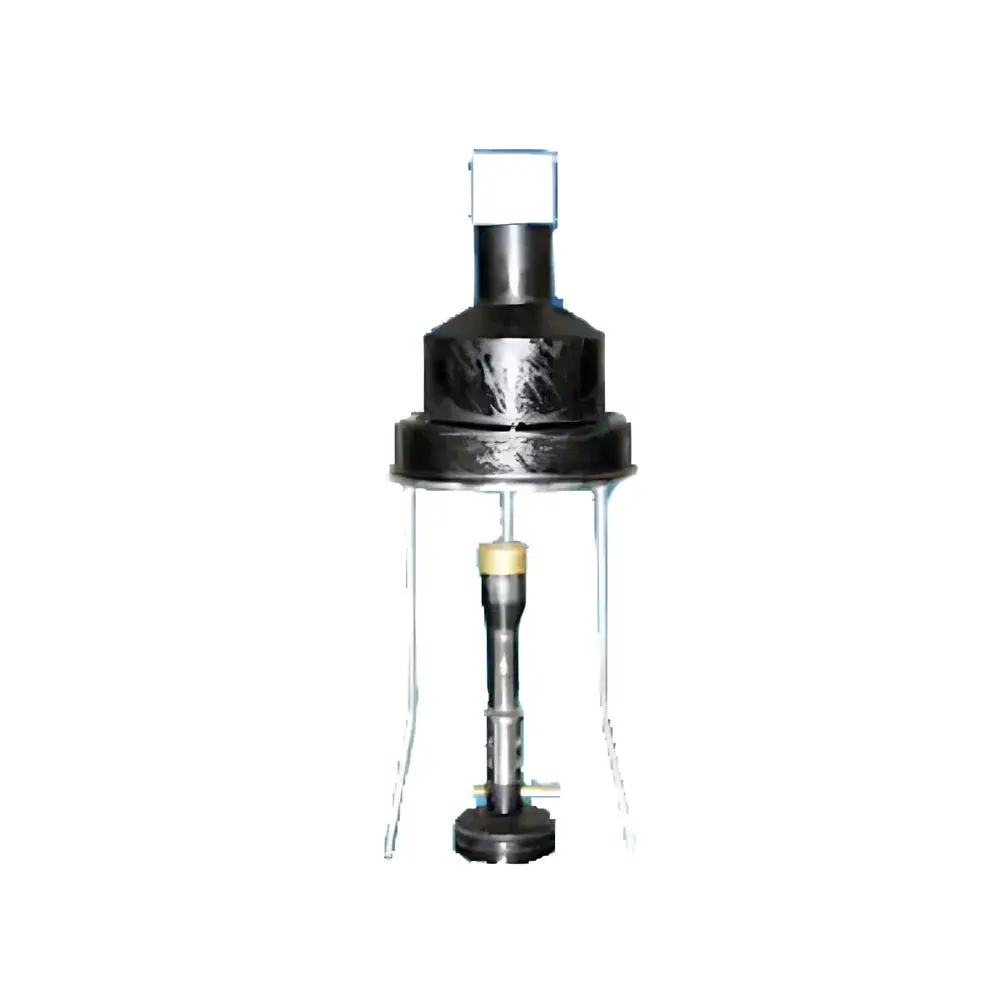
HX-KCR1875 Spectra Invent Conrad Carbon Residue Tester
| Brand | Spectra Invent (Chinainvent) |
|---|---|
| Origin | Beijing, China |
| Manufacturer Type | Authorized Distributor |
| Country of Manufacture | China |
| Model | HX-KCR1875 |
| Price Range | USD 140–14,000 |
Overview
The HX-KCR1875 Spectra Invent Conrad Carbon Residue Tester is a precision laboratory instrument engineered for the quantitative determination of carbon residue in petroleum products—specifically residual fuel oils, diesel fuels, and lubricating base stocks—using the standardized Conradson carbon residue (CCR) method. Based on ASTM D189 and ISO 10370, this apparatus replicates the classical open-crucible thermal decomposition process under controlled heating conditions: a weighed sample is heated in a specially designed glass or porcelain crucible at 500 °C in a regulated air atmosphere until volatiles are driven off and only non-volatile carbonaceous material remains. The mass of the residual coke deposit—expressed as a weight percent of the original sample—is reported as the Conradson carbon residue value. This parameter serves as a critical indicator of thermal stability, coking tendency, and potential fouling behavior during refining, combustion, or high-temperature processing. The HX-KCR1875 integrates robust thermal management, calibrated temperature profiling, and reproducible sample handling to ensure compliance with international test standards and support routine QC/QA workflows in refinery laboratories, independent testing facilities, and R&D centers.
Key Features
- Compliance-certified thermal furnace with PID-controlled heating up to 500 °C ± 2 °C, meeting ASTM D189 and ISO 10370 temperature ramp and soak requirements
- Dual-zone heating architecture: separate preheating and final pyrolysis zones to minimize thermal gradient effects and ensure uniform sample decomposition
- Integrated crucible support system with standardized porcelain crucibles (ASTM-compliant dimensions and thermal mass)
- Stainless-steel reaction chamber with forced-air ventilation and exhaust port compatible with fume hood integration
- Embedded digital timer with audible end-of-test alert and automatic power-down sequence
- Calibration traceability documentation provided per ISO/IEC 17025 guidelines; optional NIST-traceable temperature verification kit available
- Compact benchtop footprint (W × D × H: 420 × 360 × 510 mm) suitable for ISO 17025-accredited lab environments
Sample Compatibility & Compliance
The HX-KCR1875 accepts liquid hydrocarbon samples with initial boiling points above 100 °C and kinematic viscosity below 100 mm²/s at 40 °C—including No. 6 fuel oil, vacuum residuum, cracked stocks, and heavy distillates. Samples must be homogenized prior to testing and introduced into pre-weighed, pre-dried porcelain crucibles using calibrated volumetric pipettes or syringes. The instrument supports both single-sample and sequential batch operation, with full adherence to ASTM D189 Section 7 (sample preparation), Section 9 (heating cycle protocol), and Section 11 (residue calculation). Test reports generated via manual entry or optional LIMS interface comply with GLP documentation requirements, including operator ID, sample ID, ambient humidity/temperature logs, and raw mass data (initial sample mass, crucible + residue mass, tare mass). Instrument validation protocols align with ASTM E2500 and ICH Q2(R2) for analytical instrument qualification.
Software & Data Management
While the HX-KCR1875 operates as a standalone hardware platform, it supports digital workflow integration through its RS-232/USB serial interface. Optional SpectraLog™ CCR Data Manager software (v3.2+) enables automated capture of balance readings (via METTLER TOLEDO or SARTORIUS interface), time-stamped test event logging, and export of residue calculations in CSV, PDF, or XML formats compliant with FDA 21 CFR Part 11 (electronic signatures, audit trail, user access controls). All software modules undergo annual cybersecurity patching and are validated per GAMP 5 principles. Raw mass data is stored locally with SHA-256 hash integrity verification; cloud backup requires on-premise IT approval and encrypted TLS 1.3 transmission.
Applications
- Refinery QC labs: Monitoring carbon residue trends across crude slates and blending components to predict coke drum run length and heater tube fouling
- Fuel specification verification: Confirming conformance to ASTM D975 (diesel), ASTM D396 (fuel oil), and ISO 8217 (marine fuels)
- Lubricant formulation development: Evaluating base stock stability and additive package interactions under simulated thermal stress
- Contract testing laboratories: Delivering accredited CCR results for third-party certification (e.g., ISO/IEC 17025 scope item #4.3.2)
- Academic research: Supporting studies on hydrocarbon cracking mechanisms, coke morphology, and catalyst deactivation kinetics
FAQ
What standards does the HX-KCR1875 conform to?
ASTM D189, ISO 10370, GB/T 268, and IP 14.
Is calibration service included with purchase?
Factory calibration certificate is supplied; on-site annual recalibration by authorized Spectra Invent service engineers is recommended and available under service contract.
Can the instrument be used for Ramsbottom carbon residue (RCR) testing?
No—RCR (ASTM D524) requires a different furnace geometry, pressure control, and crucible design; the HX-KCR1875 is strictly configured for Conradson methodology.
What maintenance is required for long-term accuracy?
Monthly inspection of thermocouple junction integrity, quarterly cleaning of crucible support pins and exhaust ducts, and annual verification of furnace temperature uniformity per ASTM E220.
Does the system support multi-user access control?
Only when paired with SpectraLog™ CCR Data Manager v3.2+; local hardware operation has no built-in user authentication.




