
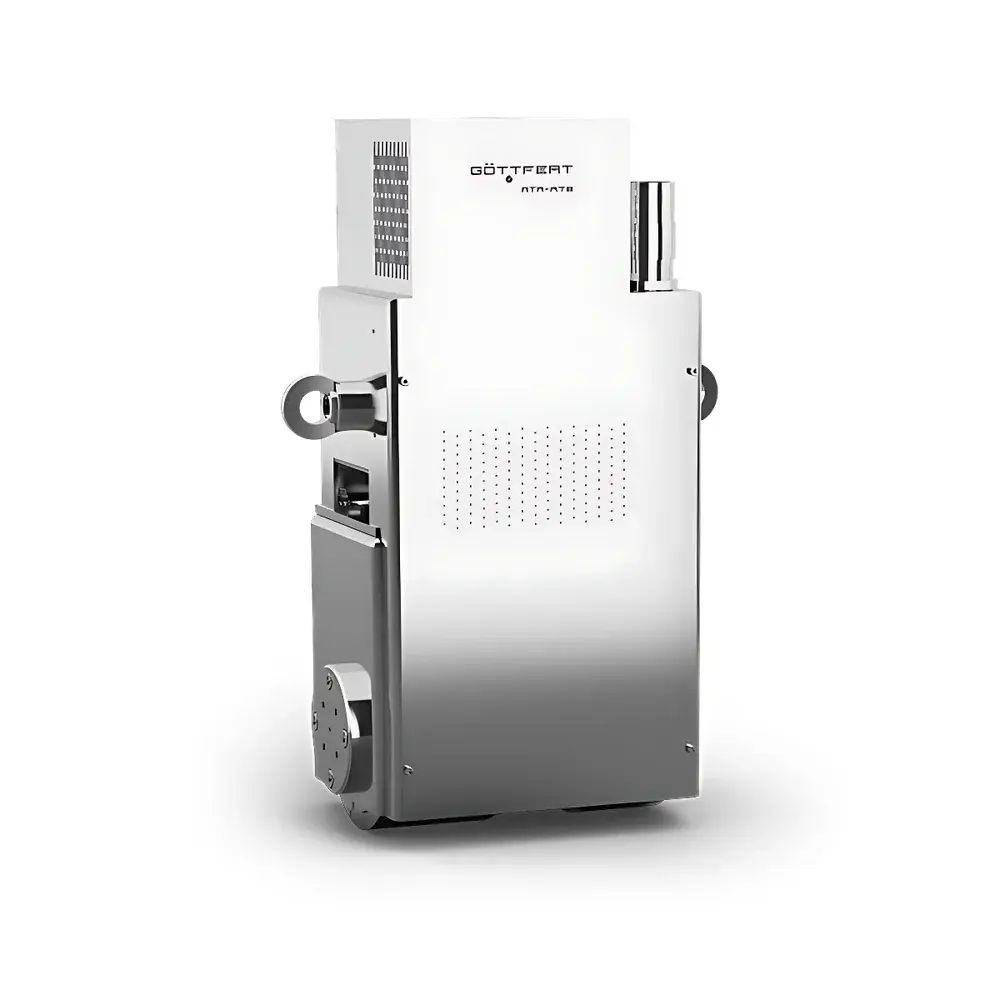
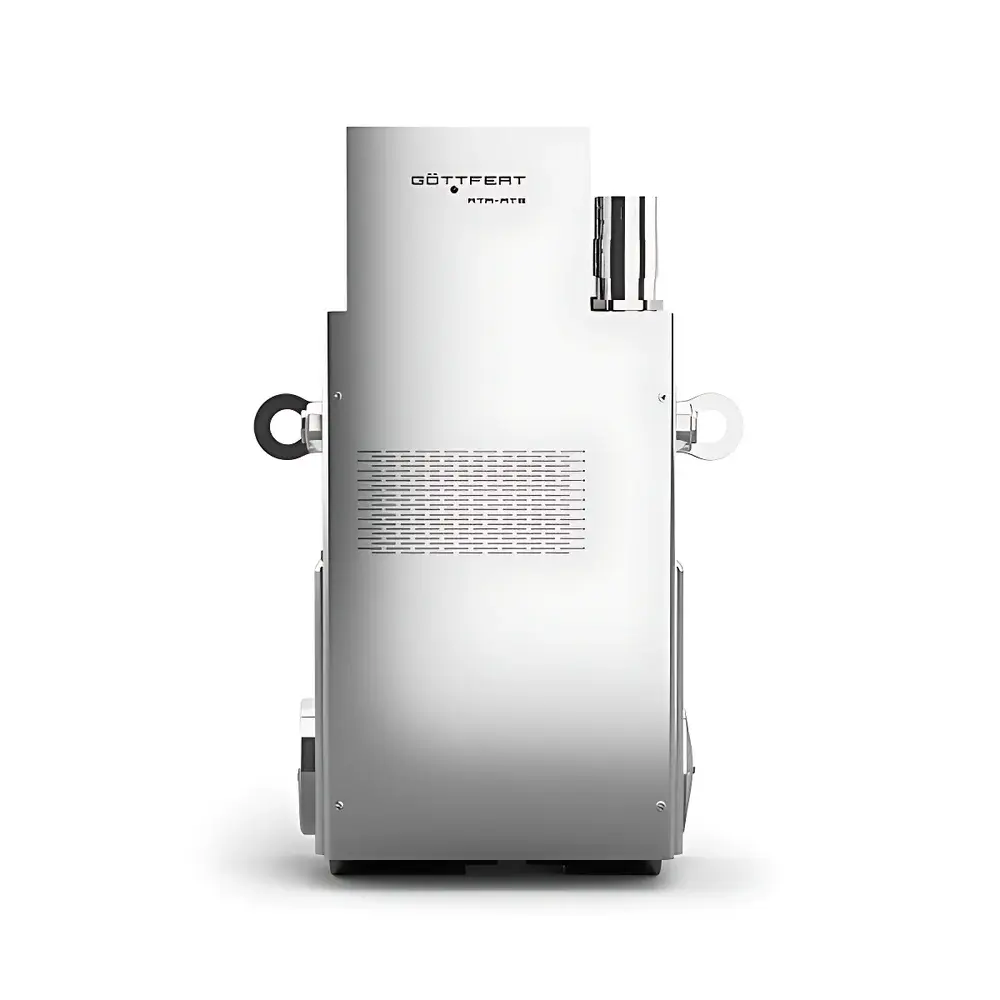
Goettfert RTR Online Capillary Rheometer
| Brand | Goettfert |
|---|---|
| Origin | Germany |
| Model | RTR |
| Capillary Diameter | 0.5–10 mm |
| Capillary Length | 20/60/92 mm |
| Temperature Range | 40–350 °C |
| Pressure Range | 1–350 bar |
| Melt Pump Displacement | 0.37 cm³/rpm |
| Pump Speed | 0.1–100 rpm |
| Dynamic MVR Range | 1:1000 |
| Dimensions (L×W×H) | 550 × 175 × 335 mm |
| Weight | ~70 kg |
Overview
The Goettfert RTR Online Capillary Rheometer is a precision-engineered, in-line viscoelastic characterization system designed for continuous, real-time monitoring of thermoplastic polymer melts during industrial extrusion and compounding processes. Operating on the principle of capillary rheometry—based on Poiseuille flow through precision-machined cylindrical dies—the RTR delivers fundamental rheological data directly from the process stream without offline sampling. Its circular capillary geometry ensures high comparability with laboratory-grade capillary rheometers (e.g., Goettfert’s Rosand series), enabling seamless correlation between R&D, quality control, and production environments. The instrument is engineered for integration into ISO-certified manufacturing lines and supports regulatory compliance frameworks including ISO 11443, ASTM D3835, and ISO 1133 for melt flow rate (MFR) and melt volume rate (MVR) derivation.
Key Features
- Triple-pump patented architecture: independent feed pump, test pump, and recirculation pump—enabling zero-waste melt return to the production line after measurement;
- Ultra-low residence time design: recirculation pump minimizes thermal degradation and shear history accumulation, ensuring representative melt state at point-of-test;
- Wide dynamic range: 1:1000 MVR capability accommodates both low-viscosity engineering resins (e.g., PC, PEEK) and highly filled or shear-thinning compounds (e.g., LCP, TPU blends);
- Dual-mode operation: selectable constant-shear-rate or constant-pressure testing protocols, configurable per ISO 11443 Annex A and B;
- Modular die system: interchangeable capillaries (0.5–10 mm diameter; 20/60/92 mm length) allow optimization for material viscosity and sensitivity requirements;
- Integrated temperature control: PID-regulated heating zones maintain ±0.1 °C stability across 40–350 °C, certified per ASTM E220 calibration standards;
- Robust mechanical architecture: stainless-steel housing, explosion-proof electronics enclosure (ATEX optional), and IP65-rated front panel for harsh plant-floor deployment.
Sample Compatibility & Compliance
The RTR is validated for use with molten thermoplastics—including polyolefins (PP, PE), styrenics (PS, ABS), polyesters (PET, PBT), nylons (PA6, PA66), and high-performance polymers (PEEK, PSU). It supports direct connection to extruder die heads or gear pump outlets via standardized flanged interfaces (DIN 2576 or ISO 2852). All pressure transducers are traceably calibrated to NIST standards; temperature sensors comply with IEC 60751 Class A tolerances. The system meets CE machinery directive 2006/42/EC and electromagnetic compatibility (EMC) directive 2014/30/EU. Optional FDA 21 CFR Part 11-compliant software modules support audit-trail generation, electronic signatures, and role-based access control for GMP/GLP environments.
Software & Data Management
Goettfert’s RHEOPLUS software provides real-time visualization of key parameters—including apparent shear viscosity (ηa), shear stress (σ), shear rate (γ̇), MFR/MVR, Flow Rate Ratio (FRR), and power-law index (n)—with configurable alarm thresholds and trend logging. Data export conforms to ASTM E1447 (CSV) and ISO 80000-9 (SI unit standardization). Historical datasets integrate with MES/SCADA platforms via OPC UA or Modbus TCP. Raw pressure and displacement signals are timestamped at 100 Hz, supporting post-hoc rheological modeling (e.g., Carreau-Yasuda fitting) and multivariate process correlation studies.
Applications
- Real-time detection of molecular weight distribution shifts during polymerization or reactor blending;
- Monitoring of thermal degradation onset in high-temperature extrusion (e.g., PET recycling lines);
- Feedback control of screw speed or barrel zone temperatures based on in-line viscosity deviations;
- Validation of masterbatch dispersion homogeneity via transient shear response analysis;
- Correlation of online FRR values with offline GPC results for rapid QC release decisions;
- Supporting Design of Experiments (DoE) in new grade development by capturing full flow curves under actual processing conditions.
FAQ
Can the RTR operate continuously for 24/7 production monitoring?
Yes—the system is rated for unattended operation up to 12 months with scheduled maintenance intervals aligned to ISO 13374 condition monitoring guidelines.
Is calibration traceable to national metrology institutes?
All pressure, temperature, and displacement sensors are supplied with individual calibration certificates traceable to PTB (Physikalisch-Technische Bundesanstalt) or NIST.
How is melt contamination prevented during long-term operation?
The closed-loop recirculation path includes an integrated 25 µm sintered metal filter upstream of the test pump, replaceable without system shutdown.
Does the RTR support custom die geometries beyond standard specifications?
Yes—Goettfert offers bespoke capillary fabrication (including slit dies and conical entry angles) upon request, with full rheological correction factor documentation.
What cybersecurity features are included for Industry 4.0 integration?
The embedded controller supports TLS 1.2 encrypted data transmission, firewall-configurable network ports, and firmware signing verification per IEC 62443-4-2 Level 1 requirements.



