
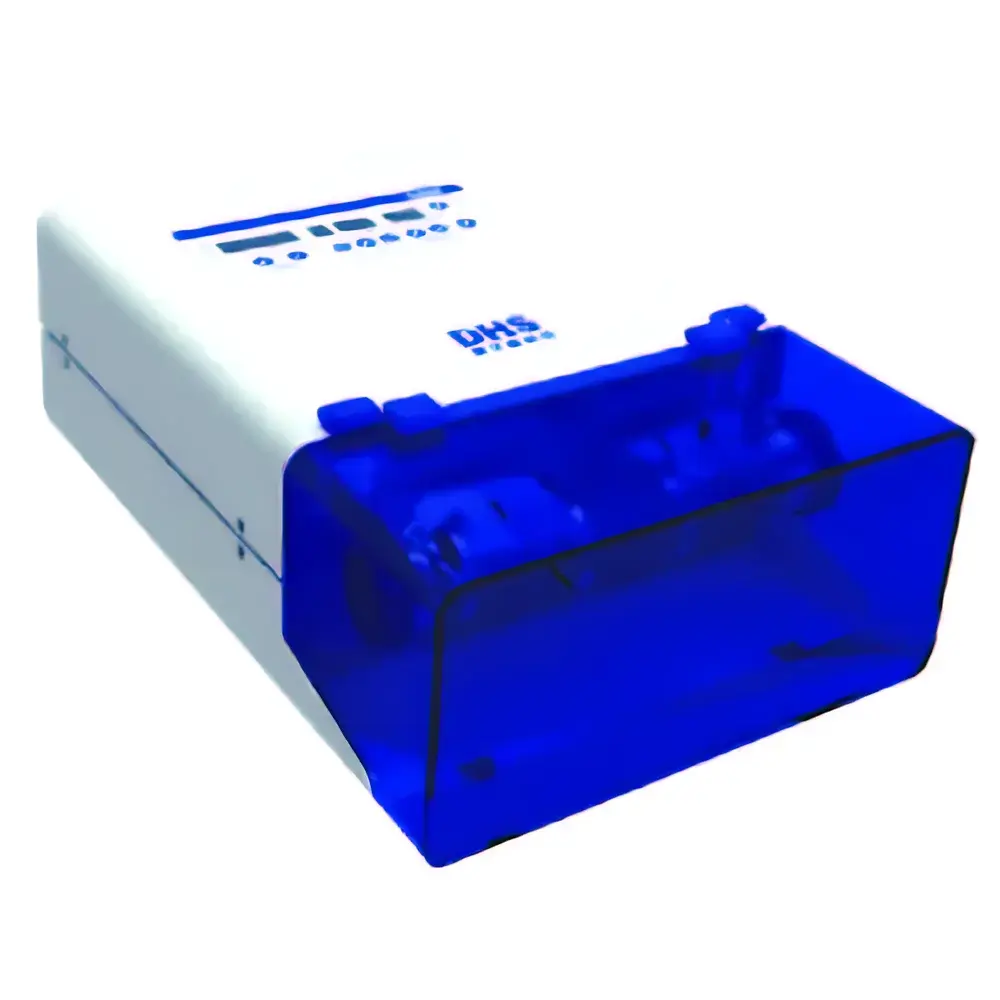
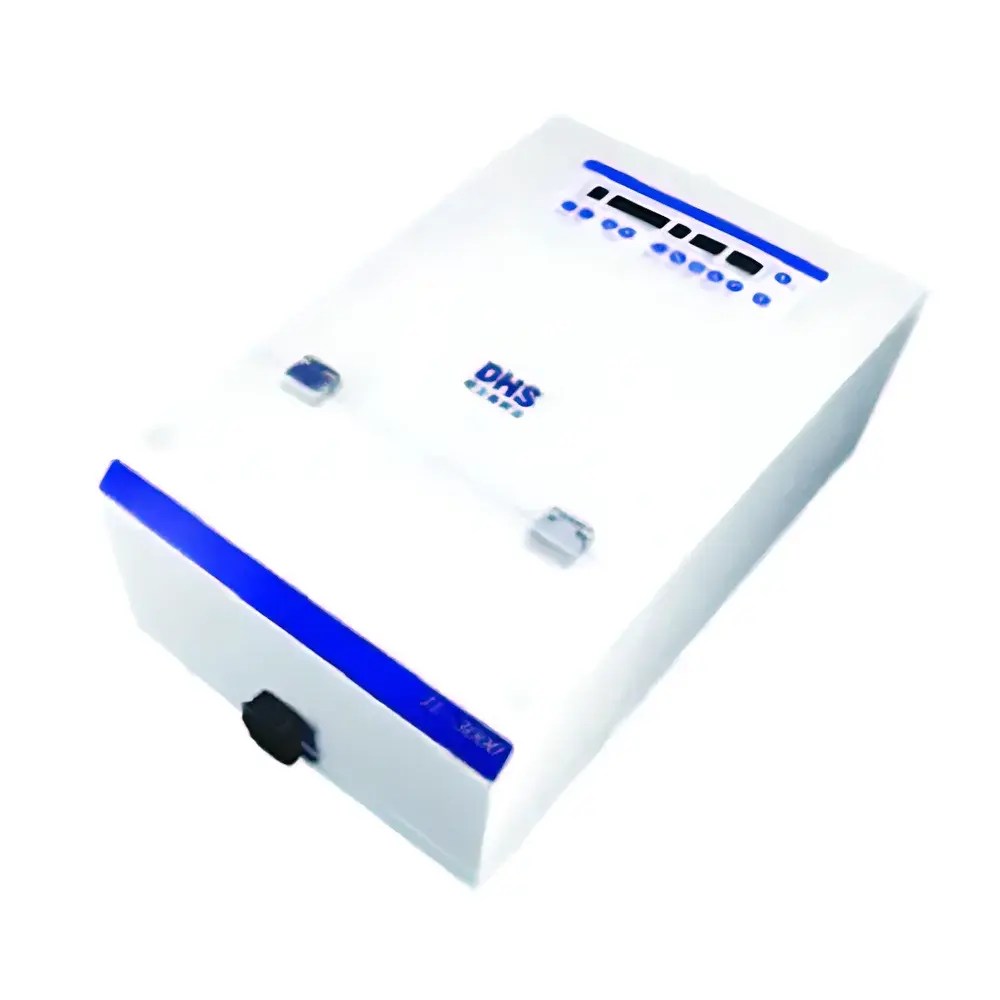
DHS TL3000/TL2010S High-Throughput Cryogenic Tissue Grinder
| Brand | DHS |
|---|---|
| Origin | Tianjin, China |
| Model | TL3000/TL2010S |
| Sample Type | Cryogenic-compatible (liquid nitrogen pre-cooled) |
| Max. Oscillation Speed | 2000 rpm |
| Input Particle Size | ≤8 mm |
| Output Particle Size | ≤5 µm |
| Throughput Capacity | 2 × 12 × 2 mL tubes, 2 × 6 × 4/5 mL rigid tubes, 2 × 15 mL grinding jars |
| Grinding Principle | Horizontal 3D oscillation with bead impact |
| Compatible Grinding Media | Stainless steel / tungsten carbide / zirconia beads (1–8 mm diameter) |
| Jar/Tube Materials | Stainless steel / PTFE-lined / specialized polymer (e.g., Delrin®) |
| Display | Digital LED interface with programmable speed, time, cycle count, and pause intervals |
Overview
The DHS TL3000/TL2010S High-Throughput Cryogenic Tissue Grinder is an engineered solution for rapid, reproducible mechanical homogenization of biological and heterogeneous solid samples under controlled low-temperature conditions. Utilizing horizontal 3D orbital oscillation, the instrument induces high-frequency, multi-directional collisions between grinding beads and sample material within sealed vessels—enabling efficient cell lysis, tissue disintegration, and particle size reduction without significant thermal degradation. Its design prioritizes compatibility with cryogenic workflows: all adapters and grinding containers are liquid nitrogen–compatible, and optional LN₂ clamps ensure stable thermal management during operation. This architecture supports compliance with standardized sample preparation protocols in molecular biology, metabolomics, environmental analysis, and materials science laboratories where integrity of labile biomolecules (e.g., RNA, proteins, metabolites) must be preserved.
Key Features
- Horizontal 3D oscillation mechanism delivers uniform energy distribution across multiple sample positions, minimizing inter-sample variability and enhancing reproducibility.
- Cryogenic-ready configuration: adapters and grinding vessels accept pre-cooling in liquid nitrogen; integrated LN₂ clamps secure temperature stability during extended runs.
- Programmable digital control interface allows precise setting of oscillation speed (up to 2000 rpm), total grinding duration, number of cycles, and inter-cycle pause intervals—supporting optimized protocols for fragile or recalcitrant matrices.
- High-throughput versatility: accommodates up to 192 samples per run using dual 12-position 2 mL tube racks; also supports 4 mL / 5 mL rigid tubes (DHS-reinforced design), 96-well deep-well plates, and 15–50 mL grinding jars.
- Material-flexible consumables ecosystem: interchangeable grinding beads (1–8 mm diameter) in stainless steel, tungsten carbide, or yttria-stabilized zirconia; grinding vessels available in stainless steel, PTFE-coated metal, or chemically inert polymers such as Delrin®.
- Robust mechanical architecture with brushless motor and reinforced chassis ensures long-term operational stability and reduced maintenance frequency.
Sample Compatibility & Compliance
The TL3000/TL2010S is validated for processing diverse sample types—including fibrous plant tissues, frozen animal organs, microbial pellets, soil aggregates, polymer composites, and electronic waste (RoHS screening). Its ability to operate at sub-zero temperatures aligns with ISO 20387:2018 (biobanking) and ASTM D7348–19 (solid waste characterization) requirements for cold-intact sample homogenization. When used with trace-metal-grade consumables and validated cleaning procedures, it supports GLP-compliant workflows in contract research organizations and regulatory testing labs. The sealed-tube configuration prevents cross-contamination and satisfies containment requirements for biosafety level 2 (BSL-2) environments per CDC/NIH guidelines.
Software & Data Management
While the TL3000/TL2010S operates via embedded firmware rather than PC-connected software, its digital interface logs all user-defined parameters—including speed, time, cycle count, and date/time stamps—for manual audit trail reconstruction. Protocol templates can be saved locally on the device for repeatable execution. For laboratories requiring electronic records compliance (e.g., FDA 21 CFR Part 11), integration with third-party LIMS platforms is achievable via RS-232 or USB-to-serial adapters, enabling parameter export and run history synchronization. All firmware updates are delivered through encrypted offline packages to maintain system integrity in air-gapped environments.
Applications
- Molecular biology: Rapid lysis of mammalian, plant, and microbial cells for nucleic acid (DNA/RNA) and protein extraction.
- Clinical diagnostics: Homogenization of frozen biopsy specimens prior to qPCR, NGS library prep, or immunoassay analysis.
- Environmental testing: Grinding of soil, sediment, and sludge samples for heavy metal analysis (ICP-MS/OES) or organic contaminant extraction (EPA Method 3540C).
- Materials science: Size reduction of polymer blends, ceramics, and composite powders for SEM-EDS or XRD analysis.
- Food safety & agriculture: Preparation of grain, seed, and leaf samples for mycotoxin screening or pesticide residue quantification (AOAC 2007.01).
- RoHS/WEEE compliance testing: Pulverization of plastics, circuit boards, and coated metals to achieve representative sub-5 µm analytical sub-samples.
FAQ
What is the minimum recommended sample volume per tube for optimal grinding efficiency?
For 2 mL tubes, ≥100 mg tissue or equivalent dry mass is advised; for 4/5 mL tubes, ≥300 mg ensures sufficient bead-to-sample interaction without overfilling.
Can the instrument process samples without liquid nitrogen cooling?
Yes—ambient-temperature grinding is supported for robust, non-labile samples; however, cryogenic operation is required for heat-sensitive analytes or tough matrices like collagen-rich tissues.
Is the device compatible with international voltage standards (e.g., 230 V / 50 Hz)?
The TL3000/TL2010S includes auto-ranging power supply (100–240 V AC, 50/60 Hz) and meets IEC 61000-6-3 EMC emission standards.
How is calibration verified for reproducible speed and timing performance?
Oscillation speed is factory-calibrated using laser tachometry; users may perform periodic verification with external optical tachometers—no field recalibration is required under normal operating conditions.
Are replacement adapters and grinding jars supplied with lot-specific certification?
Yes—certificates of conformance (CoC) and material traceability documentation are provided for all stainless steel and zirconia components upon request, supporting ISO/IEC 17025 laboratory accreditation requirements.
Related Products



