
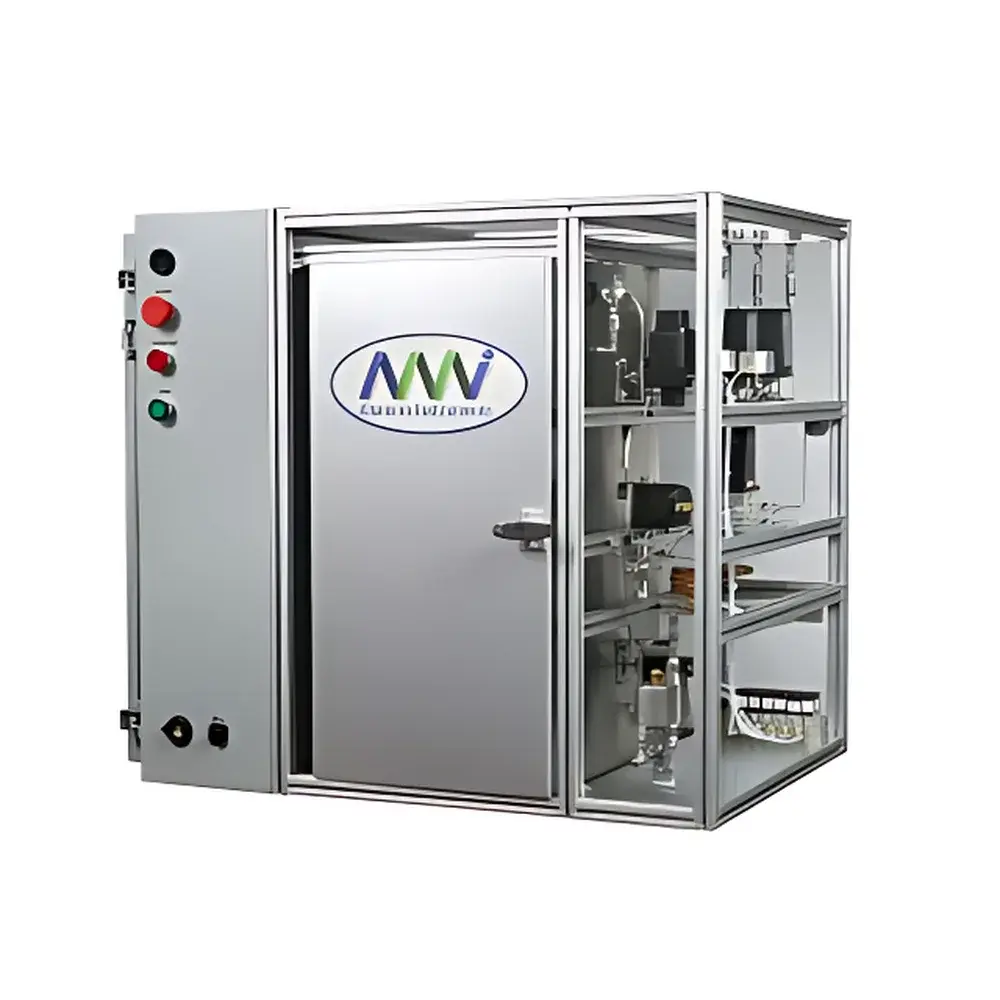
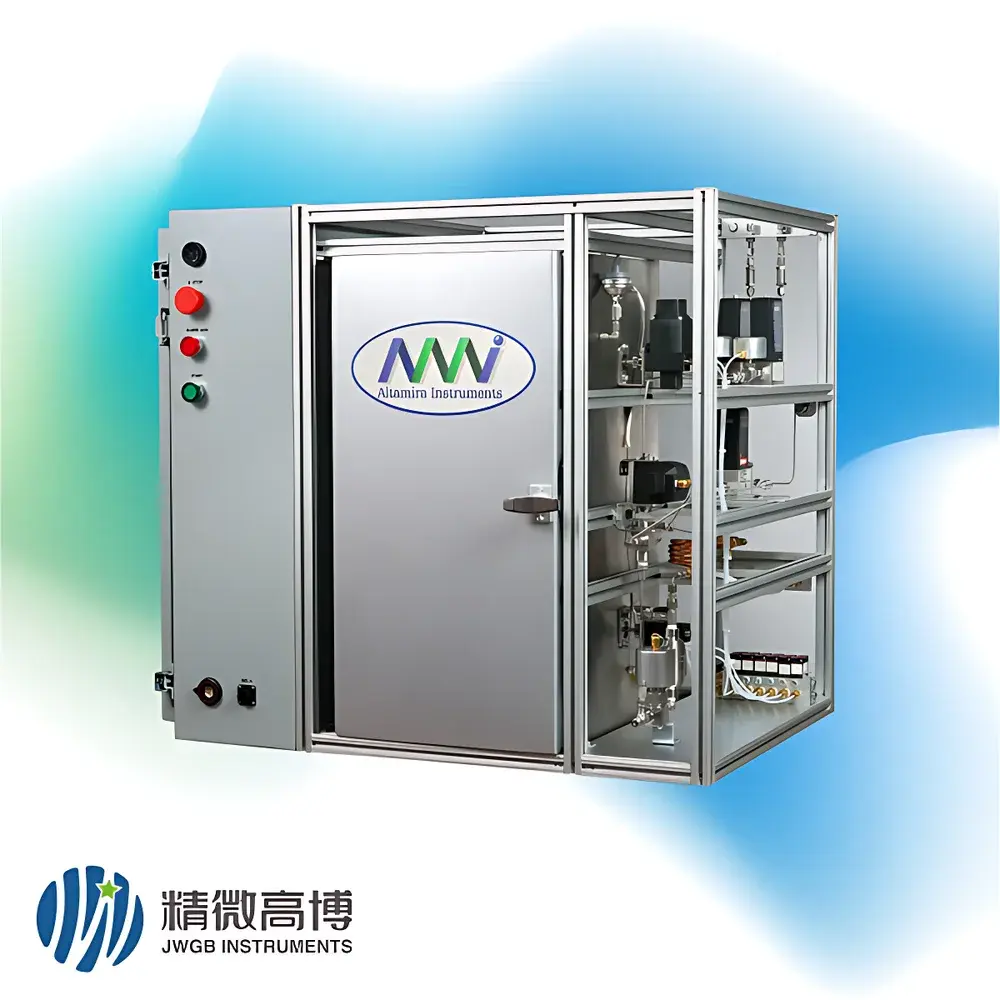
BenchCAT Custom Microreactor by Altamira Instruments
| Brand | Altamira Instruments |
|---|---|
| Origin | Beijing, China |
| Manufacturer Type | Authorized Distributor |
| Country of Origin | China |
| Model | BenchCAT Custom Microreactor |
| Instrument Category | Catalytic Reaction System |
| Reactor Volume | Small-scale (typically 0.1–10 mL) |
| Operating Pressure | Up to 100 bar (customizable to 200 bar) |
| Design Standard | ASME BPVC Section VIII Div. 1 compliant |
| Materials | 316L stainless steel, Hastelloy C-276, or quartz-lined options available |
| Temperature Range | Ambient to 500 °C |
| Flow Configuration | Continuous-flow, plug-flow, or recirculating modes |
| Gas/Liquid Handling | Dual-phase (gas–liquid–solid) catalytic operation supported |
Overview
The BenchCAT Custom Microreactor is a benchtop-scale, high-pressure catalytic reaction system engineered by Altamira Instruments (USA) and manufactured under strict quality control in Beijing. Designed for precision kinetic studies, catalyst screening, and process intensification research, the system operates on continuous-flow fixed-bed or trickle-bed principles, enabling rigorous control over residence time, temperature gradients, pressure profiles, and mass transfer limitations. Its modular architecture integrates seamlessly with upstream gas/liquid delivery modules (e.g., mass flow controllers, HPLC pumps) and downstream analytical interfaces (e.g., online GC, FTIR, or MS coupling), supporting real-time reaction monitoring under industrially relevant conditions. Unlike conventional batch autoclaves, the BenchCAT platform emphasizes reproducibility through precise thermal management (dual-zone PID-controlled heating with axial thermocouple mapping), leak-tight static sealing (metal-C-ring or graphite gasket systems), and traceable calibration protocols aligned with ISO/IEC 17025 practices.
Key Features
- Modular reactor core with interchangeable tube inserts (stainless steel, Hastelloy, quartz) for corrosion-resistant or spectroscopically transparent operation
- Integrated high-fidelity pressure regulation: dual-stage back-pressure regulator with digital setpoint control and real-time pressure logging (±0.1 bar accuracy)
- Programmable temperature ramping and isothermal hold capability across 25–500 °C, with axial uniformity ≤±2 °C over active catalyst bed
- Gas–liquid co-feed compatibility via calibrated syringe pumps or mass flow controllers (MFCs), supporting H2, CO, NH3, O2, hydrocarbons, and aqueous/organic solvents
- Standardized 1/4″ VCR and Swagelok fittings for leak-free integration into existing lab infrastructure; optional explosion-proof enclosure (ATEX Zone 2 compliant)
- Pre-configured safety interlocks: overpressure shutdown, thermal runaway detection, and emergency venting path per IEC 61511 SIL-2 requirements
Sample Compatibility & Compliance
The BenchCAT accommodates heterogeneous catalysts in powder, extrudate, pellet, or monolith form (particle size: 50 µm–3 mm), as well as immobilized enzymes or single-atom catalysts on structured supports. It supports ASTM D3241 (aviation fuel oxidation stability), ISO 11446 (catalyst deactivation testing), and USP method development for pharmaceutical hydrogenation. All wetted components meet FDA-compliant surface finish standards (Ra ≤ 0.4 µm electropolished), and documentation packages include material traceability certificates, pressure vessel test reports (hydrostatic + pneumatic), and factory calibration records—fully audit-ready for GLP and GMP environments requiring 21 CFR Part 11–compliant electronic records.
Software & Data Management
The system operates via Altamira’s ReactorControl™ v4.2 software—a Windows-based application supporting deterministic real-time control loops (100 ms cycle time), synchronized multi-channel data acquisition (pressure, temperature, flow, TCD/FID signals), and automated sequence execution (e.g., light-off curves, pulse-response experiments). Raw datasets are exported in HDF5 format with embedded metadata (timestamp, operator ID, instrument configuration hash), ensuring FAIR (Findable, Accessible, Interoperable, Reusable) compliance. Optional integration with LabArchives ELN or DeltaV DCS enables centralized experiment tracking and regulatory submission readiness.
Applications
- Kinetic modeling of Fischer–Tropsch synthesis, methanol steam reforming, and selective hydrogenation reactions
- Accelerated catalyst lifetime assessment under cyclic thermal/pressure stress (ASTM D7504)
- Development of microkinetic models for CO2 hydrogenation to methanol or olefins
- Screening of photocatalytic or electrocatalytic materials using integrated optical windows or current collectors
- Process validation for continuous manufacturing of API intermediates per ICH Q5C and Q8(R2) guidelines
FAQ
What catalyst forms are compatible with the BenchCAT system?
Powders, extrudates, pellets, monoliths, and coated microchannels—provided particle size distribution and bed void fraction are characterized prior to loading.
Can the system be validated for GMP use?
Yes. Full IQ/OQ/PQ documentation templates, calibration logs, and 21 CFR Part 11 audit trail configuration are provided upon request.
Is remote operation supported?
Local Ethernet/Wi-Fi connectivity enables secure remote monitoring and control via VPN; full cybersecurity hardening (TLS 1.2+, role-based access) is available as an add-on.
What maintenance intervals are recommended?
Quarterly verification of pressure transducer linearity, annual recalibration of thermal sensors, and post-experiment cleaning protocol adherence per SOP-RC-007.
How is catalyst loading performed without compromising seal integrity?
Through a top-access quick-release flange with torque-controlled clamping and helium leak testing (<1×10⁻⁹ mbar·L/s) prior to pressurization.



