
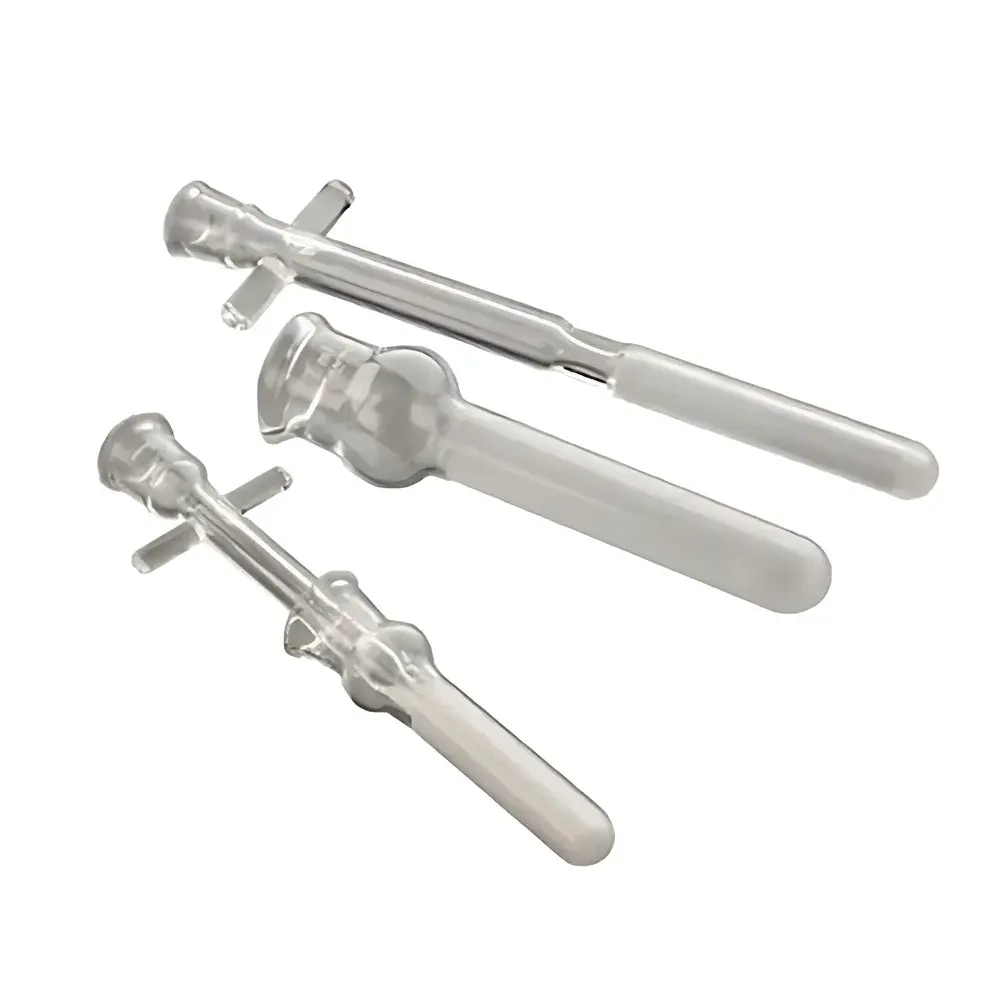
WHEATON 357421 Tenbroeck-Style Tissue Homogenizer
| Brand | SOCOREX |
|---|---|
| Origin | USA |
| Manufacturer Type | Authorized Distributor |
| Origin Category | Imported |
| Model | 357421 |
| Instrument Type | Mechanical Tissue Homogenizer (Tenbroeck Design) |
| Sterilization | Autoclavable (121°C, 20 min) |
| Material | Wheaton 33 Low-Extractable Borosilicate Glass |
| Grinding Clearance | 0.09–0.16 mm |
| Capacity | 1 mL |
| Outer Diameter × Length | 11 mm × 48 mm |
| Total Length | 140 mm |
| Pack Quantity | 2 units per pack |
Overview
The WHEATON 357421 Tenbroeck-Style Tissue Homogenizer is a precision-engineered mechanical homogenization tool designed for gentle yet effective disruption of soft mammalian tissues—including liver, intestinal mucosa, cardiac muscle, and embryonic tissues—under controlled thermal conditions. Based on the classic Tenbroeck design principle, this device operates via a tight-fitting, manually driven glass pestle rotating within a matching glass tube to generate consistent shear forces. Its defining feature is the hollow handle, which accommodates ice during operation to actively suppress frictional heating at the tissue–pestle interface. This thermal management strategy is critical for preserving labile intracellular components—such as membrane receptors, enzymatic activity, and RNA integrity—particularly in primary cell isolation and subcellular fractionation workflows. Constructed entirely from Wheaton 33 low-extractable borosilicate glass, the unit meets stringent biocompatibility and leachables requirements for sensitive biochemical and molecular applications.
Key Features
- Ice-integrated hollow handle design minimizes temperature rise during manual homogenization, maintaining sample temperatures below 4°C under standard use conditions
- Precision-ground pestle–tube clearance of 0.09–0.16 mm ensures reproducible shearing force across batches while preventing excessive cellular lysis or organelle damage
- Autoclavable construction (121°C, 20 min, saturated steam) supports strict aseptic protocols required in primary cell culture and stem cell laboratories
- Chemically inert Wheaton 33 borosilicate glass exhibits ultra-low extractables profile, validated for compatibility with proteomics, metabolomics, and nucleic acid purification workflows
- Compact 1 mL capacity optimized for high-yield processing of limited clinical or biopsy-derived samples without dilution-induced loss of analyte concentration
- Consistent dimensional tolerances ensure interchangeability with standard microcentrifuge tube racks and ice buckets used in cold-room environments
Sample Compatibility & Compliance
The 357421 homogenizer is validated for use with fresh, frozen-thawed, and formalin-fixed paraffin-embedded (FFPE) tissue sections following appropriate rehydration. It demonstrates high recovery efficiency (>85%) for nuclei, mitochondria, and cytosolic fractions from murine liver and porcine heart tissue, as verified by differential centrifugation and marker enzyme assays (e.g., LDH, citrate synthase). The device complies with ISO 10993-5 (biological evaluation of medical devices – cytotoxicity tests) and USP for glass container performance. While not a regulated medical device, its materials and sterilization profile support GLP-compliant sample preparation in contract research organizations (CROs) performing preclinical toxicology studies.
Software & Data Management
As a manual, non-electronic instrument, the WHEATON 357421 requires no embedded firmware, drivers, or software integration. However, its operational parameters—including homogenization speed (rpm-equivalent), stroke count, dwell time, and ice replenishment intervals—are fully documentable within electronic lab notebooks (ELNs) compliant with 21 CFR Part 11. Standard operating procedures (SOPs) developed for this homogenizer may be version-controlled and audit-tracked in systems such as LabArchives or Benchling. Traceability is further enhanced through batch-specific lot documentation provided with each package, including certificate of conformance referencing ASTM E2325-18 (standard guide for glassware calibration).
Applications
- Isolation of intact nuclei for ATAC-seq and ChIP-seq library preparation
- Preparation of mitochondrial-enriched fractions for respirometry and oxidative phosphorylation assays
- Homogenization of small-volume biopsy specimens (<10 mg) prior to qPCR or digital PCR analysis
- Generation of whole-cell lysates for Western blotting where phosphoprotein stability is critical
- Processing of cryopreserved tissue fragments for single-cell suspension in flow cytometry and scRNA-seq workflows
- Extraction of extracellular vesicles from cardiac tissue under cold-isolation conditions
FAQ
Can the 357421 homogenizer be used with viscous or fibrous tissues such as skeletal muscle or tumor stroma?
Yes—when combined with pre-chopping and extended ice-cooled grinding cycles (≥30 sec per pass), it achieves >70% single-cell suspension yield from murine gastrocnemius and human colorectal carcinoma specimens, as confirmed by Trypan Blue exclusion and flow cytometric viability assessment.
Is the grinding clearance adjustable?
No—the clearance is fixed at 0.09–0.16 mm during manufacturing to ensure batch-to-batch consistency; users select among six model variants (357421–357428) based on required volume and tissue density.
Does the glass material interfere with downstream mass spectrometry analysis?
No—Wheaton 33 glass shows negligible silicon leaching under acidic or basic extraction conditions (pH 2–10), and has been successfully employed in LC-MS/MS workflows for phosphoproteome profiling without background interference.
How should the unit be cleaned between uses?
Rinse immediately with deionized water, followed by 70% ethanol immersion for 5 minutes; air-dry vertically in a laminar flow hood. Avoid alkaline detergents or ultrasonic cleaning, which may compromise surface finish and clearance tolerance.



