
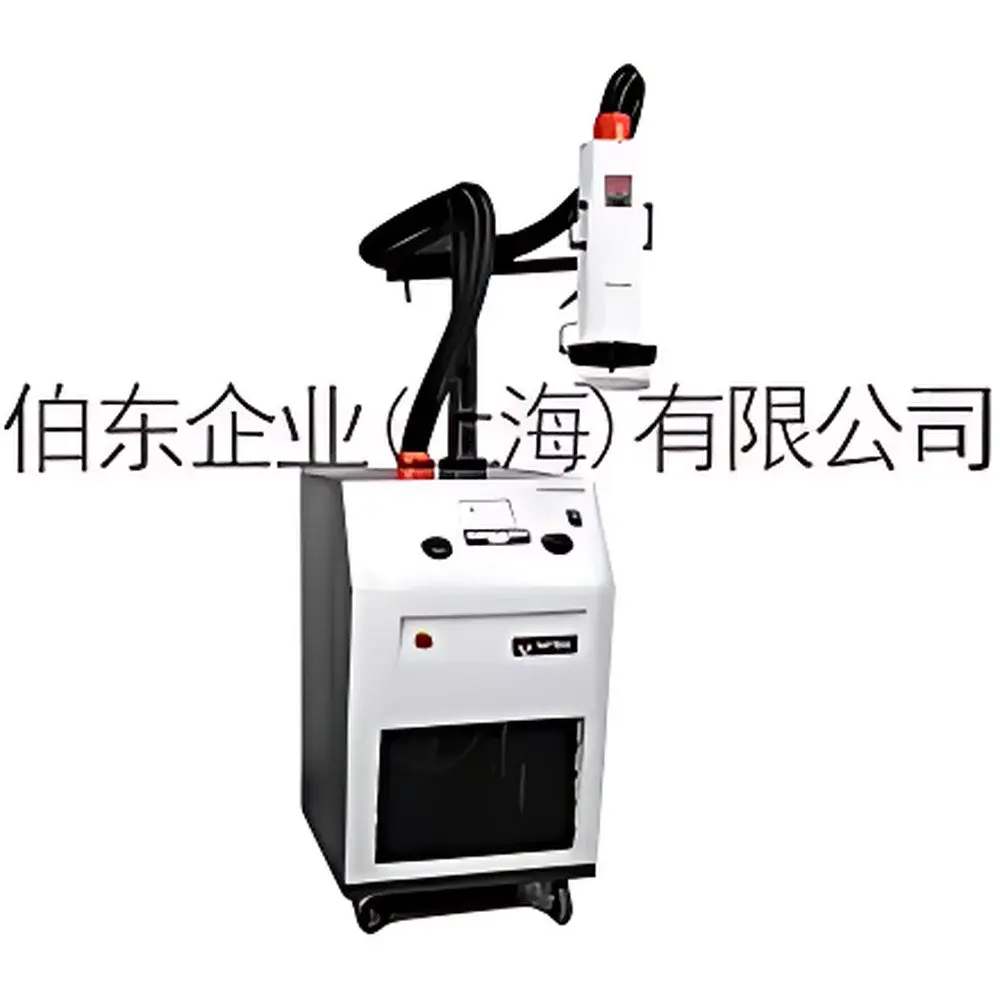
inTEST Temptronic ThermoStream ATS-545-M Thermal Shock Test System for PCB and IC-Level Temperature Cycling
| Brand | inTEST Temptronic |
|---|---|
| Origin | USA |
| Model | ATS-545-M |
| Temperature Range | -80°C to +225°C |
| Ramp Rate | Up to 18°C/s |
| Temperature Accuracy | ±1°C |
| Application | IC-level and board-level thermal shock, temperature cycling, burn-in, and reliability testing |
| Compliance | Designed for ASTM E1543, JEDEC JESD22-A104, MIL-STD-883 Method 1010, and IEC 60068-2-14 |
Overview
The inTEST Temptronic ThermoStream ATS-545-M is an engineered thermal shock test system specifically designed for high-fidelity, real-time temperature cycling of printed circuit boards (PCBs), integrated circuits (ICs), and bare semiconductor die. Unlike conventional environmental chambers that rely on bulk air volume conditioning, the ATS-545-M employs a directed, high-velocity heated or chilled gas stream—delivered via precision nozzles—to apply rapid, localized thermal transients directly onto device-under-test (DUT) surfaces. This methodology enables true *device-level* thermal stress application, decoupling thermal response from board-level thermal mass effects. The system operates on the principle of convective heat transfer with dynamic closed-loop control, allowing users to replicate operational thermal profiles observed during power-on/power-off cycles, thermal runaway events, or field deployment in extreme ambient conditions. Its architecture supports both single-point IC targeting and full-board thermal uniformity, making it indispensable for failure analysis labs, reliability engineering teams, and ATE integration environments.
Key Features
- Ultra-fast thermal ramping: Achieves up to 18°C per second across the full operating range of –80°C to +225°C, enabling accelerated thermal cycling protocols without compromising thermal fidelity.
- IC-level targeting capability: Focuses conditioned airflow precisely on individual components (e.g., BGA, QFN, or flip-chip packages) while maintaining ambient stability for adjacent devices—eliminating cross-talk and enabling fault-isolation testing.
- Real-time DUT temperature feedback: Integrated thermocouple or IR sensor inputs allow closed-loop regulation based on actual junction or surface temperature—not chamber setpoint—ensuring measurement traceability to physical device behavior.
- Modular nozzle interface: Supports interchangeable nozzle configurations optimized for load board mounting, probe station integration, or automated handler interfaces (e.g., SECS/GEM compliant).
- Robust thermal stability: Maintains ±1°C accuracy under dynamic load conditions, verified per ISO/IEC 17025-accredited calibration procedures using NIST-traceable reference standards.
- Low thermal inertia design: Eliminates long soak times typical of conventional chambers; transitions between extreme temperatures occur within seconds rather than minutes.
Sample Compatibility & Compliance
The ATS-545-M accommodates a wide range of electronic substrates and packaging formats—including FR-4 and high-Tg PCBs, ceramic substrates, wafer-level packages, and bare die mounted on thermal chucks or custom carriers. It is routinely deployed in accordance with industry-standard qualification test methods including JEDEC JESD22-A104 (Temperature Cycling), JEDEC JESD22-A106 (Thermal Shock), MIL-STD-883 Method 1010.8 (Steady-State Temperature Cycling), and IEC 60068-2-14 (Change of Temperature). The system’s programmable profile engine supports multi-zone thermal mapping and dwell time sequencing required for HALT/HASS protocols. All firmware and control logic are architected to support GLP/GMP audit readiness, with optional 21 CFR Part 11-compliant electronic signatures and audit trail logging available through certified software modules.
Software & Data Management
Control and data acquisition are managed via ThermoStream Control Software (v5.x), a Windows-based platform offering intuitive profile creation, real-time thermal mapping visualization, and synchronized logging of temperature, flow rate, and DUT feedback signals at up to 10 Hz resolution. Raw data exports comply with ASTM E2915 and ISO/IEC 17025 reporting requirements, generating CSV, XML, and PDF-certified reports with embedded metadata (operator ID, timestamp, calibration status, environmental conditions). Optional integration with LabVantage LIMS or Siemens Opcenter Quality allows direct traceability to product lot numbers and FA database entries. All software updates undergo formal change control and version-locking to ensure reproducibility across global manufacturing sites.
Applications
- Qualification testing of automotive-grade microcontrollers (AEC-Q100 Grade 0–2) under transient thermal loads.
- Failure mode identification in solder joint fatigue (e.g., intermetallic growth, void propagation) via accelerated thermal cycling.
- Validation of thermal interface materials (TIMs) performance under dynamic thermal gradients.
- Pre-solder reflow screening of BGAs prior to assembly to detect latent delamination or popcorning effects.
- Reliability assessment of advanced packaging technologies including 2.5D/3D IC stacks, fan-out wafer-level packaging (FOWLP), and silicon photonics modules.
- Support for IEEE 1149.1 (JTAG) boundary-scan synchronized thermal stress during functional test execution.
FAQ
What distinguishes the ThermoStream ATS-545-M from conventional thermal shock chambers?
Conventional chambers rely on two- or three-zone air immersion with slow thermal mass exchange; the ATS-545-M delivers targeted convective heating/cooling directly to the DUT surface, achieving orders-of-magnitude faster ramp rates and eliminating thermal lag.
Can the system perform temperature cycling on live devices under electrical bias?
Yes—when integrated with compatible probe stations or ATE handlers, the system supports simultaneous thermal stress and functional testing with real-time parametric monitoring.
Is calibration documentation provided with the instrument?
Each unit ships with a factory calibration certificate traceable to NIST standards, covering temperature accuracy, ramp rate verification, and flow linearity across the full operational envelope.
Does the system support automated test sequence execution?
Yes—the control software includes scriptable test sequencing with external trigger I/O (TTL, RS-232, Ethernet/IP), enabling seamless integration into production test lines and reliability qualification workflows.
What maintenance intervals are recommended for sustained accuracy?
Annual preventive maintenance is recommended, including nozzle inspection, flow sensor recalibration, and thermal sensor validation—services available globally through inTEST-certified field engineers.



