
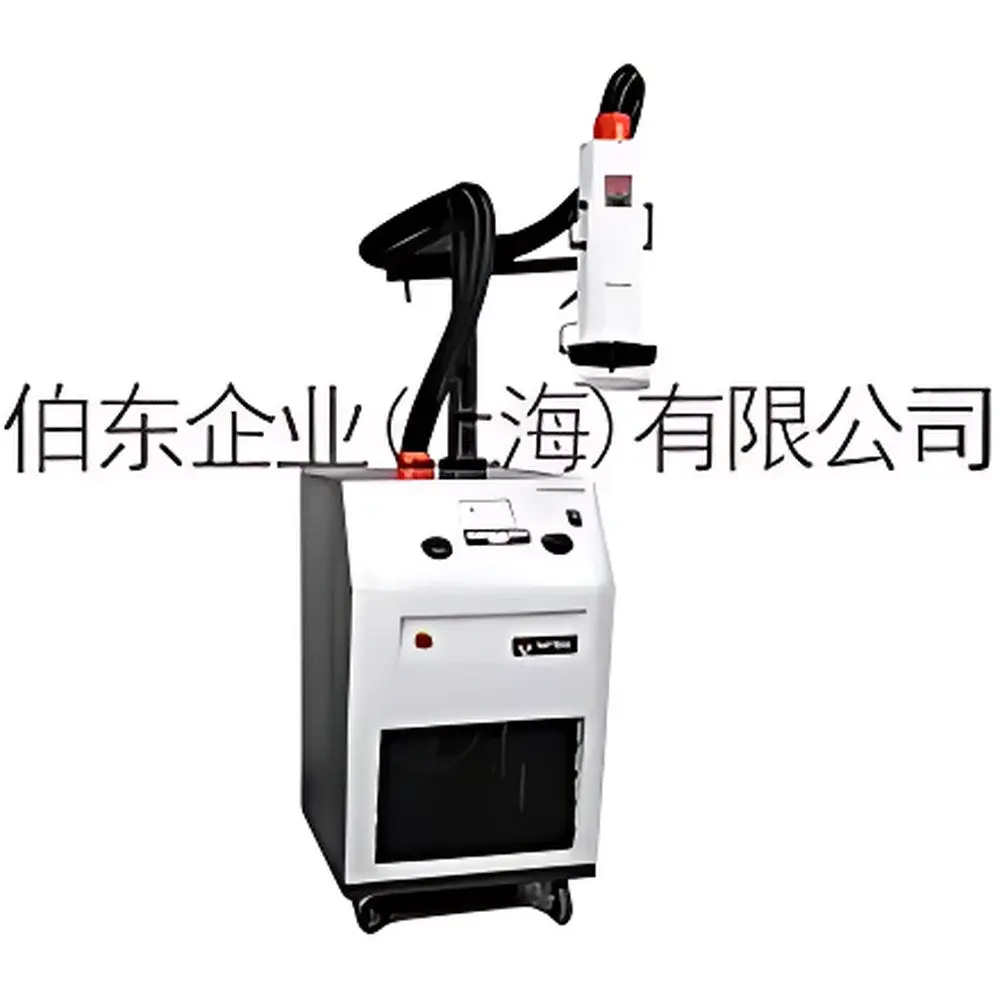
inTEST Temptronic ATS-545-M-7 ThermoStream® Thermal Shock Test System for Optical Transceivers
| Brand | inTEST Temptronic |
|---|---|
| Origin | USA |
| Model | ATS-545-M-7 |
| Temperature Range | -80°C to +225°C |
| Temperature Stability | ±1°C |
| Thermal Shock Range | -80°C to +225°C |
| Cooling/Heating Method | Compressed Dry Air with Integrated Refrigeration & Resistive Heating |
| Operating Mode | Air-Based Localized Thermal Streaming |
Overview
The inTEST Temptronic ATS-545-M-7 ThermoStream® Thermal Shock Test System is an engineered thermal management platform designed specifically for high-fidelity, localized temperature stress testing of optoelectronic components—particularly optical transceivers used in datacom and telecom infrastructure. Unlike conventional environmental chambers that thermally condition entire assemblies or enclosures, the ATS-545-M-7 delivers rapid, precise, and spatially confined thermal cycling via directed airflow. It operates on a closed-loop air-stream principle: compressed, desiccated air is first cooled through an integrated refrigeration unit (capable of reaching −80 °C), then routed through a high-response resistive heating head to achieve up to +225 °C. The conditioned air is delivered through a precision nozzle directly onto the device under test (DUT), enabling dynamic thermal shock profiles with minimal thermal inertia. This architecture supports real-time electrical characterization during temperature transitions—a critical requirement for validating the operational integrity of 40G, 100G, and emerging 400G/800G optical modules under transient thermal loads.
Key Features
- Localized thermal streaming: Targets individual optical transceivers without affecting adjacent components or PCB traces—ideal for board-level qualification and burn-in.
- Rapid thermal transition capability: Achieves typical ramp rates exceeding 100 °C/min between extreme setpoints, significantly reducing test cycle time versus conventional chamber-based systems.
- High-precision temperature control: Maintains ±1 °C stability across the full operating range (−80 °C to +225 °C) with sub-second response to PID-driven setpoint changes.
- Modular air-handling design: Integrates ISO 8573-1 Class 2 desiccant filtration and oil-free air conditioning to prevent moisture ingress and condensation on sensitive optoelectronic surfaces.
- Reproducible thermal shock profiling: Supports programmable dwell times, ramp slopes, and step-cycle sequences compliant with JEDEC JESD22-A104 (Temperature Cycling) and MIL-STD-883 Method 1010.
- Compact footprint and benchtop integration: Designed for seamless incorporation into automated test environments, including ATE racks and probe station workflows.
Sample Compatibility & Compliance
The ATS-545-M-7 accommodates standard SFP+, QSFP28, OSFP, and COBO form-factor optical modules, as well as bare-die transceiver ICs mounted on custom carriers or test sockets. Its non-contact airflow delivery eliminates mechanical loading or thermal conduction artifacts, preserving optical alignment and solder joint integrity during repeated thermal excursions. The system complies with IEC 60068-2-14 (Change of Temperature), IEC 61215 (for photovoltaic module prequalification), and supports traceable calibration per ISO/IEC 17025 requirements when operated with certified reference sensors. For regulated industries—including medical-grade optical interconnects and aerospace avionics—the platform can be configured with audit-ready logging and 21 CFR Part 11–compliant user access controls when paired with optional inTEST ControlSuite™ software.
Software & Data Management
ControlSuite™ software provides deterministic thermal profile scripting, real-time DUT temperature monitoring (via optional K-type or RTD input), and synchronized data capture from external instruments (e.g., bit-error-rate testers, optical power meters). All thermal events—including setpoint changes, dwell durations, actual air temperature at nozzle exit, and alarm states—are timestamped and stored in CSV- and SQLite-compatible formats. Audit trails record operator identity, session start/stop timestamps, and parameter modification history. Exported datasets are compatible with JMP, MATLAB, and Python-based statistical process control (SPC) pipelines for failure mode analysis and accelerated life modeling (e.g., Arrhenius-based FIT rate estimation).
Applications
- Qualification of optical transceivers under thermal shock conditions per GR-468-CORE and Telcordia reliability standards.
- Thermal boundary validation for active optical cables (AOCs) and co-packaged optics (CPO) subsystems.
- Failure analysis of wavelength drift, extinction ratio degradation, and TEC controller instability under rapid ambient shifts.
- Pre-compliance screening prior to formal chamber-based environmental stress screening (ESS) per IPC-9701.
- Process development support for reflow soldering simulation and underfill cure profiling in optoelectronic packaging lines.
FAQ
What distinguishes ThermoStream® technology from conventional thermal chambers?
ThermoStream® uses directed, conditioned airflow instead of convective chamber heating/cooling—enabling faster transitions, superior spatial resolution, and compatibility with live electrical testing.
Can the ATS-545-M-7 perform temperature cycling with humidity control?
No—this model is dry-air only. Humidity-controlled variants (e.g., ATS-710 series) require separate configuration and are not supported by the M-7 platform.
Is remote operation and script automation supported?
Yes—via TCP/IP interface and SCPI command set; fully integrable with LabVIEW, Python, and TestStand frameworks.
What safety certifications does the system carry?
UL 61010-1, CE (EMC & LVD), and RoHS-compliant; factory-calibrated per NIST-traceable references.
Does inTEST provide application-specific validation protocols for optical modules?
Yes—application notes and test method templates for transceiver thermal shock compliance (including JEDEC-aligned soak-and-switch profiles) are available under NDA upon request.



