Hexagon CereScan Intelligent Handheld Blue-Light 3D Scanner
| Brand | Hexagon |
|---|---|
| Origin | Shandong, China |
| Manufacturer Type | Authorized Distributor |
| Product Category | Domestic |
| Model | CereScan |
| Price Range | USD 14,000 – 70,000 |
| Instrument Type | Blue-Light Structured Light 3D Scanner |
| Measurement Speed | 2.48 million measurements per second |
| Scanning Accuracy | Up to 0.01 mm |
| Resolution | Up to 0.02 mm |
| Maximum Scan Area | 600 mm × 550 mm |
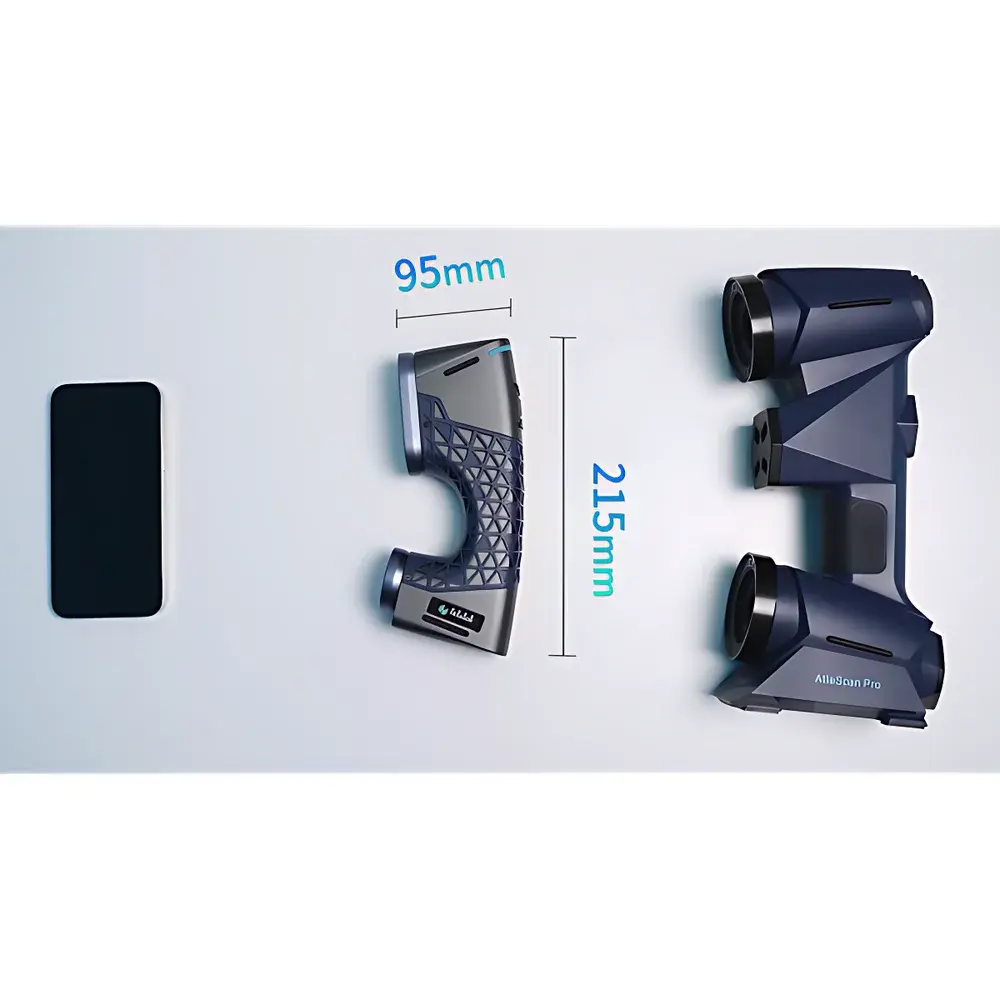
| Unit Weight | 1.0 kg |
Overview
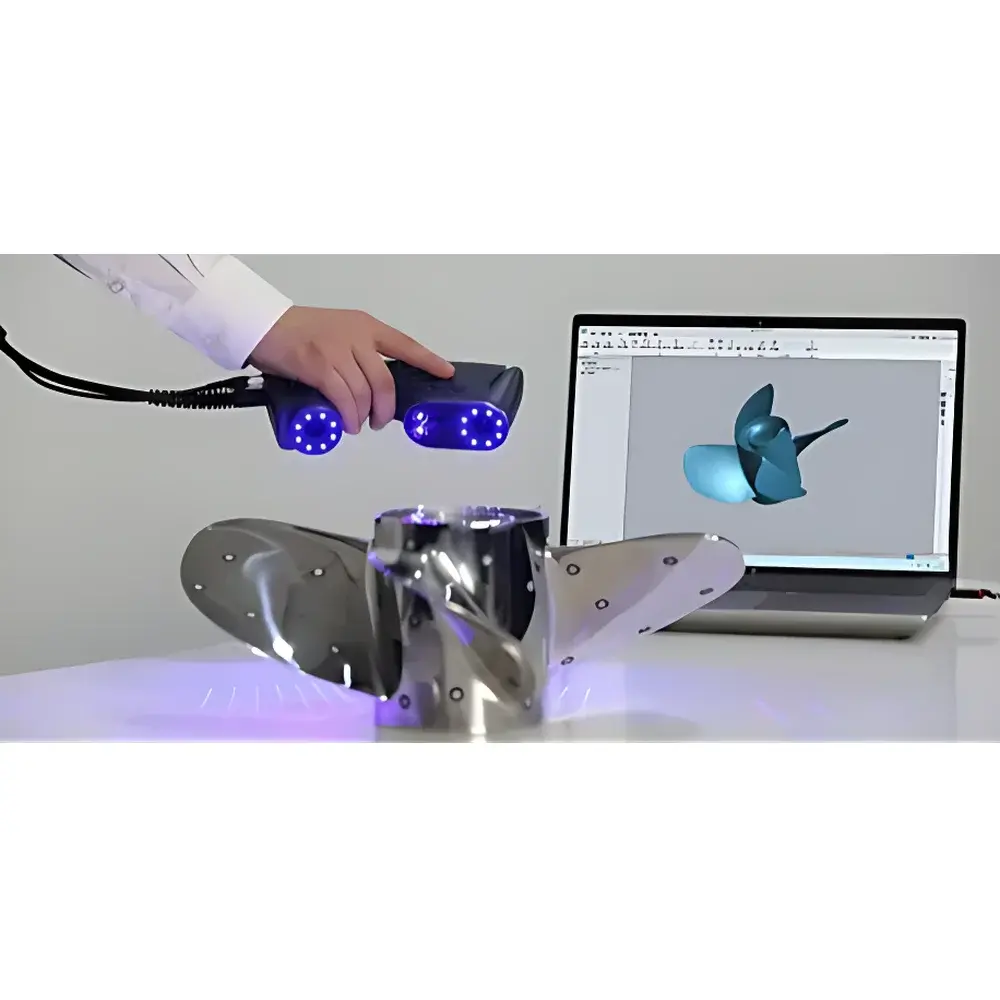
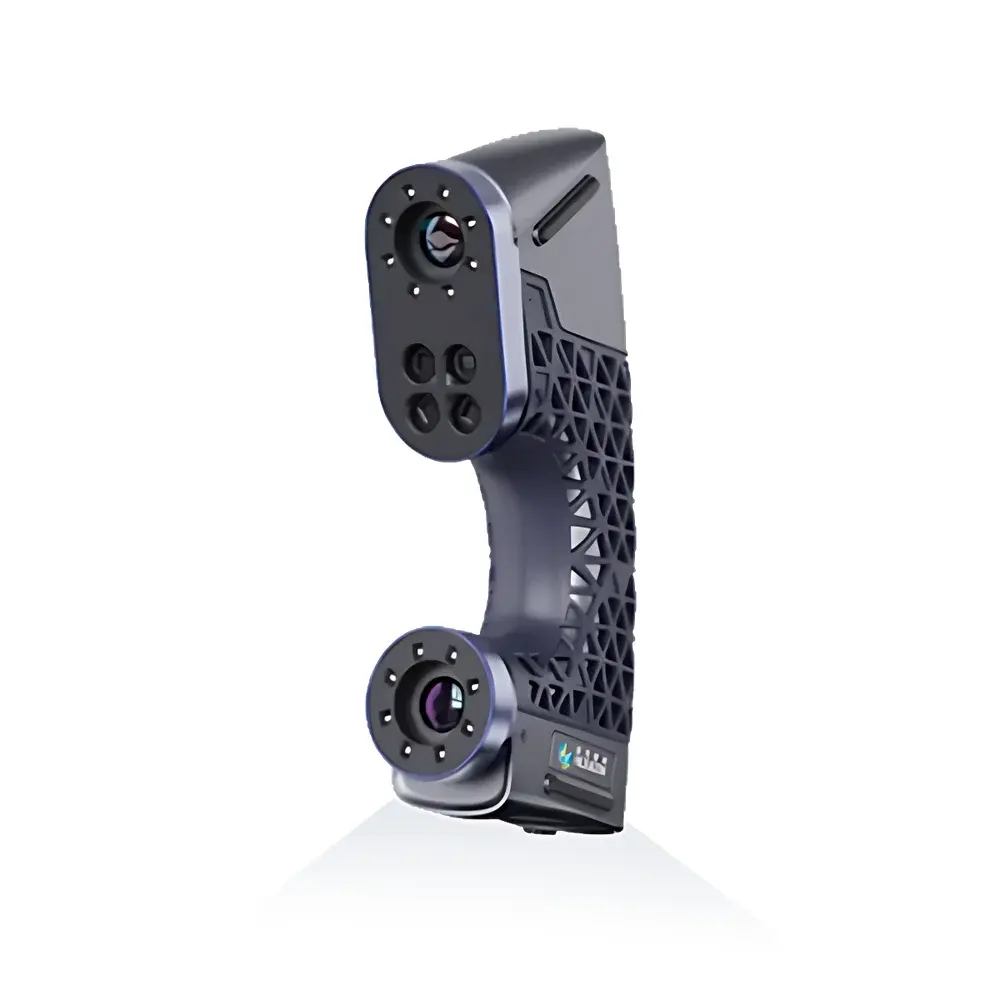
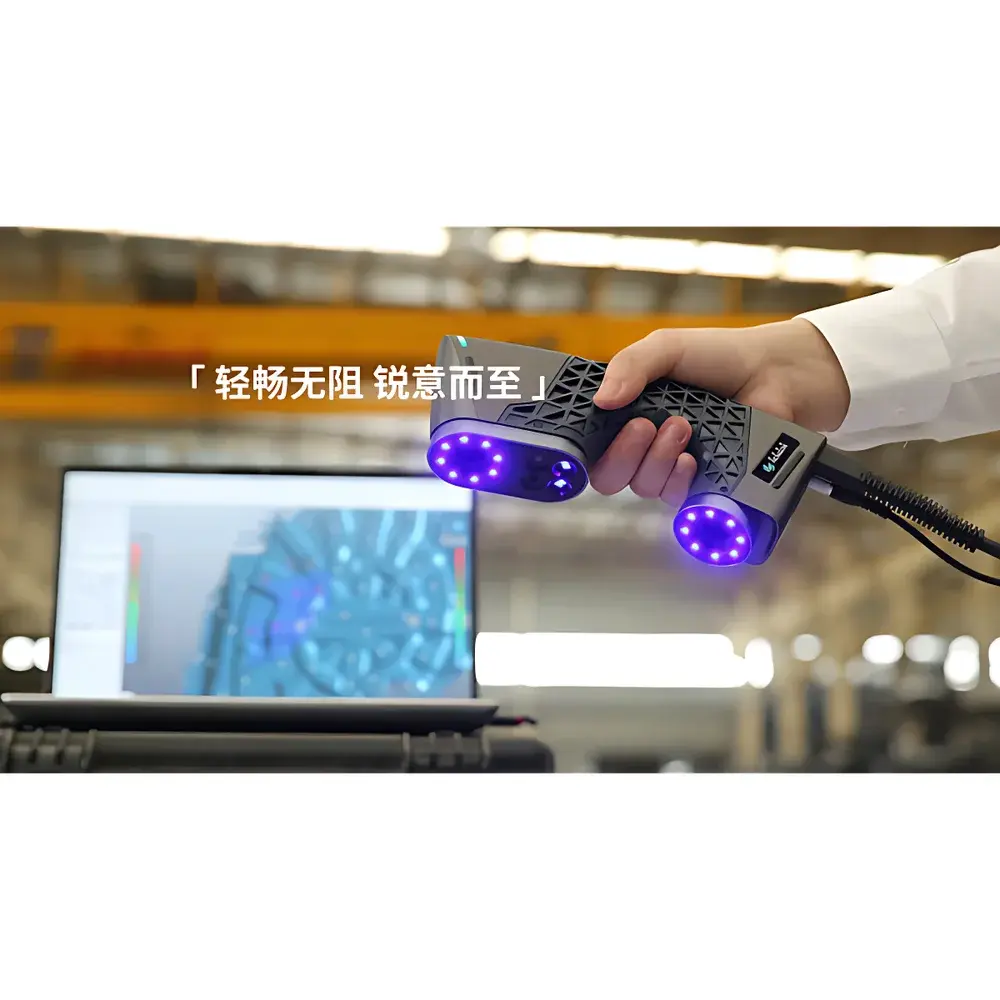
The Hexagon CereScan is a metrology-grade handheld 3D scanner engineered for high-fidelity surface digitization in industrial quality control, reverse engineering, and tooling verification environments. It operates on the principle of blue-light structured light triangulation—projecting 34 synchronized blue laser lines onto the target surface while dual high-speed CMOS cameras capture phase-shifted fringe patterns. This optical architecture delivers robust performance under ambient lighting conditions, with immunity to interference from dark, glossy, or highly reflective surfaces—a critical advantage over red or white light systems. Designed for ISO/IEC 17025-aligned metrology workflows, the CereScan integrates traceable calibration protocols and supports uncertainty budgeting per VDI/VDE 2634 Part 2 and ASTM E2924 standards. Its compact form factor (650 g operational weight) enables sustained one-handed operation during extended inspection sessions, while its modular design allows seamless integration into Hexagon’s broader ecosystem—including Leica Absolute Tracker and PC-DMIS software platforms.
Key Features
- Metrology-validated accuracy of ≤ 0.01 mm volumetric error across full 600 mm × 550 mm field-of-view, verified via NIST-traceable artifact calibration
- Real-time point cloud generation at 2.48 million measurements/sec, enabling dynamic scanning of moving parts or rapid iterative alignment checks
- 34-channel blue laser projection system (450 nm wavelength) optimized for signal-to-noise ratio on challenging surfaces—including black anodized aluminum, carbon fiber composites, and polished steel
- Dual-camera stereo imaging with sub-pixel centroid detection and adaptive exposure control for consistent resolution down to 0.02 mm
- Ergonomic arc-shaped grip with textured anti-slip polymer coating and balanced center-of-gravity distribution for fatigue-reduced operation
- Integrated photogrammetry module supporting marker-based global registration for large-part scanning (up to 10 m³ volume), compliant with ISO 10360-8 geometric error specifications
Sample Compatibility & Compliance
The CereScan accommodates a broad spectrum of industrial components—from turbine blades and injection-molded plastic housings to welded chassis assemblies and composite airframe sections. Surface finish requirements align with ISO 25178-2: Ra < 12.5 µm is recommended for optimal fringe contrast; matte spray application is optional but not mandatory for most metallic or ceramic substrates. The system complies with CE marking directives (2014/30/EU EMC, 2014/35/EU LVD), RoHS 2011/65/EU, and meets IEC 61000-6-2/6-3 immunity/emission thresholds. All firmware and calibration data are stored with cryptographic integrity checks, supporting audit-ready documentation for FDA 21 CFR Part 11 and ISO 13485 medical device manufacturing environments.
Software & Data Management
The CereScan operates natively with Hexagon’s proprietary AtlaScan software suite, which provides real-time mesh reconstruction, GD&T annotation (per ASME Y14.5–2018), and automated deviation reporting against CAD reference models. Raw point cloud data exports in standard formats including .STL, .PLY, .OBJ, and metrology-specific .IGES and .STEP AP214. Version-controlled project files include embedded calibration certificates, environmental logs (temperature/humidity timestamps), and operator ID metadata—enabling full GLP/GMP traceability. Optional API access permits integration with enterprise PLM systems (e.g., Teamcenter, Windchill) via RESTful web services and supports custom scripting in Python 3.9+ for automated QA report generation.
Applications
- First-article inspection of machined aerospace components requiring tight tolerances on thin-wall features and deep cavities
- Tool wear monitoring for die-cast molds through time-series comparison of cavity geometry
- Reverse engineering of legacy parts lacking CAD documentation, especially those with organic contours or undercuts
- In-process validation of additive manufactured parts, including support structure removal verification and porosity assessment
- Dimensional analysis of composite layup tooling where thermal expansion compensation is required across multi-stage curing cycles
- Automotive interior trim fit-and-finish evaluation using color-mapped deviation overlays on Class-A surfaces
FAQ
Is the CereScan certified for use in regulated industries such as aerospace or medical device manufacturing?
Yes—the system supports full compliance documentation packages, including calibration certificates traceable to national metrology institutes, and firmware with electronic signature and audit trail capabilities per FDA 21 CFR Part 11.
Does it require external tracking hardware for large-part scanning?
No—its integrated photogrammetry engine enables standalone large-volume registration up to 10 m³ using coded targets; however, optional integration with Leica AT960 laser trackers enhances volumetric accuracy to ±0.025 mm/m.
Can scan data be directly imported into common CAD platforms like SolidWorks or Siemens NX?
Yes—native export to STEP AP214 and IGES ensures feature-preserving interoperability; direct plugin modules are available for SolidWorks Inspection and Siemens NX Quality Management.
What maintenance intervals are recommended for long-term metrological stability?
Annual recalibration is advised per ISO/IEC 17025; Hexagon-certified service centers perform full optical path verification, camera alignment validation, and laser line uniformity testing using calibrated interferometric references.