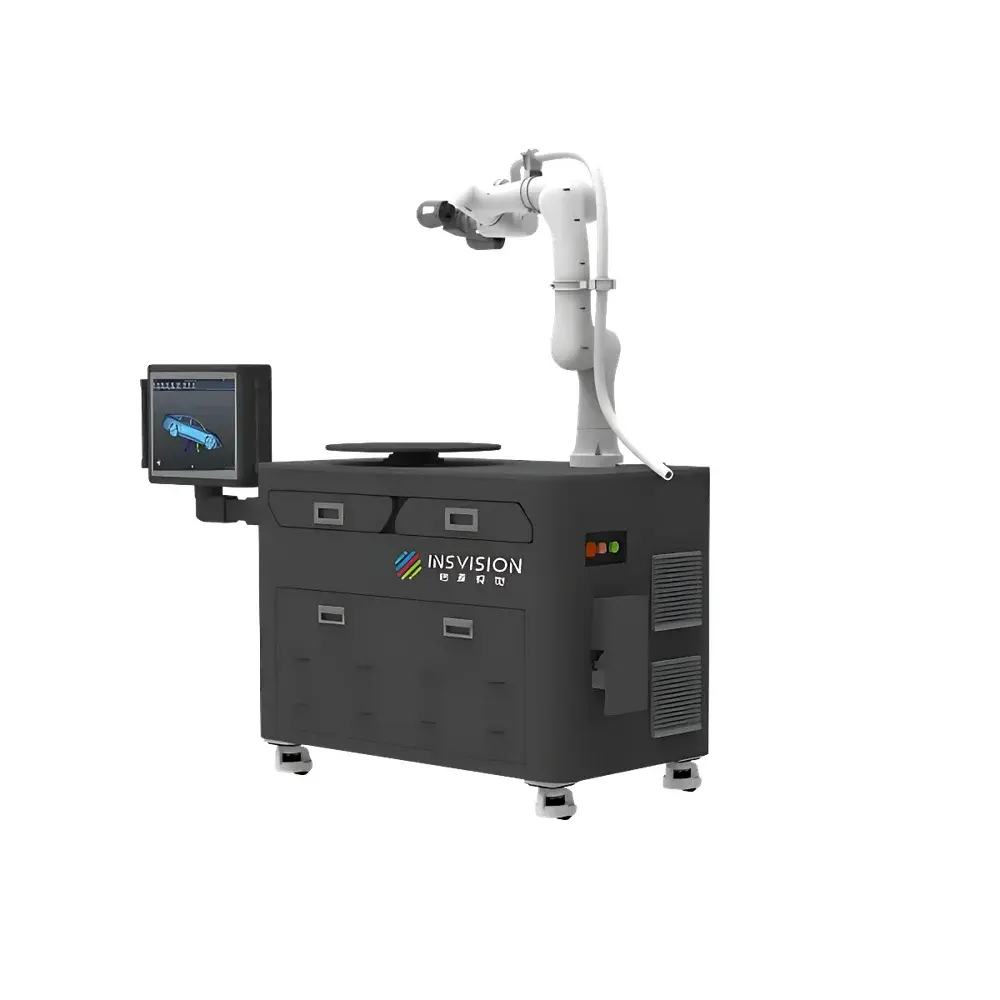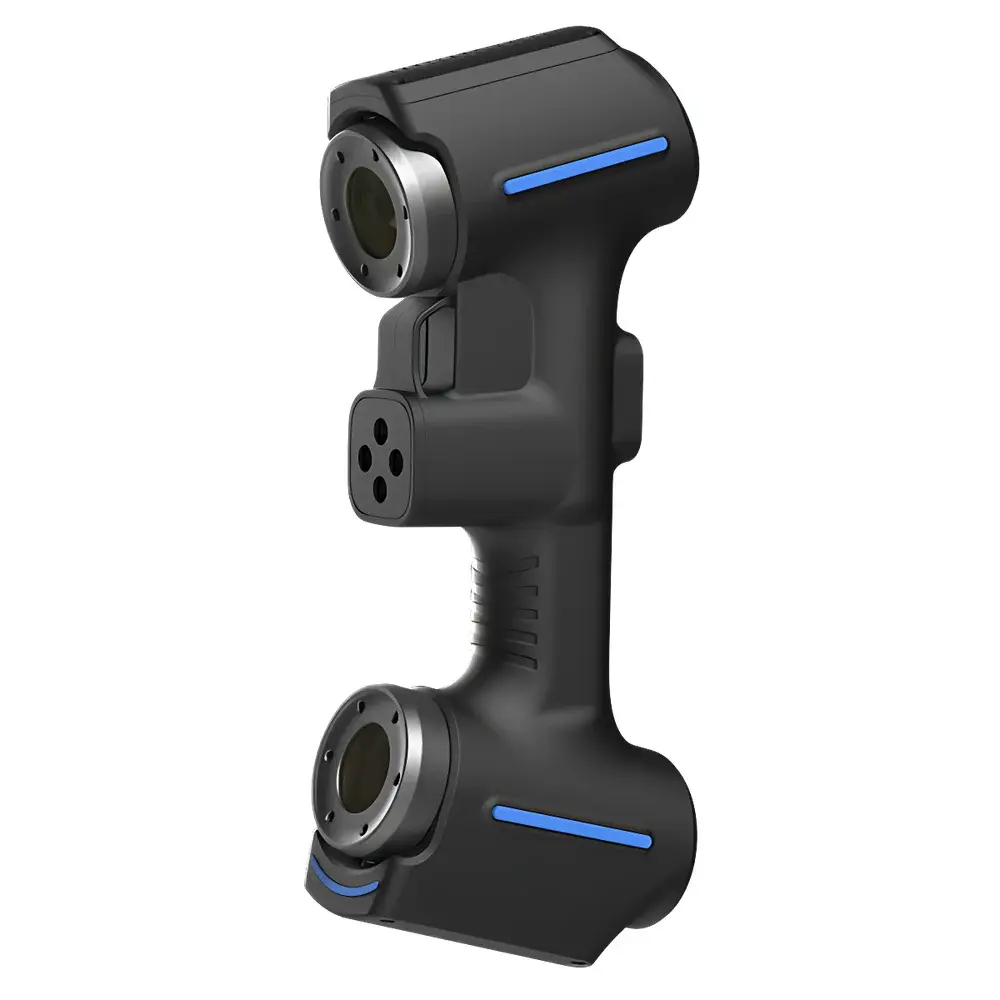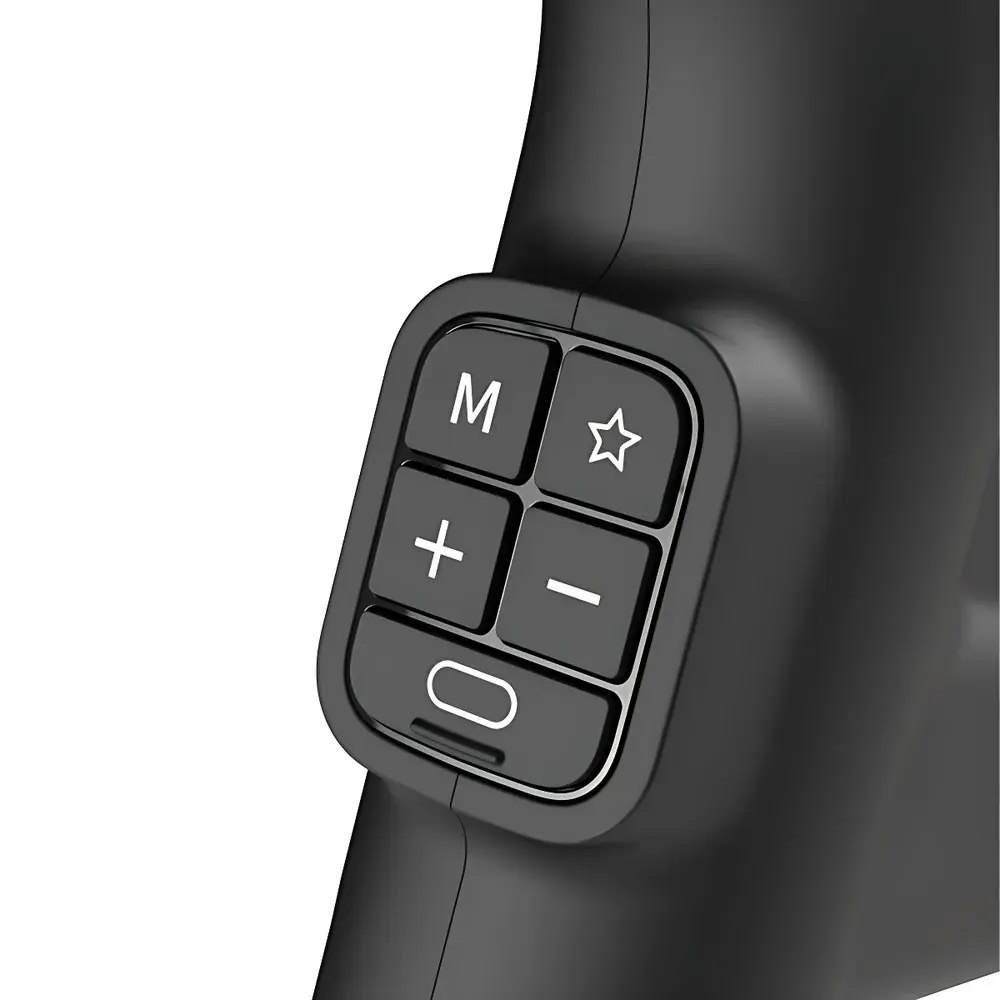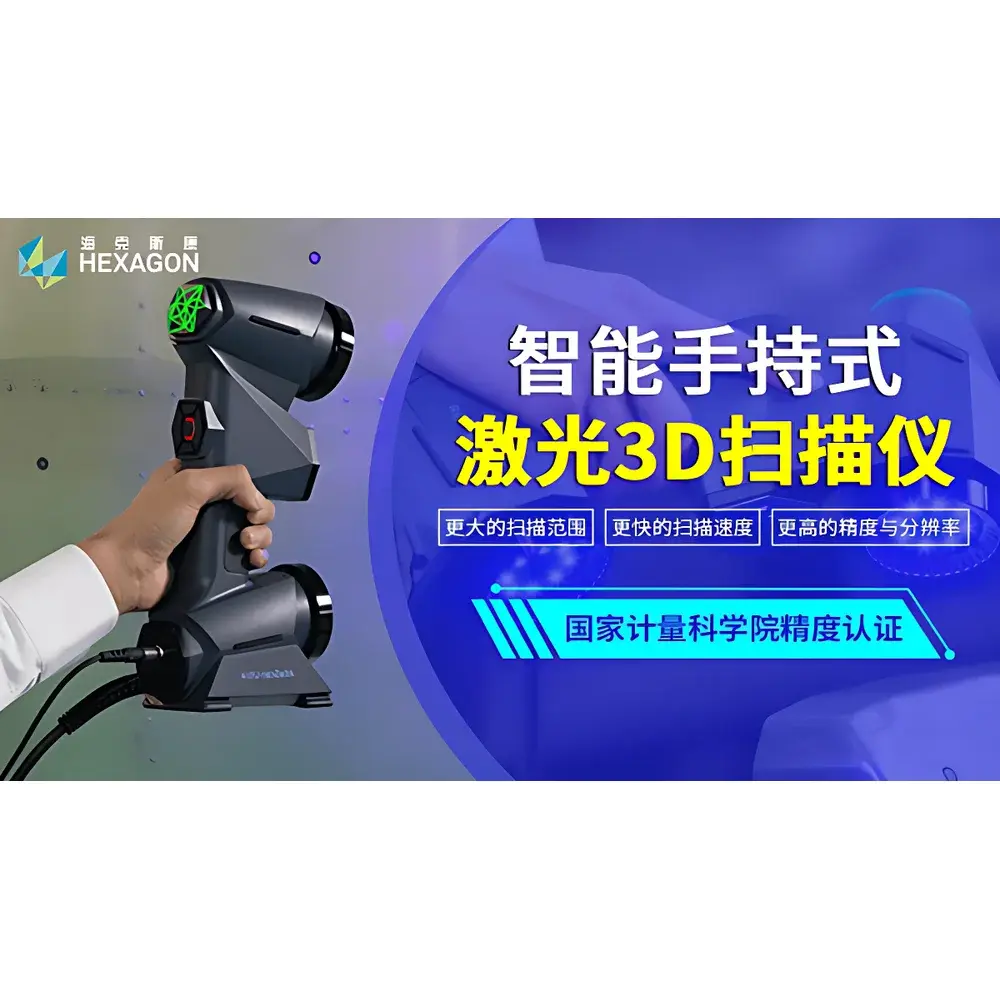
Hexagon RigelScan Smart Handheld Laser 3D Scanner
| Brand | Hexagon |
|---|---|
| Origin | Hubei, China |
| Manufacturer Type | Authorized Distributor |
| Country of Origin | China |
| Model | RigelScan |
| Measurement Speed | 450,000 pts/sec |
| Scanning Accuracy | ±0.01 mm |
| Resolution | Up to 0.02 mm |
| Maximum Scan Area | 600 × 550 mm |
| Weight | 1.0 kg |
Overview
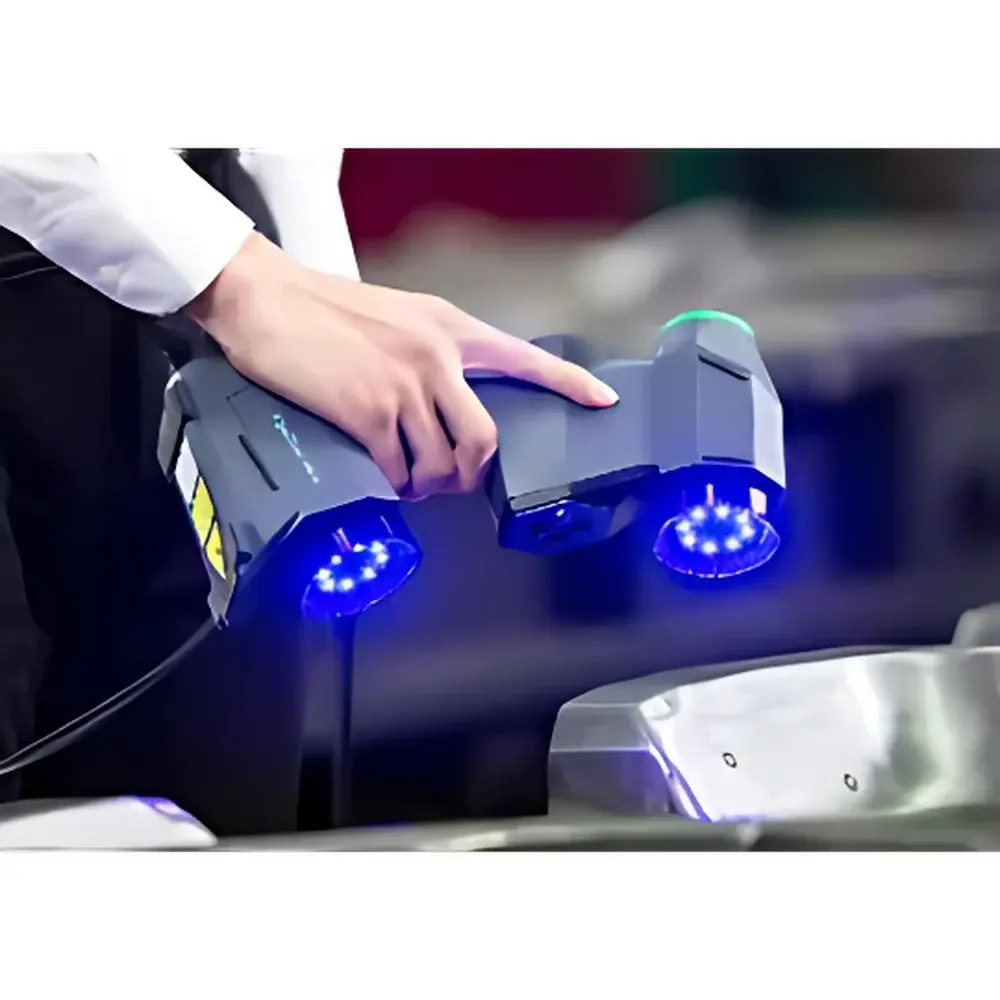
The Hexagon RigelScan Smart Handheld Laser 3D Scanner is an industrial-grade optical metrology system engineered for high-fidelity, non-contact geometric digitization of physical objects. It operates on the principle of structured light triangulation—specifically utilizing dual blue-light LED projectors and high-resolution CMOS stereo cameras—to reconstruct surface topography with sub-hundred-micron spatial fidelity. Unlike conventional white-light or single-wavelength systems, RigelScan employs proprietary dual-mode blue-light illumination (standard and fine modes), enabling robust performance across challenging surface conditions—including glossy, dark, or low-contrast materials—without requiring spray-based surface enhancement. Its metrological traceability is formally validated by the National Institute of Metrology (NIM) of China, confirming compliance with ISO 10360-8 (coordinate measuring machines) and supporting GLP-aligned measurement workflows in regulated manufacturing environments.
Key Features
- Metrological-grade accuracy: Certified scanning accuracy of ±0.01 mm (ISO 10360-8 compliant), with resolution down to 0.02 mm in fine mode—enabling faithful capture of micro-features such as fillets, chamfers, and tooling marks.
- High-speed acquisition: Delivers up to 450,000 measured points per second, accelerated by GPU-accelerated real-time point cloud generation and onboard stereo matching algorithms.
- Adaptive optical architecture: Dual blue-light projection system minimizes ambient light interference and improves signal-to-noise ratio on reflective or absorptive surfaces; hardware-level calibration ensures long-term repeatability without periodic recalibration.
- Modular expandability: Optional wireless communication module enables seamless integration with photogrammetry targets for large-part alignment (up to 10 m³ volume); supports synchronized multi-scanner operation for distributed scanning networks.
- Ergonomic design: Weighing only 1.0 kg with balanced center-of-gravity distribution, optimized for extended handheld use in factory-floor or field-deployed metrology applications.
Sample Compatibility & Compliance
RigelScan reliably captures geometry from metallic, composite, ceramic, rubber, and organic materials—including black anodized aluminum, carbon fiber, vulcanized rubber tires, and aged stone or plaster artifacts—without surface preparation. Its blue-light wavelength (450±10 nm) avoids fluorescence excitation in museum-grade pigments and minimizes thermal loading on thermally sensitive components. The system conforms to IEC 61000-6-3 (EMC emission standards) and carries CE marking for industrial use within the EEA. For regulated industries, raw point cloud data and processed STL/ASCII XYZ outputs are timestamped and logged with full audit trail capability—supporting 21 CFR Part 11-compliant data integrity when deployed with Hexagon’s Metrology Suite software.
Software & Data Management
The scanner integrates natively with Hexagon’s Metrology Suite (v5.2+), a modular platform supporting automated feature extraction, GD&T evaluation (per ASME Y14.5–2018 and ISO 1101), comparison against CAD models (including deviation color mapping), and batch report generation in PDF/PDF/A format. All processing pipelines—including noise filtering, mesh decimation, and NURBS surface fitting—are scriptable via Python API. Raw scan data is stored in vendor-neutral HDF5 containers with embedded metadata (sensor pose, exposure time, calibration ID), ensuring long-term archival integrity and third-party interoperability with PolyWorks, Geomagic Control X, or open-source tools like CloudCompare.
Applications
- Automotive: Full-vehicle body-in-white digitization, competitor benchmarking, A-surface validation, and Class-A clay model scanning.
- Tire & Rubber: Tread wear profiling, inflation-induced deformation analysis, cross-sectional contour extraction, and mold cavity verification.
- Sheet Metal & Stamping: Springback quantification, flange distortion mapping, and first-article inspection against nominal stamping dies.
- Casting & Forging: Mold cavity dimensional verification, core shift detection, and post-machining residual stress assessment via surface topology change tracking.
- Heavy Equipment: Structural weld joint inspection, custom fixture validation, and legacy part reverse engineering for spare parts digital twin creation.
- Cultural Heritage: Contactless digitization of fragile artifacts, orthorectified mural documentation, virtual restoration simulation, and structural crack propagation monitoring over time-series scans.
FAQ
Is RigelScan certified for metrological traceability?
Yes—its accuracy has been independently verified by the National Institute of Metrology (NIM), China, under ISO/IEC 17025-accredited procedures.
Does it require target markers or spray for scanning dark surfaces?
No—dual-mode blue-light illumination and adaptive exposure control enable stable capture on matte black, polished steel, and carbon fiber without surface treatment.
Can multiple RigelScan units operate simultaneously in one workspace?
Yes—multi-scanner synchronization is supported via Ethernet or optional wireless module, with automatic pose registration using shared photogrammetric reference frames.
What file formats does the native software export?
Point clouds (PLY, PTS, E57), polygonal meshes (STL, OBJ, 3MF), and metrology reports (PDF, XML, CSV) with GD&T annotations and statistical process control (SPC) charts.
Is firmware and software update support available internationally?
Yes—Hexagon provides remote firmware updates and quarterly software releases through its global Metrology Support Portal, accessible to all registered end-users regardless of regional distributor affiliation.