
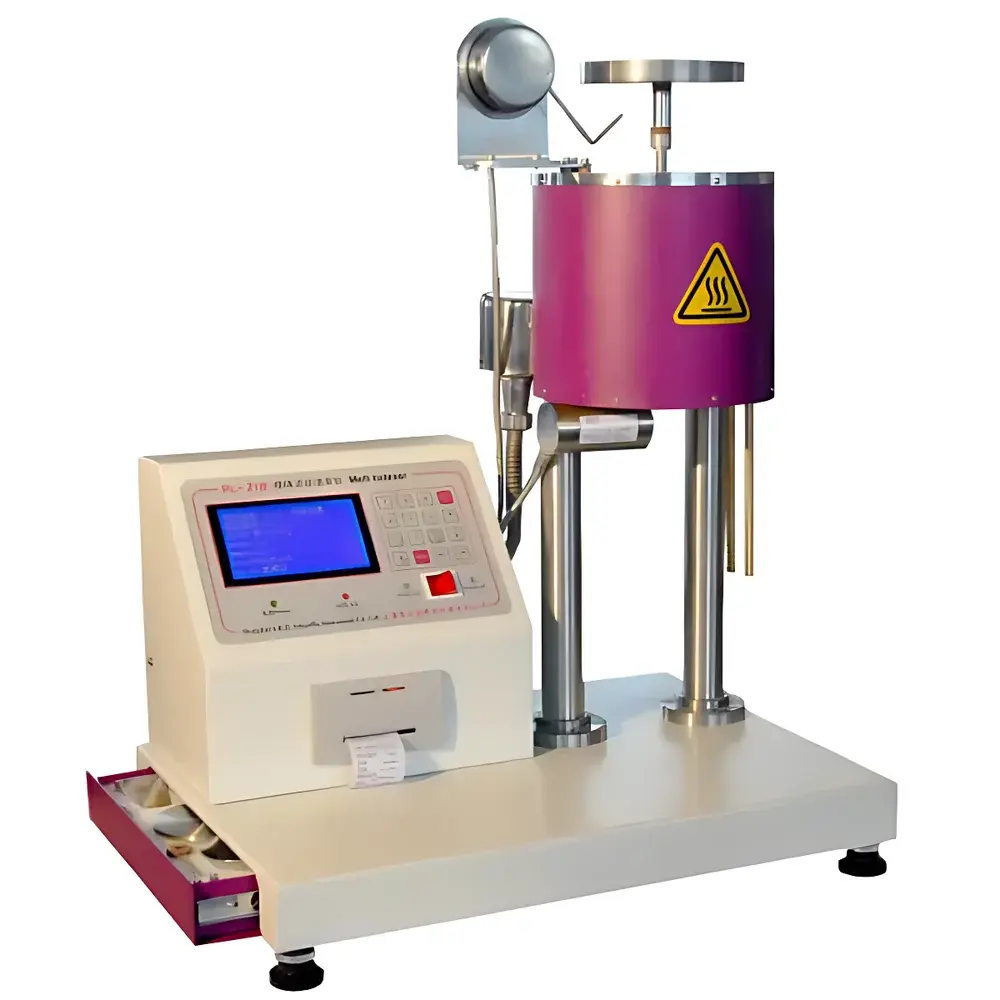
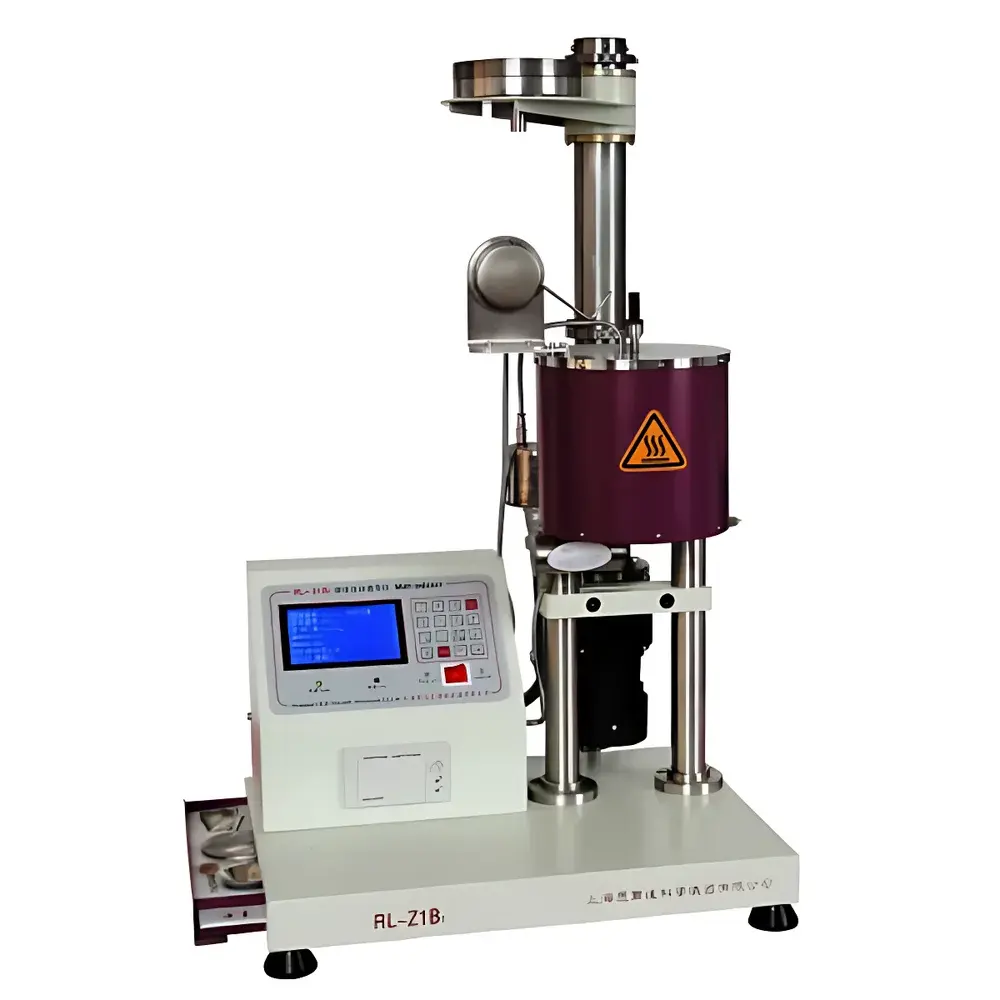
SRD Z1B Automatic Melt Flow Indexer
| Brand | SRD |
|---|---|
| Origin | Shanghai, China |
| Manufacturer Type | Authorized Distributor |
| Country of Origin | China |
| Model | Z1B1 |
| Price | USD 4,950 (FOB Shanghai) |
| Temperature Control Range | 100–400 °C |
| Temperature Display Accuracy | < 0.1 °C |
| 8-h Thermal Stability | < 0.10 °C |
| Temperature Recovery Time | ≤ 4 min |
| Standard Load Masses | 325, 1200, 2160, 3800, 5000, 10000, 12500, 21600 g |
| Die Orifice Diameters | Φ2.095 ± 0.005 mm and Φ1.18 ± 0.01 mm |
| Power Supply | 198–242 V AC, 50 Hz, 3 A |
| Dimensions (W×D×H) | 520 × 380 × 730 mm |
| Net Weight | Main Unit 40 kg, Weight Kit 22 kg |
| Measuring Range | 0.01–9999 g/10 min (MFR, automatic mode) |
| Compliance | ASTM D1238, ISO 1133-1 & ISO 1133-2, GB/T 3682.1–2018 |
| Sample Compatibility | Thermoplastics including PE, PP, PC, PA, PS, POM, ABS, PMMA, cellulose esters, fluoropolymers (e.g., FEP, F46) |
Overview
The SRD Z1B Automatic Melt Flow Indexer is a precision-engineered instrument designed for the standardized determination of melt mass-flow rate (MFR) and melt volume-flow rate (MVR) of thermoplastic polymers under defined temperature and load conditions. Operating on the fundamental principle of extrusion rheometry—where molten polymer is forced through a standardized capillary die under controlled gravimetric loading—the Z1B delivers repeatable, traceable results aligned with internationally recognized test protocols. Its core architecture integrates a microprocessor-based temperature regulation system, high-stability heating block, and an electronically actuated auto-cutting mechanism synchronized with real-time timer logic. Unlike manual or semi-automatic indexers, the Z1B eliminates operator-dependent timing errors during specimen extrusion, ensuring compliance with strict repeatability requirements specified in ASTM D1238 and ISO 1133-1. The instrument is calibrated to maintain thermal uniformity across the barrel and die zone, with active compensation for line voltage fluctuations and ambient thermal drift—critical for laboratories operating under variable utility conditions.
Key Features
- Microcontroller-driven operation with intuitive LCD interface supporting both English and Chinese menu navigation
- Dual-capillary configuration: interchangeable dies with nominal orifices of 2.095 ± 0.005 mm and 1.18 ± 0.01 mm, each certified per ISO 1133 Annex A
- Eight pre-configured standard load masses (325–21600 g), enabling full coverage of common MFR test conditions for polyolefins, engineering resins, and fluoropolymers
- High-precision temperature control system featuring PID algorithm, real-time deviation monitoring (< 0.1 °C display resolution), and sub-4-minute thermal recovery after load change
- Auto-cutting module with programmable time intervals (0.1–999.9 s), functioning independently of melt detection—essential for low-MFR or highly viscous fluoropolymer melts (e.g., FEP, F46)
- Corrosion-resistant barrel and die assembly constructed from aerospace-grade alloy steel, qualified for extended exposure to hydrofluoric acid–generating decomposition products
- Integrated thermal stability verification protocol compatible with NIST-traceable reference standards (e.g., certified PE homopolymer)
Sample Compatibility & Compliance
The Z1B supports routine testing of a broad spectrum of thermoplastic materials, including polyethylene (PE), polypropylene (PP), polycarbonate (PC), polyamide (PA6/PA66), polyoxymethylene (POM), acrylonitrile-butadiene-styrene (ABS), polymethyl methacrylate (PMMA), and cellulose esters. Its robust thermal design and chemically inert flow path also permit reliable MFR assessment of fluorinated polymers such as fluorinated ethylene propylene (FEP) and perfluoroalkoxy alkane (PFA), where conventional brass or stainless-steel barrels may suffer accelerated degradation. All operational parameters—including temperature setpoint, load selection, cut interval, and dwell time—are fully configurable to satisfy method requirements in ASTM D1238 (Procedure A/B), ISO 1133-1 (MFR) and ISO 1133-2 (MVR), as well as national standards GB/T 3682.1–2018 and GB/T 3682.2–2018. The system meets mechanical and electrical safety requirements per IEC 61010-1 and carries CE marking for laboratory use within the EEA.
Software & Data Management
While the Z1B operates as a standalone benchtop instrument with embedded firmware, its data output architecture supports full integration into regulated quality environments. Measurement results—including raw cut weights, calculated MFR/MVR values, melt density (ρf), test duration, and thermal history logs—are printed via built-in thermal printer with timestamp and operator ID fields. For laboratories implementing electronic recordkeeping, optional RS-232 or USB-to-serial interfaces enable direct export of ASCII-formatted test reports to LIMS or ELN platforms. Audit trail functionality—including parameter change logs, calibration event timestamps, and user authentication records—is available upon firmware update to v2.3+ (optional). The instrument complies with data integrity expectations outlined in FDA 21 CFR Part 11 when deployed with validated third-party data capture software and appropriate procedural controls.
Applications
- Quality control of incoming polymer resin batches against supplier specifications
- In-process monitoring of extrusion-grade polyolefin consistency during compounding
- Research evaluation of molecular weight distribution shifts following thermal or shear history exposure
- Validation of polymer degradation kinetics during accelerated aging studies
- Supporting regulatory submissions requiring ISO/ASTM-compliant rheological characterization (e.g., medical device polymer qualification per ISO 10993-12)
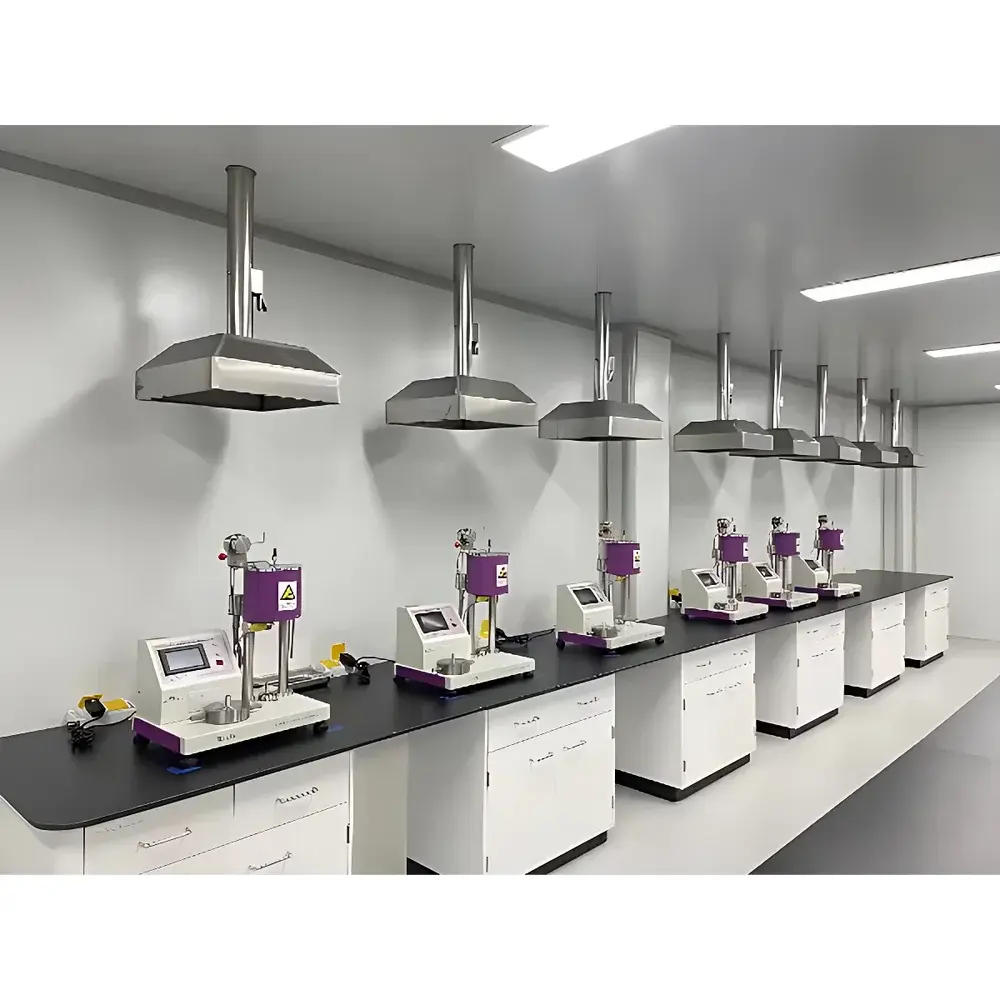
- Teaching laboratories requiring hands-on instruction in polymer processing fundamentals and standardized test methodology
FAQ
Does the Z1B support MVR (melt volume-flow rate) measurement?
Yes. The instrument calculates both MFR (g/10 min) and MVR (cm³/10 min) using user-input or auto-derived melt density (ρf). MVR mode requires prior calibration of piston displacement volume or integration with optional volumetric sensor modules.
Can the Z1B be used for fluoropolymer testing without modification?
Yes. The barrel and die are manufactured from corrosion-resistant high-alloy tool steel, specifically qualified for repeated exposure to HF-generating thermal decomposition byproducts of F46 and similar fluoropolymers.
Is external calibration certification included with shipment?
No. Traceable calibration certificates for temperature and load are available as optional add-ons (NIST-traceable PT100 probe and Class M1砝码 set), subject to separate quotation and lead time.
What maintenance is required for long-term accuracy?
Routine cleaning of the die orifice and piston with brass wire brush and solvent; annual verification of temperature uniformity profile and load mass accuracy using accredited metrology services is recommended per ISO/IEC 17025 guidelines.
How does the Z1B handle low-flow-rate materials (e.g., MFR < 0.1 g/10 min)?
The auto-cutting timer operates independently of melt detection, allowing precise, operator-defined cut intervals (e.g., 600 s) to ensure statistically valid mass collection—even for ultra-high-viscosity engineering thermoplastics.






