
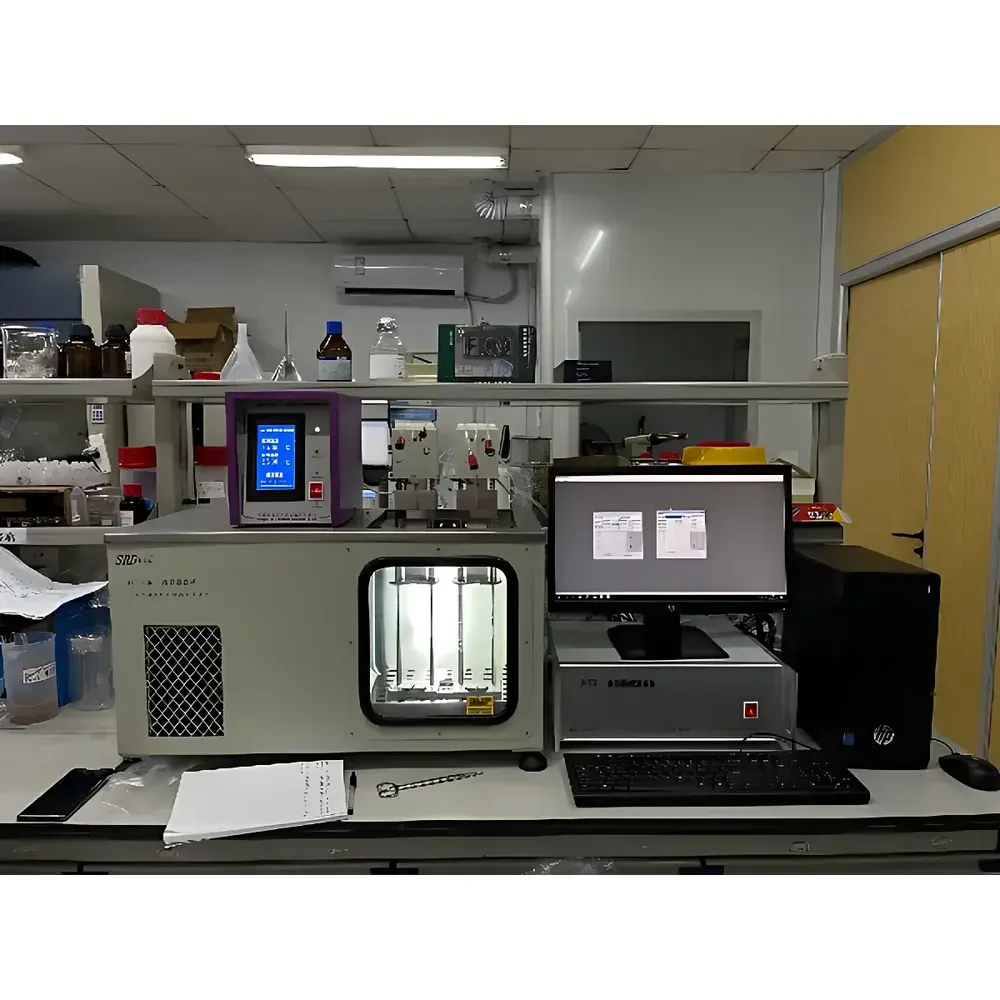
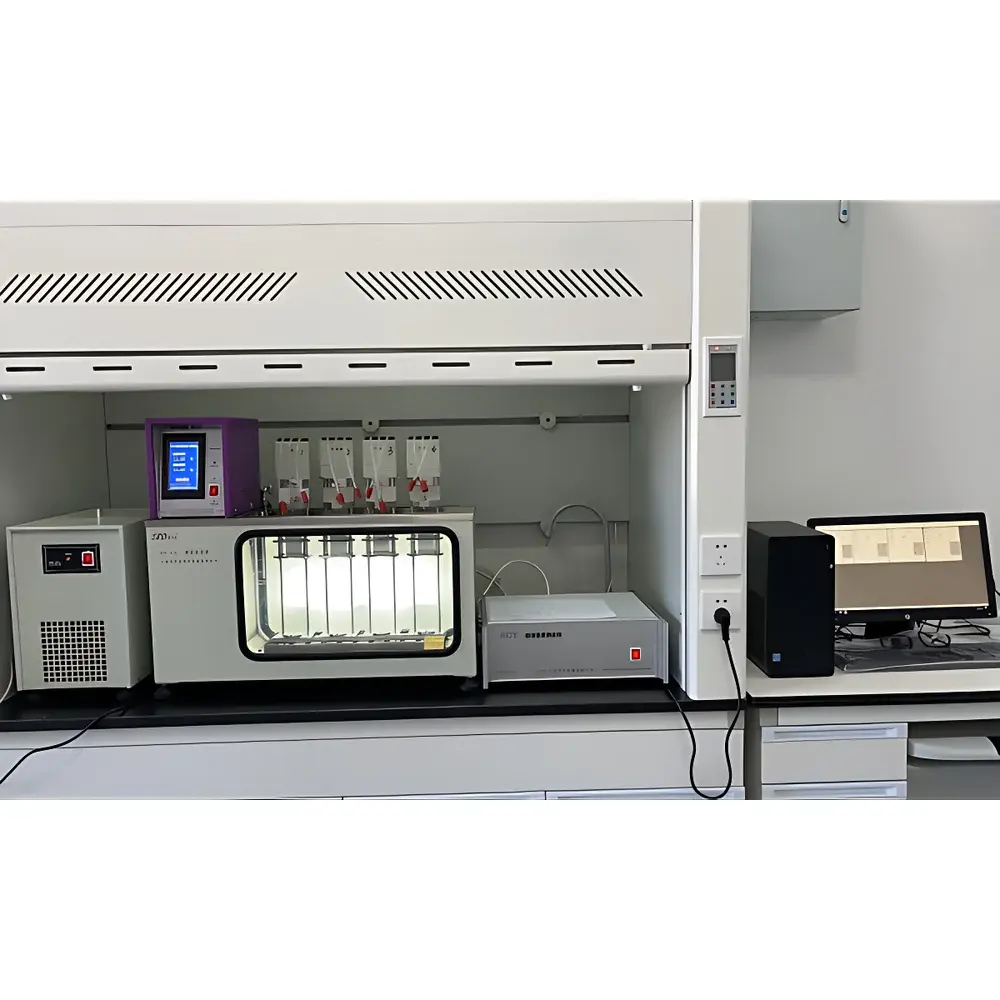
Sierda SRD NCY Series Capillary Viscometer
| Brand | Sierda/SRD |
|---|---|
| Origin | Shanghai, China |
| Manufacturer Type | Authorized Distributor |
| Regional Classification | Domestic (China) |
| Model | NCY |
| Instrument Type | Fixed-Position Capillary Viscometer |
| Operating Environment | Ambient Temperature |
| Viscosity Range | 0.4–1.5 dL/g (intrinsic viscosity) |
| Temperature Range | 5–75 °C |
| Temperature Resolution | 0.01 °C |
| Temperature Accuracy | ±0.01 °C |
Overview
The Sierda SRD NCY Series Capillary Viscometer is a precision-engineered, computer-controlled capillary flow viscometer designed specifically for intrinsic viscosity (IV), relative viscosity, viscosity number, and average polymerization degree (DP) determination in synthetic fiber and thermoplastic polymer solutions—particularly polyester (PET), nylon (PA6/PA66), polyvinyl alcohol (PVA), acrylic, vinylon, PVC, and dissolving pulp. It operates on the fundamental principle of capillary flow rheometry, where solution efflux time through a calibrated glass capillary (e.g., Ubbelohde or Ostwald type) is measured under gravity-driven laminar flow conditions, and intrinsic viscosity is calculated via the Huggins or Kraemer equation using concentration-dependent relative viscosity data. The instrument integrates a high-stability thermostatic bath, automated fluid handling, optical flow detection, and ISO/ASTM-compliant timing logic to ensure traceable, repeatable, and operator-independent results aligned with ASTM D4603, ISO 1628-1/5, and GB/T 14190–2017.
Key Features
- Multi-channel parallel testing architecture: Configurable as NCY-2 through NCY-6 models supporting simultaneous analysis of 2–6 samples per run—significantly improving throughput in QC laboratories processing high-volume polymer batches.
- Ultra-stable temperature control: Precision thermostatic bath with ±0.01 °C temperature fluctuation and uniformity across all capillary positions, verified using NIST-traceable 0.01 °C resolution platinum resistance thermometers.
- Fully automated operation: Motorized syringe actuators perform solution aspiration, loading, and drainage; photodiode-based optical sensors detect meniscus passage with 0.01 s timing resolution and automatic outlier rejection based on user-defined statistical criteria (e.g., 3σ rule).
- Comprehensive formula library: Preloaded with 10 standardized calculation protocols—including Huggins, Kraemer, Schulz-Blaschke, and single-point IV estimation—enabling compliance with diverse industry specifications for PET, PA, PVA, and cellulose derivatives.
- Robust hardware integration: RS232-controlled electromechanical interface between host PC and test units ensures deterministic command execution and real-time status feedback; no proprietary drivers required beyond standard Windows COM port support.
- GLP-ready data governance: All raw efflux times, calculated viscosities, temperature logs, and operator actions are timestamped and stored in an encrypted local database with audit trail capability—supporting internal validation and regulatory readiness per FDA 21 CFR Part 11 Annex 11 requirements.
Sample Compatibility & Compliance
The NCY series is validated for use with dilute polymer solutions in solvents including phenol/1,1,2,2-tetrachloroethane (for PET), formic acid (for nylon and acrylic), sulfuric acid (for cellulose), and aqueous borax (for PVA). Each test unit accommodates standard Ubbelohde-type capillaries conforming to ISO 3105 and ASTM D2515 dimensional tolerances. The system meets mechanical and thermal stability requirements outlined in ISO/IEC 17025 for accredited testing laboratories and supports documentation packages necessary for GMP-compliant polymer manufacturing environments.
Software & Data Management
The native Windows-based application (v3.x, compatible with Windows 10/11 x64) provides a bilingual UI (English/Chinese), configurable report templates (PDF, CSV, XML), and export-ready datasets compliant with LIMS integration standards. Software features include real-time flow visualization per capillary channel, dynamic pass/fail flagging against user-set specification limits, batch-level statistical summaries (mean, SD, RSD, Cp/Cpk), and electronic signature support for QA release workflows. Raw data files are immutable post-acquisition and retain full metadata (instrument ID, calibration certificate IDs, ambient lab conditions, operator ID).
Applications
- Quality control of PET chip and fiber-grade resins in extrusion and spinning facilities
- Batch-to-batch consistency verification of nylon 6/66 polymer melts prior to melt spinning
- In-process monitoring of cellulose dissolution efficiency in viscose rayon production
- Stability assessment of PVA solutions used in battery separator coatings
- R&D evaluation of molecular weight distribution shifts during polymer degradation or modification studies
- Regulatory submission support for pharmaceutical excipients requiring USP or Ph. Eur. 2.2.31 viscosity characterization
FAQ
What capillary types are supported?
Ubbelohde, Ostwald, and Cannon-Fenske capillaries meeting ISO 3105 dimensional specifications can be installed; calibration certificates must be supplied by the user.
Is external solvent degassing required?
Yes—degassing prior to loading is recommended to eliminate microbubbles that may disrupt laminar flow and introduce timing errors.
Can the system operate unattended overnight?
Yes—scheduled batch runs with auto-shutdown and error logging are supported; however, solvent evaporation mitigation (e.g., sealed bath cover) is advised for extended operation.
Does the software support 21 CFR Part 11 compliance?
Full electronic signature, audit trail, and data integrity features are implemented; validation documentation (IQ/OQ/PQ protocols) is available upon request.
What maintenance is required for long-term accuracy?
Annual recalibration of temperature sensors and timing modules is recommended; capillary cleaning with appropriate solvents after each polymer type change is mandatory to prevent cross-contamination.



