
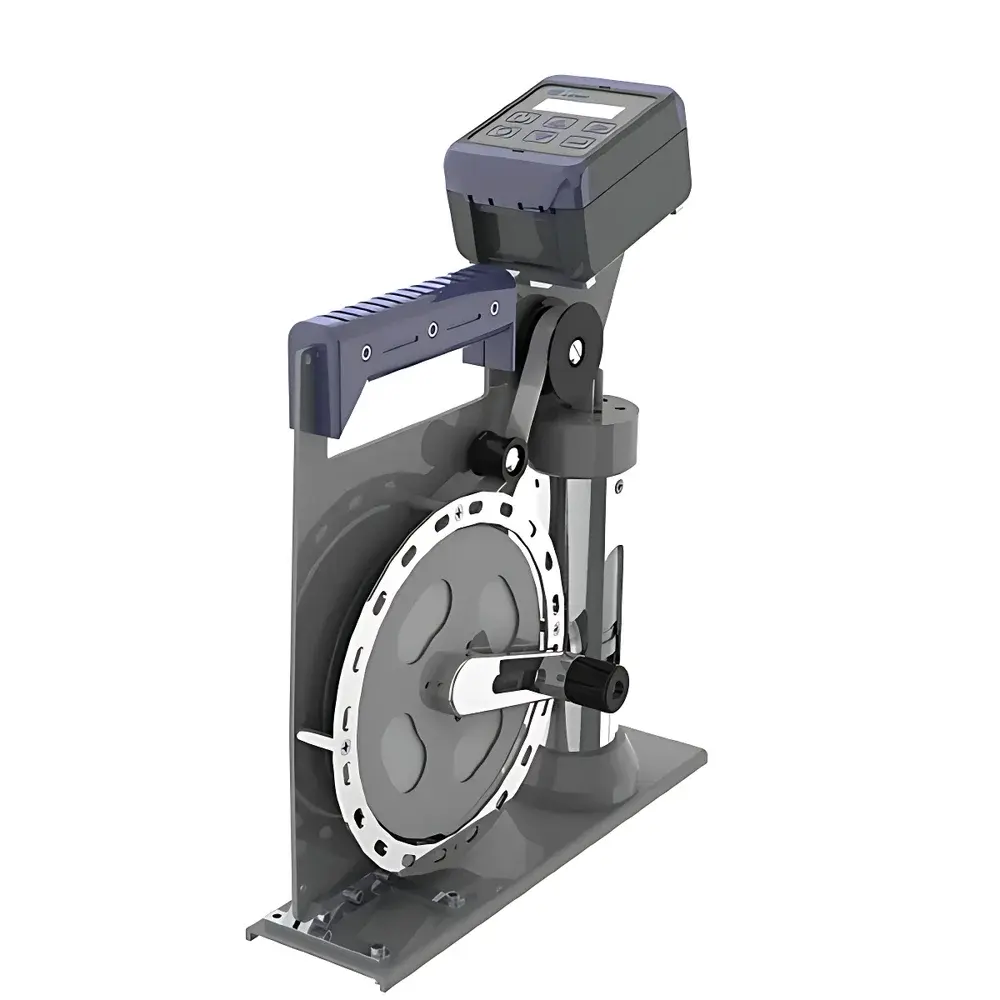
ChemTron VDM-250.2N Portable Immersion Density and Viscosity Meter
| Brand | ChemTron |
|---|---|
| Origin | Germany |
| Model | VDM-250.2N |
| Instrument Type | Portable immersion densimeter & viscometer |
| Density Range | 0–3 g/cm³ (0–3000 kg/m³) |
| Density Accuracy | ±0.0003 or ±0.0005 g/cm³ |
| Density Repeatability | ±0.00015 or ±0.00025 g/cm³ |
| Temperature Range | −40 to +85 °C |
| Temperature Accuracy | ±0.1 or ±0.2 °C |
| Viscosity Range | up to 10,000 mPa·s (cP) |
| Viscosity Accuracy | ±1% of span |
| Viscosity Repeatability | ±0.5% of span |
| Max. Immersion Depth | 30 m |
| Data Storage | 2000 measurements |
| Communication | Bluetooth & USB |
| Certified | ATEX, IECEx HazLoc |
| Sensor Materials | SS 316L, NiSpan C, Hastelloy C-22 |
| Battery | NiMH 3.6 V, 1500 mAh (≈12 h operation) |
Overview
The ChemTron VDM-250.2N is a dual-parameter, portable immersion meter engineered for simultaneous in-situ measurement of density and dynamic viscosity in liquid process streams and bulk storage environments. Unlike traditional benchtop densimeters or capillary viscometers, the VDM-250.2N employs oscillating U-tube density sensing combined with rotational viscometry principles—implemented via a compact, hermetically sealed probe—to deliver real-time, temperature-compensated readings directly within tanks, pipelines, or open vessels. Its core architecture enables direct insertion to depths of up to 30 meters, eliminating sampling errors, thermal equilibration delays, and contamination risks associated with offline analysis. Designed for continuous operation across extreme ambient conditions (−40 to +85 °C), the instrument meets the metrological requirements of industrial QA/QC, custody transfer verification, and process optimization workflows where spatial density gradients, thermal stratification, or compositional homogeneity must be quantified without interrupting production.
Key Features
- Simultaneous dual-parameter measurement: density (0–3 g/cm³) and dynamic viscosity (up to 10,000 mPa·s) in a single immersion event
- Oscillating U-tube density sensor with temperature-controlled reference oscillator for high reproducibility (±0.00015 g/cm³ repeatability)
- Integrated Pt1000 RTD temperature sensor with ±0.1 °C accuracy, enabling automatic density correction per ASTM D1250 and ISO 12185
- ATEX Zone 1 / IECEx Zone 1 certified housing (II 2G Ex ib IIB T4 Gb) for safe deployment in hazardous hydrocarbon and solvent environments
- Ruggedized probe construction using SS 316L, NiSpan C, or Hastelloy C-22—selected based on chemical compatibility and erosion resistance
- OLED display with backlight for legibility under low-light or outdoor field conditions
- Onboard non-volatile memory storing 2000 timestamped measurement records with GPS-tagged location metadata (when paired with compatible mobile device)
- Bluetooth 5.0 and USB-C interfaces compliant with USB CDC class protocols for seamless integration into LIMS and MES platforms
Sample Compatibility & Compliance
The VDM-250.2N is validated for use with Newtonian and mildly shear-thinning liquids—including crude oil, refined fuels, ethanol blends, aqueous pharmaceutical solutions, syrups, and cosmetic emulsions—provided viscosity remains within the specified range and particulate loading does not exceed 5 vol%. It conforms to international standards governing density metrology (ASTM D1298, ISO 16574, IP 160) and viscosity measurement (ASTM D2161, ISO 3104). Its calibration traceability follows DIN EN ISO/IEC 17025 requirements through ChemTron’s accredited service laboratory. The instrument supports GLP-compliant data integrity via encrypted storage, audit-trail-enabled firmware, and user-access controls aligned with FDA 21 CFR Part 11 expectations for electronic records and signatures.
Software & Data Management
ChemTron’s VDM Connect software (Windows/macOS/Linux) provides full configuration, real-time telemetry visualization, and batch export in CSV, Excel, and PDF formats. Measurement logs include raw sensor outputs, compensated values, environmental timestamps, and operator ID fields. The software supports automated report generation per API RP 2552 or ASTM D4052 templates and integrates with OPC UA servers for SCADA-level process monitoring. All firmware updates are digitally signed and delivered via secure HTTPS endpoints. Data encryption at rest (AES-256) and in transit (TLS 1.2+) ensures compliance with GDPR and NIST SP 800-53 security controls.
Applications
- Crude oil tank bottom sediment & water (BS&W) profiling and interface detection
- In-line verification of ethanol-gasoline blend ratios (E10, E15, E85) during terminal loading
- Batch release testing of injectable drug solutions and oral suspensions per USP
- Real-time density mapping of fermentation broth in bioethanol bioreactors
- Quality gate screening of edible oils, dairy concentrates, and fruit juice concentrates
- Field validation of density specifications for specialty solvents (e.g., NMP, DMF, THF) prior to shipment
- Corrosion inhibitor concentration monitoring in multiphase flowlines via density-viscosity correlation modeling
FAQ
Does the VDM-250.2N require calibration before each use?
No. Factory calibration is traceable to NIST SRMs and remains stable for 12 months under normal operating conditions. Field verification using certified reference fluids (e.g., water, n-decane) is recommended prior to critical measurements.
Can it measure density of non-Newtonian fluids such as polymer melts or drilling muds?
It is not designed for highly time-dependent or yield-stress materials. For pseudoplastic or thixotropic samples, results represent apparent viscosity at the instrument’s fixed shear rate (~10–50 s⁻¹); interpretation requires correlation with rheological models.
Is the Bluetooth connection secure enough for regulated environments?
Yes. Pairing uses LE Secure Connections (SC) with FIPS 140-2 validated cryptographic modules. All transmitted data payloads are encrypted end-to-end; pairing is restricted to authenticated devices only.
How is temperature compensation applied to density readings?
The instrument applies real-time polynomial correction based on material-specific coefficients stored in its internal database (e.g., ASTM D1250 petroleum tables, alcohol hydrometer tables, or user-defined custom curves).
What maintenance is required for long-term field reliability?
Annual inspection of O-ring integrity, sensor window cleanliness, and battery health is advised. No routine recalibration or fluid replacement is needed due to solid-state sensor design and sealed probe construction.



