
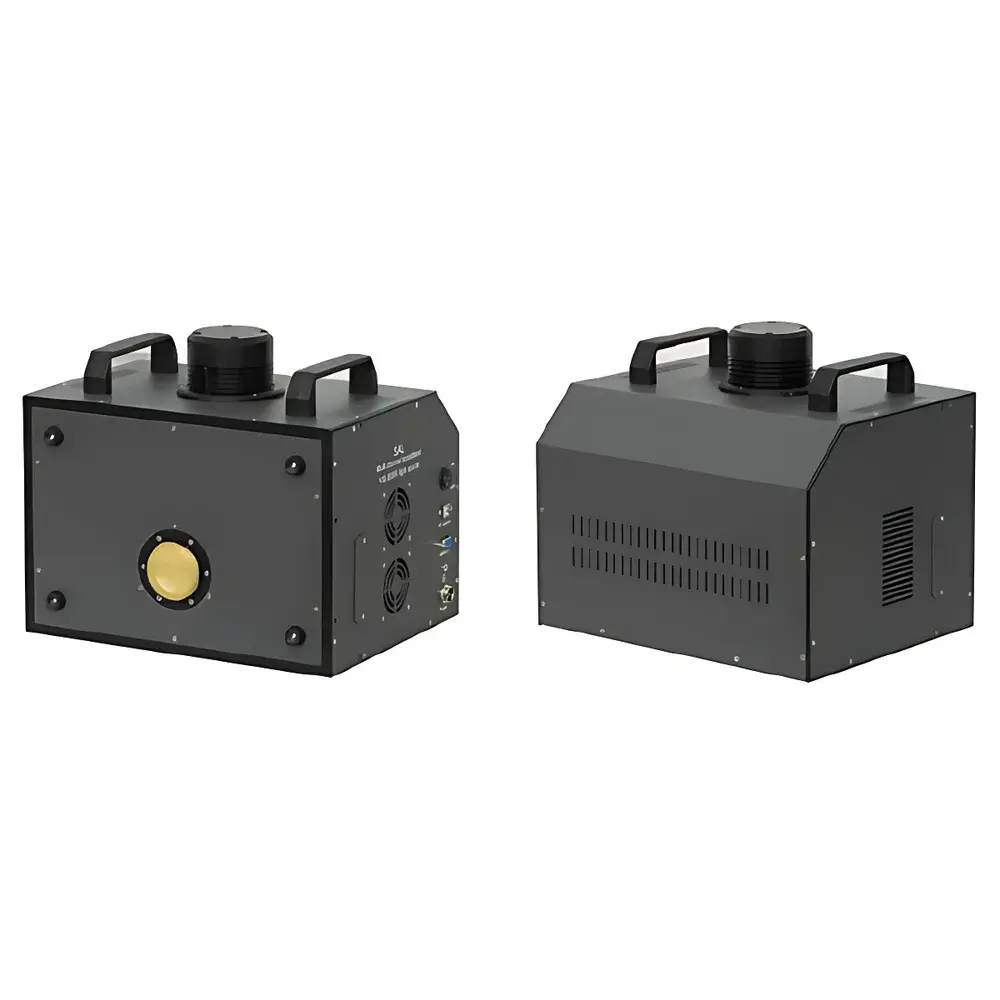
Inframet LS-SAL Multi-Channel Broadband Visible-to-Short-Wave Infrared Calibration Source
| Brand | Inframet |
|---|---|
| Origin | Poland |
| Model | LS-SAL |
| Spectral Range | 400–2200 nm |
| Primary Modes | Halogen (2856 K, unfiltered), White LED (>5000 K), Hybrid Halogen+LED, 1550 nm Narrowband (±15 nm), SWIR Bandpass (900–2200 nm) |
| Luminance Range (Halogen mode) | 10 μcd/m² – 1000 cd/m² |
| Radiance Range (1550 nm mode) | 0.1 mW·sr⁻¹·m⁻² – 1 W·sr⁻¹·m⁻² |
| Radiance Range (SWIR mode) | 2 mW·sr⁻¹·m⁻² – 20 W·sr⁻¹·m² |
| Stability | <1% (all modes) |
| Warm-up/Stabilization Time | <90 s (halogen), <30 s (LED), <100 s (hybrid) |
| Aperture Diameter | 40 mm |
| Brightness Resolution | 10 μcd/m² (low-luminance), 0.01 cd/m² (LED), 0.05 mW·sr⁻¹·m⁻² (1550 nm), 1 mW·sr⁻¹·m⁻² (SWIR) |
| Attenuation | Mechanical optical attenuator (continuous, calibrated) |
Overview
The Inframet LS-SAL Multi-Channel Broadband Visible-to-Short-Wave Infrared Calibration Source is a precision-engineered reference irradiance and radiance source designed for laboratory-grade characterization, calibration, and validation of VIS-SWIR imaging systems—including scientific CMOS, InGaAs, and extended-range silicon focal plane arrays. Operating across a continuous spectral band from 400 nm to 2200 nm, the LS-SAL integrates five physically distinct, mutually exclusive optical output configurations within a single compact chassis. Its architecture is based on dual-source photometric and radiometric principles: a stabilized tungsten-halogen lamp (emitting a near-blackbody spectrum up to ~2100 nm with a nominal color temperature of 2856 K) and a high-CCT white LED array (>5000 K) optimized for visible-band uniformity and temporal stability. Unlike broadband lamps requiring external monochromators or tunable filters, the LS-SAL delivers traceable, repeatable output in five pre-aligned, factory-calibrated modes—eliminating alignment drift and inter-system variability common in multi-instrument calibration workflows.
Key Features
- Five independent, switchable output modes: (1) Unfiltered halogen (400–2200 nm, 2856 K), (2) High-CCT white LED (400–720 nm), (3) Electronically blended halogen + LED hybrid mode, (4) 1550 ±15 nm narrowband output via precision interference filter, and (5) Short-wave infrared bandpass (900–2200 nm) using a custom wideband SWIR filter.
- Mechanically actuated, calibrated optical attenuator enabling continuous, non-linear luminance/radiance adjustment with metrological traceability—no manual filter wheel handling required.
- Aperture-defined 40 mm collimated output beam with spatial uniformity >98% (measured per ISO 15739), ensuring consistent illumination geometry across detector pixel arrays.
- Stability performance certified at <1% RMS fluctuation over 30 minutes (all modes), verified under controlled ambient conditions (23 ±1 °C, <40% RH) per ASTM E259-22 Annex A3 guidelines for radiometric source repeatability.
- Integrated thermal management and closed-loop lamp current regulation ensure <90 s stabilization time in halogen mode and <30 s in LED mode—critical for high-throughput production-line calibration.
- Full NIST-traceable calibration certificate supplied with each unit, covering spectral radiance (W·sr⁻¹·m⁻²·nm⁻¹), luminance (cd/m²), and irradiance (W/m²) at defined wavelengths and apertures.
Sample Compatibility & Compliance
The LS-SAL is compatible with all VIS-SWIR imaging platforms requiring primary or secondary calibration—including hyperspectral push-broom scanners, staring-array SWIR cameras (e.g., Sensors Unlimited, Hamamatsu, Xenics), and multispectral test benches used in defense, remote sensing, and agricultural monitoring R&D. Its spectral coverage satisfies key standards including MIL-STD-461G (EMI-immunity during operation), ISO 15739:2013 (electronic still-picture imaging noise and dynamic range measurement), and ASTM E1548-21 (standard guide for characterizing SWIR camera responsivity). All electrical interfaces comply with IEC 61000-6-3:2019 emission limits, and mechanical housing meets IP20 ingress protection for laboratory environments. The system supports integration into GLP-compliant workflows through optional audit-trail-enabled firmware (conforming to FDA 21 CFR Part 11 requirements when paired with validated PC control software).
Software & Data Management
Control is executed via Inframet’s proprietary LS-Control Suite (Windows 10/11, 64-bit), which provides deterministic USB 2.0 communication with sub-10 ms command latency. The software enables full parameter scripting—including ramp profiles, dwell times, and mode sequencing—for automated calibration routines compliant with ISO/IEC 17025:2017 Clause 7.7 (measurement uncertainty evaluation). Export formats include CSV (radiometric values vs. time), XML (full metadata including calibration date, serial number, and uncertainty budget), and HDF5 (for integration with Python-based analysis pipelines using h5py or SciPy). Firmware updates preserve calibration coefficients via internal EEPROM storage, and all user-modifiable settings are logged with timestamps and operator ID fields—supporting full traceability in regulated environments.
Applications
- Factory calibration of SWIR line-scan and area-scan cameras prior to deployment in semiconductor wafer inspection and solar cell defect detection.
- Validation of atmospheric correction algorithms in airborne hyperspectral imagers (e.g., AVIRIS-NG, HySpex) by providing known spectral radiance references across overlapping VIS-SWIR bands.
- Testing and verification of optical system MTF and stray-light performance using controlled, spectrally selective illumination.
- Development and verification of machine learning models for material classification (e.g., plastic sorting, mineral identification) where spectral fidelity directly impacts model generalizability.
- Reference source for inter-laboratory comparison studies coordinated under EURAMET projects (e.g., EMPIR 17NRM02 “Metrology for SWIR Imaging”)
FAQ
Is the LS-SAL suitable for absolute radiometric calibration of InGaAs detectors?
Yes—the 1550 nm narrowband mode and SWIR bandpass mode provide NIST-traceable radiance values with expanded uncertainties ≤2.1% (k=2) at 1550 nm and ≤3.4% (k=2) across 1000–1800 nm, fully meeting the requirements of ISO 15739 Annex D for detector quantum efficiency mapping.
Can the LS-SAL be integrated into an automated test station?
Yes—RS-232 and USB VCP interfaces support SCPI-style commands; digital I/O lines enable TTL-triggered mode switching and synchronization with frame grabbers or motion controllers.
Does the system require annual recalibration?
Inframet recommends recalibration every 24 months under normal use, or after any event involving mechanical shock, lamp replacement, or exposure to ambient humidity >70% RH for >48 hours—per ISO/IEC 17025:2017 Clause 7.8.2.
What safety certifications does the LS-SAL hold?
It carries CE marking per EU Directive 2014/30/EU (EMC) and 2014/35/EU (LVD), and complies with IEC 62471:2006 for photobiological safety (Risk Group 1 for all operating modes).
Is spectral irradiance data provided for each unit?
Yes—each LS-SAL ships with a full spectral radiance dataset (0.5 nm resolution from 400–2200 nm), measured on Inframet’s primary standard double-monochromator system traceable to PTB (Physikalisch-Technische Bundesanstalt).






