
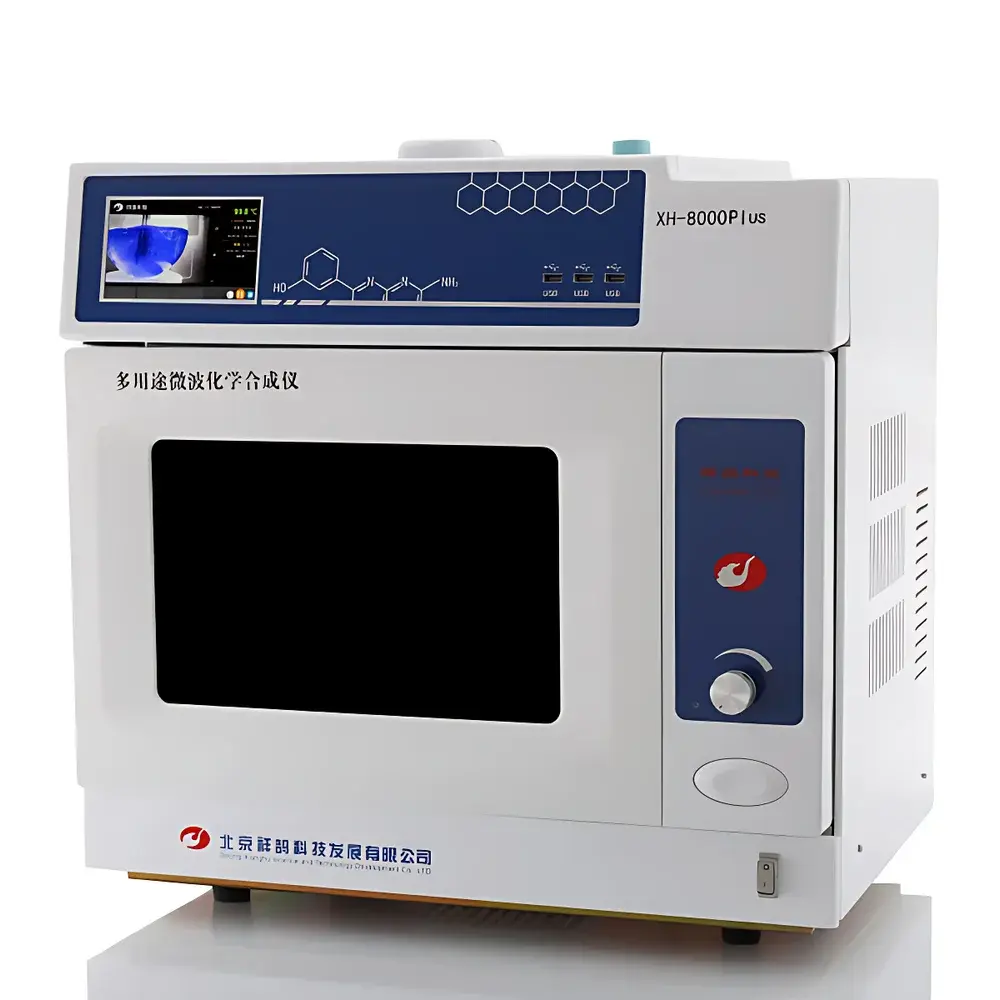
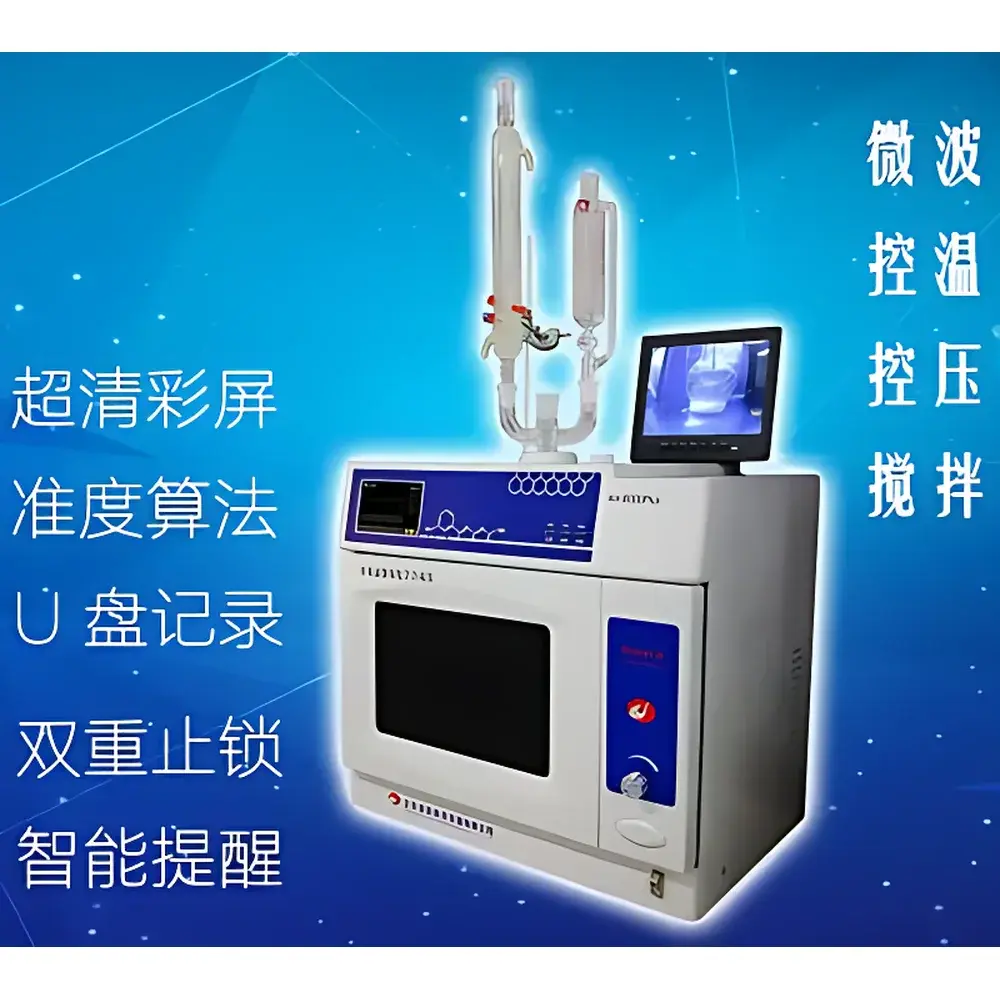
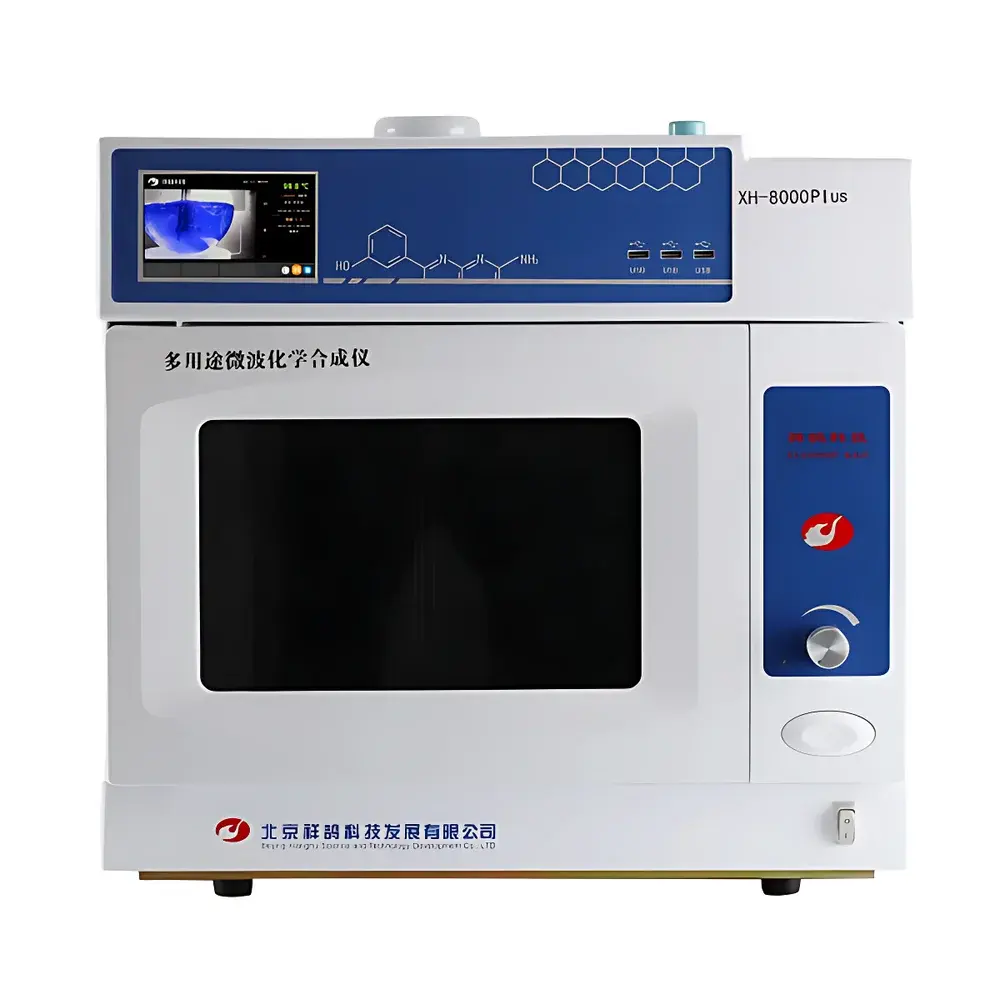
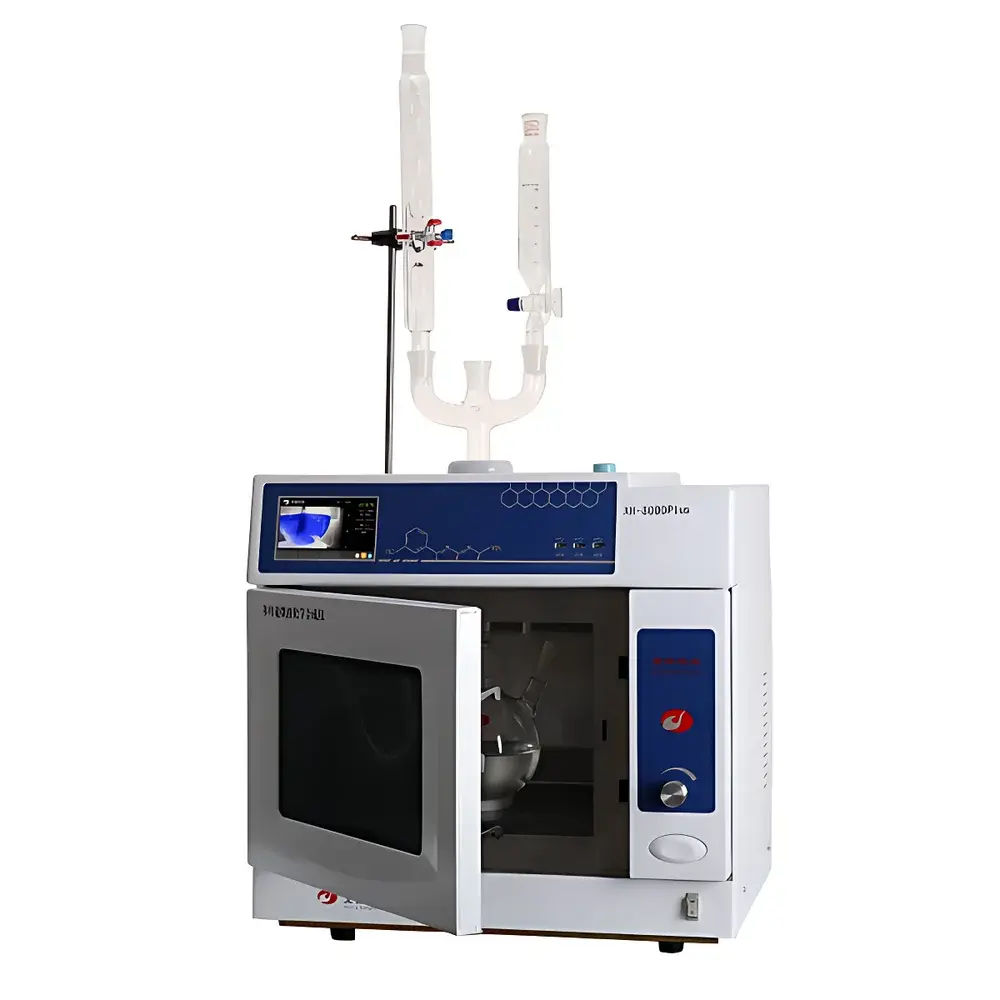
Xianghu XH-8000 Plus Multi-Function Microwave Synthesis System
| Brand | Xianghu |
|---|---|
| Origin | Beijing, China |
| Manufacturer Type | Direct Manufacturer |
| Origin Category | Domestic (China) |
| Model | XH-8000 Plus |
| Price Range | USD 14,000–28,000 (FOB) |
| Temperature Range | 0–260 °C |
| Pressure Range | 0–6 MPa |
| Microwave Power Output | 0–1000 W (continuously adjustable) |
| Magnetron Frequency | 2450 MHz |
| Stirring Method | Magnetic Stirring |
| Reaction Volumes | 100 mL, 250 mL, 500 mL |
| Temperature Sensor | Pt1000 contact probe (±0.1 °C accuracy |
| Pressure Sensor Accuracy | ±0.01 MPa |
| Cavity Material | Austenitic stainless steel with 5-layer acid-resistant coating |
| Reaction Vessel Outer Jacket | PEEK (polyether ether ketone), injection-molded |
| Inner Liner Material | Compression-molded polytetrafluoroethylene (PTFE), non-injection molded |
| Control Interface | Touchscreen LCD with real-time temperature/pressure/power curve visualization |
| Data Storage | Unlimited experiment logs |
| Safety Features | Radial vertical vessel orientation, overpressure auto-regulation, microwave leakage <5 mW/cm² (IEC 61000-3-2 compliant) |
| Certifications | ISO 9001 certified |
Overview
The Xianghu XH-8000 Plus Multi-Function Microwave Synthesis System is an engineered platform for controlled, rapid, and reproducible chemical synthesis under elevated temperature and pressure conditions. Utilizing single-mode 2450 MHz microwave irradiation, the system delivers precise energy coupling into reaction mixtures—enabling accelerated reaction kinetics, improved selectivity, and reduced by-product formation compared to conventional conductive heating. Its core architecture integrates closed-vessel high-pressure chemistry with real-time process monitoring, making it suitable for research-scale organic synthesis, inorganic material preparation, nanomaterial crystallization, and catalytic methodology development. Designed for compliance with laboratory safety standards (GB 4793.1–2007) and quality management systems (ISO 9001), the XH-8000 Plus supports both exploratory screening and method-optimized synthesis workflows in academic, pharmaceutical, and industrial R&D laboratories.
Key Features
- Precision Dual-Parameter Control: Simultaneous real-time monitoring and regulation of temperature (0–260 °C, ±1 °C control accuracy) and pressure (0–6 MPa, ±0.01 MPa measurement resolution) via Pt1000 contact sensor and calibrated piezoresistive transducer.
- Adaptive Microwave Delivery: 0–1000 W continuous power modulation with dynamic feedback loop ensures consistent energy input regardless of sample dielectric properties or volume changes during reaction.
- Robust Reaction Vessel Architecture: Radially oriented PTFE inner liners (compression-molded, non-injection) housed within PEEK outer jackets provide thermal stability up to 260 °C and mechanical integrity at 6 MPa; vessel geometry minimizes lateral stress and enhances burst resistance.
- Secure Cavity Design: 5-layer acid-resistant coating on austenitic stainless steel cavity walls prevents corrosion from volatile reagents; interlocked industrial-grade door with dual-seal gasket guarantees microwave leakage <5 mW/cm² (per IEC 61000-3-2).
- Integrated Process Visualization: High-resolution camera module synchronized with touchscreen display enables real-time observation of color change, precipitation, gas evolution, or phase separation—recorded with timestamped metadata for correlation with thermal/pressure profiles.
- Emergency Response Capability: Remote stop function allows immediate termination of microwave emission and cooling sequence from outside the lab environment, supporting emergency protocols in unattended operation scenarios.
Sample Compatibility & Compliance
The XH-8000 Plus accommodates a broad range of chemically aggressive media—including strong acids (e.g., HNO₃, HF), oxidants (e.g., H₂O₂, KMnO₄), and organometallic precursors—without compromising vessel integrity. Its PTFE/PEEK vessel system exhibits compatibility with solvents such as DMF, NMP, ethylene glycol, and supercritical CO₂-based mixtures. The instrument meets national safety standard GB 4793.1–2007 for electrical laboratory equipment and conforms to electromagnetic compatibility requirements per IEC 61000-3-2. While not inherently 21 CFR Part 11 compliant, audit-ready data export (CSV, PDF) and full experimental traceability—including user ID, timestamp, parameter set, and raw sensor logs—support GLP/GMP-aligned documentation practices when integrated into validated laboratory information management systems (LIMS).
Software & Data Management
The embedded control firmware records all operational parameters at ≥150 Hz sampling rate, generating time-stamped datasets that include microwave power output, internal temperature, vessel pressure, stirring status, and video frame index. Data are stored locally on internal flash memory (unlimited experiment groups) and exportable via USB 2.0 to standard FAT32-formatted drives. Companion Windows-based PC software enables post-run analysis: users may annotate experiments with custom names and procedural notes, overlay multiple runs for comparative kinetics modeling, and export selected intervals as CSV or image-embedded PDF reports. All exported files retain cryptographic hash signatures to ensure data integrity verification—critical for regulatory submission readiness and peer-reviewed publication support.
Applications
- Accelerated synthesis of heterocyclic compounds (e.g., pyrazoles, triazoles) under solvent-free or low-volume conditions
- Hydrothermal/solvothermal preparation of metal–organic frameworks (MOFs) and perovskite nanocrystals
- Catalyst screening for cross-coupling reactions (Suzuki, Heck, Buchwald–Hartwig) with precise thermal ramping
- Degradation studies of polymers and pharmaceuticals under controlled oxidative environments
- Green chemistry optimization: reduction of reaction times from hours to minutes while maintaining >95% yield reproducibility across 100+ consecutive runs
- Method development for USP/EP-compliant API synthesis where thermal homogeneity and pressure containment are critical
FAQ
What is the maximum allowable working pressure for routine operation?
The system is rated for continuous operation up to 6 MPa; the pressure sensor range extends to 10 MPa for safety margin detection and overpressure event logging.
Can the instrument be integrated into automated lab platforms?
Yes—RS-232 and optional Ethernet interfaces support third-party SCADA or LIMS integration for scheduled batch execution and centralized log aggregation.
Is calibration traceable to national standards?
Temperature and pressure sensors are factory-calibrated against NIST-traceable references; certificate of calibration is provided with each unit and includes uncertainty budgets per ISO/IEC 17025 guidelines.
How does the system handle exothermic runaway scenarios?
Upon detecting pressure rise exceeding user-defined threshold +0.2 MPa within 2 seconds, the controller initiates immediate microwave cutoff, activates forced-air cooling, and opens auxiliary venting path—documented in the safety event log with pre- and post-trigger data snapshots.
What maintenance is required during the first year of operation?
No scheduled maintenance is required; annual verification of door seal integrity and sensor drift (via external reference probes) is recommended but not mandatory under warranty terms.



