
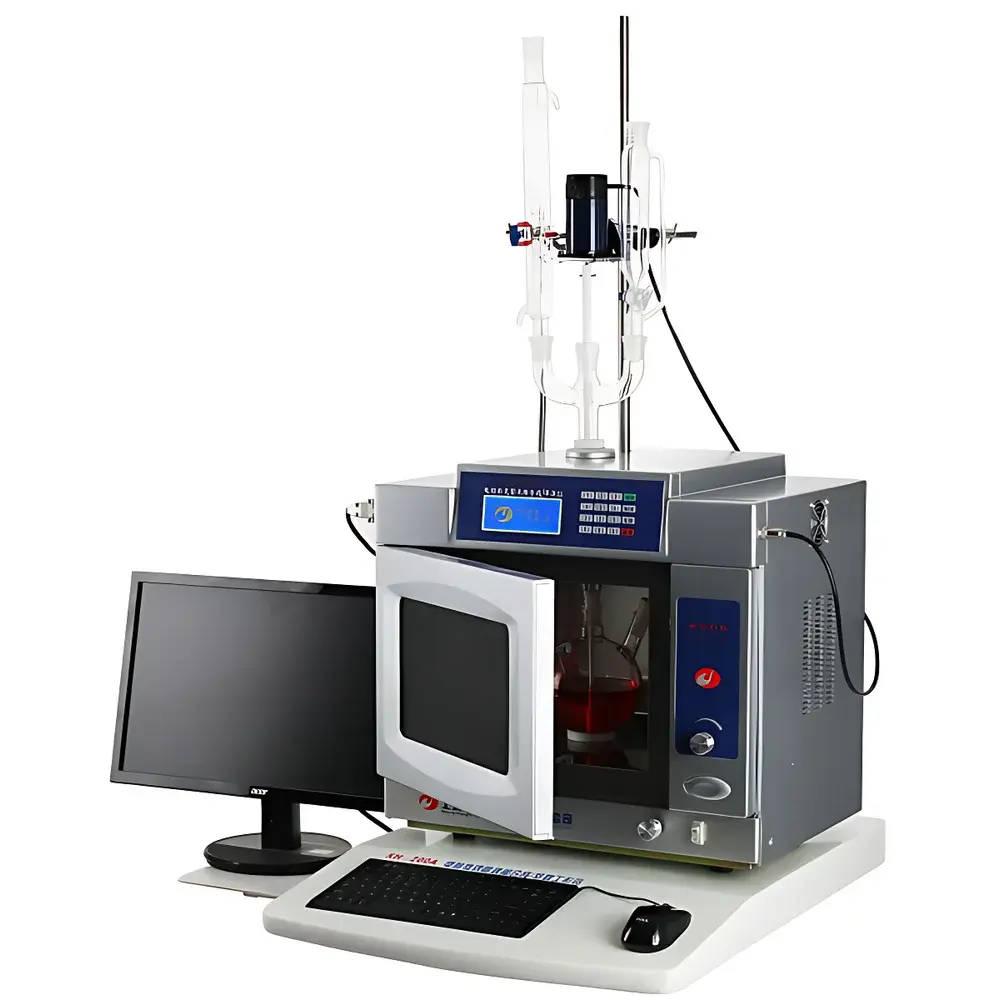
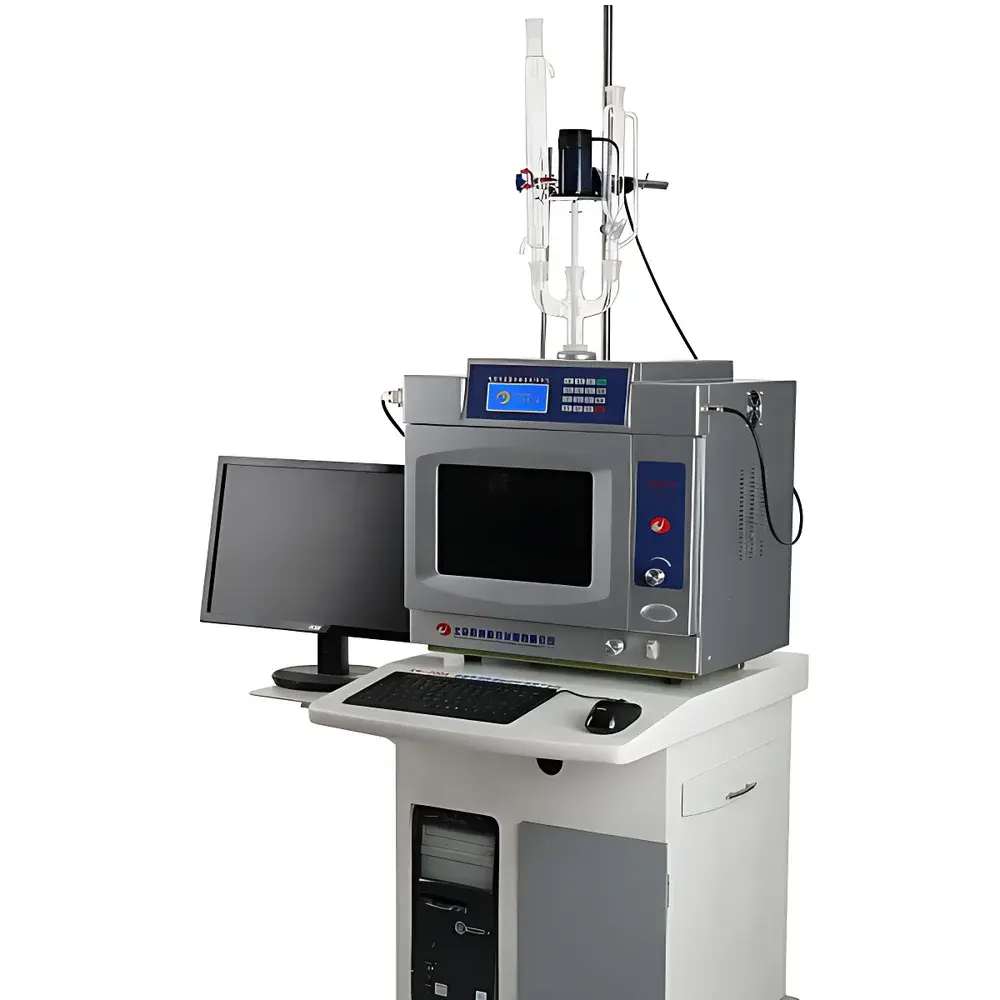
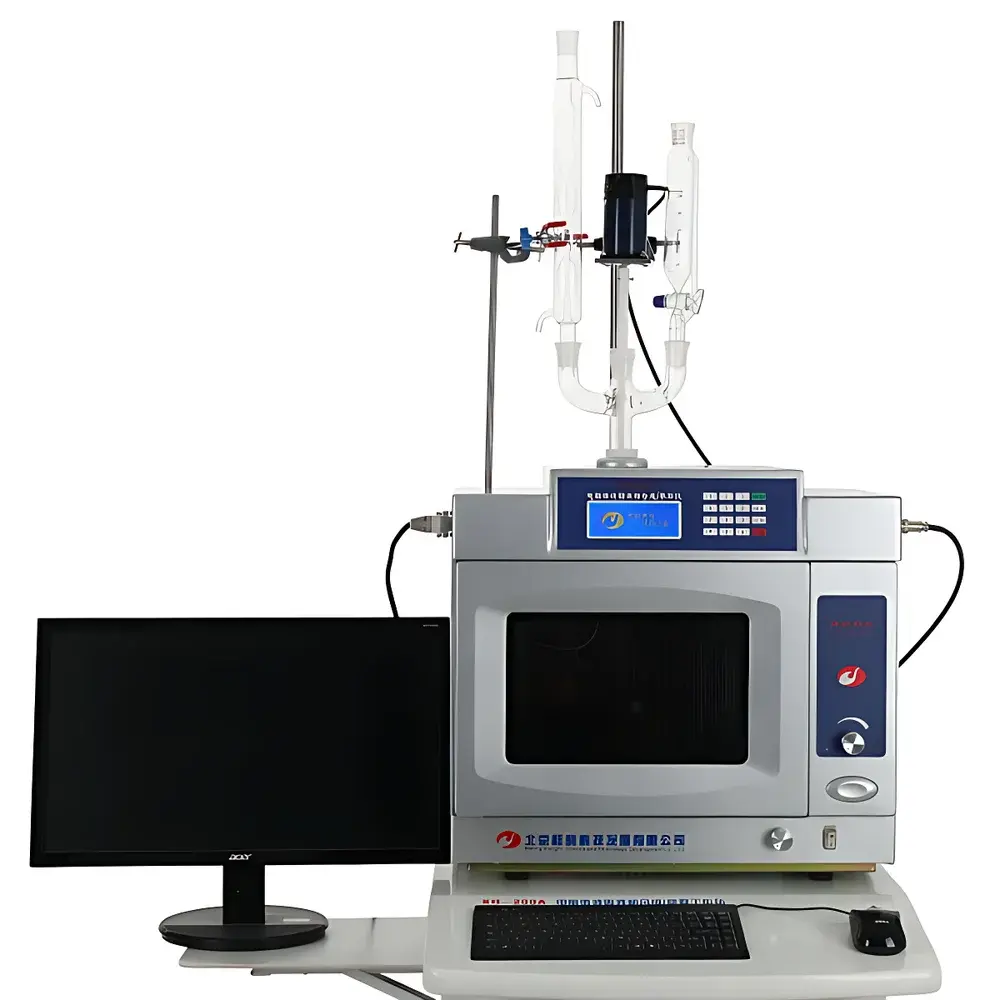
Xianghu XH-200A Computer-Controlled Microwave Synthesis and Extraction System
| Brand | Xianghu |
|---|---|
| Origin | Beijing, China |
| Manufacturer Type | Direct Manufacturer |
| Country of Origin | China |
| Model | XH-200A |
| Price Range | USD 7,000–14,000 (FOB) |
| Temperature Range | 0–300°C (contact), up to 500°C (non-contact) |
| Microwave Power | 0–1000 W, continuously adjustable |
| Magnetron Frequency | 2450 MHz |
| Stirring Options | Integrated magnetic stirring + external mechanical stirring |
| Reaction Volume | 10–1500 mL |
| Temperature Sensor | Pt1000 contact probe |
| Temperature Sampling Rate | 150–200 Hz |
| Temperature Accuracy | ±0.1°C (measurement), ±1°C (control) |
Overview
The Xianghu XH-200A Computer-Controlled Microwave Synthesis and Extraction System is a benchtop, open-vessel microwave reactor engineered for precise thermal management and reproducible reaction control in solid–liquid phase synthesis, catalytic transformation, and targeted extraction workflows. Unlike sealed-vessel high-pressure systems, the XH-200A operates under ambient pressure—enabling safe, real-time observation of reaction progress, direct addition of reagents via standard glassware (e.g., dropping funnels), and integration with reflux condensers. Its core microwave source employs an industrial-grade 2450 MHz magnetron with linear 0–1000 W power modulation, delivering uniform energy coupling across heterogeneous mixtures. Temperature regulation relies on a high-stability Pt1000 contact sensor embedded in the reaction vessel base, sampling at 150–200 data points per second and maintaining setpoint accuracy within ±1°C. This architecture supports both kinetic-driven rapid heating and isothermal hold protocols essential for optimizing reaction selectivity and yield in organic, inorganic, and materials chemistry applications.
Key Features
- Real-time dual-mode temperature monitoring: Contact-based Pt1000 probe (0–300°C range, ±0.1°C accuracy) supplemented by optional non-contact IR sensing (0–500°C)
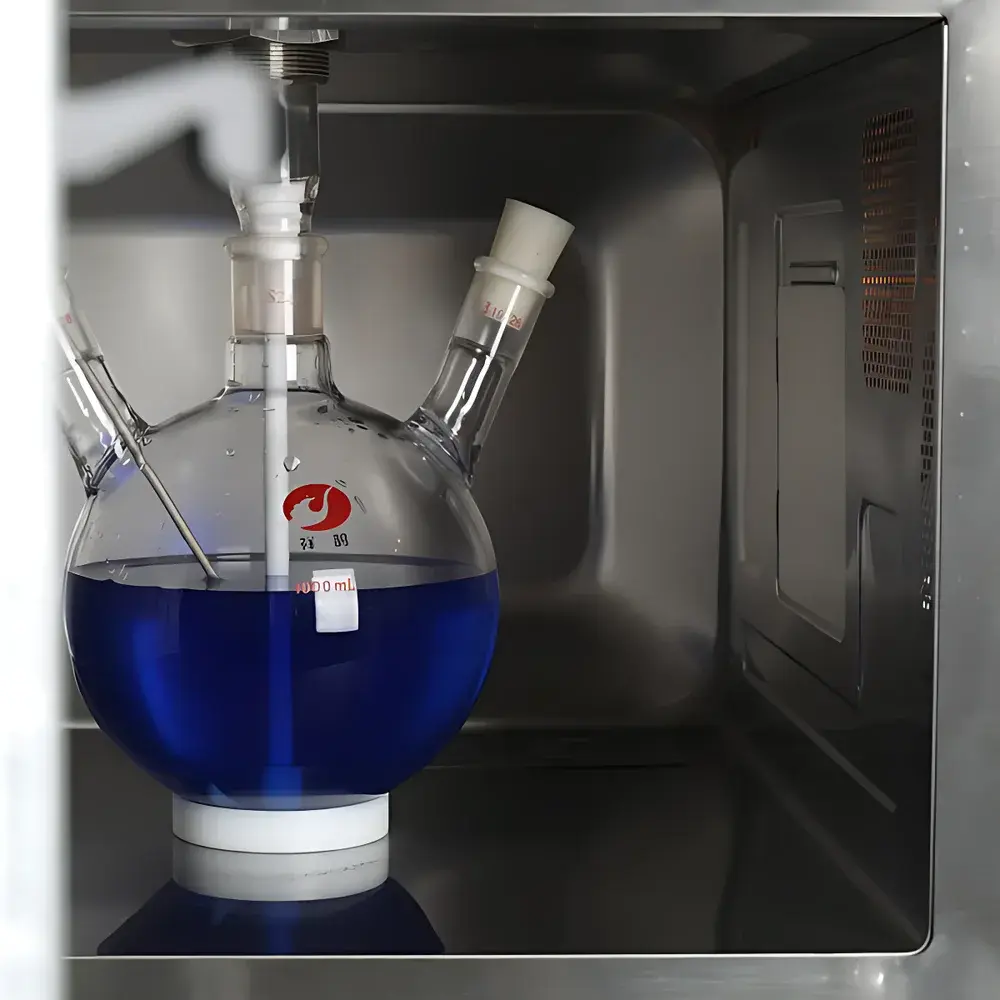
- Open-cavity stainless steel reaction chamber (Austenitic 316L grade) with reinforced industrial door seal, certified for microwave leakage <5 mW/cm² at 5 cm distance (per GB 4706.21 & IEC 60335-2-90)
- Dual stirring configuration: Internal magnetic stirring (variable speed, compatible with standard stir bars) plus externally coupled mechanical stirring for viscous or particulate-laden media
- Full computer integration via embedded Windows-based controller with 10.1″ color LCD interface, supporting dynamic parameter adjustment during active irradiation
- High-fidelity data logging: Simultaneous timestamped capture of temperature, microwave power, and time; exportable to CSV or proprietary .xhd format for post-run analysis
- Modular reaction vessel support: Compatible with borosilicate glass vessels (10–1500 mL), PTFE liners, and custom adapters for Schlenk-line or gas-inlet configurations
Sample Compatibility & Compliance
The XH-200A accommodates a broad spectrum of sample types—including powders, slurries, suspensions, and low-to-medium viscosity liquids—without requiring specialized pressure-rated vessels. Its atmospheric operation eliminates risks associated with over-pressurization, making it suitable for reactions involving volatile solvents (e.g., ethanol, acetone, ethyl acetate) or thermally labile substrates. The system complies with ISO 9001:2015 quality management standards and meets China’s national safety requirements for microwave laboratory equipment (GB 4706.21-2008). While not designed for GLP/GMP-regulated production environments, its audit-ready data logs—including full traceability of operator inputs, timestamps, and real-time parameter curves—support method validation under research-level QA frameworks aligned with ASTM E2656 and USP guidelines for analytical instrument qualification.
Software & Data Management
The proprietary XH-Control software provides a deterministic, deterministic execution environment for method development and routine operation. Users define multi-step temperature/power ramps, hold durations, and conditional triggers (e.g., “reduce power if temperature exceeds 120°C for >30 s”). All experimental metadata—including operator ID, date/time stamp, vessel ID, and calibration status—is embedded in each dataset. Raw data files are stored locally on the onboard SSD with optional network backup via Ethernet or USB 3.0. Export functions support direct plotting in MATLAB, Origin, or Excel; curve overlays enable comparative kinetic analysis across replicate runs. Software updates are delivered via signed firmware packages verified through SHA-256 checksums to ensure integrity and regulatory traceability.
Applications
- Catalyst-assisted C–C bond formation (e.g., Suzuki, Heck, and Ullmann couplings) under mild thermal conditions
- Rapid extraction of bioactive compounds (polyphenols, alkaloids, flavonoids) from plant matrices using ethanol–water mixtures
- Solid-phase peptide synthesis with microwave-accelerated deprotection cycles
- Inorganic nanomaterial synthesis (e.g., metal oxides, perovskites) via polyol or solvothermal routes
- Accelerated aging studies of polymer blends and composites under controlled thermal stress
- Green chemistry optimization: Solvent reduction, energy efficiency gains (>60% vs conventional oil-bath heating), and improved atom economy
FAQ
Is the XH-200A suitable for high-pressure reactions?
No. It is explicitly designed for atmospheric-pressure operation. For sealed-vessel high-pressure synthesis, refer to Xianghu’s XH-8000 series.
Can third-party software interface with the XH-200A’s data stream?
Yes—via TCP/IP socket protocol documentation provided under NDA; LabVIEW and Python (PySerial + custom API wrapper) integrations are validated by end users.
What maintenance is required for the magnetron and waveguide assembly?
Annual inspection of waveguide gasket integrity and magnetron cooling airflow is recommended; no user-serviceable parts inside the RF cavity.
Does the system support FDA 21 CFR Part 11 compliance?
Out-of-the-box electronic records meet ALCOA+ principles (Attributable, Legible, Contemporaneous, Original, Accurate); Part 11 compliance requires site-specific validation protocols and supplementary access controls.
How is temperature uniformity validated across different vessel sizes?
Xianghu provides a standardized calibration report using ASTM E2847-compliant thermal mapping procedures with 9-point thermocouple arrays for common vessel volumes (50 mL, 250 mL, 1000 mL).



