
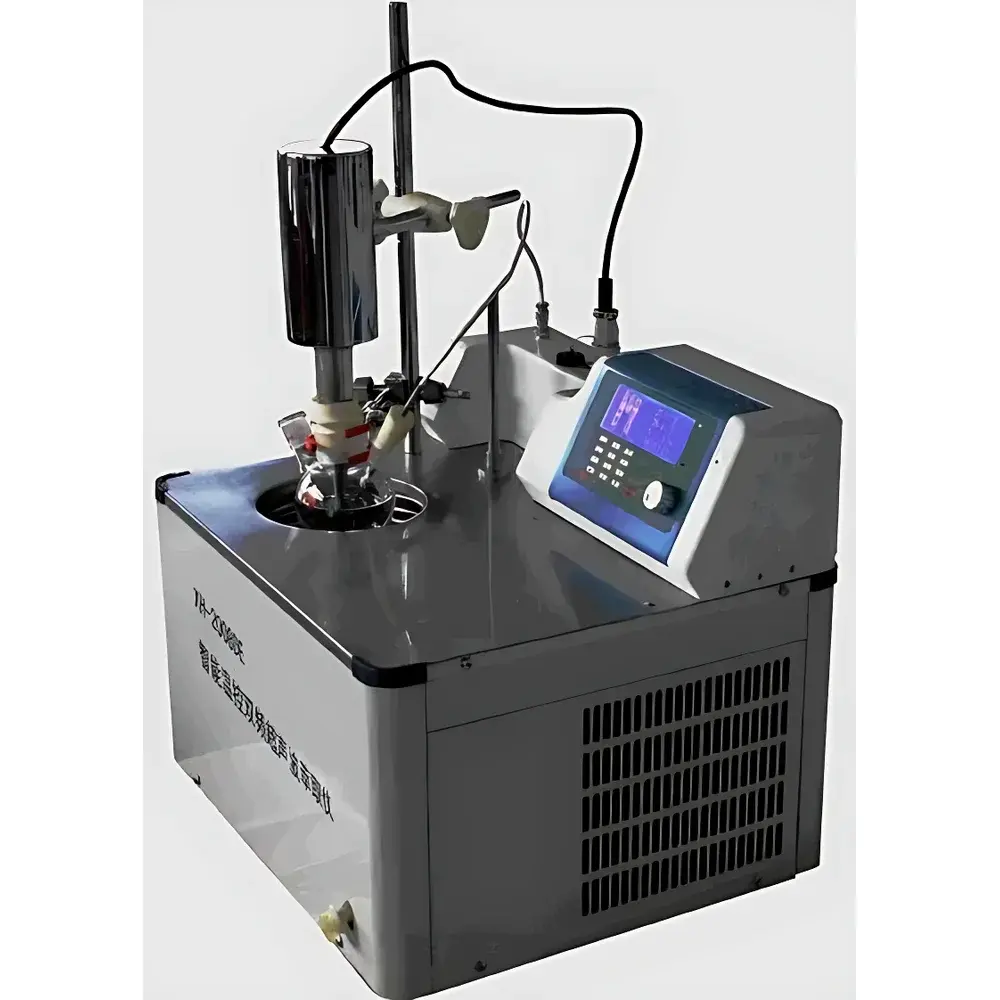
Xianghu XH-2008DE Intelligent Dual-Frequency Ultrasonic Extractor with Precision Temperature Control
| Brand | Xianghu |
|---|---|
| Origin | Beijing, China |
| Manufacturer Type | Direct Manufacturer |
| Origin Category | Domestic (China) |
| Model | XH-2008DE |
| Ultrasonic Power | 0–1500 W (continuously adjustable) |
| Ultrasonic Frequencies | 25 ± 1 kHz and 40 ± 1 kHz (auto-frequency-tracking enabled) |
| Heating Power | 500–800 W |
| Temperature Range | −20 to 100 °C |
| Cold Bath Volume | 2 L |
| Reaction Vessel Capacity | ≤ 500 mL |
| Probe Diameters | Ø8 mm and Ø18 mm |
| Temperature Control Accuracy | ±1 °C |
| Operating Mode | Pulse-mode ultrasonication with programmable duty cycle |
| Safety Features | Over-temperature automatic mode switching and thermal cutoff |
Overview
The Xianghu XH-2008DE Intelligent Dual-Frequency Ultrasonic Extractor with Precision Temperature Control is an engineered solution for laboratory-scale solid–liquid and liquid–liquid extraction processes requiring simultaneous acoustic energy delivery and stringent thermal regulation. It operates on the principle of cavitation-induced mass transfer enhancement—where controlled ultrasonic waves generate transient microbubbles in the solvent medium; their collapse produces localized high-pressure, high-temperature zones that disrupt cell walls, accelerate solute diffusion, and improve extraction yield and kinetics. Unlike conventional single-frequency systems, the XH-2008DE integrates two independently selectable transducer frequencies (25 kHz and 40 kHz), enabling optimization across diverse sample matrices—lower frequency for higher cavitation intensity in viscous or particulate-rich suspensions, and higher frequency for finer dispersion and gentler treatment of thermolabile compounds. The system couples this acoustic capability with a dual-mode thermal management architecture: a compressor-driven cold bath (−20 to 99 °C) for external temperature stabilization, and real-time internal probe-based temperature monitoring of the reaction vessel (−20 to 100 °C), ensuring process fidelity under both cryogenic and elevated thermal conditions.
Key Features
- Dual-frequency ultrasonic generation (25 ± 1 kHz and 40 ± 1 kHz) with automatic phase-locked loop (PLL) frequency tracking—ensures resonant coupling between amplifier and transducer across varying load impedance and temperature drift.
- Continuously adjustable ultrasonic power output (0–1500 W), supporting scalable energy input from gentle sonication to high-intensity cavitation.
- Integrated compressor-cooled bath (2 L capacity) with heating element (500–800 W), enabling precise bidirectional temperature control (−20 to 100 °C) and thermal stability ≤ ±1 °C.
- Two interchangeable titanium alloy ultrasonic probes (Ø8 mm and Ø18 mm) optimized for compatibility with standard laboratory glassware (e.g., round-bottom flasks, beakers) and scalable reaction volumes up to 500 mL.
- Pulse-mode operation with user-defined on/off timing—reduces net thermal load and mitigates sample degradation during extended extractions.
- Onboard microcontroller with LCD interface provides intuitive parameter programming (power, frequency, temperature setpoint, pulse duration, dwell time) and real-time status feedback.
- Embedded safety logic: automatic transition to low-power or standby mode upon exceeding user-defined temperature thresholds, plus audible/visual alarm activation.
- Modular design supports auxiliary functions including magnetic stirring (variable speed), reflux condensation (via standard ground-glass joint), and external data logging via RS232 or analog output.
Sample Compatibility & Compliance
The XH-2008DE accommodates a broad range of natural product matrices—including plant leaves, roots, seeds, microbial biomass, and synthetic polymers—as well as organic and aqueous solvent systems (e.g., ethanol, methanol, ethyl acetate, water, buffer solutions). Its closed-vessel configuration minimizes volatile loss and enables safe handling of flammable or low-boiling solvents under reflux. From a regulatory perspective, the instrument’s programmable parameters, thermal traceability, and operational repeatability support adherence to GLP (Good Laboratory Practice) documentation requirements. While not certified to ISO/IEC 17025 or FDA 21 CFR Part 11 out-of-the-box, its deterministic control architecture and audit-ready parameter logging (when interfaced with compliant LIMS or ELN software) facilitate validation protocols required for QC/QA workflows in pharmaceutical, nutraceutical, and food safety laboratories.
Software & Data Management
The XH-2008DE operates via embedded firmware without dependency on proprietary PC software. All critical process variables—including actual vs. setpoint temperature, applied ultrasonic power, active frequency, and elapsed time—are displayed and stored locally in non-volatile memory for up to 100 complete run logs. Optional RS232 serial output permits integration with third-party data acquisition systems or custom SCADA environments. For laboratories requiring electronic records compliance, the device supports timestamped export of CSV-formatted logs, compatible with validated platforms implementing ALCOA+ principles (Attributable, Legible, Contemporaneous, Original, Accurate, Complete, Consistent, Enduring, Available). No cloud connectivity or remote access functionality is included—ensuring data sovereignty and network security alignment with institutional IT policies.
Applications
- Accelerated extraction of bioactive compounds (e.g., polyphenols, alkaloids, terpenoids) from botanical materials under controlled low-temperature conditions to preserve thermosensitivity.
- Preparation of reference standards and calibration solutions in analytical chemistry labs where reproducible matrix disruption is essential prior to HPLC or GC analysis.
- Development of green extraction protocols compliant with ICH Q5C and USP guidelines for residual solvent profiling.
- Cell lysis and intracellular metabolite recovery in microbiology and synthetic biology workflows—particularly for Gram-negative bacteria and yeast strains with robust cell walls.
- Enhancement of enzymatic or chemical derivatization reactions by improving reagent–substrate contact efficiency in heterogeneous media.
- Method development for AOAC Official Method 2012.01 (ultrasonic-assisted extraction of pesticides in fruits/vegetables) and ISO 17075-1:2022 (determination of tannins in plant extracts).
FAQ
What is the maximum recommended reaction volume for optimal cavitation efficiency?
The system is calibrated and validated for consistent performance with reaction volumes ≤ 500 mL. Exceeding this limit may reduce energy density and compromise temperature uniformity.
Can the instrument operate continuously at −20 °C ambient temperature?
Yes—the compressor cooling system is rated for sustained operation down to −20 °C bath setpoint; however, ambient lab temperature should remain ≥ 15 °C to ensure stable refrigeration cycle performance.
Is the ultrasonic probe chemically resistant to strong acids or halogenated solvents?
The standard titanium alloy (Grade 5, Ti-6Al-4V) probe exhibits excellent resistance to most organic solvents and dilute mineral acids; prolonged exposure to concentrated HF, hot HCl, or brominated solvents is not recommended.
Does the unit meet electromagnetic compatibility (EMC) standards for use in shared laboratory environments?
The XH-2008DE complies with GB/T 18268.1–2010 (equivalent to IEC 61326-1), ensuring minimal radiated emissions and immunity to common lab-grade electrical noise sources.
How is temperature measured inside the reaction vessel?
A Pt100-grade RTD sensor is integrated into the ultrasonic probe shaft, providing direct, real-time measurement of the liquid phase adjacent to the cavitation zone—enabling accurate closed-loop control independent of bath temperature.
Related Products



