Xianghu XH-600US Intelligent Ultrasonic Cell Disruptor
| Brand | Xianghu |
|---|---|
| Origin | Beijing, China |
| Manufacturer Type | Direct Manufacturer |
| Product Category | Domestic |
| Model | XH-600US |
| Instrument Type | Ultrasonic Cell Disruptor |
| Ultrasonic Power | 0–1500 W |
| Operating Frequency | 20–25 kHz with Auto-Frequency Tracking |
| Temperature Range | 0–100 °C |
| Sample Volume | 10–500 mL |
| Sample Capacity | Single-vessel operation |
Overview
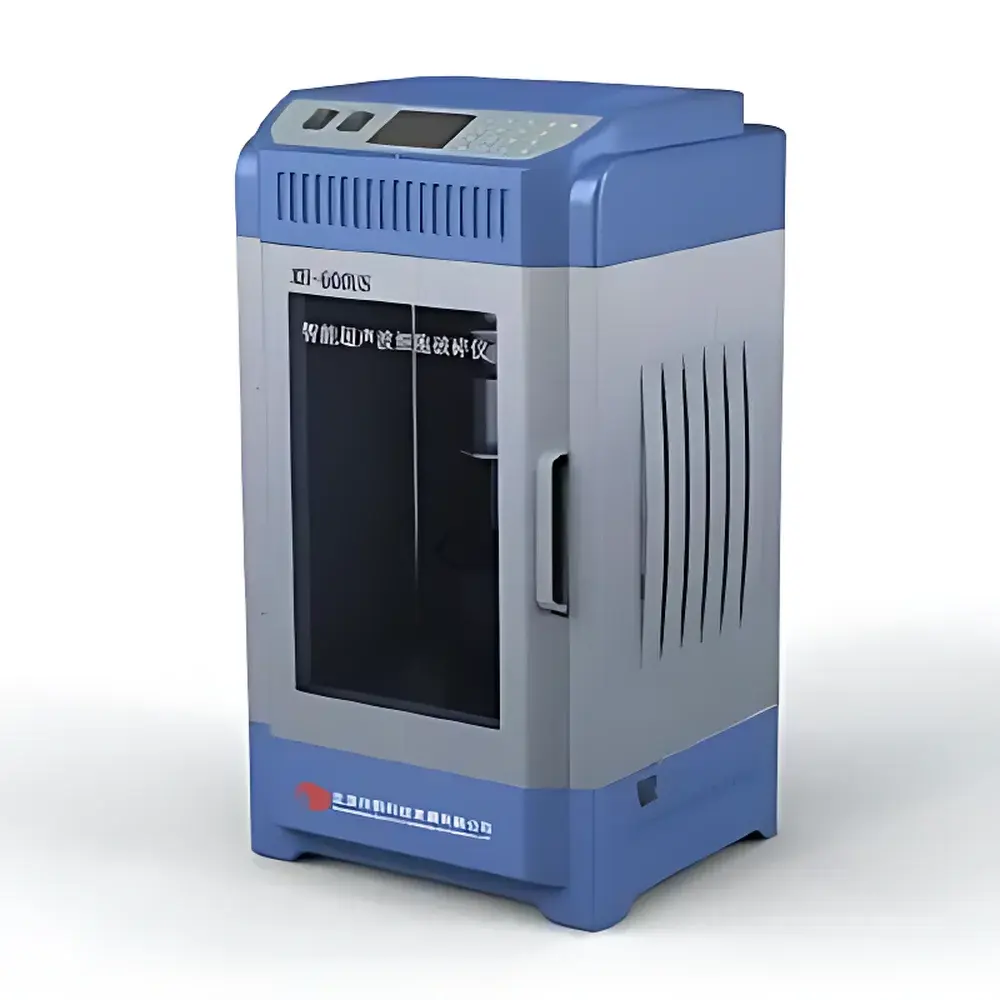
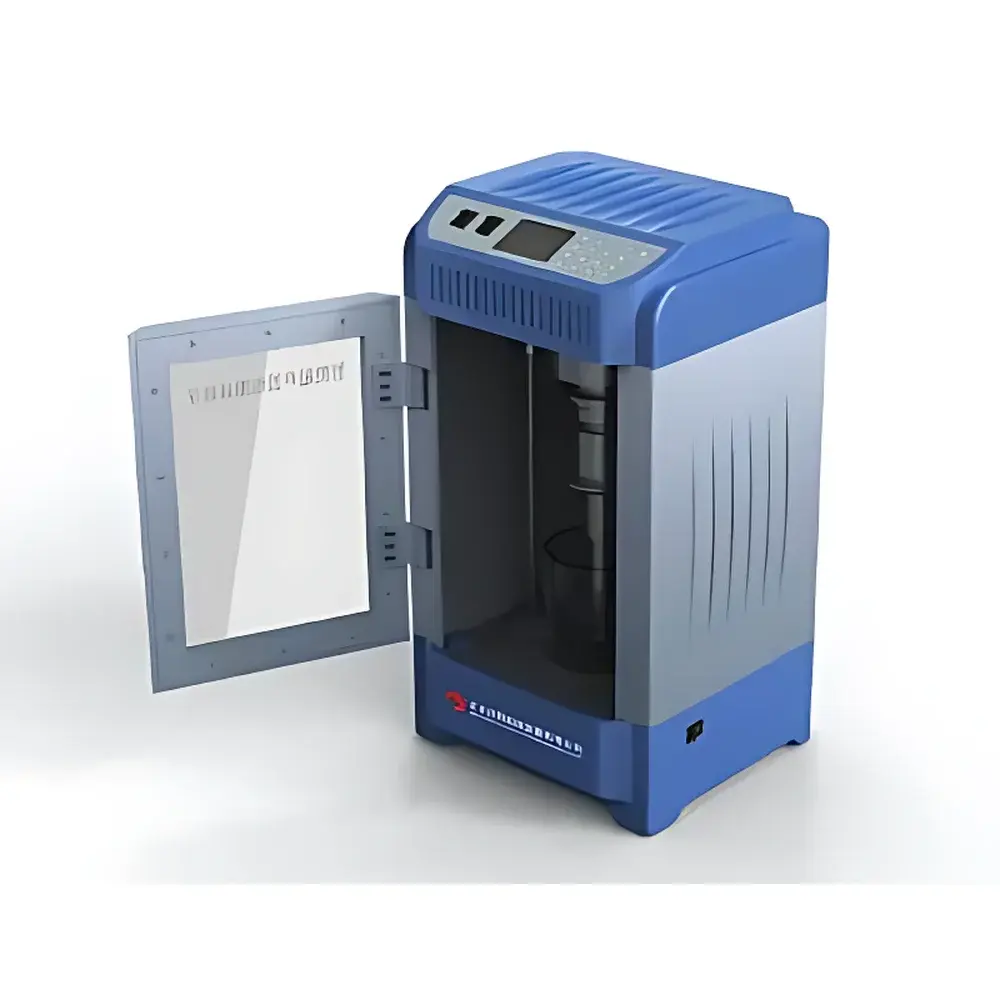
The Xianghu XH-600US Intelligent Ultrasonic Cell Disruptor is an integrated benchtop system engineered for efficient, controllable, and reproducible cell lysis and macromolecular extraction in life science laboratories. It operates on the principle of high-intensity ultrasonic cavitation—where rapid pressure fluctuations generated by piezoelectric transduction induce microbubble formation, growth, and implosive collapse within liquid media—resulting in localized shear forces sufficient to disrupt cellular membranes and subcellular structures. Unlike conventional split-unit ultrasonicators, the XH-600US integrates the power supply, transducer assembly, control electronics, and user interface into a single compact chassis. This architecture eliminates signal loss across external cabling, improves impedance matching, and enhances energy transfer efficiency from electrical input to acoustic output. Designed for routine use in molecular biology, protein purification, nucleic acid isolation, and nanomaterial dispersion workflows, the system delivers stable cavitation performance across variable sample viscosities and thermal conditions.
Key Features
- Integrated monolithic design: Combines ultrasonic generator, piezoelectric transducer, motorized probe lift mechanism, and embedded controller in one unit—reducing footprint and improving operational reliability.
- Auto-frequency tracking via phase-locked loop (PLL) circuitry: Dynamically locks onto the resonant frequency of the titanium alloy horn within the 20–25 kHz range, compensating for load-dependent drift caused by temperature rise or viscosity changes.
- Motorized vertical probe positioning: Enables precise, repeatable immersion depth control (±0.5 mm resolution) and automatic retraction during standby or overtemperature events.
- Dual-diameter titanium alloy sonotrodes: Includes interchangeable ∅8 mm and ∅18 mm horns optimized for low-volume microcentrifuge tubes and larger batch processing (up to 500 mL), respectively.
- Real-time temperature monitoring: High-accuracy PT100 sensor (±0.1 °C at 25 °C) embedded in the sample chamber provides continuous feedback; system triggers duty-cycle reduction or pulse interruption if user-defined thermal thresholds are exceeded.
- Pulse-mode operation with programmable duty cycles: Supports on/off ratios from 0.1 s to 99.9 s, enabling thermal management during prolonged treatments without manual intervention.
- Corrosion-resistant fluoropolymer-coated chamber: Internal cavity surface treated with high-temperature PTFE coating resists chemical degradation from organic solvents, strong acids, and alkaline buffers.
- Acoustic enclosure: Integrated sound-dampening housing reduces ambient noise to ≤65 dB(A) at 1 m distance, meeting ISO 7779 requirements for laboratory equipment noise emission.
Sample Compatibility & Compliance
The XH-600US accommodates aqueous and organic-phase suspensions across a wide viscosity spectrum—from dilute bacterial cultures (≤10 cP) to viscous lysates containing genomic DNA or inclusion bodies (up to ~200 cP). Its sealed chamber supports samples in standard glass or polypropylene vessels (e.g., centrifuge tubes, beakers, jacketed reactors). The system complies with IEC 61000-6-3 (EMC emission limits) and IEC 61010-1 (safety requirements for laboratory electrical equipment). While not certified for GMP manufacturing environments, its logging-capable software interface and hardware-level thermal interlocks support GLP-aligned documentation practices. Temperature and power logs can be exported for audit trails required under FDA 21 CFR Part 11 when used in regulated preclinical research settings.
Software & Data Management
The instrument features an embedded 4.3-inch TFT-LCD touchscreen with intuitive icon-driven navigation. All operational parameters—including amplitude (% of max power), pulse duration, cycle count, target temperature, and total elapsed time—are stored in non-volatile memory with timestamped event logging. Data export is supported via USB 2.0 port in CSV format, compatible with Excel, GraphPad Prism, and LabArchives ELN platforms. Firmware updates are performed offline using FAT32-formatted USB drives. No cloud connectivity or remote access capabilities are implemented, ensuring data sovereignty and network security compliance per institutional IT policies.
Applications
- Routine lysis of E. coli, yeast, and mammalian cells for recombinant protein expression and purification
- Chromatin shearing for ChIP-seq and ATAC-seq library preparation
- Exosome isolation and extracellular vesicle disruption
- Preparation of antigen extracts for immunological assays
- Nanoparticle dispersion and deagglomeration in colloidal synthesis
- Enhanced solvent extraction of plant metabolites and natural products
- Cell membrane permeabilization for intracellular dye loading or CRISPR RNP delivery
FAQ
What is the maximum recommended continuous operating time per cycle?
The system supports up to 100 hours of cumulative runtime per session, with programmable intervals and rest periods to manage thermal load.
Does the instrument support external temperature control integration (e.g., circulating chiller)?
Yes—the chamber includes dual 1/4″ NPT ports for optional recirculating coolant connection, enabling active temperature stabilization below ambient.
How does the auto-frequency tracking improve reproducibility compared to fixed-frequency units?
By continuously adjusting drive frequency to match the mechanical resonance of the horn-sample system, it maintains consistent cavitation intensity despite changes in liquid level, temperature, or suspended solids concentration.
Is validation documentation (IQ/OQ/PQ protocols) available for this model?
Xianghu provides basic factory calibration certificates and operational qualification templates; site-specific IQ/OQ execution must be performed by qualified laboratory personnel per ISO/IEC 17025 guidelines.
Can the ∅8 mm sonotrode be used for volumes below 10 mL?
Yes—though optimal energy coupling is achieved between 2–10 mL; smaller volumes require careful horn immersion depth control to avoid excessive foaming or aerosol generation.
Related Products