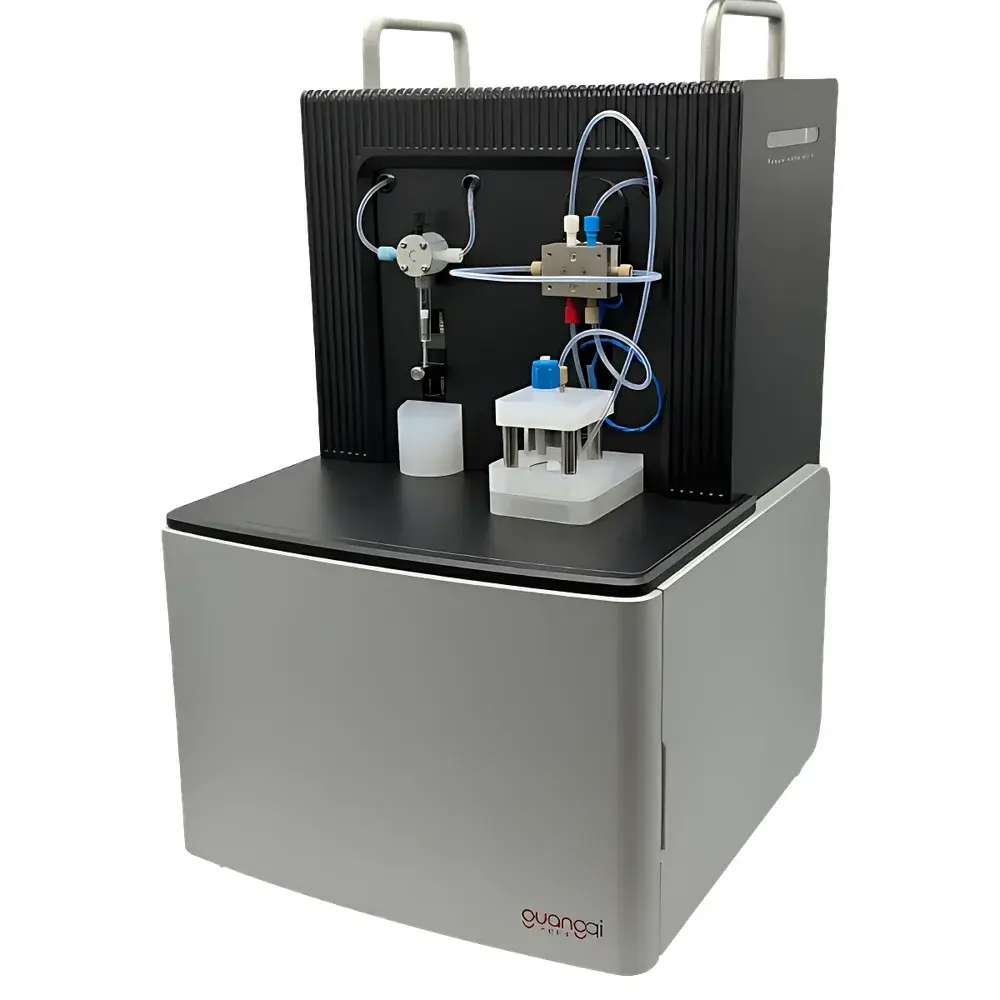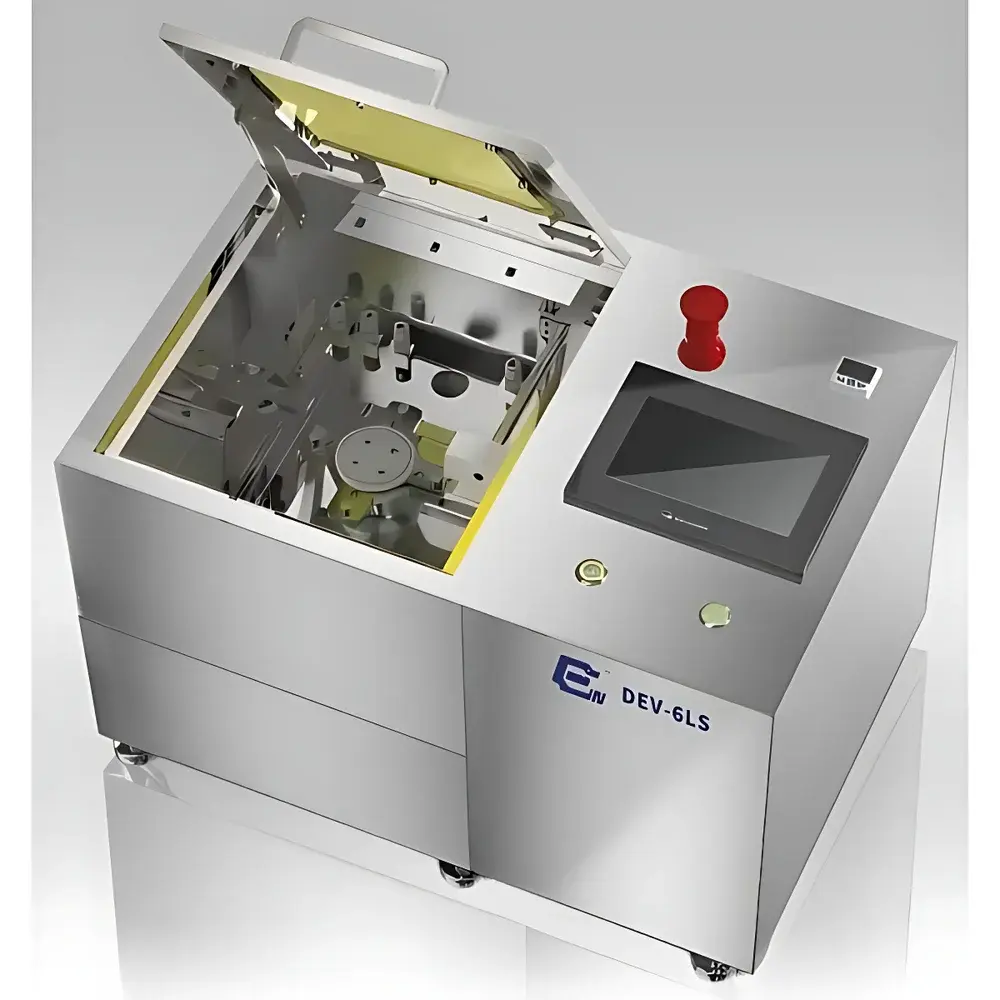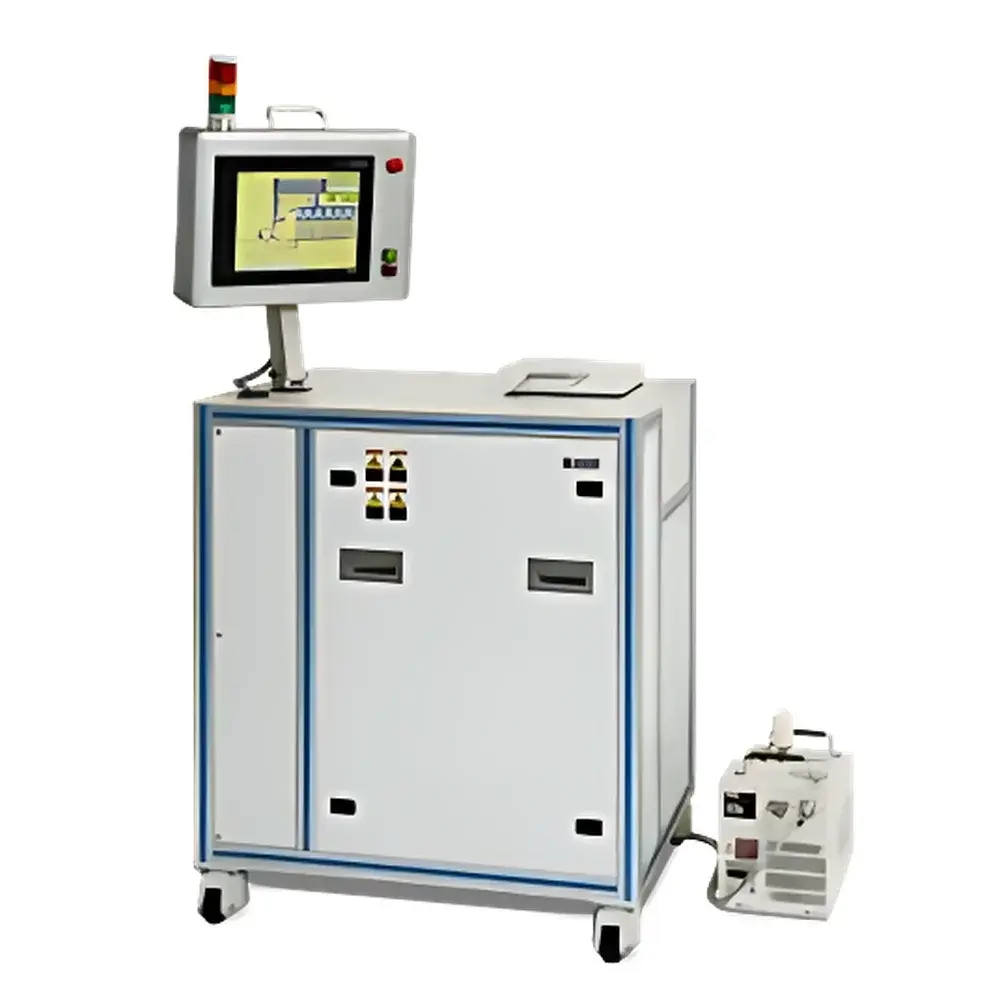
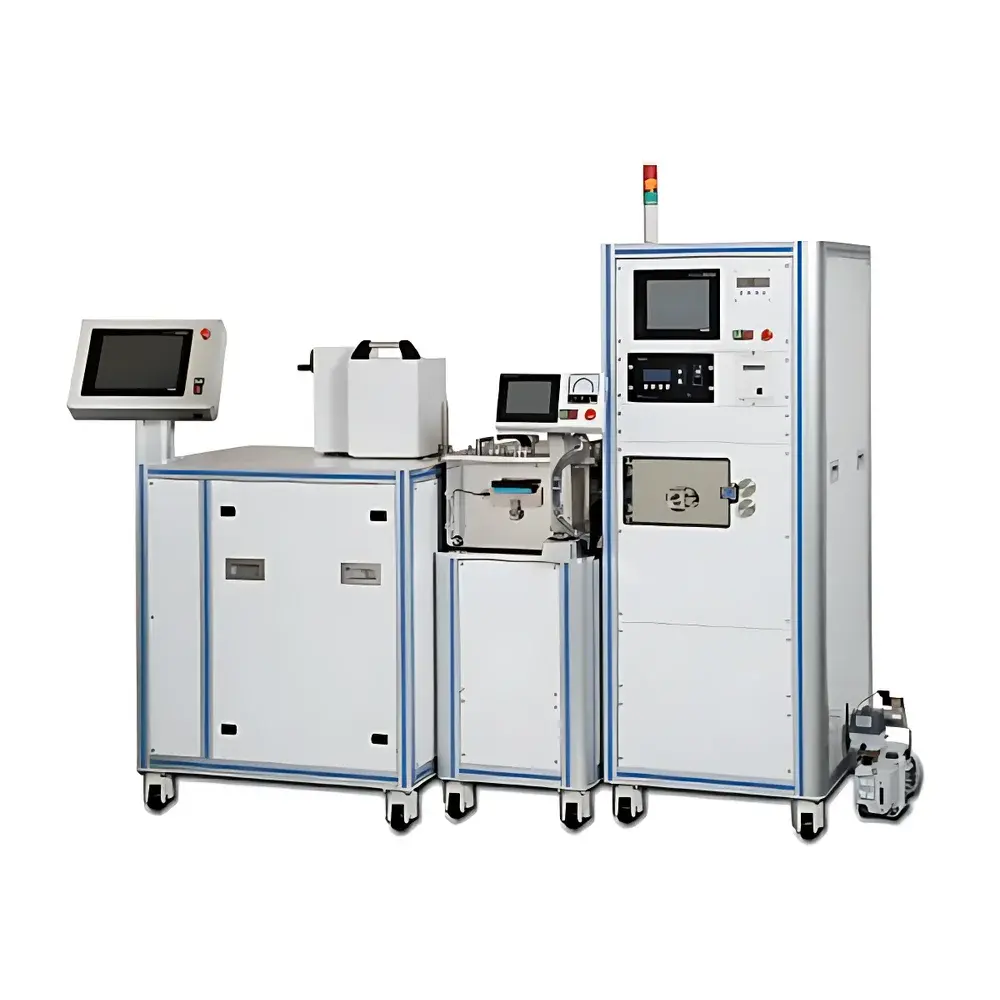
AGUS SAL-3000Plus Atomic Layer Deposition System
| Brand | AGUS |
|---|---|
| Origin | Japan |
| Model | SAL-3000Plus |
| Substrate Size | 4-inch (100 mm) |
| Process Temperature Range | 350–800 °C |
| Number of Precursor Lines | 6 |
| Vacuum Base Pressure | ≤5 Pa |
| Film Thickness Uniformity | ≤3% @ 100 mm |
| System Dimensions (W × H × D) | 835 × 1644 × 700 mm |
| Weight | 160 kg |
Overview
The AGUS SAL-3000Plus is a modular, high-precision Atomic Layer Deposition (ALD) system engineered for research and pilot-scale semiconductor process development. It operates on the fundamental ALD principle—sequential, self-limiting surface reactions between gaseous precursors and reactive substrate surfaces—enabling sub-nanometer thickness control and atomic-level conformality. Unlike CVD or PVD techniques, ALD achieves exceptional step coverage on high-aspect-ratio structures (e.g., trenches >50:1, vias, nanowires), making it indispensable for advanced logic, memory (3D NAND, DRAM), and emerging device architectures such as gate-all-around (GAA) transistors and ferroelectric capacitors. The SAL-3000Plus supports both thermal and plasma-enhanced ALD modes (with optional plasma module integration), allowing deposition of oxides (Al₂O₃, HfO₂, TiO₂), nitrides (TiN, TaN), sulfides (MoS₂), and complex multilayers with stoichiometric fidelity and low defect density.
Key Features
- Modular architecture designed for seamless integration with complementary AGUS Plus-series tools—including STR2000 transfer modules, SAN2000Plus rapid thermal annealing systems, SVE2000Plus e-beam evaporators, and SSP2000Plus/SSP3000Plus magnetron sputtering systems—enabling fully automated cluster tool configurations compliant with cleanroom-integrated material handling standards.
- Dual-side deposition capability: configurable gas inlet and showerhead orientation permit film growth on either the top or bottom surface of the substrate, minimizing particle contamination from precursor condensation on chamber walls or shadowing effects during loading.
- Six independently controlled, temperature-regulated precursor delivery lines (up to 200 °C) with mass flow controllers (MFCs) and pulsed injection valves ensure precise dosing, minimal cross-contamination, and reproducible saturation kinetics across all chemistries.
- High-vacuum compatible chamber with base pressure ≤5 Pa (achieved via integrated dry scroll pump), low-outgassing stainless-steel construction, and water-cooled chamber walls for thermal stability during extended high-temperature cycles (up to 800 °C).
- Intuitive 15-inch capacitive touch HMI with real-time process monitoring, recipe management (≥30 stored protocols), and event logging—designed for operator efficiency without compromising audit readiness.
Sample Compatibility & Compliance
The SAL-3000Plus accommodates standard 4-inch (100 mm) wafers, including Si, SiO₂/SiNₓ stacks, III–V substrates (GaAs, InP), and flexible polyimide or quartz carriers. Its conformal coating performance is validated per SEMI F20-0202 (wafer uniformity measurement) and ASTM F392 (thin-film adhesion testing). The system meets ISO 14644-1 Class 5 cleanroom compatibility requirements when installed with appropriate air filtration and exhaust ducting. Optional ozone generator and abatement units enable safe handling of hazardous precursors (e.g., TMA, DEZ, NH₃), satisfying OSHA 29 CFR 1910.1200 and local EPA emission guidelines.
Software & Data Management
The embedded control software provides full parameter logging (temperature, pressure, pulse timing, MFC setpoints), timestamped recipe execution history, and CSV export for offline analysis. Audit trails comply with GLP/GMP principles, supporting 21 CFR Part 11–ready configurations (with optional electronic signature and role-based access control modules). Integration with factory automation protocols (SECS/GEM, OPC UA) allows direct communication with MES systems for traceability in qualification runs.
Applications
- Deposition of high-κ gate dielectrics (HfO₂, Al₂O₃) with <0.05 nm thickness resolution and ≤3% wafer-to-wafer repeatability over 100+ cycles.
- Conformal ALD AlN and ScAlN layers for piezoelectric MEMS actuators and RF filters.
- Encapsulation of perovskite solar cells and OLED emitters using pinhole-free Al₂O₃ barrier films (<10⁻⁴ g/m²/day water vapor transmission rate).
- Surface functionalization of porous low-κ interlayer dielectrics (SiCOH) prior to Cu electroplating.
- Research on atomic-scale interface engineering in 2D heterostructures (e.g., MoS₂/h-BN/graphene stacks).
FAQ
What substrate sizes does the SAL-3000Plus support?
The system is optimized for 4-inch (100 mm) wafers; custom carrier plates can be configured for smaller substrates (e.g., 2-inch, diced chips, or TEM grids) upon request.
Is plasma-enhanced ALD supported natively?
Plasma enhancement requires the optional PE-ALD add-on module (RF 13.56 MHz, 300 W max), which integrates with the main chamber and shares the same control interface.
Can the system operate under inert atmosphere without vacuum pumping?
No—the SAL-3000Plus is a vacuum-based ALD platform; continuous vacuum operation is mandatory to maintain precursor purity, prevent oxidation, and ensure self-limiting reaction kinetics.
How is film thickness calibrated and verified?
Thickness calibration uses in-situ quartz crystal microbalance (QCM) monitoring (optional) combined with ex-situ XRR and ellipsometry validation against NIST-traceable reference samples.
What maintenance intervals are recommended for precursor delivery lines?
Precursor lines should undergo quarterly purge-and-bake cycles; MFC recalibration is advised every six months or after 500 process hours, per AGUS Maintenance Protocol MP-SAL3000P-REV4.