
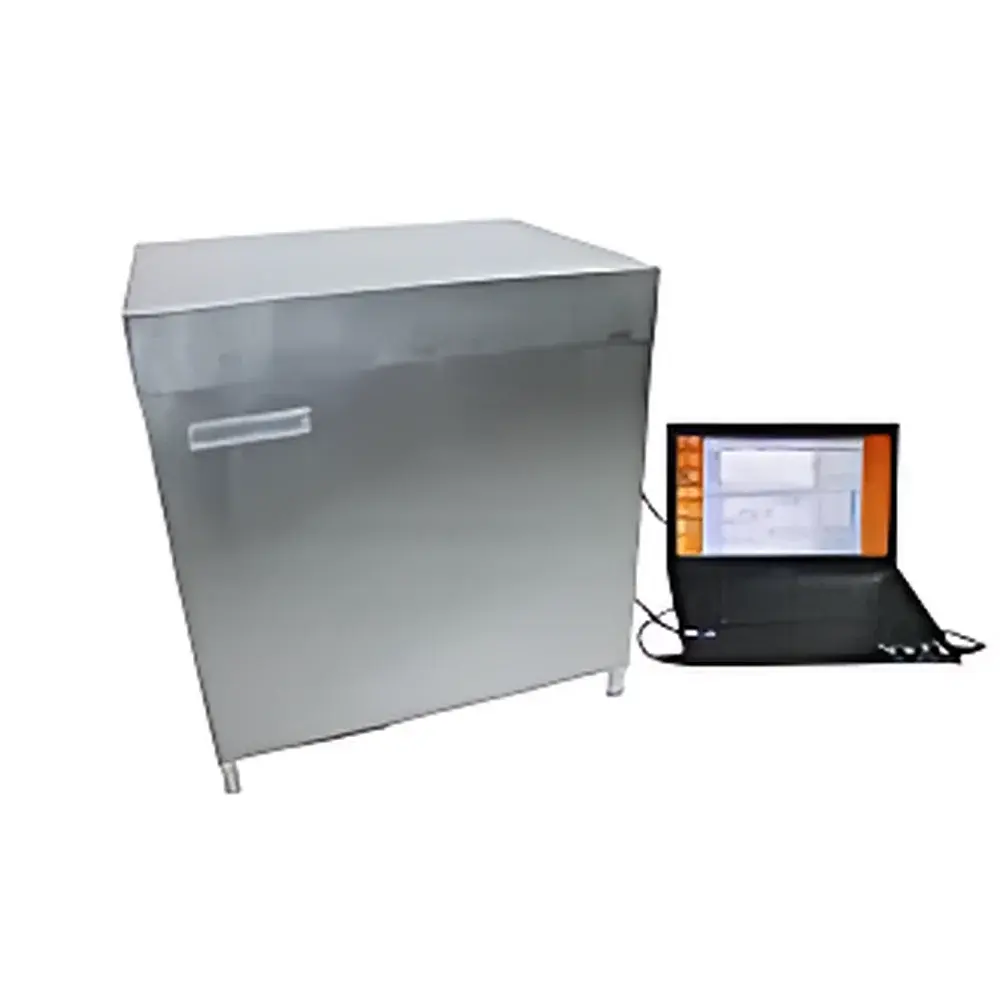
Calmetrix I-Cal 8000/4000/2000HPC Isothermal Calorimeter for Cement and Concrete Hydration Analysis
| Brand | Calmetrix |
|---|---|
| Origin | USA |
| Model | I-Cal 8000HPC / I-Cal 4000HPC / I-Cal 2000HPC |
| Compliance | ASTM C1679, ASTM C1702 |
| Temperature Range | Up to 70 °C |
| Sample Volume | 125 mL per vial |
| Measurement Duration | Up to 7 days |
| Thermal Sensitivity | Sub-mW resolution (typical) |
| Configuration | Integrated fixed reference cell |
| Cooling Architecture | Per-channel heat-sink (4000HPC), Fully isolated thermal units (2000HPC), Multi-channel parallel measurement (8000HPC) |
Overview
The Calmetrix I-Cal Series HPC (High-Precision Calorimeter) is a purpose-built isothermal heat flow calorimeter engineered for quantitative, real-time monitoring of hydration enthalpy in cementitious systems. Operating on the principle of sensitive heat flux detection via thermopile-based differential measurement against a thermally stabilized internal reference, the I-Cal platform delivers high reproducibility in exothermic heat release profiling under strictly controlled isothermal conditions. Unlike adiabatic or semi-adiabatic methods, this system maintains sample and reference cells at identical, user-defined setpoints—typically ranging from ambient to 70 °C—enabling precise quantification of cumulative heat evolution (J/g) and instantaneous heat flow rate (mW/g) over extended durations up to 7 days. Its design directly supports standardized evaluation of early-age cement reactivity, supplementary cementitious material (SCM) performance, admixture compatibility, and low-heat binder development—critical parameters for durability modeling, mix optimization, and compliance verification.
Key Features
- Multi-channel parallel architecture: I-Cal 8000HPC supports eight independent 125 mL sample positions; I-Cal 4000HPC accommodates four; I-Cal 2000HPC provides two fully isolated thermal measurement units.
- Integrated fixed-reference cell: Eliminates inter-unit drift and enhances baseline stability across multi-day runs without external calibration artifacts.
- Active temperature control with ±0.02 °C stability: Achieved via Peltier-based thermal regulation and precision RTD feedback loops, compliant with ASTM C1679 Section 6.2 and C1702 Annex A1 requirements.
- Low-noise thermopile sensor array: Delivers sub-milliwatt thermal sensitivity with <1% relative standard deviation across replicate measurements under identical curing conditions.
- Modular thermal isolation: I-Cal 4000HPC employs individual aluminum heat sinks per channel to minimize cross-talk; I-Cal 2000HPC features physically and thermally decoupled chambers for maximum signal fidelity in comparative studies.
- Ruggedized benchtop enclosure: Designed for continuous operation in QC laboratories, concrete technology centers, and university materials research facilities.
Sample Compatibility & Compliance
The I-Cal HPC series accepts standard 125 mL cylindrical glass or polypropylene ampoules—compatible with ASTM C1679 Annex A2 and C1702 Section 7.1 specimen preparation protocols. It supports pastes, mortars, and low-slump concretes (with appropriate pre-consolidation). All models are validated for conformance with ASTM C1679 “Standard Test Method for Determining the Heat of Hydration of Hydraulic Cement” and ASTM C1702 “Standard Test Method for Determining the Heat of Hydration of Ground Granulated Blast-Furnace Slag” as primary test platforms. Data acquisition and reporting workflows support GLP-compliant documentation, including time-stamped raw heat flow traces, integrated cumulative energy plots, and exportable CSV/TXT datasets traceable to NIST-traceable temperature references.
Software & Data Management
Calmetrix Acquire™ software (v4.3+) provides instrument control, real-time visualization, and post-processing tools optimized for cement hydration kinetics. Features include automated baseline correction, time-zero alignment per sample, customizable integration windows, and batch analysis for multi-sample comparison. Export formats include ASCII, Excel-compatible .csv, and XML metadata containers. Audit trail functionality logs all parameter changes, user logins, and data exports in accordance with FDA 21 CFR Part 11 requirements when configured with electronic signature modules. Raw thermal voltage signals are stored at 1 Hz sampling resolution, enabling retrospective recalibration or advanced deconvolution modeling.
Applications
- Quantitative assessment of Portland cement reactivity and setting behavior
- Evaluation of slag, fly ash, silica fume, and limestone filler hydration kinetics
- Admixture interaction studies—especially retarders, accelerators, and SCMs
- Development and validation of low-heat or ultra-low-alkali binder systems
- Correlation of heat evolution profiles with compressive strength development (per ASTM C109)
- Support for predictive modeling of thermal cracking risk in mass concrete placements
- Teaching and demonstration of cement chemistry fundamentals in academic curricula
FAQ
What standards does the I-Cal HPC series comply with?
ASTM C1679 and ASTM C1702 are fully supported through hardware design, thermal stability specifications, and software reporting templates.
Can the system operate above room temperature?
Yes—temperature setpoints are programmable from 5 °C to 70 °C with ±0.02 °C stability over 7-day tests.
Is sample preparation automated?
No—sample loading, mixing, and vial sealing follow ASTM-standard manual procedures; however, the system accommodates pre-conditioned specimens placed directly into the measurement chamber.
How is data integrity ensured during long-duration tests?
Continuous internal diagnostics monitor thermopile offset, reference cell drift, and power supply variance; all anomalies trigger event-tagged alerts within the Acquire™ audit log.
Does Calmetrix provide application support for method development?
Yes—application scientists offer protocol guidance, inter-laboratory study coordination, and interpretation support for heat evolution curve analysis, including inflection point identification and activation energy estimation via isoconversional methods.




