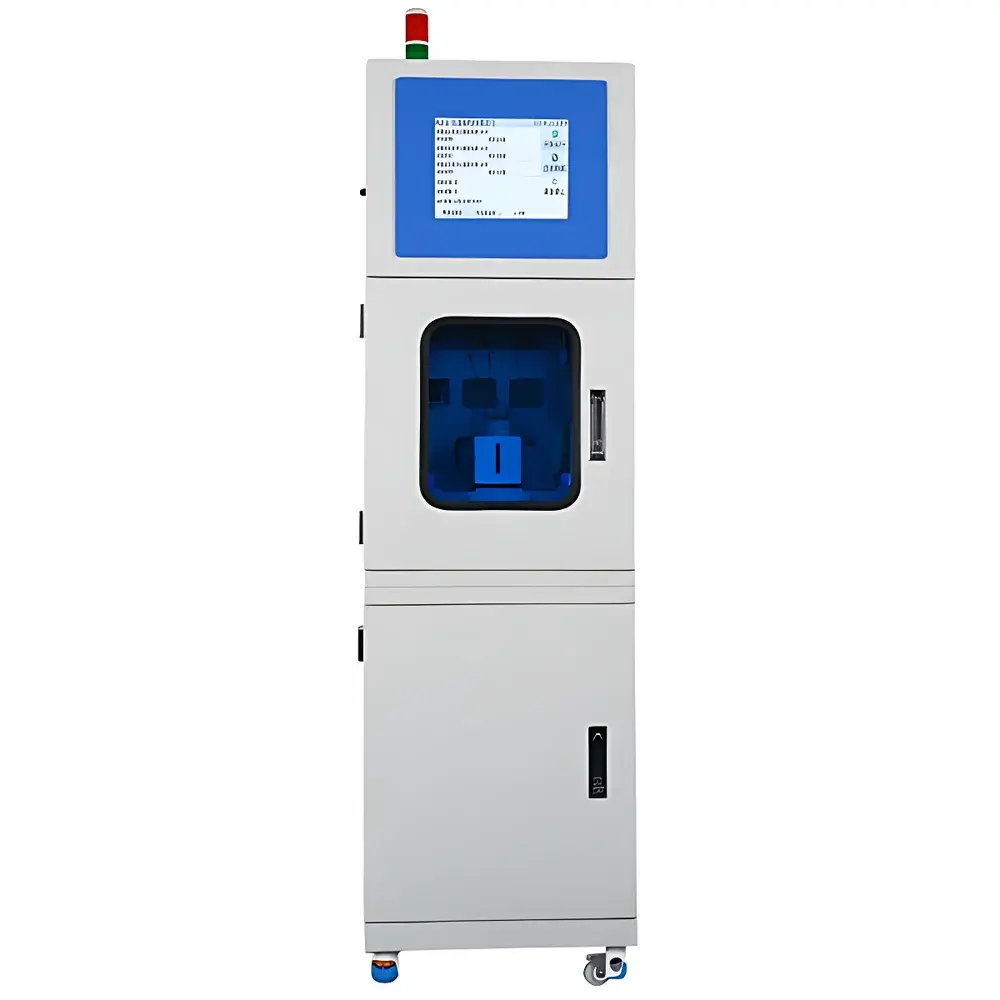
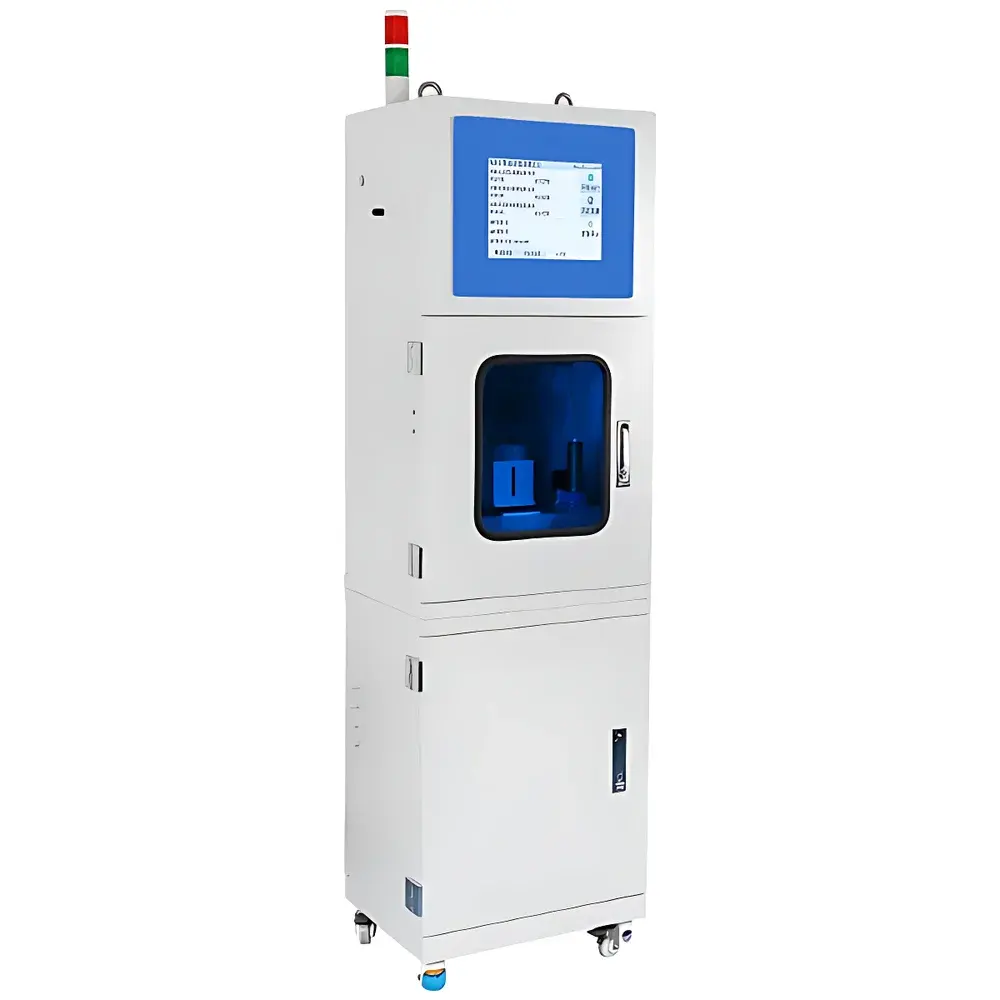
HOGON ALT-1 Online Titration Analyzer for Electroplating Bath Monitoring
| Brand | HOGON |
|---|---|
| Origin | Shanghai, China |
| Manufacturer Type | Direct Manufacturer |
| Regional Classification | Domestic (China) |
| Model | ALT-1 Online Titration Analyzer for Electroplating Baths |
| Pricing | Available Upon Request |
Overview
The HOGON ALT-1 Online Titration Analyzer is an industrial-grade, fully automated process analytical instrument engineered specifically for real-time chemical monitoring and control of electroplating and surface treatment baths. It implements classical volumetric titration—principally acid-base and redox titration—within a ruggedized, closed-loop online architecture. Unlike grab-sample laboratory analysis or semi-automated benchtop titrators, the ALT-1 integrates continuous sampling, reagent dosing, endpoint detection (via high-resolution potentiometric or photometric sensors), and closed-loop feedback control into a single system deployed directly at the process line. Its core function is to maintain critical bath parameters—including free acid concentration, accelerator (promoter) activity, complexing agent levels, and metal ion ratios—within narrow, recipe-defined operational windows. This ensures consistent deposit morphology, adhesion, corrosion resistance, and appearance across production batches. The system operates under ISO/IEC 17025-aligned measurement principles, with method validation performed per ASTM E2043 (Standard Guide for Validation of Analytical Methods for Electroplating Solutions) and aligned with internal GLP-compliant documentation practices.
Key Features
- Fully automated, 24/7 unattended operation with integrated sample conditioning, titration, and endpoint recognition
- Real-time determination of free acid, accelerators, inhibitors, and auxiliary additives via standardized titration protocols
- Statistical equivalence verified against manual lab titration (two-tailed t-test: T = 1.98 < t0.05,10 = 2.101, n = 11 paired samples)
- Programmable dosage logic engine that calculates and triggers precise chemical replenishment based on measured deviation from target setpoints
- Multi-stage alarm architecture: pre-alarm (deviation warning), active alarm (out-of-spec condition), and fault alarm (system integrity failure)
- IP65-rated enclosure with corrosion-resistant wetted materials (PP, PTFE, borosilicate glass, 316L SS) suitable for aggressive plating environments
- Modular design supporting field-upgradable reagent modules, sensor cartridges, and communication interfaces
Sample Compatibility & Compliance
The ALT-1 is validated for use with acidic and alkaline electroplating electrolytes, including but not limited to sulfuric acid-based copper sulfate baths, nickel sulfamate and Watts nickel solutions, zinc cyanide and non-cyanide alkaline zinc baths, and chromium trioxide-based hard chrome plating solutions. It accommodates suspended solids up to 50 ppm and operates reliably in temperature ranges from 20 °C to 55 °C. All analytical methods are traceable to NIST-certified primary standards. The system supports audit-ready data integrity in accordance with FDA 21 CFR Part 11 requirements through electronic signatures, role-based access control, and immutable audit trails. It complies with CE marking directives (2014/30/EU EMC, 2014/35/EU LVD) and meets IEC 61000-6-2 immunity standards for industrial environments.
Software & Data Management
The embedded HOGON ProcessLink™ software provides a unified interface for configuration, calibration, diagnostics, and historical review. Data logging occurs at user-defined intervals (default: 5-minute resolution) and includes raw titration curves, calculated concentrations, reagent consumption, actuator status, and alarm event timestamps. All records are stored locally on an industrial-grade SSD with optional redundant backup to network-attached storage (NAS) or cloud-based secure repositories via TLS 1.2–encrypted MQTT or OPC UA connections. Batch-level metadata tagging enables direct linkage to ERP/MES systems (e.g., SAP, Rockwell FactoryTalk) using standard CSV export or RESTful API integration. Reporting modules generate PDF/Excel summaries compliant with ISO 9001 clause 8.5.2 (Control of Production and Service Provision).
Applications
- Continuous monitoring of free H2SO4 and chloride in acid copper plating baths to prevent burning, pitting, and poor throwing power
- Quantification of accelerator depletion in microvia-filling electrolytes for PCB manufacturing
- Tracking of brightener breakdown products in nickel plating to avoid brittle deposits and stress-related cracking
- Stabilization of zinc-nickel alloy bath composition to ensure repeatable coating thickness and corrosion performance (ASTM B841)
- Reduction of drag-out losses and wastewater treatment load through optimized chemical dosing frequency and volume
- Supporting IATF 16949 process validation by providing statistically significant, time-stamped evidence of bath stability over extended production runs
FAQ
How frequently does the ALT-1 perform analyses?
Default cycle time is 30 minutes per parameter; configurable down to 15 minutes depending on bath stability requirements and reagent consumption constraints.
Can the system integrate with existing PLC or DCS infrastructure?
Yes—native Modbus TCP and optional Profibus DP or HART 7 interfaces enable seamless integration with Siemens S7, Rockwell ControlLogix, Yokogawa CENTUM VP, and other major industrial control platforms.
What maintenance is required for long-term reliability?
Scheduled maintenance includes quarterly calibration verification, biannual replacement of titration tubing and electrode membranes, and annual full-system functional testing per HOGON PM-ALT1-002 procedure.
Is remote diagnostics supported?
Yes—the system includes embedded VNC server and secure SSH access for authorized service engineers, enabling firmware updates, log retrieval, and real-time troubleshooting without onsite visits.
Does the ALT-1 support multi-bath deployment?
A single central controller can manage up to six independent bath analysis loops via multiplexed sampling manifolds, with individual parameter configuration and alarm thresholds per loop.
Related Products