
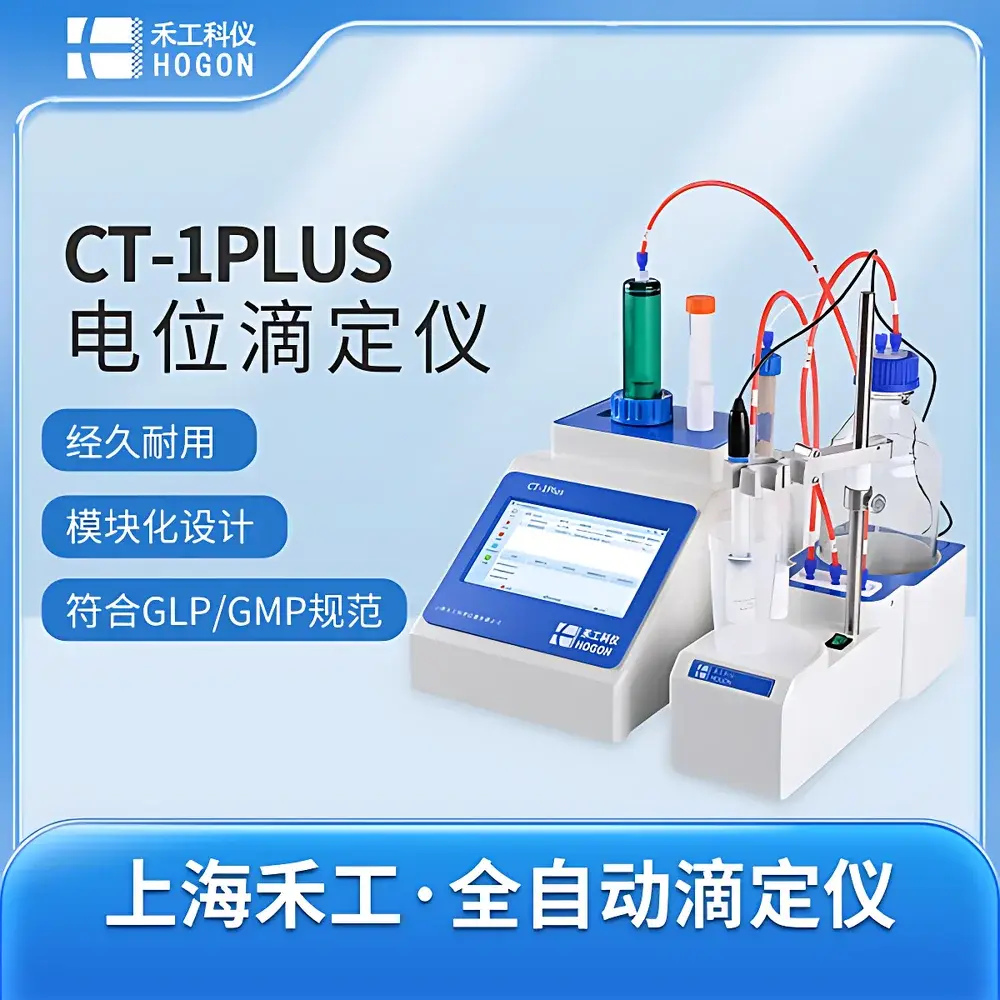
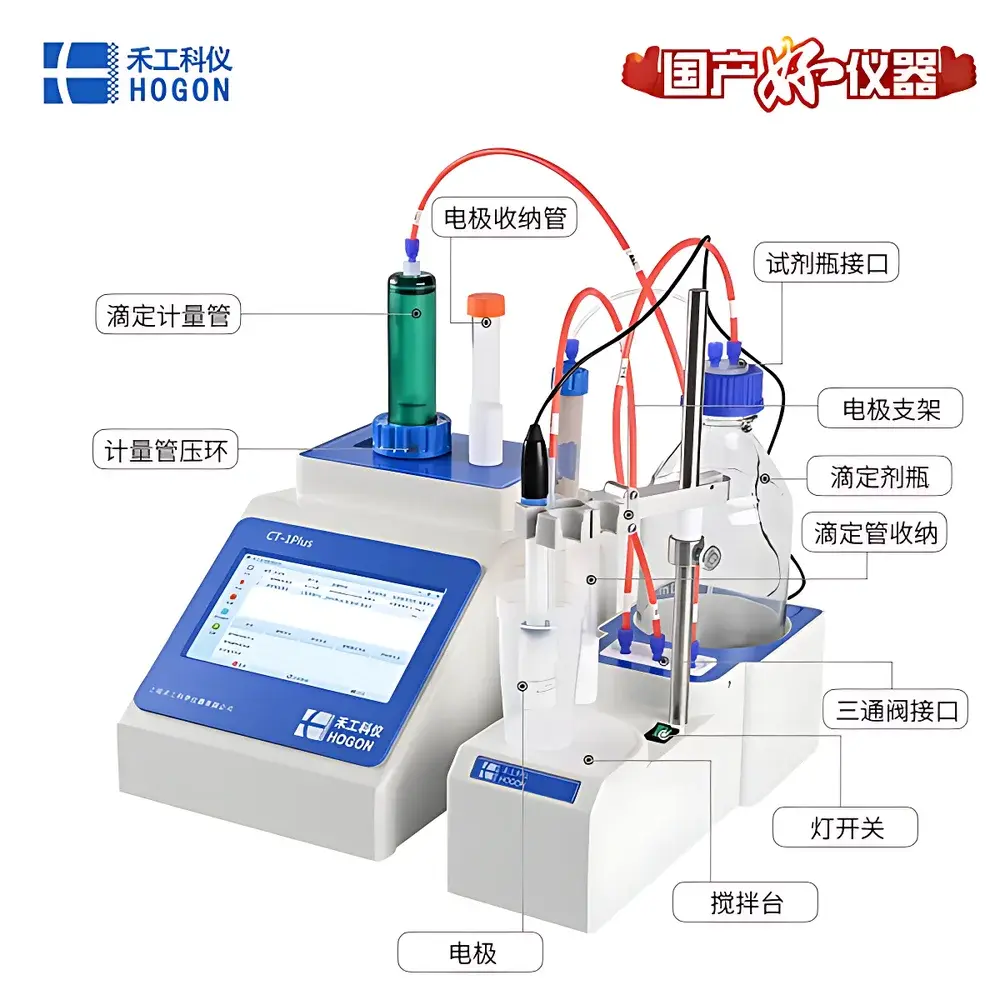
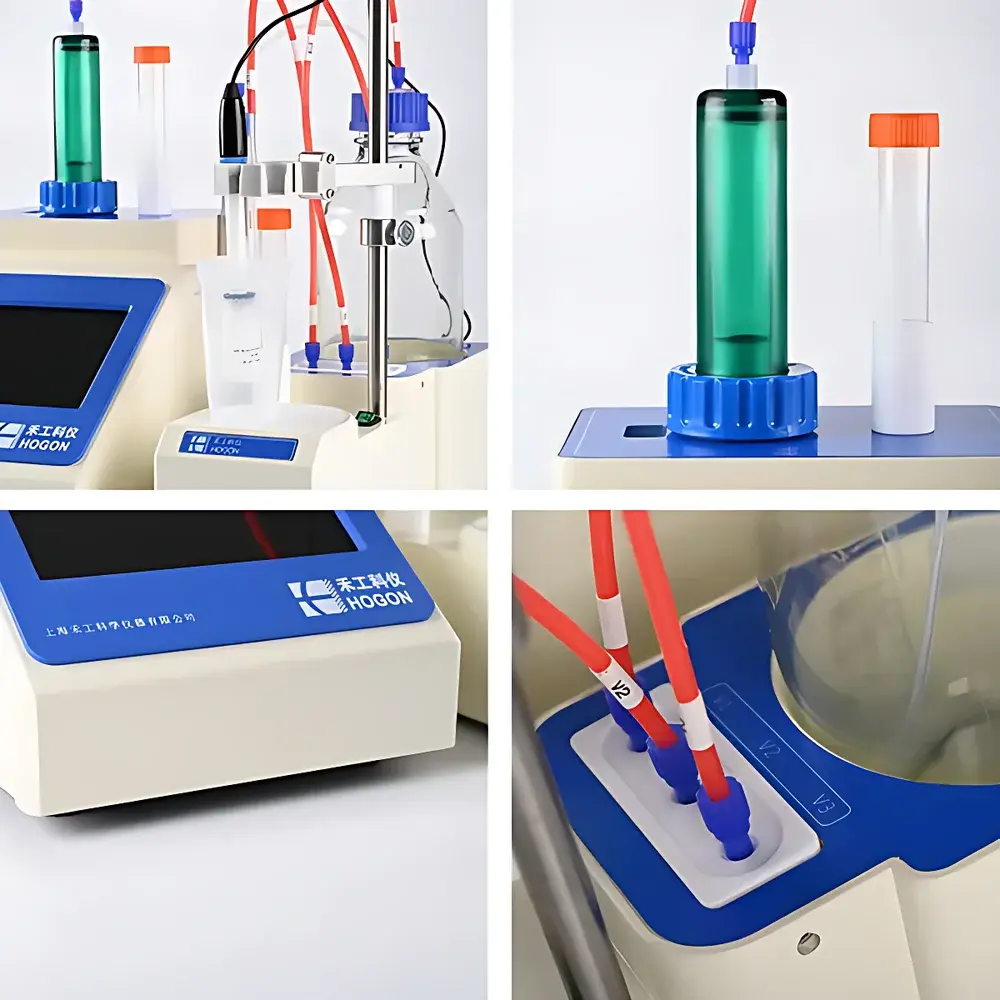
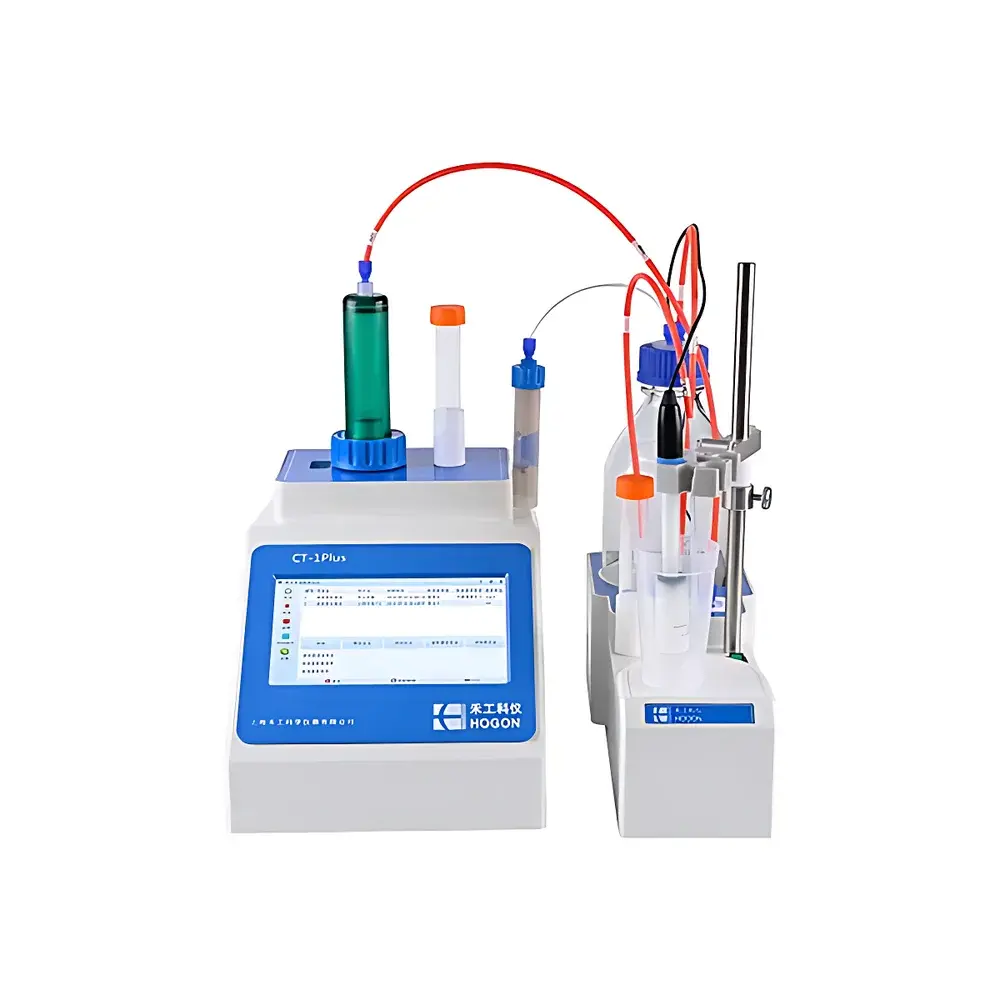
HOGON CT-1plus Multifunctional Fully Automatic Potentiometric Titrator
| Brand | HOGON |
|---|---|
| Origin | Shanghai, China |
| Manufacturer Type | Direct Manufacturer |
| Region Category | Domestic (China) |
| Model | CT-1plus |
| Instrument Type | General-Purpose Potentiometric Titrator |
| Application Scope | Universal |
| Measurement Ranges | Potential: ±2000 mV |
| pH | 0–14 pH |
| Temperature | −5 to 125 °C |
| Meter Accuracy | ±0.3% of full scale |
| Meter Resolution | Potential: 0.1 mV |
| pH | 0.001 pH |
| Temperature | 0.1 °C |
| Titration Accuracy | (±0.3 mV ±1 digit) over 3 h |
| Titration Resolution | ±2000 mV range, 0.1 mV resolution, ±0.2 mV absolute accuracy |
Overview
The HOGON CT-1plus is a modular, fully automatic potentiometric titrator engineered for precision, reproducibility, and regulatory compliance in routine and method-critical quantitative analysis. It operates on the fundamental electrochemical principle of potentiometric endpoint detection—measuring potential difference between a reference electrode and an indicator electrode as titrant is incrementally added—while simultaneously supporting colorimetric endpoint determination via optional vision-based color recognition. This dual-mode architecture enables robust analytical flexibility across matrices where potentiometric response may be insufficient (e.g., turbid, colored, or low-conductivity samples), eliminating reliance on subjective visual endpoint judgment without sacrificing traceable, objective measurement.
Key Features
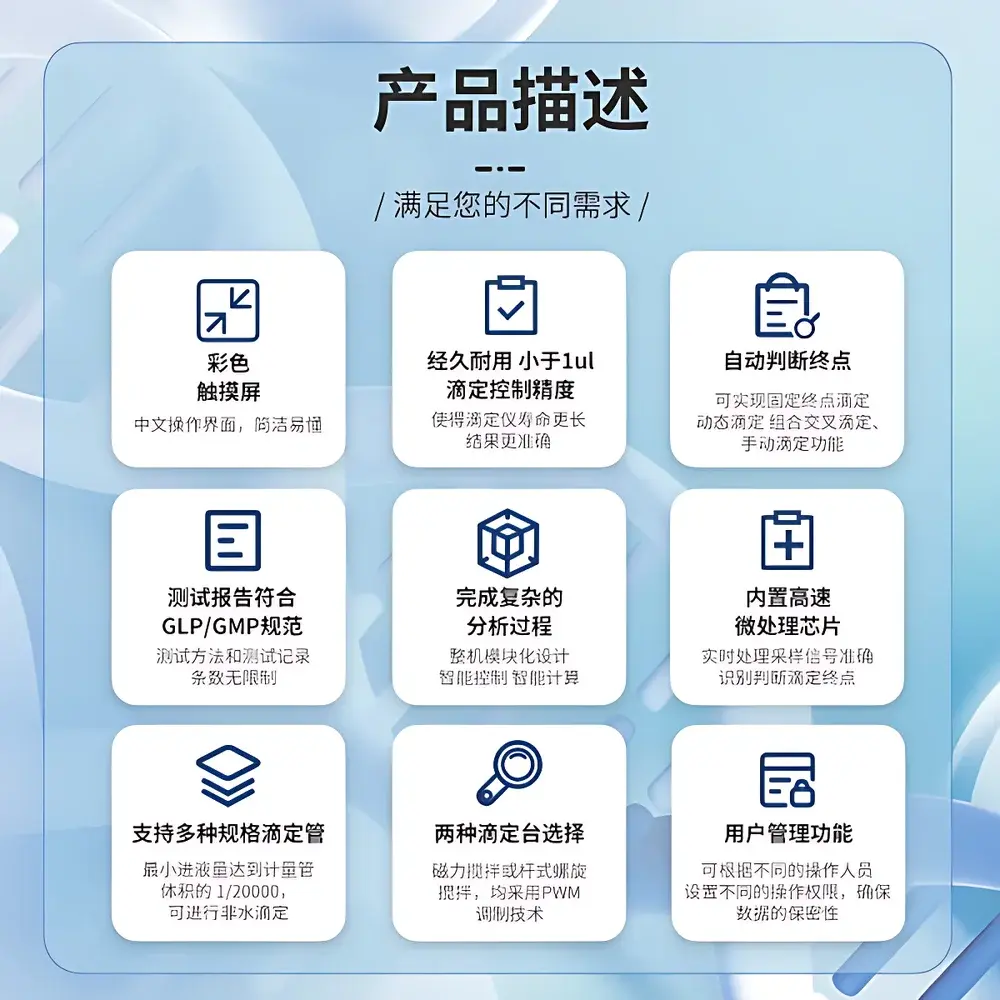
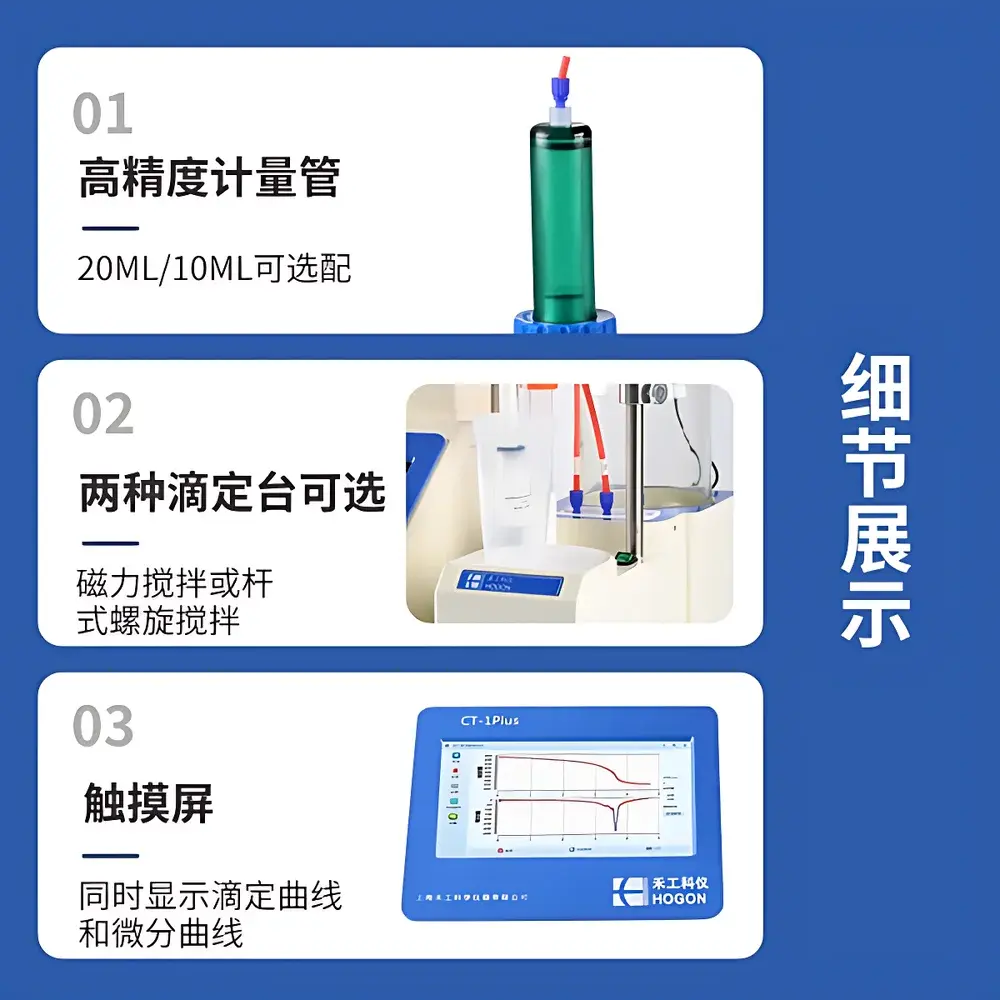
- Modular architecture integrating high-precision burette drive (≤1 µL delivery resolution), intelligent control unit, and multi-sensor detection module (pH, redox, temperature, optional RGB color sensor)
- Dual-mode endpoint detection: potentiometric (mV/pH/redox) and colorimetric (machine-vision-based RGB thresholding with real-time spectral validation)
- Endpoint algorithms include fixed-point, dynamic (first/second derivative), crossover, and user-defined manual termination—with programmable pre-titration, titration, and post-titration delay steps
- Emergency stop circuitry integrated into motor drivers, peristaltic pump controllers, and electrode signal path to halt operation upon voltage anomaly, mechanical stall, or thermal exceedance
- GLP/GMP-compliant data integrity: audit-trail-enabled method storage, electronic signature support, U-disk export of tamper-evident PDF reports with embedded metadata (operator ID, timestamp, instrument serial, calibration history)
- Unlimited method library and result storage capacity; all parameters—including titrant concentration, sample weight, dilution factor, and temperature compensation coefficients—are stored per run
Sample Compatibility & Compliance
The CT-1plus accommodates aqueous, non-aqueous, viscous, and heterogeneous samples across industrial QC and regulatory testing environments. Its wide temperature range (−5 to 125 °C) supports heated titrations for slow-reacting systems (e.g., epoxy equivalent weight in resins) and cold-stage analysis of volatile analytes. The instrument meets essential metrological requirements referenced in ISO 8655-3 (burette accuracy), ASTM E2087 (potentiometric titration practice), and USP (titrimetric analysis). Method templates are preconfigured for pharmacopeial standards including ChP (Chinese Pharmacopoeia), USP, and EP monographs, as well as food safety methods (GB 5009.227, GB 5009.229, GB 5009.44), petrochemical standards (GB/T 6909, GB/T 15453), and polymer characterization protocols (GB/T 4612, GB/T 12008.3, HG/T 2409).
Software & Data Management
The embedded firmware supports method-driven operation with intuitive touchscreen navigation and PC-based configuration via USB or Ethernet. All methods are version-controlled and digitally signed. Raw sensor data (mV vs. volume, pH vs. time, RGB intensity profiles) are logged at ≥10 Hz sampling rate and retained in native binary format alongside processed results. PDF reports embed digital watermarks, cryptographic hash values, and timestamped operator credentials—fully compliant with FDA 21 CFR Part 11 requirements for electronic records and signatures. Data export formats include CSV (for LIMS integration), XML (for ELN ingestion), and encrypted PDF (for audit submission).
Applications
- Chemical & Polymer Industry: Acid number, hydroxyl value, epoxy equivalent weight, NCO content in polyurethane prepolymers (HG/T 2409), chloride in cement (GB/T 176)
- Petrochemical Sector: Total acid number (TAN) and total base number (TBN) in lubricants and crude fractions (ASTM D664, D4739)
- Food & Beverage: Peroxide value (GB 5009.227), acid value (GB 5009.229), chloride (GB 5009.44), calcium (AOAC 978.02)
- Pharmaceuticals: Assay of active pharmaceutical ingredients (APIs), residual chloride in sodium chloride injections, iodine value in excipients, purity assessment per ChP monographs
- Battery Materials: Residual alkali (Li₂CO₃/LiOH) in lithium cathode precursors, free acid in electrolyte formulations, chloride impurity in LiPF₆
- Environmental Monitoring: Total hardness and alkalinity (GB/T 6909), chloride in wastewater and cooling water (GB/T 15453)
FAQ
Does the CT-1plus support remote operation and networked data transfer?
Yes—via Ethernet interface with configurable IP settings, enabling integration into laboratory intranets and centralized LIMS platforms using standard TCP/IP protocols.
Is calibration traceability provided for the electrode modules?
All pH and redox electrodes shipped with the system include factory calibration certificates traceable to NIM (National Institute of Metrology, China) standards; users may perform in-house verification using certified buffer solutions (NIST-traceable pH 4.01, 7.00, 10.01).
Can custom titration curves be defined for non-standard reactions?
Yes—the software allows user-defined derivative thresholds, slope-based stopping criteria, and multi-step conditional logic (e.g., “if dE/dV > X, then reduce step size by 50%”).
What safety mechanisms prevent over-titration or reagent waste?
Real-time slope monitoring halts titration when dE/dV falls below user-set minimum; physical limit switches on the burette carriage prevent mechanical overtravel; and programmable maximum volume limits enforce method-bound constraints.
How is data integrity maintained during power interruption?
Non-volatile memory retains active method state and partial titration data; upon restart, the system resumes from last valid measurement point with full audit-log continuity.
Related Products





