
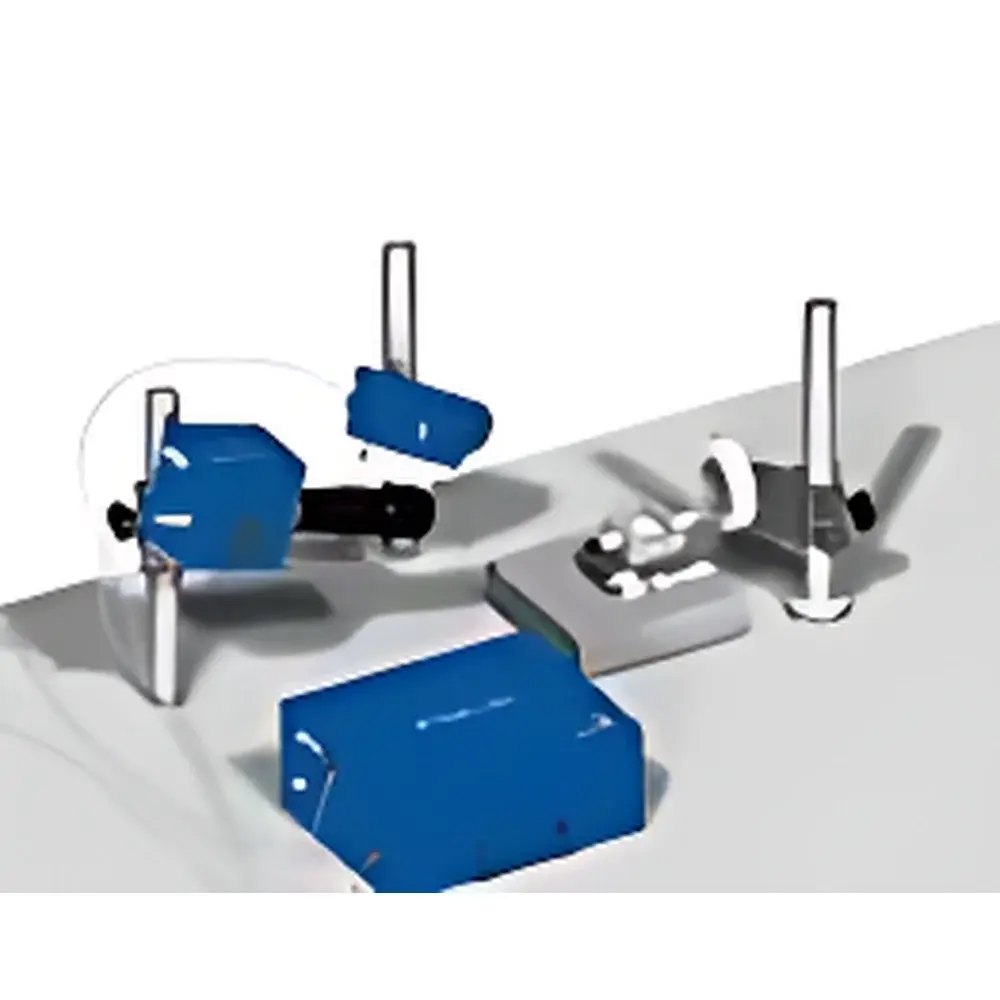
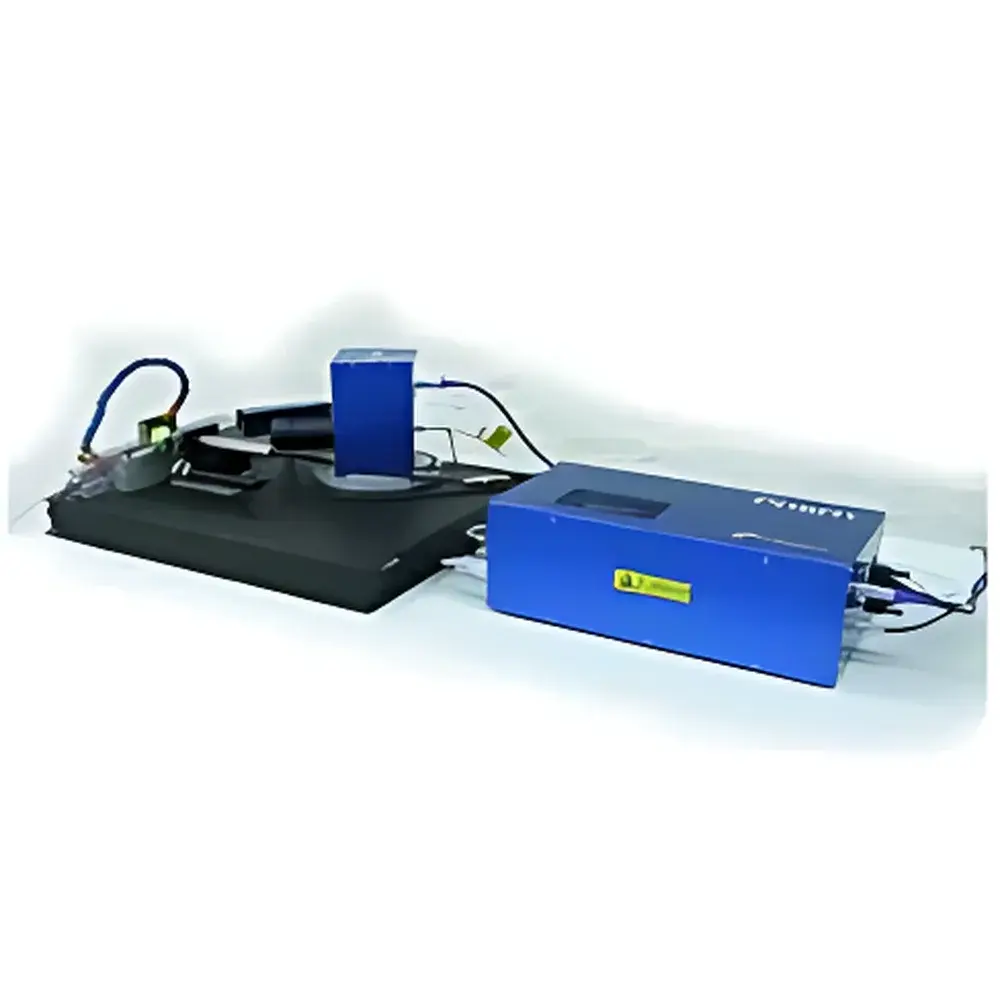
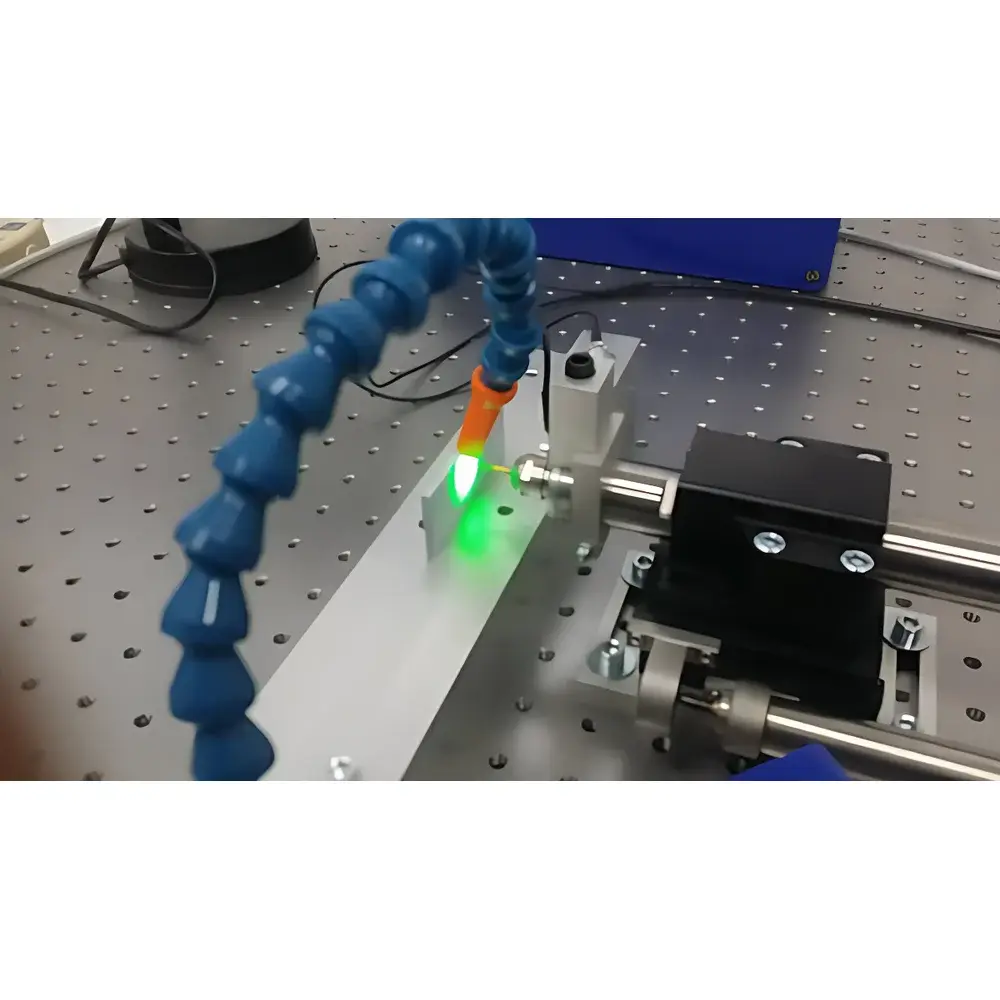
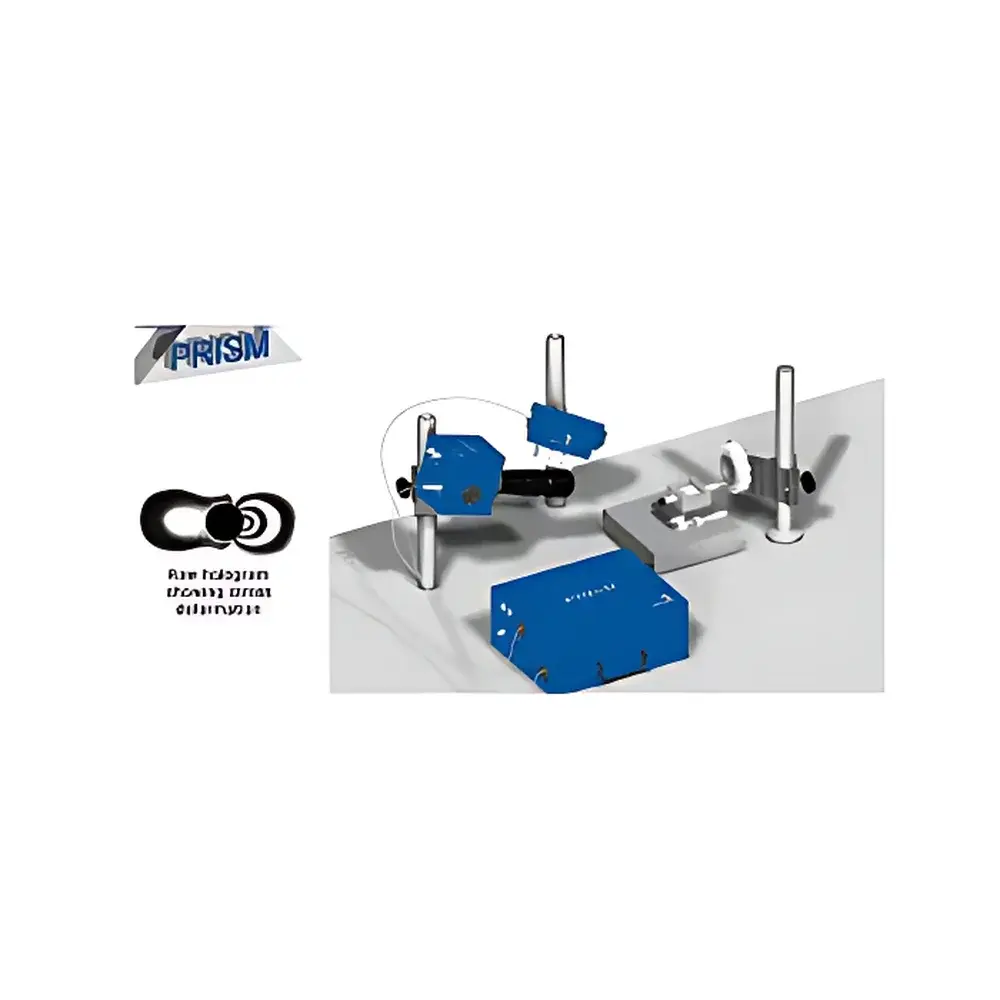
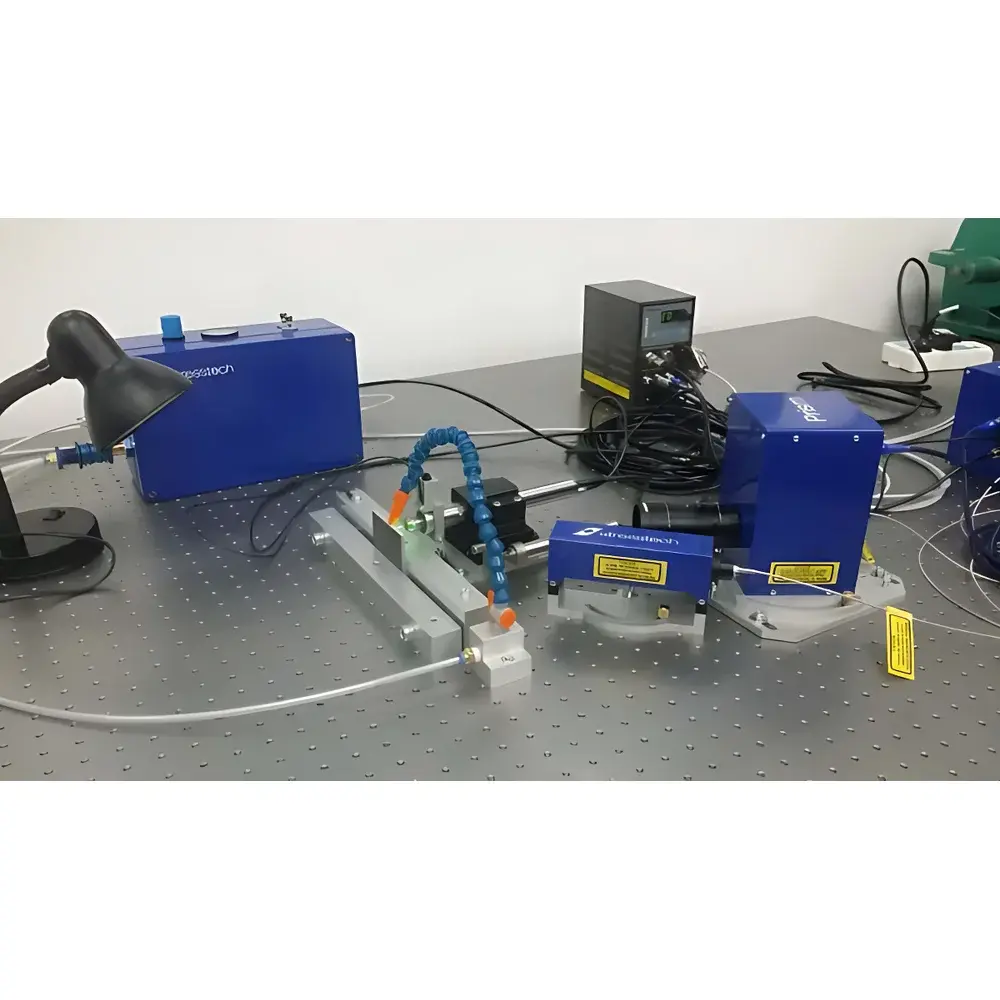
Stresstech PRISM Laser Hole-Drilling Residual Stress Analyzer
| Brand | Stresstech Oy |
|---|---|
| Origin | Netherlands |
| Manufacturer Status | Authorized Distributor |
| Origin Category | Imported |
| Model | PRISM |
| Pricing | Upon Request |
Overview
The Stresstech PRISM Laser Hole-Drilling Residual Stress Analyzer is a precision metrology instrument engineered for non-destructive, quantitative determination of near-surface residual stress states in metallic components. It implements the standardized hole-drilling method (ASTM E837–22, ISO 21945:2021) enhanced by laser-based electronic speckle pattern interferometry (ESPI), eliminating reliance on bonded strain gauges. In this technique, a controlled micro-hole is mechanically drilled into the material surface using a CNC-guided carbide or diamond-tipped tool; the resulting elastic relaxation displacements—typically on the order of nanometers—are captured in real time via high-resolution ESPI imaging. These full-field displacement maps are then processed using integral-based stress calculation algorithms (e.g., Sachs–Macherauch or integral method per ASTM E837 Annex A3) to derive principal residual stress components (σ₁, σ₂, τ₁₂) and their depth profiles. The system operates under ambient laboratory conditions and requires no vacuum or radiation shielding, distinguishing it from X-ray diffraction (XRD)-based alternatives.
Key Features
- Non-contact, full-field surface deformation measurement via pulsed laser ESPI with sub-50 nm displacement resolution
- Integrated CNC drilling module with programmable depth incrementing (0.01–2.0 mm), diameter control (0.5–2.0 mm), and automatic tool wear compensation
- Real-time interferogram acquisition at up to 15 Hz frame rate, enabling dynamic monitoring of relaxation during drilling
- Optical path optimized for reflective metallic surfaces (aluminum, steel, titanium, nickel alloys) without surface coating or preparation
- Ruggedized optical head with motorized zoom lens (10× continuous optical zoom) and integrated LED illumination for consistent contrast
- Fully automated data capture and stress computation workflow compliant with GLP/GMP documentation requirements
Sample Compatibility & Compliance
The PRISM analyzer is validated for use on flat, curved, or contoured metallic parts with surface roughness Ra ≤ 3.2 µm and minimum thickness ≥ 3 mm. It supports specimens ranging from small aerospace fasteners to large turbine discs and welded joints. Measurement repeatability is ≤ ±15 MPa for uniaxial stress states in aluminum 6061-T6 and ≤ ±25 MPa in hardened AISI 4340 steel (per internal validation per ISO/IEC 17025:2017). The methodology conforms to ASTM E837–22 (Standard Test Method for Determining Residual Stresses by the Hole-Drilling Strain-Gage Method), ISO 21945:2021 (Residual stress measurement — Hole-drilling method using optical interferometry), and EN 15305:2008 (Non-destructive testing — Test method for residual stress analysis by X-ray diffraction). Software audit trails meet FDA 21 CFR Part 11 requirements for electronic records and signatures.
Software & Data Management
The PRISM Control Suite is a Windows 10/11-native application built on a modular architecture supporting both manual operation and fully scripted batch analysis. It includes: (1) Drill Path Designer for defining multi-point grids and custom hole sequences; (2) ESPI Acquisition Engine with adaptive exposure control and speckle contrast optimization; (3) Stress Reconstruction Module implementing ASTM E837-compliant coefficient matrices and iterative depth profiling; (4) Report Generator producing PDF/CSV outputs with embedded raw interferograms, displacement vectors, stress tensors, uncertainty estimates (k=2), and operator metadata. All datasets are stored in a secure SQLite database with version-controlled backups and optional integration with enterprise LIMS systems via OPC UA or REST API.
Applications
- Aerospace: Residual stress mapping in turbine blades, landing gear components, and wing spar welds pre- and post-shot peening
- Automotive: Validation of heat treatment uniformity in crankshafts, camshafts, and transmission gears
- Energy: Stress assessment in nuclear reactor pressure vessel weld overlays and steam turbine rotor grooves
- Medical Devices: Verification of compressive stress induction in nitinol stents and titanium orthopedic implants
- Research: Correlation studies between machining parameters (cutting speed, feed rate) and subsurface stress gradients in additively manufactured Inconel 718
FAQ
What standards does the PRISM system comply with for residual stress measurement?
ASTM E837–22, ISO 21945:2021, EN 15305:2008, and ISO/IEC 17025:2017 for measurement uncertainty quantification.
Can the system measure residual stress on curved or complex geometries?
Yes—motorized optical zoom, adjustable working distance (50–300 mm), and tilt-compensated interferogram alignment enable measurements on radii down to R = 15 mm.
Is calibration traceable to national metrology institutes?
Yes—laser wavelength (532 nm) and displacement calibration are traceable to NIST SRM 2036 and PTB DKD-RW-0102, with annual recalibration supported via Stresstech’s EU-accredited service centers.
Does the software support automated reporting for quality audits?
Yes—reports include digital signatures, timestamped audit logs, raw image archives, and uncertainty budgets aligned with ISO 17025 clause 7.8.2.
What is the typical measurement depth range?
Standard depth profiling covers 0–2.0 mm in 0.05 mm increments; extended-depth kits support up to 4.0 mm with optimized drill bit geometry and thermal drift compensation.
Related Products




