
Stresstech Stress3000 Portable X-Ray Residual Stress Analyzer
| Brand | Stresstech Oy |
|---|---|
| Country of Origin | Finland |
| Model | Stress3000 |
| Application | Non-Destructive Residual Stress Measurement in Welded Joints |
| Measurement Principle | Sin²ψ X-Ray Diffraction (XRD) |
| Depth Resolution | ~1–5 µm (surface) |
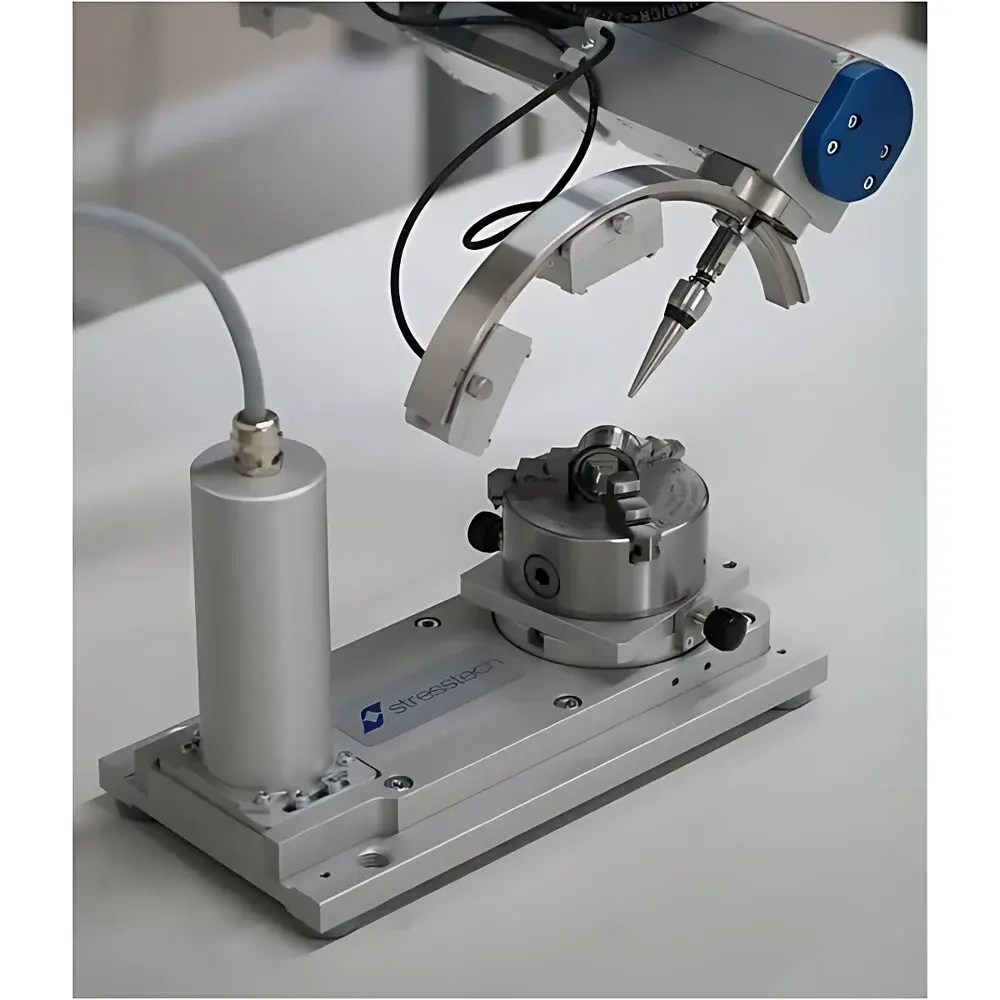
| Portability | Integrated robotic positioning system, battery-optional operation, field-deployable |
| Compliance | Designed for ASTM E915-22, ISO 21432:2022, and EN 15305:2022 conformance |
| Data Interface | USB 3.0 & Ethernet |
Overview
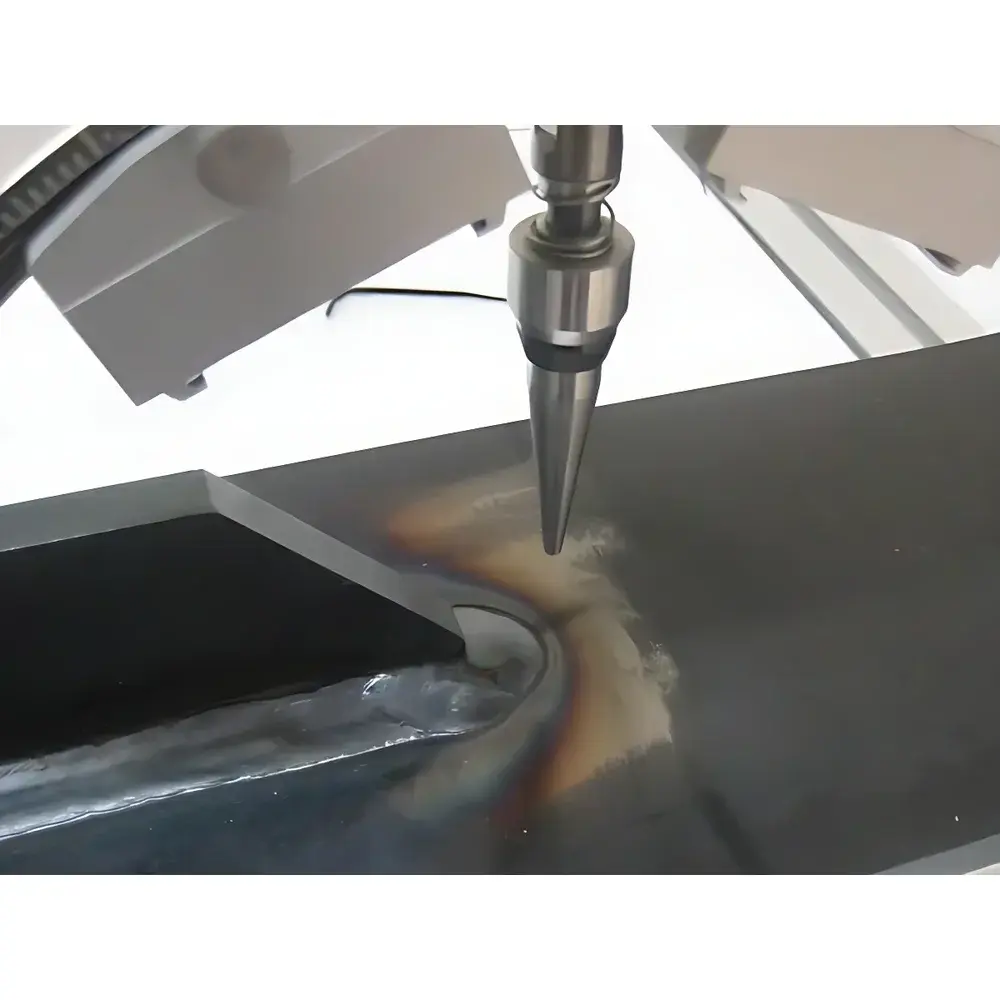
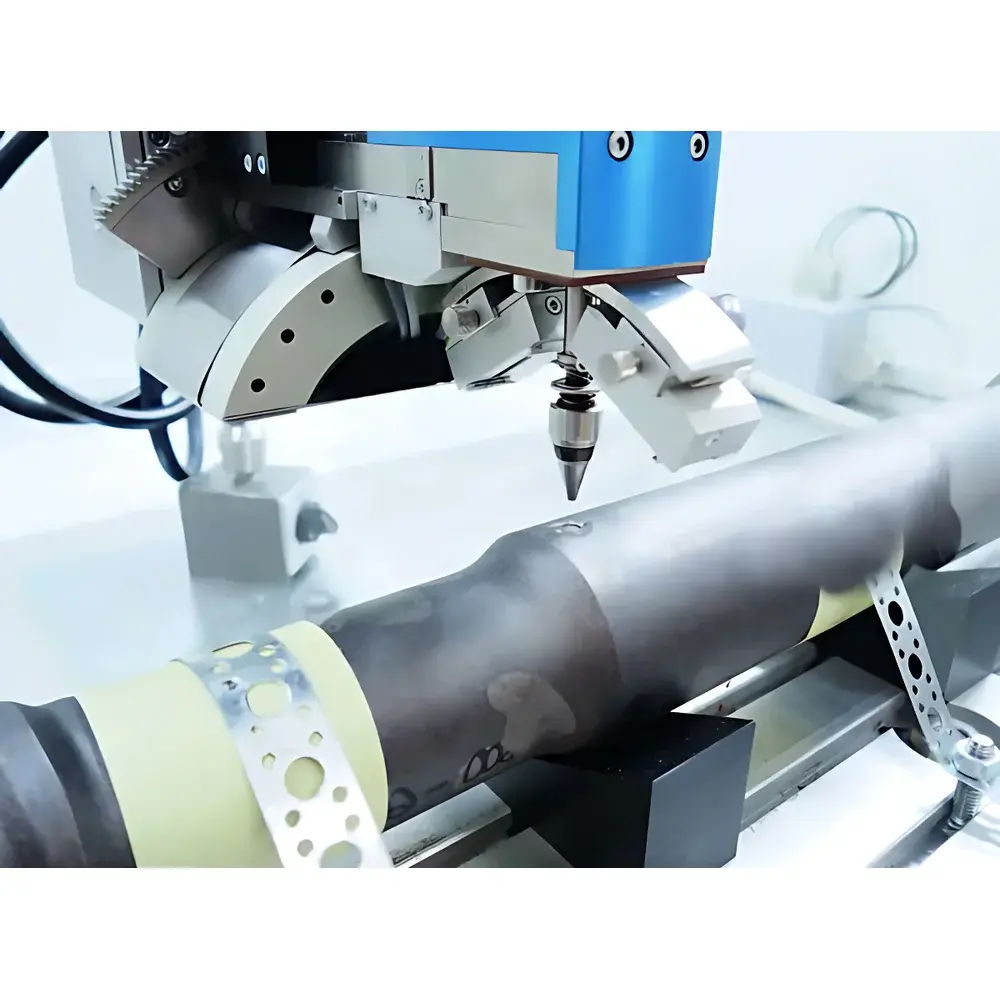
The Stresstech Stress3000 Portable X-Ray Residual Stress Analyzer is an industrial-grade, non-destructive measurement system engineered for quantitative determination of near-surface residual stress states in welded components. It employs the well-established sin²ψ method of X-ray diffraction (XRD), operating at a fixed Cu-Kα radiation wavelength (λ = 0.15406 nm), to resolve lattice strain in crystalline metallic materials—including structural steels, stainless alloys, aluminum, titanium, and nickel-based superalloys. Unlike destructive or indirect estimation methods, the Stress3000 delivers direct, physics-based stress values (in MPa) aligned with principal material axes—longitudinal, transverse, and normal—enabling correlation with welding process parameters, heat input history, and post-weld treatments. Its portability, combined with integrated robotic motion control, allows in-situ measurements on large-scale fabricated structures (e.g., pressure vessels, offshore platforms, railcar frames, and pipeline girth welds) without component removal or disassembly.
Key Features
- Compact, ruggedized chassis with IP54-rated enclosure for workshop and outdoor deployment
- Motorized 3-axis robotic stage (θ–2θ–ψ) enabling automated point mapping and line scans across complex geometries
- High-stability microfocus X-ray tube (30 kV / 1 mA) with collimated beam (0.5–2.0 mm diameter selectable)
- Real-time detector readout using a high-resolution silicon strip detector (energy resolution < 200 eV FWHM)
- Embedded industrial PC running Windows 10 IoT Enterprise with preloaded StressScan™ v5.2 software
- Onboard data storage (256 GB SSD) and dual connectivity: USB 3.0 host interface + Gigabit Ethernet for remote monitoring and network integration
- Electrochemical polishing module compatibility (optional) for controlled layer-by-layer stress depth profiling up to 100 µm
- Automatic calibration verification using certified reference samples (e.g., IN718, SAE 4140) traceable to NIST standards
Sample Compatibility & Compliance
The Stress3000 supports measurement on ferrous and non-ferrous weldments meeting minimum grain size requirements (>0.1 µm) and sufficient diffracting phase volume fraction (≥5 vol%). It accommodates curved surfaces (radius ≥50 mm), inclined joints (up to ±30°), and restricted-access zones via modular probe extension kits. All measurement protocols comply with internationally recognized standards for residual stress evaluation: ASTM E915-22 (Standard Test Method for Verifying the Alignment of X-Ray Diffraction Equipment for Residual Stress Measurement), ISO 21432:2022 (Non-destructive testing — Standard test method for determining residual stresses by X-ray diffraction), and EN 15305:2022 (Non-destructive testing — Qualification and certification of NDT personnel — General principles). Audit trails, user access logs, and electronic signatures are fully configurable to support GLP/GMP environments and FDA 21 CFR Part 11 compliance where required.
Software & Data Management
StressScan™ software provides full workflow control—from instrument setup and alignment validation to peak fitting (Pseudo-Voigt deconvolution), stress tensor calculation (including shear components), and uncertainty quantification per GUM (JCGM 100:2018). Raw diffraction patterns, strain vs. sin²ψ plots, and stress contour maps are stored in HDF5 format with embedded metadata (operator ID, timestamp, location GPS tag, ambient temperature/humidity). Export options include CSV, XML, and PDF reports compliant with ASME BPVC Section V, Appendix VIII. Data synchronization with enterprise LIMS or MES systems is supported via OPC UA or RESTful API endpoints. Software updates and calibration patches are delivered through Stresstech’s secure customer portal, requiring no on-site service visits.
Applications
- Validation of welding procedure specifications (WPS) per AWS D1.1, ISO 15614-1, and EN ISO 15614-1
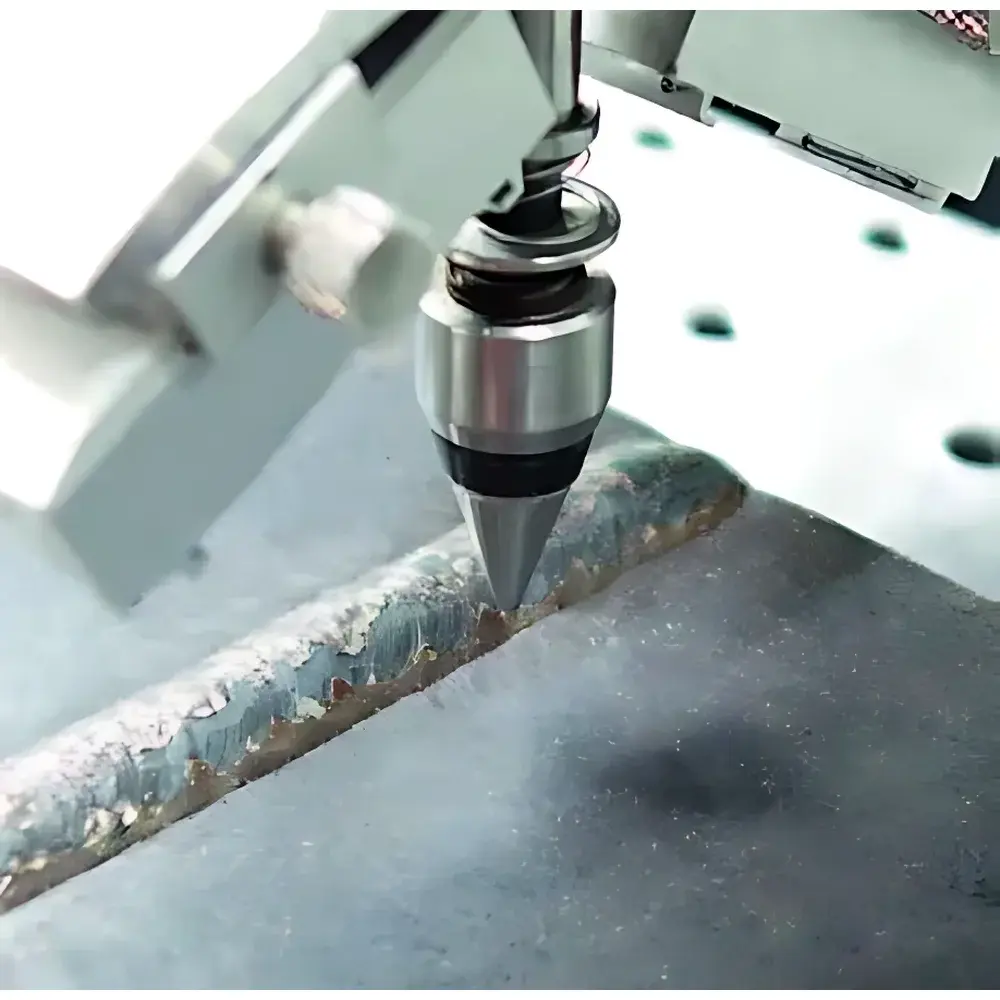
- Residual stress mapping across weld toe, heat-affected zone (HAZ), and base metal transitions
- Quantitative assessment of post-weld treatments: PWHT, TIG dressing, shot peening, HFMI, and laser shock peening
- Root cause analysis of premature fatigue failure in critical weld joints
- In-service inspection of aging infrastructure (bridges, wind turbine towers, nuclear containment welds)
- R&D support for novel high-strength steels (e.g., Q&T steels >960 MPa YS) and dissimilar metal welds
FAQ
What is the typical measurement time per point?
A single-point stress measurement (including alignment, exposure, and peak evaluation) takes 45–90 seconds, depending on material diffraction intensity and required statistical confidence.
Can the Stress3000 measure residual stress beneath the surface?
Yes—when coupled with electrochemical polishing, it enables sequential removal of material layers (typically 1–5 µm/step) while maintaining mechanical equilibrium, yielding depth-resolved stress profiles.
Is radiation safety certification required to operate this system?
The Stress3000 is classified as a “sealed source” device under IAEA SSG-46 guidelines and complies with EU Directive 2013/59/Euratom. No operator licensing is required in most jurisdictions, though site-specific radiation surveys are recommended prior to first use.
Does the system support automated scanning of long weld seams?
Yes—using the optional linear track accessory and StressScan™ AutoPath module, users can define weld centerline trajectories and execute continuous 2D stress mapping at up to 10 mm/s scan speed.
How is measurement accuracy verified?
Accuracy is validated daily using NIST-traceable stress reference samples; long-term stability is monitored via built-in drift compensation algorithms referencing internal Si standard peaks.




