
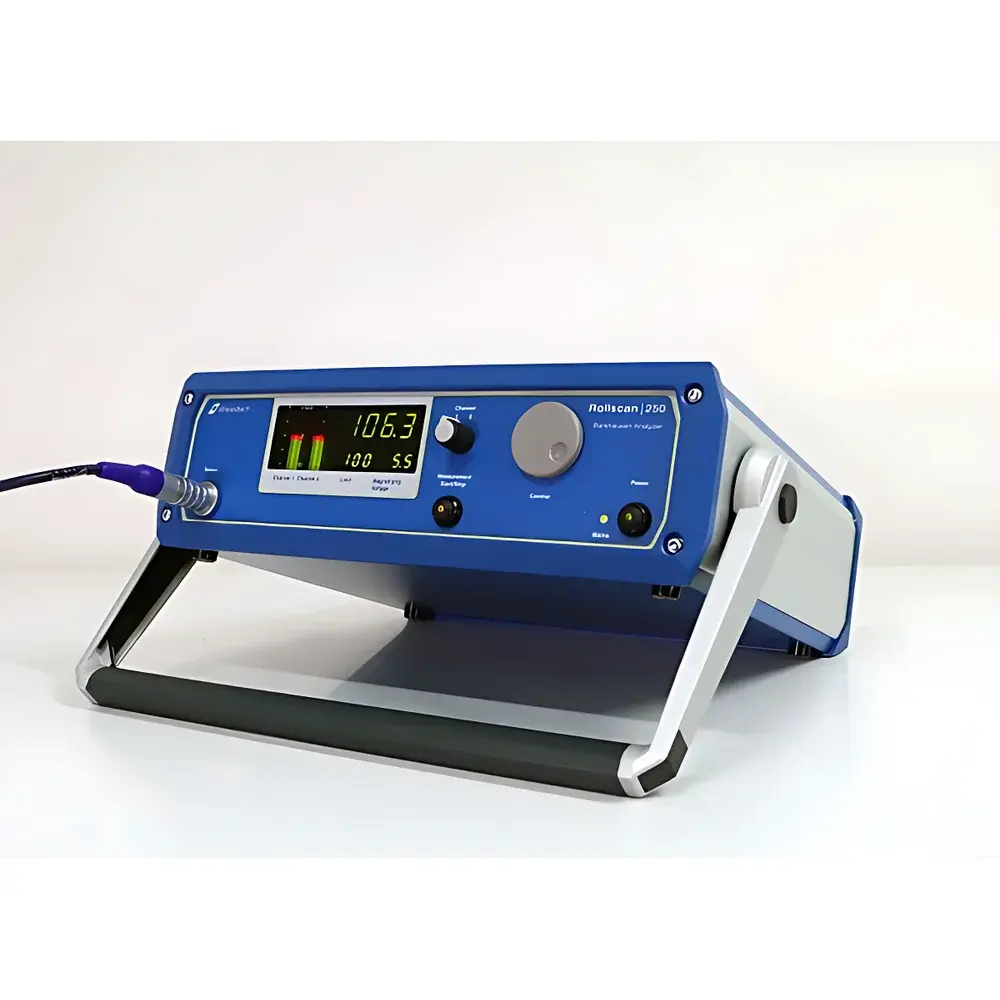
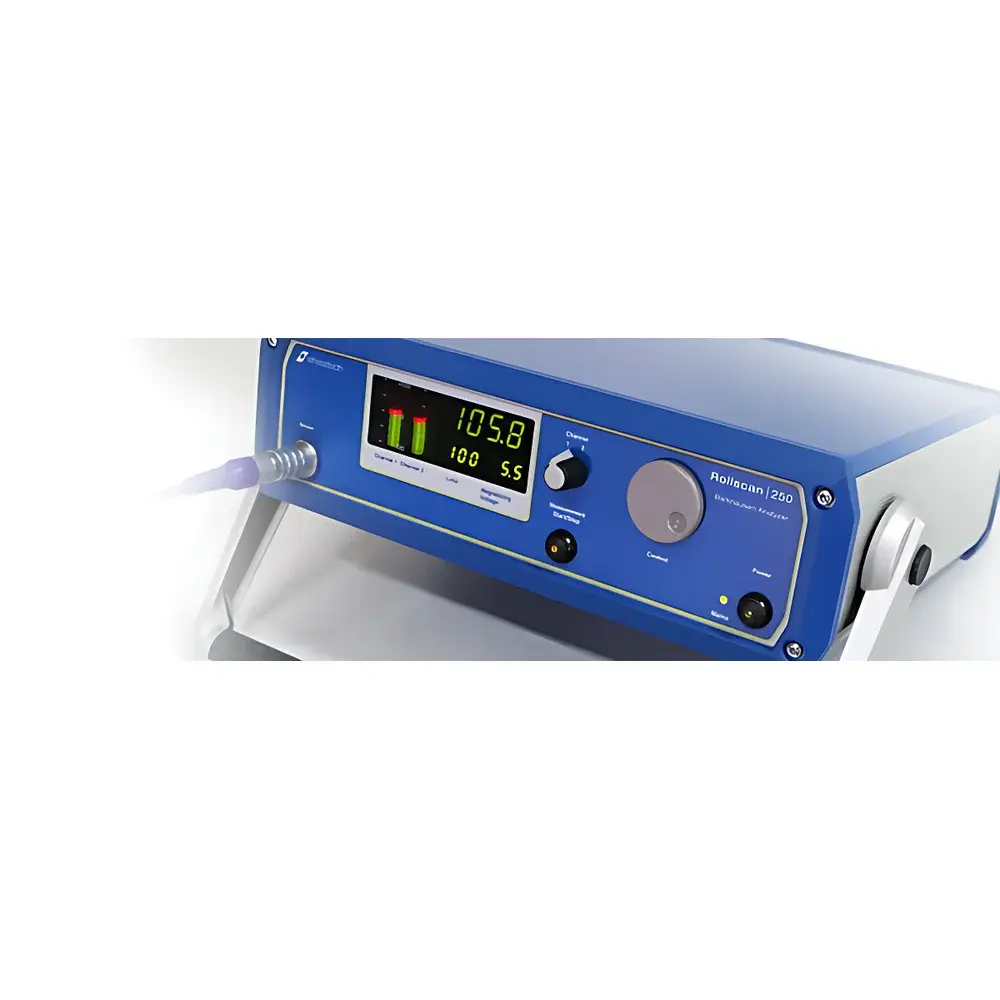
Stresstech Rollscan 250 Barkhausen Noise Analyzer
| Brand | Stresstech Oy |
|---|---|
| Origin | Finland |
| Model | Rollscan 250 |
| Detection Principle | Magnetic Barkhausen Noise (MBN) |
| Measurement Type | Non-destructive surface integrity assessment |
| Channel Configuration | Single- or multi-channel probe interface |
| Typical Measurement Time | < 5 seconds per location |
| Compliance | Designed for ISO 28671, ASTM E3179 (under development), and GLP-aligned data traceability |
Overview
The Stresstech Rollscan 250 Barkhausen Noise Analyzer is a precision-engineered, portable non-destructive testing (NDT) instrument designed for quantitative evaluation of surface and near-surface integrity in ferromagnetic components. It operates on the physical principle of Magnetic Barkhausen Noise (MBN), which arises from irreversible domain wall motion during controlled magnetization of ferromagnetic materials. Variations in MBN signal amplitude, frequency spectrum, and pulse count correlate directly with microstructural changes—including grinding burn, residual stress gradients, hardness variations, and subsurface plastic deformation. Unlike destructive methods such as nital etching (acid wash), the Rollscan 250 delivers immediate, repeatable, and operator-independent results without altering the part’s geometry, surface finish, or functional properties. Its architecture integrates high-stability excitation electronics, low-noise differential sensing, and real-time digital signal processing—enabling reliable detection of thermal damage at depths up to 100–200 µm beneath the surface.
Key Features
- Multi-channel modular probe support: Enables simultaneous acquisition from up to four independently configurable sensors—ideal for complex geometries including shaft journals, raceway shoulders, fillets, and contoured bearing surfaces.
- Probe interchangeability: Standardized interface accommodates application-specific probes—including pencil-type, contour-following, and high-resolution micro-probes—with calibrated lift-off compensation and automatic gain normalization.
- Real-time signal visualization: On-device waveform display with adjustable bandwidth filtering (10 kHz–1 MHz), RMS envelope extraction, and peak amplitude tracking for rapid pass/fail decision-making.
- Ruggedized industrial design: IP54-rated enclosure, shock-absorbing housing, and battery-operated operation (up to 6 hours) suitable for shop-floor, field, and laboratory environments.
- Calibration traceability: Factory-calibrated against reference standards traceable to national metrology institutes; supports user-defined calibration curves per material grade and heat treatment condition.
Sample Compatibility & Compliance
The Rollscan 250 is validated for use on carbon steels, alloy steels, case-hardened steels, and martensitic stainless steels within hardness ranges of 35–65 HRC. It is not applicable to austenitic stainless steels, aluminum alloys, titanium, or non-ferromagnetic materials. The system complies with electromagnetic compatibility (EMC) requirements per EN 61326-1 and safety standards per EN 61010-1. Data acquisition workflows align with Good Laboratory Practice (GLP) and quality management systems requiring audit trails: all measurements include embedded timestamps, operator ID, probe serial number, excitation parameters, and environmental temperature readings. While no single international standard fully governs MBN-based burn detection, the methodology is referenced in draft ASTM E3179 and cited in ISO 28671 (non-destructive testing — guidelines for surface integrity assessment of ground components).
Software & Data Management
The Rollscan 250 operates with ViewScan software—a Windows-based platform supporting both real-time monitoring and post-processing analysis. ViewScan provides spatial mapping of MBN parameters across scanned areas, overlaying burn indicators onto CAD-derived component outlines. It generates compliant PDF reports containing raw time-domain signals, spectral density plots, statistical summaries (mean, std dev, skewness), and annotated pass/fail thresholds defined per customer specification or industry guideline (e.g., aerospace OEM process specifications). All data files are stored in open-format HDF5 containers with embedded metadata, enabling integration into LIMS or MES platforms. Software validation documentation (IQ/OQ/PQ protocols) and 21 CFR Part 11-compliant electronic signature modules are available upon request for regulated industries.
Applications
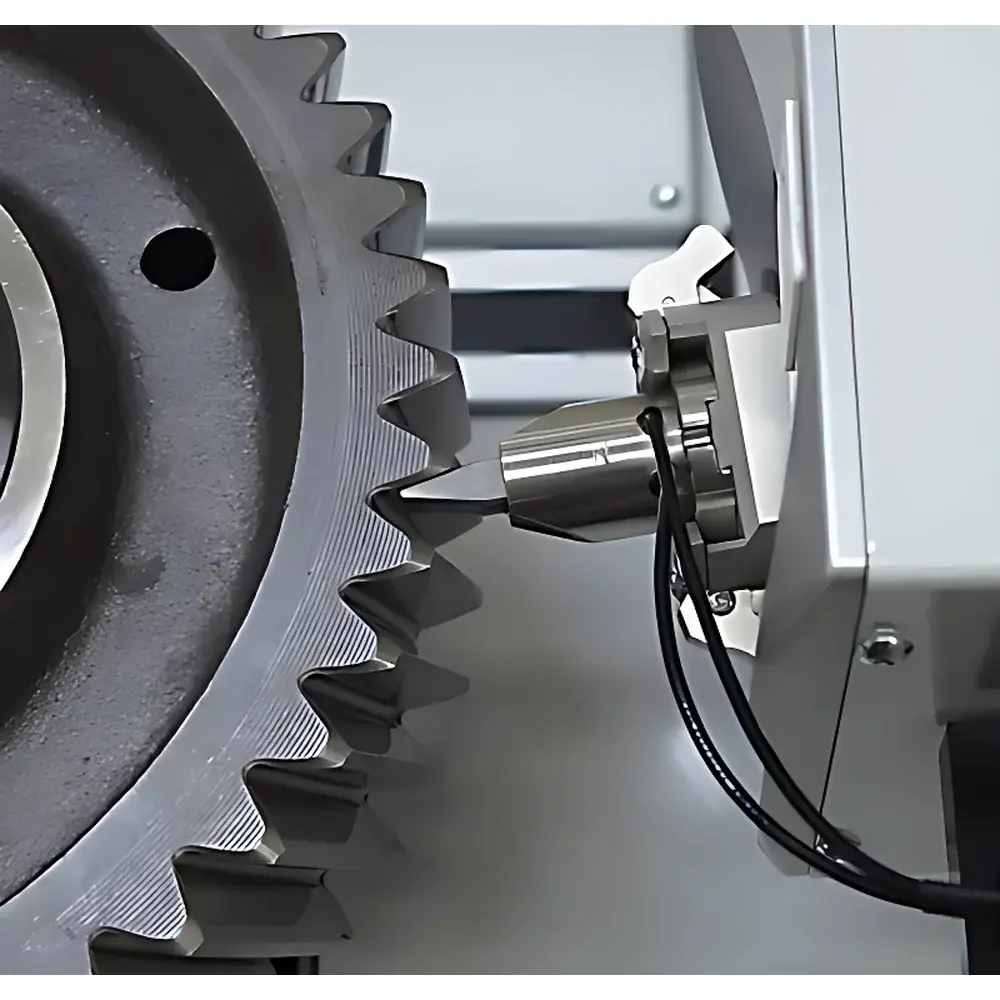
This analyzer serves critical quality assurance functions across high-reliability manufacturing sectors. In aerospace and power generation, it verifies absence of grinding burn in turbine blade roots, gear teeth, and bearing races prior to final assembly. In automotive transmission manufacturing, it validates heat treatment uniformity and detects soft spots induced by inadequate tempering or quench distortion. Nuclear component suppliers employ it for residual stress screening of pressure vessel weld overlays and cladding interfaces. Research institutions utilize its sensitivity to microstructural evolution for studies on thermomechanical fatigue, phase transformation kinetics, and magnetic domain dynamics under cyclic loading. Universities integrate the system into metallurgy and NDT curricula for hands-on instruction in magnetic characterization techniques.
FAQ
What materials can be tested with the Rollscan 250?
Ferromagnetic steels only—specifically medium- to high-carbon steels, low-alloy steels, tool steels, and martensitic stainless steels. Austenitic grades (e.g., 304, 316), aluminum, copper, and titanium are incompatible.
Does the measurement require surface preparation?
No mechanical or chemical preparation is needed. Surface oil, light rust, or oxide layers do not impede measurement—though thick coatings (>50 µm) or conductive debris may require removal.
How does MBN compare to X-ray diffraction for residual stress measurement?
MBN assesses near-surface integrity and microstructural degradation qualitatively and semi-quantitatively, while XRD provides absolute stress values at defined depths. The two methods are complementary: MBN screens for burn; XRD validates stress state in confirmed non-burned zones.
Is operator training required?
Yes—Stresstech provides certified Level 2 NDT training aligned with ISO 9712, covering probe selection, parameter optimization, signal interpretation, and report generation.
Can the system be integrated into automated production lines?
Yes—via Ethernet/IP or Modbus TCP interfaces, the Rollscan 250 supports synchronized triggering, real-time pass/fail output signals, and PLC-compatible status flags for inline quality gating.






