
Stresstech Xstress3000 Residual Austenite & Stress Analyzer
| Brand | Stresstech Oy |
|---|---|
| Origin | Finland |
| Manufacturer Type | Authorized Distributor |
| Origin Category | Imported |
| Model | Xstress3000 |
| Quotation | Upon Request |
Overview
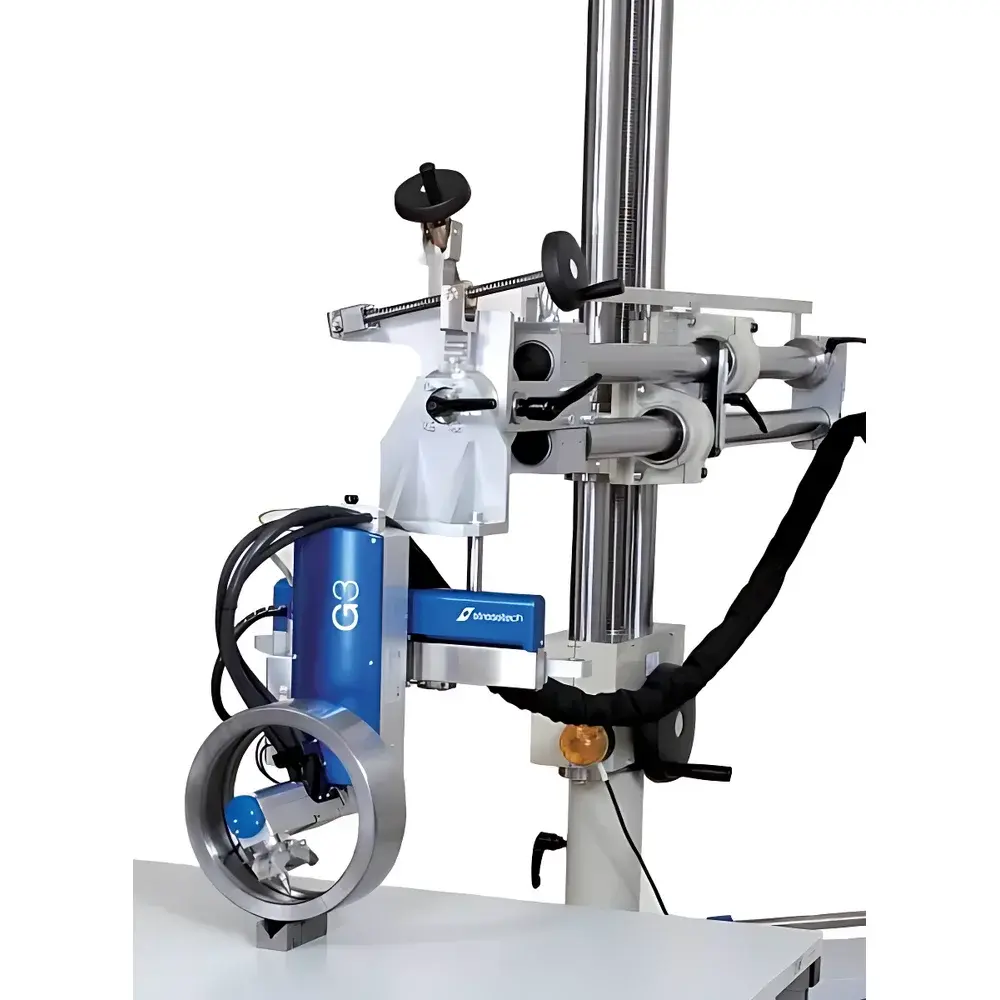
The Stresstech Xstress3000 Residual Austenite & Stress Analyzer is a portable, high-precision X-ray diffraction (XRD)-based instrument engineered for non-destructive quantitative determination of residual austenite phase content and residual stress in ferrous alloys. It operates on the principle of Bragg’s law using monochromatic Cu-Kα radiation (λ = 0.15406 nm), enabling simultaneous phase identification and lattice strain measurement via sin²ψ method or side-inclination (y-geometry) analysis. Designed for field-deployable metrology, the system meets the rigorous demands of industrial quality assurance where laboratory access is impractical—particularly in aerospace component verification, automotive powertrain validation, additive manufacturing post-process characterization, and nuclear-grade pressure vessel integrity assessment.
Key Features
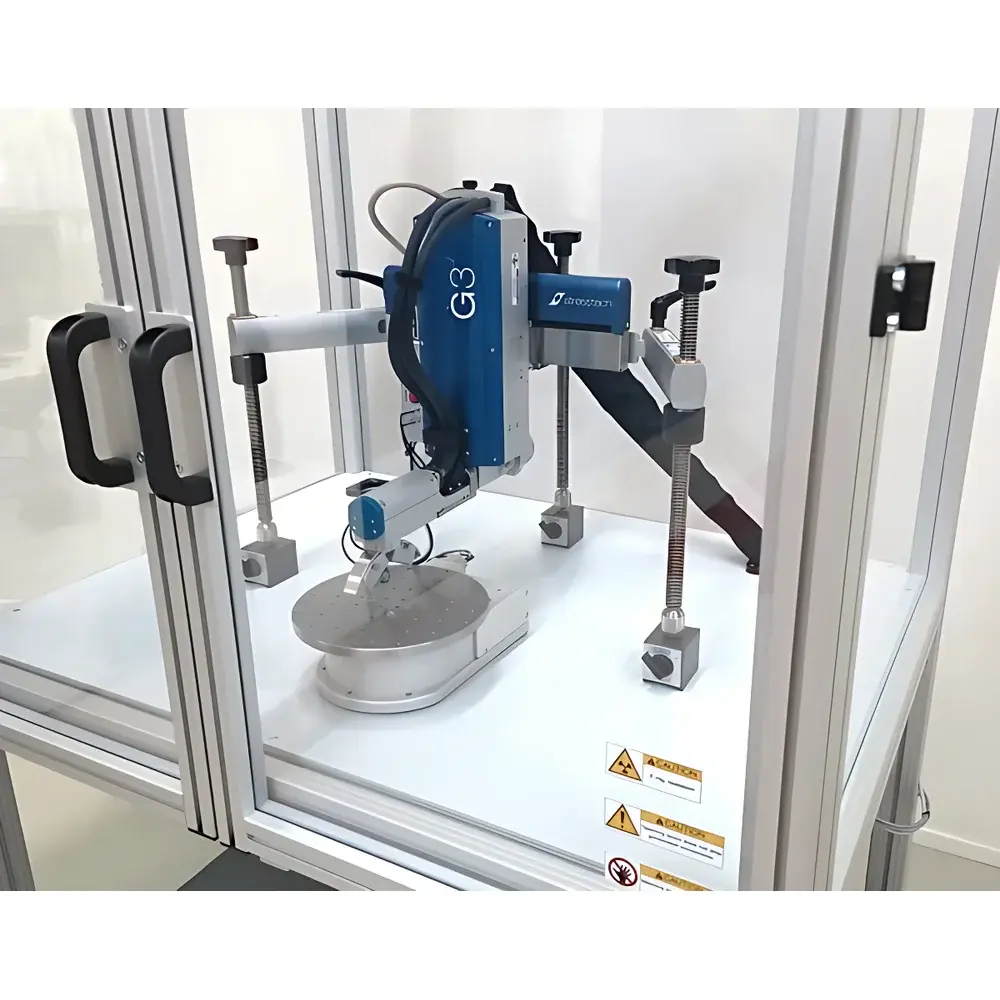
- Compact, lightweight architecture (≤25 kg total system weight) with integrated ergonomic carrying handles and ruggedized transport case—optimized for on-site use in production floors, maintenance hangars, and field service environments.
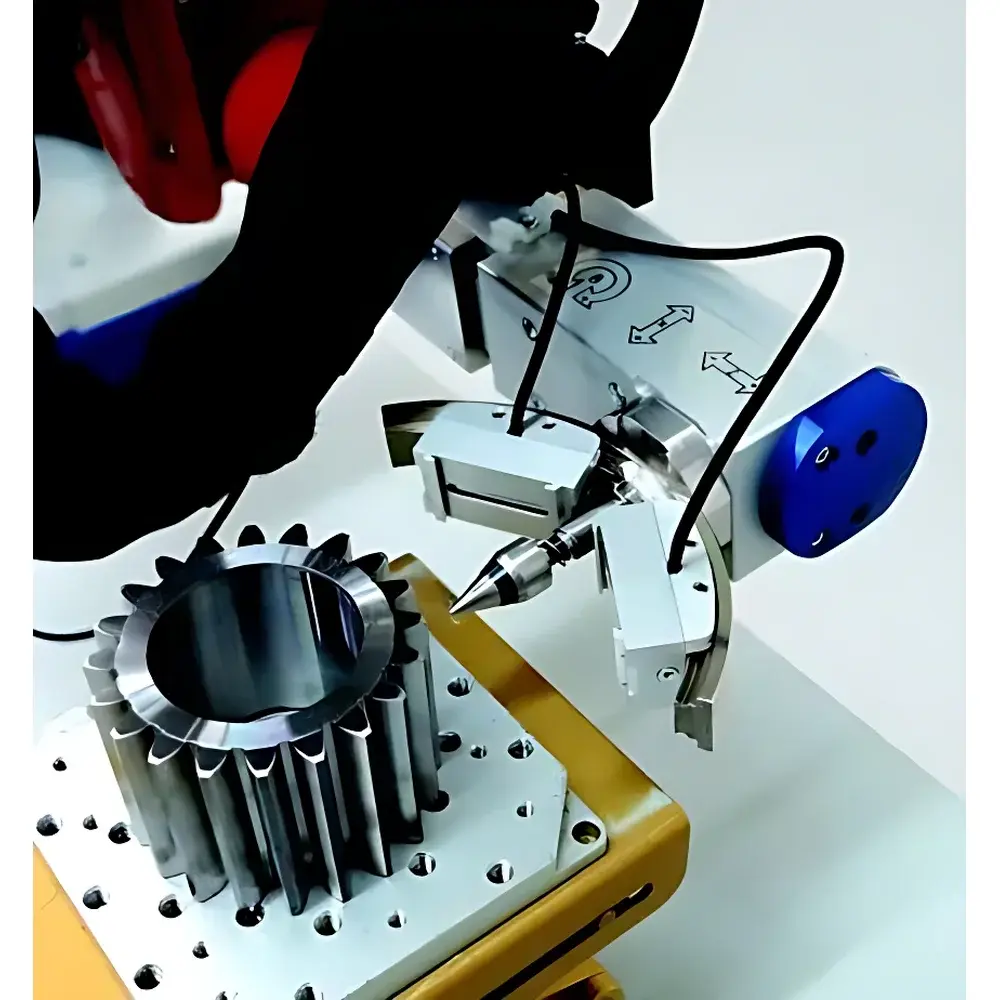
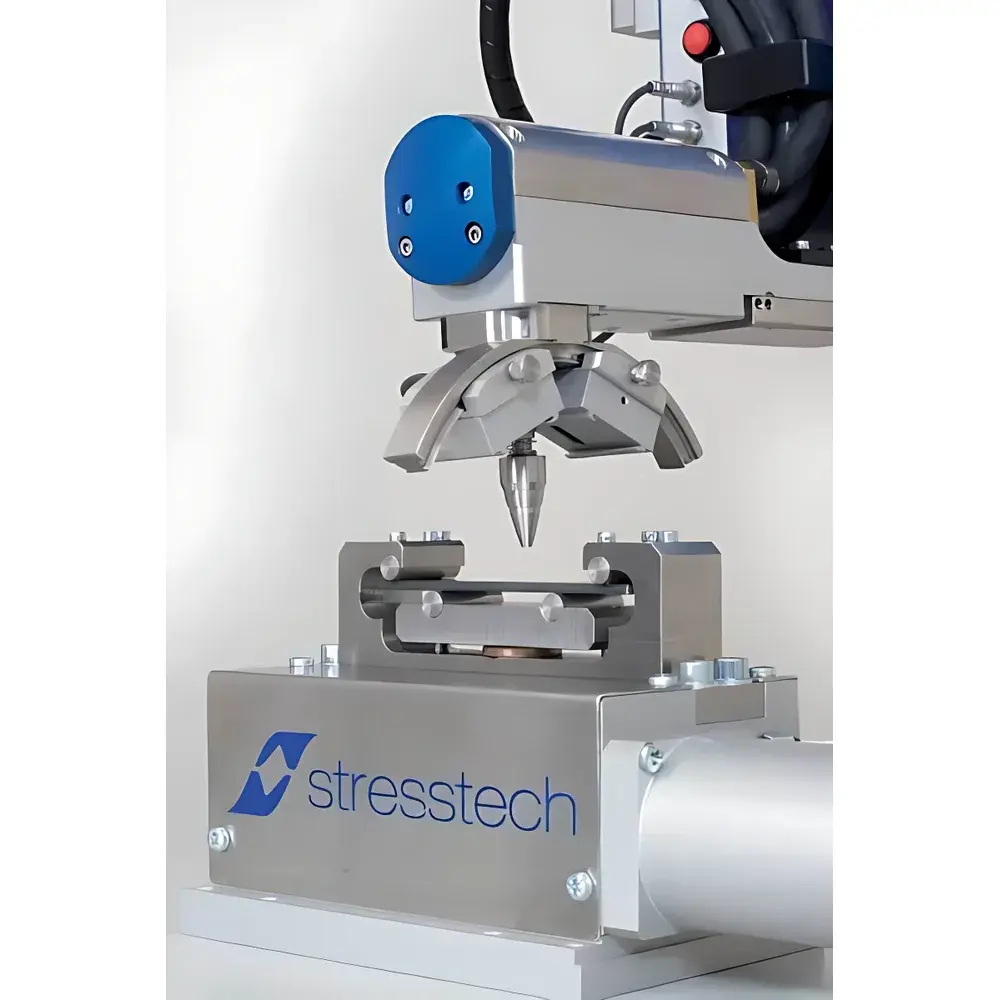
- Motorized goniometer with dual-axis tilt-and-rotation capability and improved y-geometry configuration for enhanced angular precision and reduced texture-induced measurement bias.
- Symmetrically mounted dual scintillation detectors enabling high signal-to-noise ratio acquisition and real-time background subtraction during scanning.
- Continuously adjustable 2θ angular range from 110° to 171°, supporting multi-peak evaluation across α-Fe (211), γ-Fe (200/220), and carbide phases for robust austenite quantification per ASTM E975 and ISO 21942.
- Interchangeable collimators (Φ0.5 mm, Φ0.8 mm, Φ1.0 mm, Φ2.0 mm, Φ5.0 mm) with automated alignment and calibration—enabling micro-area analysis down to sub-millimeter spot sizes.
- Full PC-based control with closed-loop positioning feedback; linear stage repeatability < ±0.003 mm; integrated safety interlocks compliant with IEC 61010-1 and EN 62471 Class 1 laser safety requirements.
- Hermetically sealed recirculating cooling system with forced-air heat exchanger—ensuring stable tube anode temperature during extended field operation without external water supply.
Sample Compatibility & Compliance
The Xstress3000 accommodates flat, curved, and irregularly shaped components—including gears, bearing races, camshafts, turbine blades, welded joints, and additively manufactured lattice structures—without requiring sample sectioning or surface polishing beyond standard metallographic preparation (e.g., 600-grit finish). It supports both surface and near-surface (up to ~20 µm depth) residual stress profiling in accordance with ASTM E1426, EN 15305, and VDI/VDE 2653 Part 1. Residual austenite quantification complies with ASTM E975-22 (Standard Test Method for Determining Volume Fraction of Retained Austenite Using X-Ray Diffraction) and ISO 21942:2020 (Non-destructive testing — Residual stress measurement by X-ray diffraction). All measurement protocols are fully traceable and support GLP/GMP documentation workflows including audit trails and electronic signatures per FDA 21 CFR Part 11 when used with validated software modules.
Software & Data Management
The instrument is operated via Stresstech’s proprietary Xstress Suite v5.x—a Windows-based application providing intuitive workflow navigation, real-time diffraction pattern visualization, peak fitting with pseudo-Voigt deconvolution, and automated phase fraction calculation using Rietveld refinement or direct intensity ratio methods. Data export formats include CSV, XML, and PDF reports with embedded metadata (operator ID, timestamp, calibration log, collimator ID, exposure parameters). The software supports batch processing of multi-location datasets and integrates with enterprise MES/QMS platforms via OPC UA and RESTful API interfaces. All raw diffraction data files are stored in vendor-neutral HDF5 format, ensuring long-term archival compatibility and third-party analysis interoperability.
Applications
- Aerospace: Residual stress mapping in Ti-6Al-4V turbine discs and Inconel 718 weldments prior to flight certification.
- Automotive: Quantification of retained austenite in carburized gear teeth after shot peening and induction hardening.
- Additive Manufacturing: In-process validation of phase stability in maraging steel (18Ni300) and stainless steel 316L builds.
- Energy Sector: Stress evaluation in reactor pressure vessel cladding layers and steam generator tubing welds.
- Rail & Heavy Machinery: Field assessment of grinding burn and subsurface stress gradients in railhead and roller bearing surfaces.
- Academic Research: Correlation studies between thermo-mechanical processing parameters and phase evolution kinetics in dual-phase steels.
FAQ
What standards does the Xstress3000 comply with for residual stress measurement?
It adheres to ASTM E1426, EN 15305, and VDI/VDE 2653 Part 1 for stress determination, and ASTM E975 and ISO 21942 for residual austenite quantification.
Can the system perform measurements on curved surfaces such as bearing races or shafts?
Yes—the motorized y-geometry goniometer and auto-focusing distance adjustment enable accurate measurements on radii as small as 15 mm.
Is the instrument suitable for ISO 17025-accredited laboratories?
When deployed with documented calibration certificates, traceable reference materials (e.g., NIST SRM 1979), and validated SOPs, it supports full compliance with ISO/IEC 17025:2017 clause 7.7 on measurement uncertainty estimation.
Does the Xstress3000 require external cooling water or compressed air?
No—it features a self-contained recirculating chiller with passive heat dissipation; no auxiliary utilities are needed for operation.
How is detector alignment verified during routine use?
The system performs fully automated optical and mechanical calibration prior to each measurement sequence, including zero-angle verification and collimator centering via laser alignment routines.






