
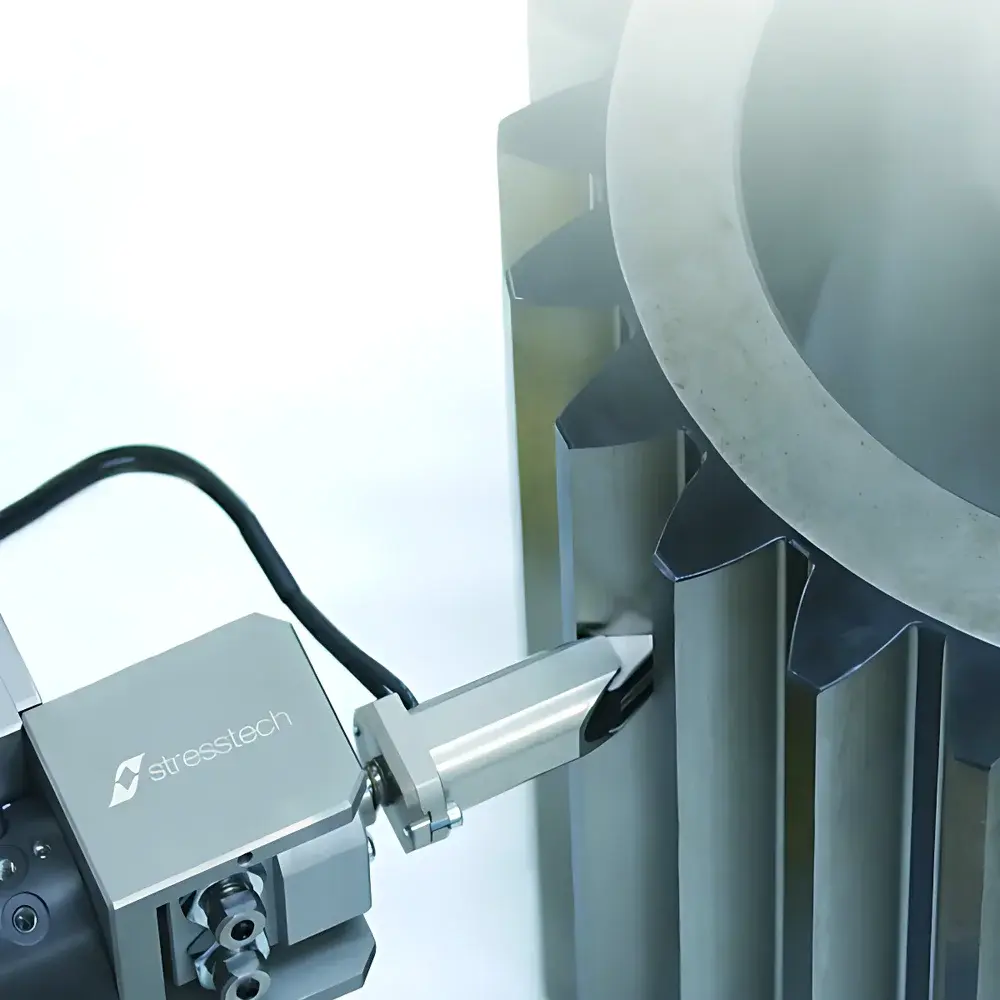
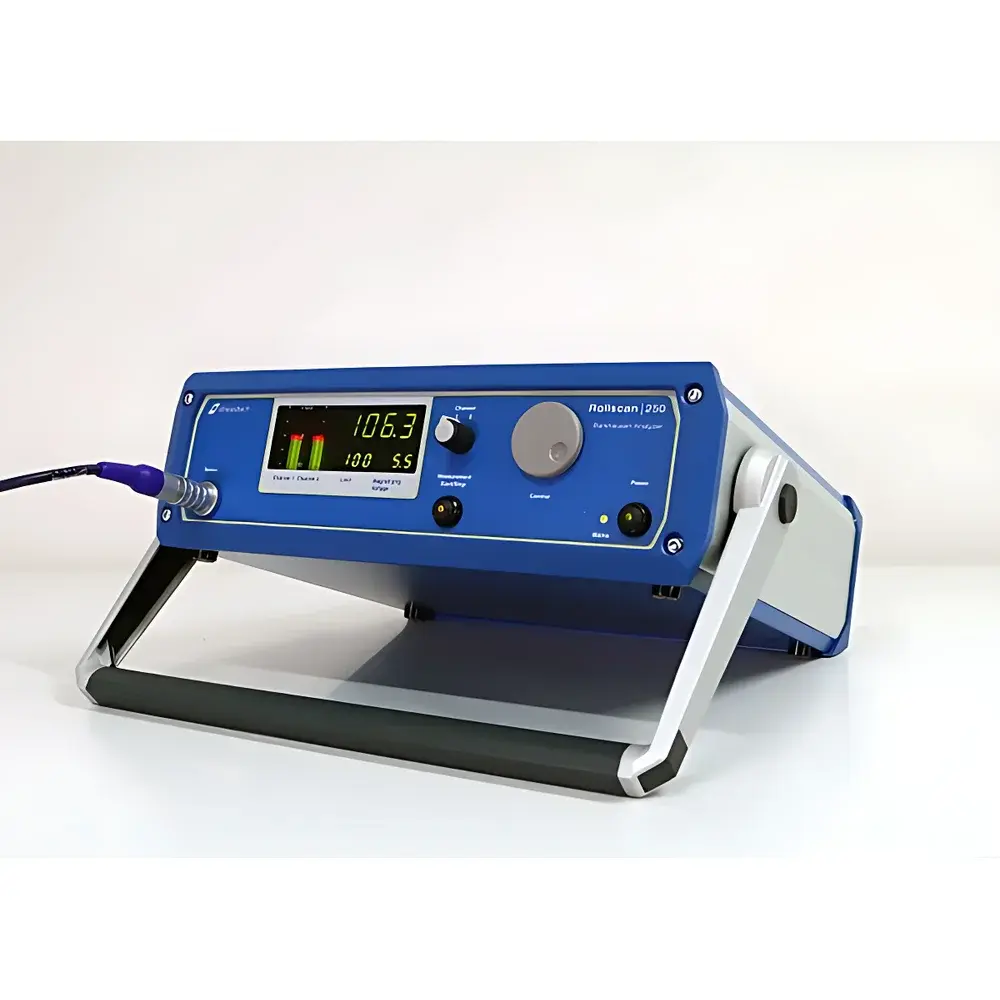
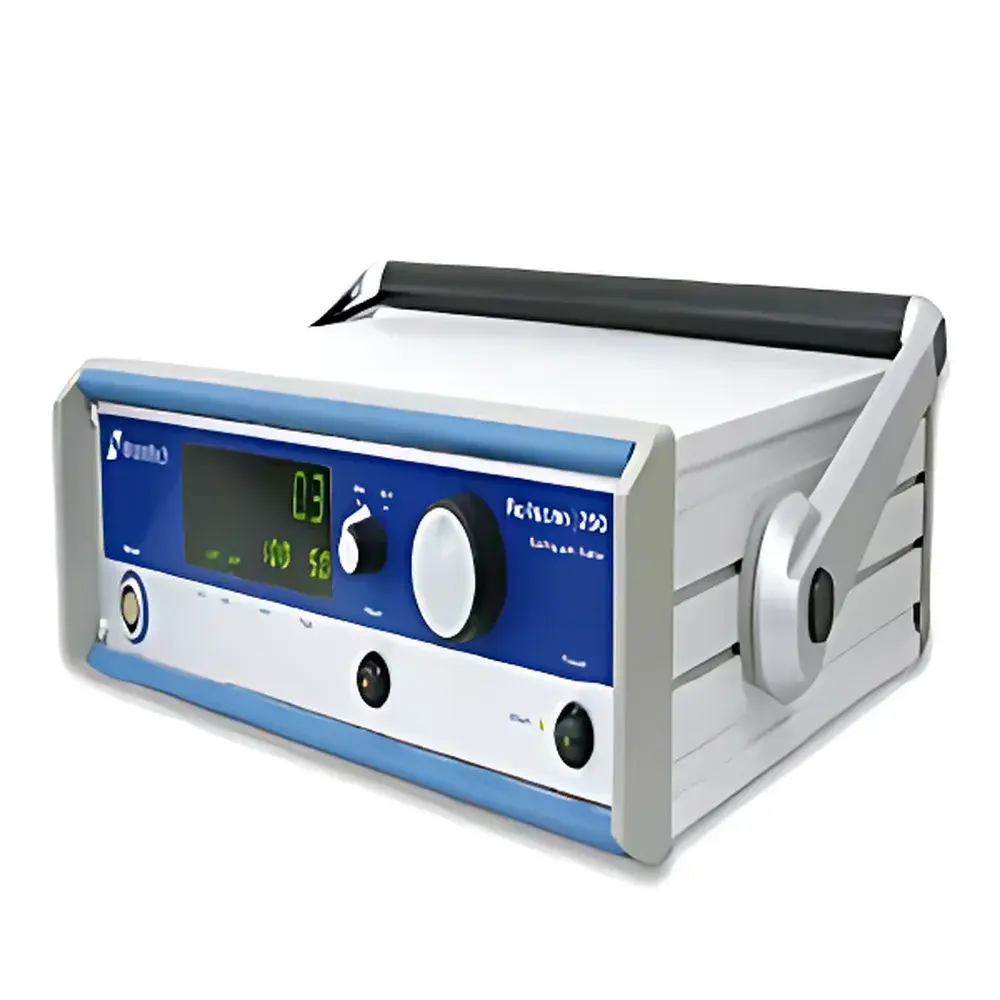
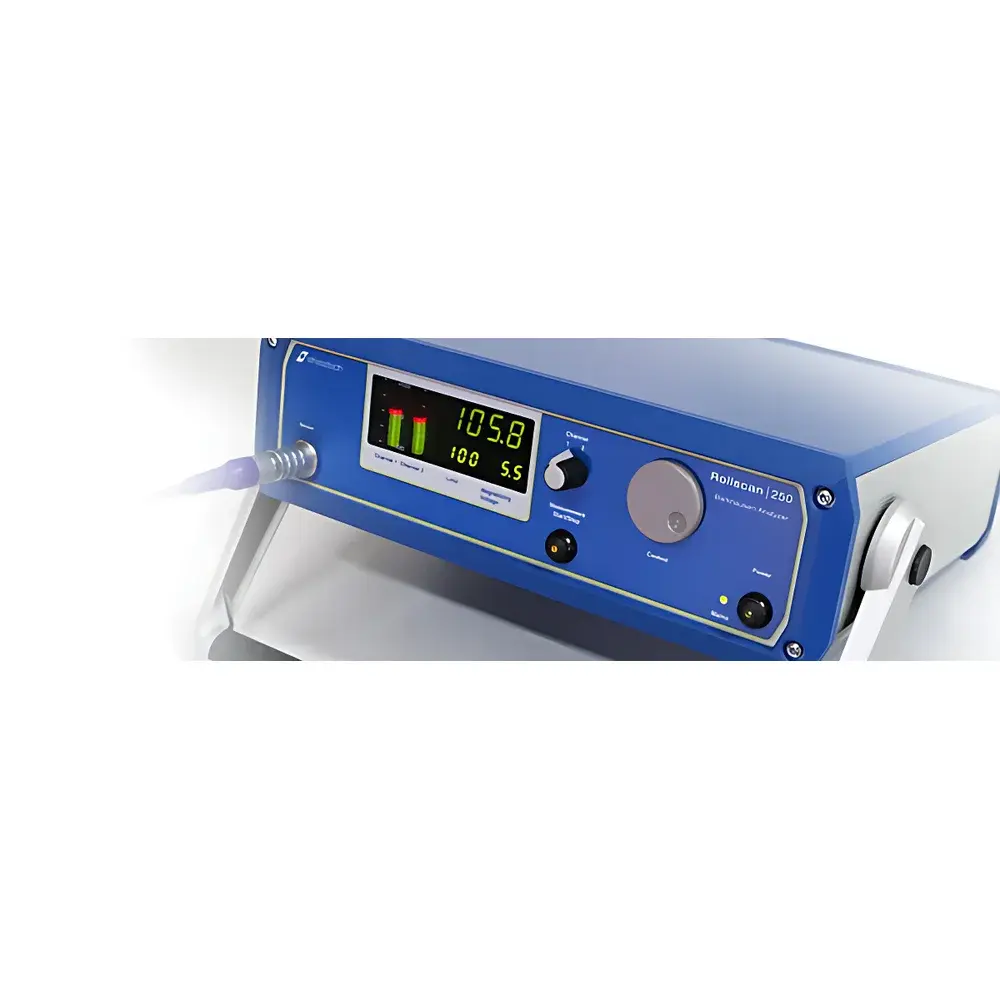
Stresstech Rollscan 250 Barkhausen Noise Analyzer
| Brand | Stresstech Oy |
|---|---|
| Origin | Finland |
| Model | Rollscan 250 |
| Type | Non-Destructive Surface Integrity Analyzer |
| Measurement Principle | Magnetic Barkhausen Noise (MBN) Analysis |
| Compliance | ISO 28640, ASTM E3147 (under development), EN 10327 (applicable for grinding burn assessment) |
| Sensor Interface | Plug-and-play modular connector |
| Motion Control | Motorized X/Z linear axes + A/T rotational axes |
| Software Platform | EasyGear v5.x (Windows-based, FDA 21 CFR Part 11 compliant configuration available) |
| Data Output | ASCII, CSV, XML |
| Cabinet Integration | Integrated control cabinet with main isolator switch, LED status indicators, emergency stop, door interlock, and Ergotron-display mounting |
Overview
The Stresstech Rollscan 250 Barkhausen Noise Analyzer is a precision-engineered, non-destructive testing (NDT) system designed for quantitative evaluation of surface and near-surface integrity in ferromagnetic components. It operates on the physical principle of Magnetic Barkhausen Noise (MBN), which arises from irreversible domain wall jumps during controlled magnetization of stressed or microstructurally altered material. When subjected to grinding, heat treatment, or mechanical loading, localized plastic deformation, phase transformations (e.g., untempered martensite), or residual stress gradients induce measurable changes in MBN amplitude, frequency spectrum, and pulse count density. The Rollscan 250 captures these transient magnetic emissions via high-bandwidth, low-noise induction sensors, enabling detection of grinding burns, thermal damage, case depth inconsistencies, and subsurface microcrack precursors — all without surface preparation, chemical etching, or part disassembly.
Key Features
- Modular sensor architecture with hot-swappable probe interface: No tools required for sensor exchange; full electrical and mechanical alignment maintained via precision-machined bayonet coupling.
- Integrated 4-axis motion system: Programmable X- and Z-axis linear translation (±50 mm range, 1 µm repeatability) coupled with A-axis (360° continuous rotation) and T-axis (±90° tilt) for adaptive scanning of complex geometries including gears, camshafts, bearing races, and turbine blades.
- Dedicated EasyGear software suite: Provides real-time signal visualization (time-domain waveform, RMS envelope, spectral FFT), automated threshold-based pass/fail classification, multi-point measurement sequencing, and customizable reporting templates aligned with internal quality protocols.
- Industrial-grade control cabinet: Includes IEC 60204-compliant main isolator switch, IP54-rated enclosure, emergency stop circuit with mechanical latch, safety door interlock, status LED array, and Ergotron-compatible display mount for ergonomic operator positioning.
- Calibration traceability: Factory calibration performed against NIST-traceable reference standards; optional annual recalibration service with certified documentation per ISO/IEC 17025 requirements.
Sample Compatibility & Compliance
The Rollscan 250 is validated for use on carbon steels, alloy steels, tool steels, and case-hardened components with hardness ranges from 30–65 HRC. It accommodates flat, cylindrical, conical, and involute gear tooth profiles up to Ø300 mm diameter and 150 mm height. All measurements comply with the technical foundation outlined in ISO 28640:2012 (“Non-destructive testing — Magnetic Barkhausen noise method — General principles”) and support verification activities under aerospace (e.g., AMS 2632), automotive (VW 60320, GMW 14872), and power generation (EPRI TR-102422) specifications. For regulated environments, optional 21 CFR Part 11 compliance packages include electronic signatures, audit trail logging, and role-based user access control.
Software & Data Management
EasyGear v5.x serves as the central platform for acquisition, analysis, and archival. It supports synchronized multi-channel data capture (up to 4 sensors simultaneously), time-stamped metadata embedding (operator ID, lot number, process parameters), and export to industry-standard formats (CSV, XML, PDF). Raw MBN waveforms are stored in lossless binary format with header metadata for retrospective reprocessing. The software includes built-in statistical process control (SPC) tools — X-bar/R charts, capability indices (Cp/Cpk), and trend analysis — directly linked to measurement locations. Data integrity is enforced via SHA-256 hash verification and immutable audit logs meeting GLP/GMP documentation requirements.
Applications
- Grinding burn detection in aerospace landing gear shafts and turbine discs prior to shot peening.
- In-process verification of case depth uniformity in carburized transmission gears.
- Residual stress gradient mapping across welded joints in pressure vessel fabrication.
- Quality gate screening for heat-treated bearing rings to prevent premature spalling failure.
- Root cause analysis of batch failures linked to quenching variability or tempering insufficiency.
- Validation of surface integrity after EDM, laser hardening, or induction heating processes.
FAQ
What materials can be tested with the Rollscan 250?
Ferromagnetic steels only — including low-alloy, high-carbon, stainless (ferritic/martensitic), and precipitation-hardened grades. Austenitic stainless steels, aluminum, titanium, and non-metals are not compatible.
Is surface preparation required before measurement?
No. The method is fully non-destructive and requires no cleaning beyond removal of loose debris or thick oil films. Surface roughness up to Ra 6.3 µm does not impair signal fidelity.
Can the system be integrated into an automated production line?
Yes. Digital I/O interface (24 V DC, opto-isolated) enables PLC synchronization for start/stop triggering, pass/fail output signaling, and error condition reporting.
How is measurement repeatability ensured across operators?
Through standardized probe lift-off control (mechanical stops or motorized Z-axis servo lock), fixed magnetizing frequency (10–200 Hz adjustable), and sensor calibration certificates traceable to Stresstech’s metrology lab.
Does the system support remote diagnostics or firmware updates?
Yes. Secure remote access via TLS-encrypted RDP or VNC is supported; firmware updates are delivered as signed packages with version-controlled release notes and backward-compatible configuration migration.





