
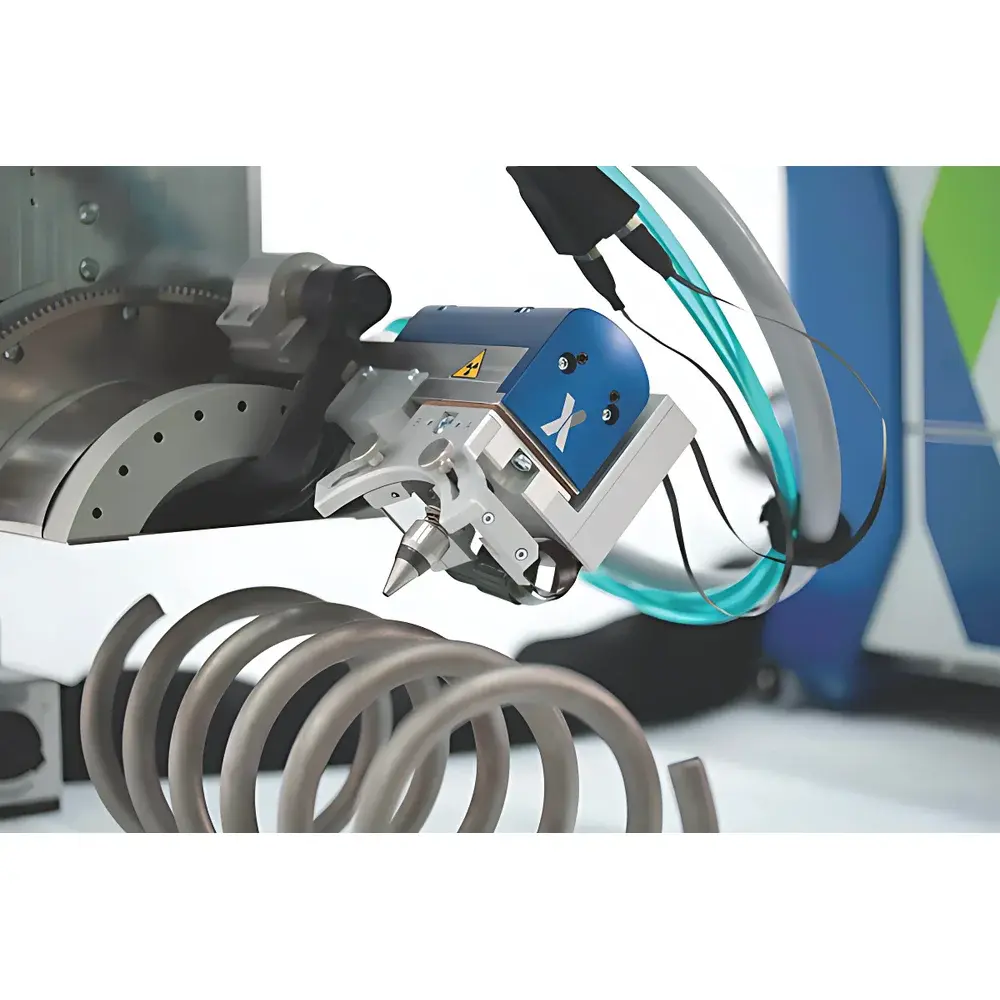
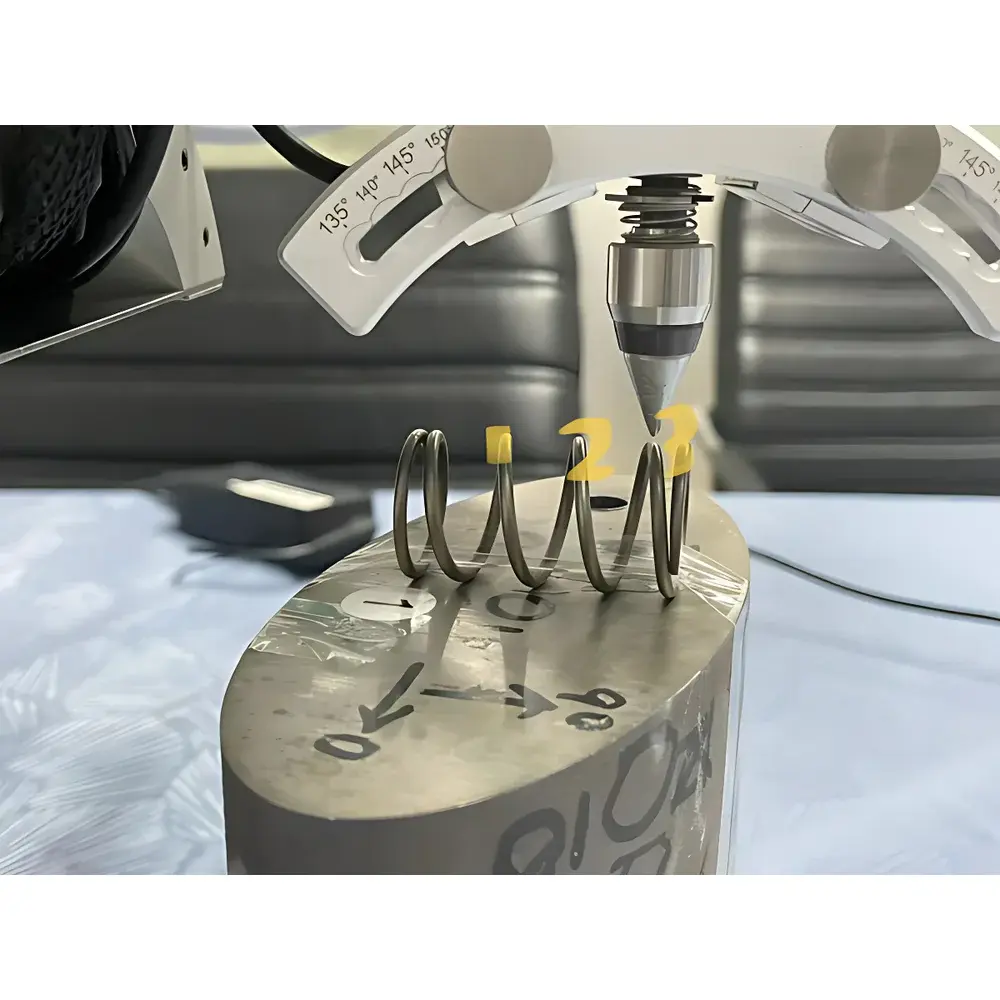
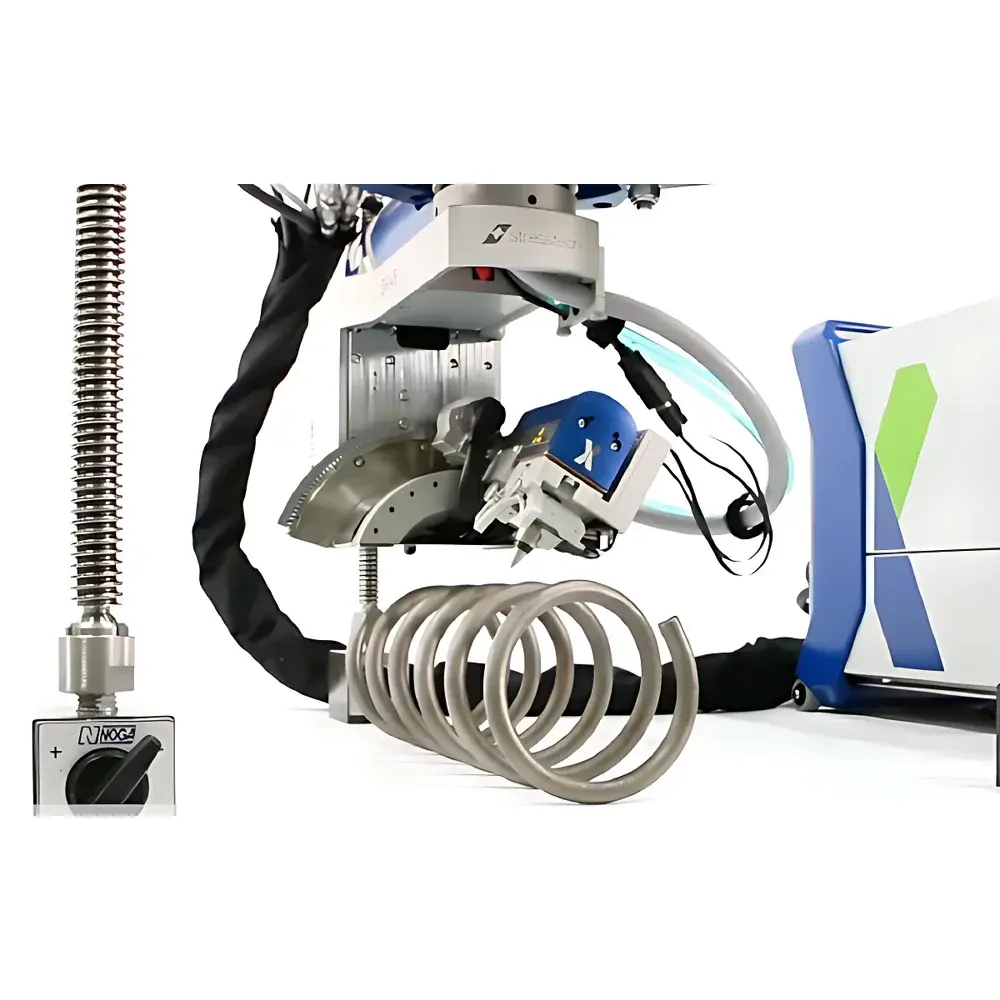
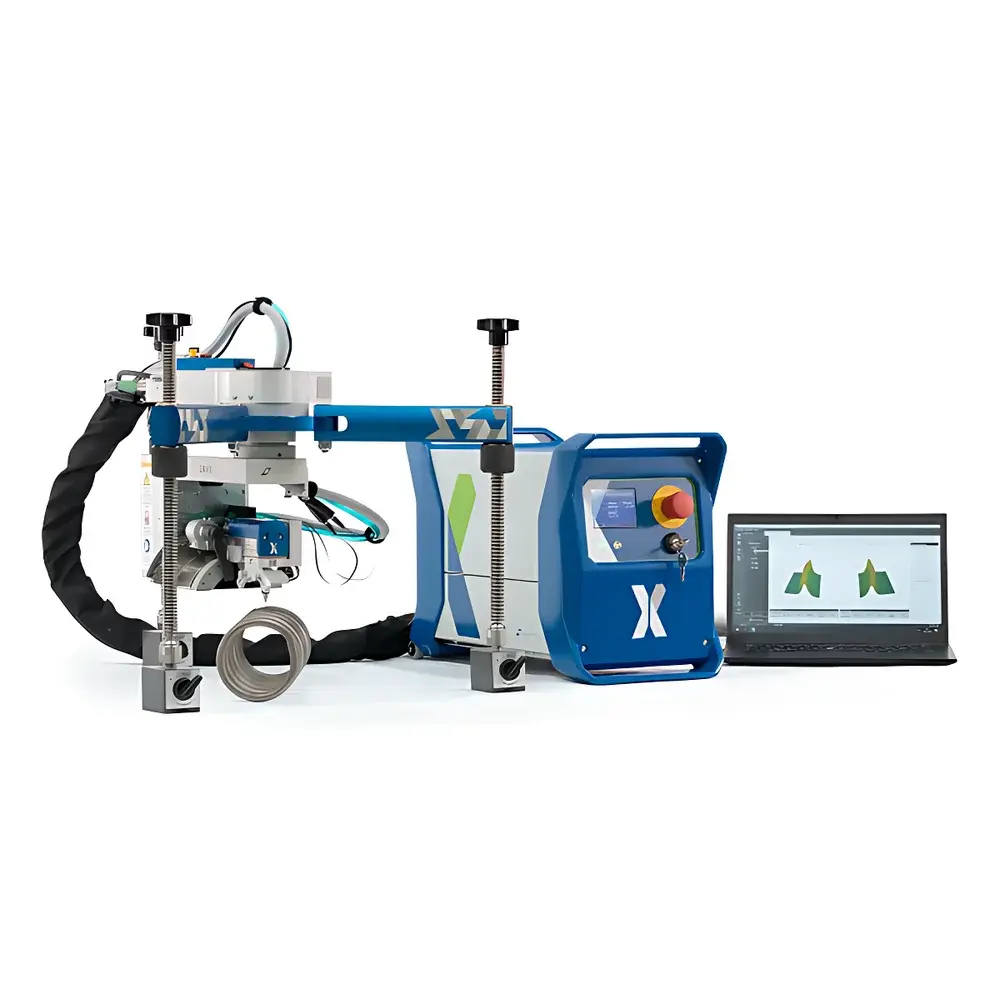
Stresstech DR45 Portable X-ray Residual Stress Analyzer
| Brand | Stresstech Oy |
|---|---|
| Country of Origin | Finland |
| Model | DR45 |
| Type | Portable X-ray Diffraction (XRD)-Based Residual Stress Analyzer |
| Measurement Principle | Sin²ψ Method with Cr-Kα Radiation |
| Detector | High-Sensitivity Si-PIN or CCD (Configurable) |
| Angular Range | 2θ = 135°–165° (Optimized for Fe, Ni, Ti, Al, and Co-based alloys) |
| Sample Positioning | Motorized XYZ Stage with Manual Fine-Adjustment |
| Data Acquisition Time | < 90 s per measurement point (typical) |
| Stress Resolution | ≤ ±10 MPa (Fe-based steels, under optimal surface condition) |
| Depth Sensitivity | Surface-to-near-surface (~1–20 µm, dependent on material and radiation) |
| Compliance | ASTM E915-22, ISO 21913:2019, EN 15305:2021 |
Overview
The Stresstech DR45 Portable X-ray Residual Stress Analyzer is a field-deployable, non-destructive testing (NDT) instrument engineered for quantitative determination of residual stress states in metallic components—particularly critical in high-stress, cyclic-load applications such as automotive valve springs, suspension coil springs, and precision instrumentation springs. Based on the well-established sin²ψ X-ray diffraction method, the DR45 utilizes Cr-Kα radiation (λ = 2.2909 Å) to measure lattice strain shifts in crystalline materials. These shifts are converted into macroscopic residual stress values via Hooke’s law and elastic constants, enabling direct assessment of both surface and near-surface stress distributions. Unlike destructive sectioning or hole-drilling techniques, the DR45 preserves component integrity while delivering metrologically traceable results aligned with international standards including ASTM E915-22 (Standard Test Method for Verifying the Alignment of X-Ray Diffraction Instrumentation for Residual Stress Measurement), ISO 21913:2019 (Non-destructive testing — Residual stress measurement by X-ray diffraction), and EN 15305:2021 (Non-destructive testing — Qualification and certification of NDT personnel — General principles). Its compact, battery-operated architecture supports on-site measurements directly on production lines, maintenance bays, or field service locations—eliminating the need for sample removal or laboratory submission.
Key Features
- True portable design: Weighs < 12 kg with integrated battery, ruggedized IP54-rated housing for workshop and outdoor use
- Motorized XYZ positioning stage with sub-millimeter repeatability and manual fine-tuning capability for precise beam alignment on curved or irregular spring geometries
- Dual-detector configuration support: Selectable Si-PIN diode for rapid qualitative screening or high-resolution CCD detector for enhanced peak fidelity and low-strain sensitivity
- Onboard real-time data processing: Embedded Linux OS runs Stresstech’s certified StressTrack™ software for immediate stress tensor calculation, error estimation, and uncertainty reporting per GUM (Guide to the Expression of Uncertainty in Measurement)
- Integrated collimator system: Adjustable 1–3 mm diameter air-gap collimators optimized for small-diameter spring wires (down to Ø0.5 mm) and tight pitch geometries
- Fully compliant with ISO/IEC 17025 documentation requirements: Audit-ready measurement logs include full metadata (exposure time, ψ-tilt angles, Kα₂ suppression status, background subtraction method, and calibration certificate traceability)
Sample Compatibility & Compliance
The DR45 is validated for residual stress analysis of polycrystalline ferrous and non-ferrous alloys commonly used in spring manufacturing—including cold-drawn high-carbon steel (e.g., EN 10270-1 SWP-A/B, ASTM A228), stainless steels (AISI 302, 17-7PH), nickel-based superalloys (Inconel 718), and titanium alloys (Ti-6Al-4V). It accommodates complex spring forms—helical compression/tension springs, torsion springs, leaf springs, and Belleville washers—with minimal surface preparation (grinding or electropolishing recommended for oxide-free measurement surfaces). All measurements adhere to GLP-aligned workflows and support 21 CFR Part 11-compliant electronic signatures when deployed with optional networked StressTrack™ Enterprise Server. Full compliance documentation—including factory calibration certificates (NIST-traceable reference standards), uncertainty budgets, and inter-laboratory round-robin validation reports—is provided with each unit.
Software & Data Management
StressTrack™ v5.3 firmware delivers intuitive workflow navigation from setup to report generation. Key capabilities include automated ψ-tilt sequence control, real-time diffraction pattern visualization, phase identification (via built-in ICDD PDF-4+ database), and residual stress mapping across multi-point grids. Raw diffraction data (.raw, .chi) and processed stress tables (.csv, .xlsx) are exportable with full metadata embedding. The software supports batch processing, statistical process control (SPC) charting (X̄-R, Cpk), and integration with enterprise MES/QMS platforms via RESTful API. Audit trails record all user actions, parameter modifications, and calibration events—ensuring full traceability for ISO 9001, IATF 16949, and FDA-regulated environments.
Applications
- Root cause analysis of spring fatigue failure: Correlating surface tensile residual stress with crack initiation sites observed via SEM/EDS
- Validation of heat treatment efficacy: Quantifying stress relief after tempering or cryogenic treatment in high-performance valve springs
- Process optimization feedback loop: Monitoring stress gradients across coil windings pre- and post-shot peening or roller burnishing
- Supplier quality assurance: On-receipt verification of residual stress profiles against contractual specifications (e.g., ≤ +200 MPa surface compressive stress for aerospace-grade springs)
- Research & development: In-situ stress evolution studies during cyclic loading simulations using custom fixturing
FAQ
Is the DR45 suitable for measuring residual stress in small-diameter spring wire (e.g., Ø0.3 mm)?
Yes—when equipped with a 0.5 mm micro-collimator and high-gain Si-PIN detector, the DR45 achieves reliable signal-to-noise ratios on wires ≥ Ø0.3 mm, provided surface roughness Ra < 0.4 µm.
Does the system require external cooling or compressed air?
No—the DR45 uses thermoelectrically cooled detectors and solid-state X-ray tube; no water cooling, gas supply, or external utilities are needed.
Can it quantify retained austenite alongside residual stress?
Yes—StressTrack™ includes dedicated retained austenite module per ASTM E975-21, using integrated Rietveld refinement for dual-phase (ferrite/austenite) quantification.
What is the typical measurement uncertainty for a single-point stress reading on hardened steel?
Under controlled lab conditions (polished surface, stable temperature, optimal counting time), expanded uncertainty (k=2) is ≤ ±15 MPa for uniaxial stress in AISI 5160 steel.
Is operator certification required to perform compliant measurements?
Per EN 473/ISO 9712, Level 2 NDT certification in X-ray diffraction residual stress measurement is recommended; Stresstech provides accredited training courses aligned with ISO 20807.





