
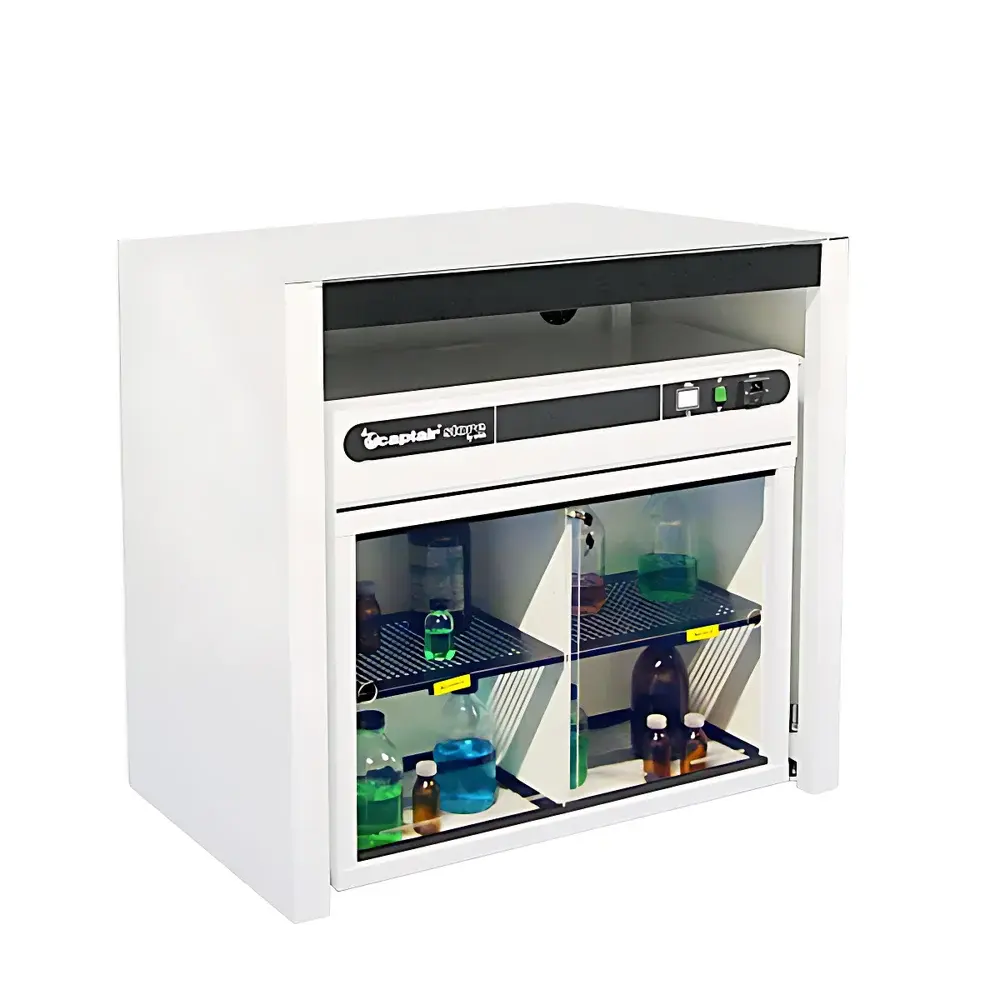
Erlab Captair Ministore Clean-Air Mini Reagent Cabinet
| Brand | Erlab |
|---|---|
| Model | Captair Ministore |
| Origin | Jiangsu, China |
| Type | Recirculating Fume Hood Cabinet for Chemical Storage |
| Dimensions (all variants) | 820 mm W × 350 mm D × 730 mm H |
| Price Range | USD 1,400 – 2,800 |
Overview
The Erlab Captair Ministore is a compact, recirculating clean-air cabinet engineered for safe, localized storage of reagents, solvents, and hazardous chemicals in laboratory environments where ducted ventilation infrastructure is unavailable or impractical. Unlike conventional fume hoods or passive storage cabinets, the Captair Ministore actively purifies internal air using a dual-stage filtration system—comprising a pre-filter and a high-efficiency activated carbon filter—designed to adsorb volatile organic compounds (VOCs), acids, bases, and other airborne chemical vapors generated during routine handling or long-term storage. Air is drawn from the cabinet interior, passed through the filtration module, and returned as purified air into the laboratory space at a continuous flow rate of approximately 120 m³/h. This closed-loop recirculation eliminates the need for external ducting, reduces HVAC load, and prevents uncontrolled release of contaminants into ambient air—making it compliant with indoor air quality standards such as ISO 16000-23 and EN 14175-3 for recirculating fume control devices.
Key Features
- Self-contained, plug-and-play design requiring no civil works or duct installation—ideal for retrofitting in existing labs, teaching facilities, or modular workspaces.
- Dual-stage filtration: washable polyester pre-filter captures particulates and extends main filter life; impregnated activated carbon filter with >90% adsorption efficiency for common lab solvents (e.g., acetone, ethanol, toluene, hydrochloric acid vapor) at typical storage concentrations.
- Intuitive LED status panel indicating real-time airflow, filter saturation level, and operational mode; audible and visual alerts for filter replacement and airflow deviation.
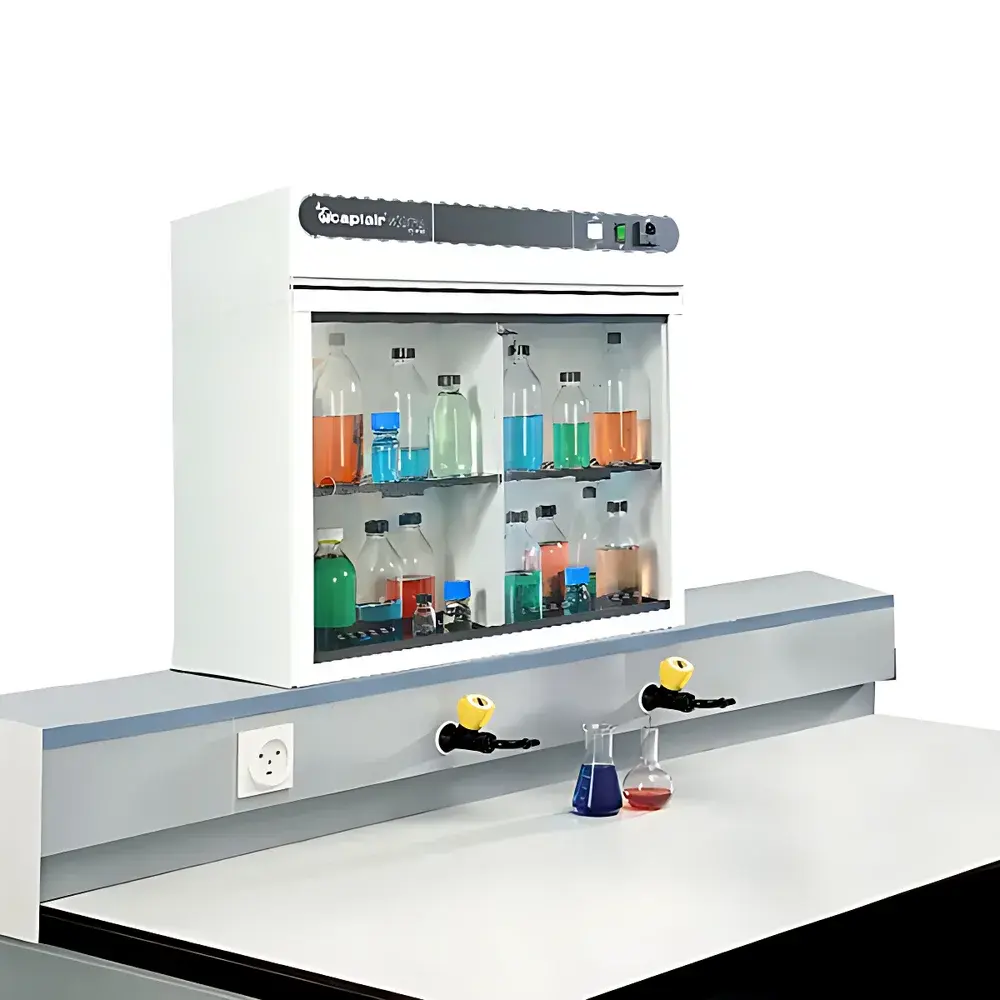
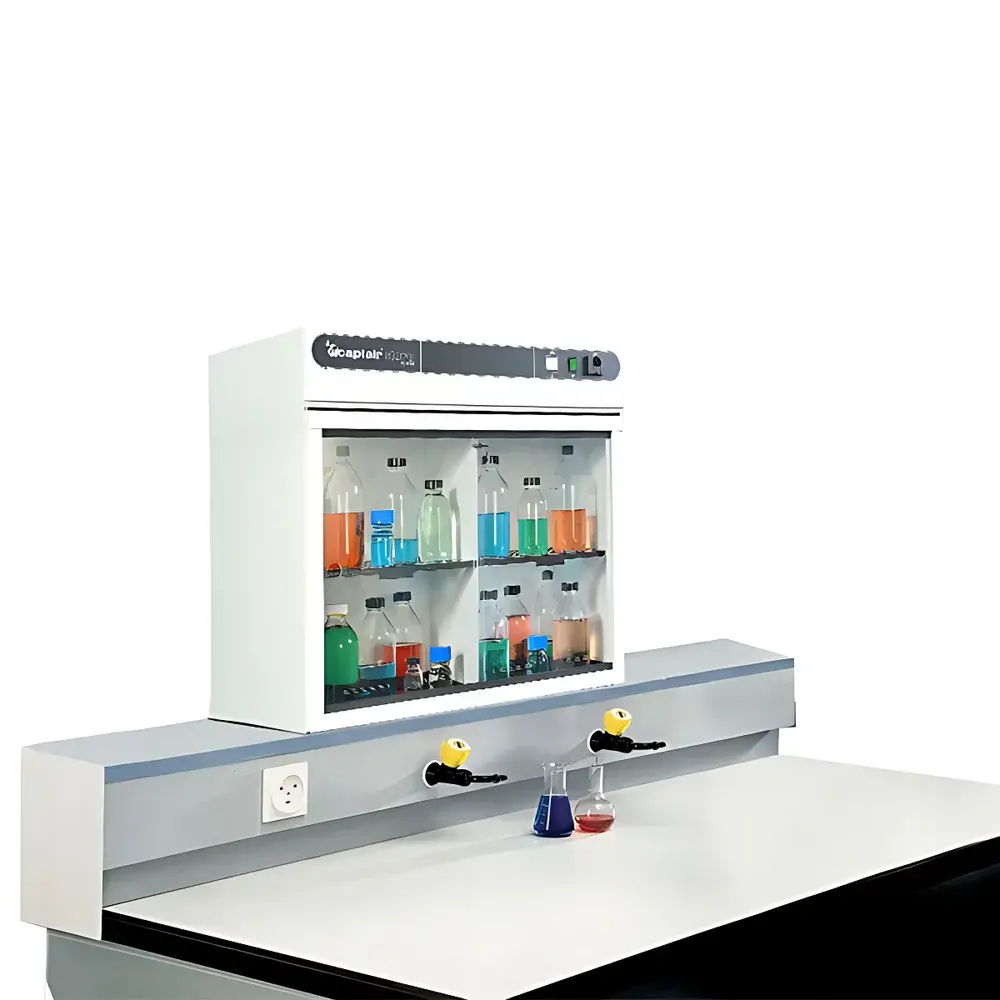
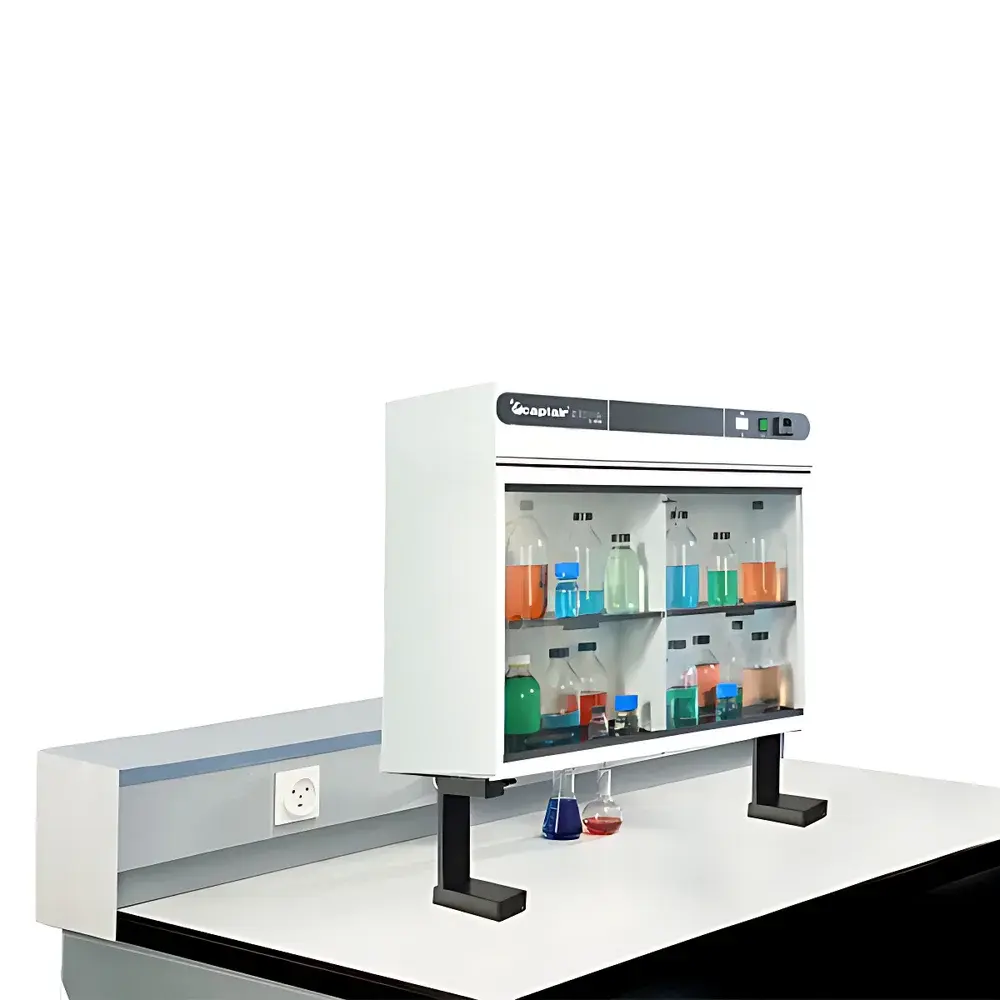
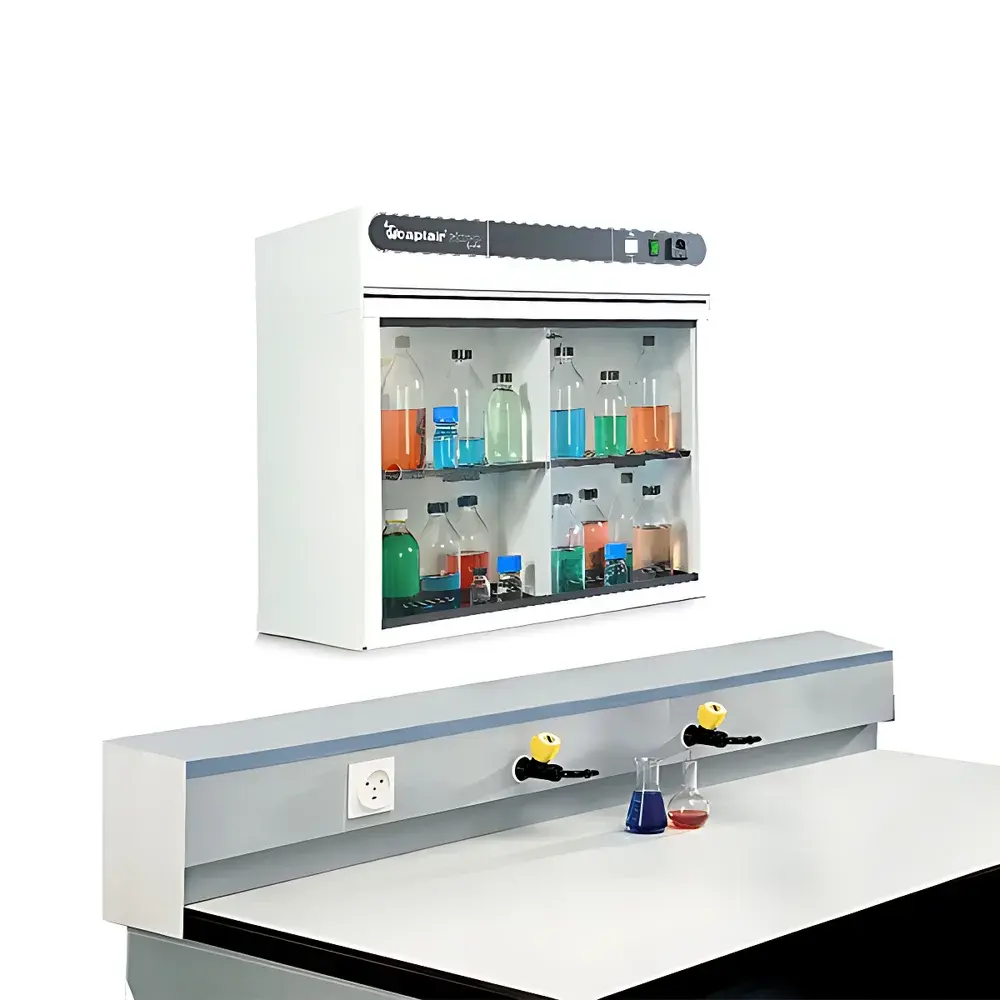
- Four mounting configurations to optimize spatial integration: desktop (Ministore 822A), floor-standing with integrated base (822B), wall-mounted (822C), and under-bench (822D)—all sharing identical footprint (820 × 350 × 730 mm) for standardized cabinetry planning.
- Chemical-resistant interior finish (epoxy-coated steel) and spill-containment sump (depth ≥15 mm) meet ANSI Z9.5 and EN 14175-5 requirements for secondary containment in chemical storage units.
- Low-noise operation (<52 dB[A] at 1 m), energy-efficient EC motor, and CE/UKCA marking for electrical safety and EMC compliance.
Sample Compatibility & Compliance
The Captair Ministore is validated for storage of Class I–III flammable liquids (per NFPA 30), corrosives, and low-to-moderate volatility organics. It is not rated for pyrophoric substances, peroxides, or highly reactive inorganics (e.g., alkali metals, chlorine gas). Filter service life varies with chemical loading and exposure frequency; typical replacement interval is 6–12 months under standard academic or QC lab usage. The unit complies with EU Directive 2014/34/EU (ATEX) for non-explosive zone applications and supports GLP/GMP documentation workflows via optional filter log templates and maintenance records aligned with ISO/IEC 17025 clause 5.5.2.
Software & Data Management
While the Captair Ministore operates as a standalone hardware unit without embedded software, its status interface enables integration into centralized lab monitoring systems via analog 0–10 V or digital Modbus RTU output (optional add-on module). Filter usage history, runtime hours, and alarm logs can be exported manually for inclusion in preventive maintenance schedules. For regulated environments, the device supports audit-trail-ready recordkeeping when paired with LIMS or CMMS platforms—ensuring traceability of filter changes and performance verification per FDA 21 CFR Part 11 Annex 11 principles.
Applications
- Secure, ventilated storage of frequently accessed reagents in analytical chemistry labs, pharmaceutical QC suites, and university teaching laboratories.
- Point-of-use solvent containment adjacent to HPLC, GC, or sample preparation stations—reducing cross-contamination and improving operator exposure control (OEL compliance).
- Temporary storage during method development or batch testing where permanent fume hood access is limited.
- Complementary containment for low-hazard inventory in biosafety Level 1/2 labs where chemical and biological agents coexist but require physical segregation.
- Mobile lab deployments and field research stations where grid power and structural modifications are constrained.
FAQ
Does the Captair Ministore require external ductwork or exhaust connection?
No—it operates on a fully recirculating principle and does not vent to the outside.
Can it be used for storing flammable liquids?
Yes, for Class I–III flammables up to 1 L per container, provided internal temperature remains below flashpoint and ignition sources are excluded.
How often must the carbon filter be replaced?
Under typical use (≤4 hrs/day, moderate VOC load), replacement is recommended every 6–12 months; actual interval depends on chemical profile and concentration.
Is the unit suitable for GMP-regulated environments?
Yes—when integrated into documented maintenance procedures and supported by calibration records, it meets baseline requirements for controlled environment chemical storage per EU GMP Annex 15 and USP .
What certifications does it hold?
CE, UKCA, RoHS, and compliance with EN 61000-6-3 (EMC), EN 61000-6-4 (emissions), and EN 60335-1 (safety).



