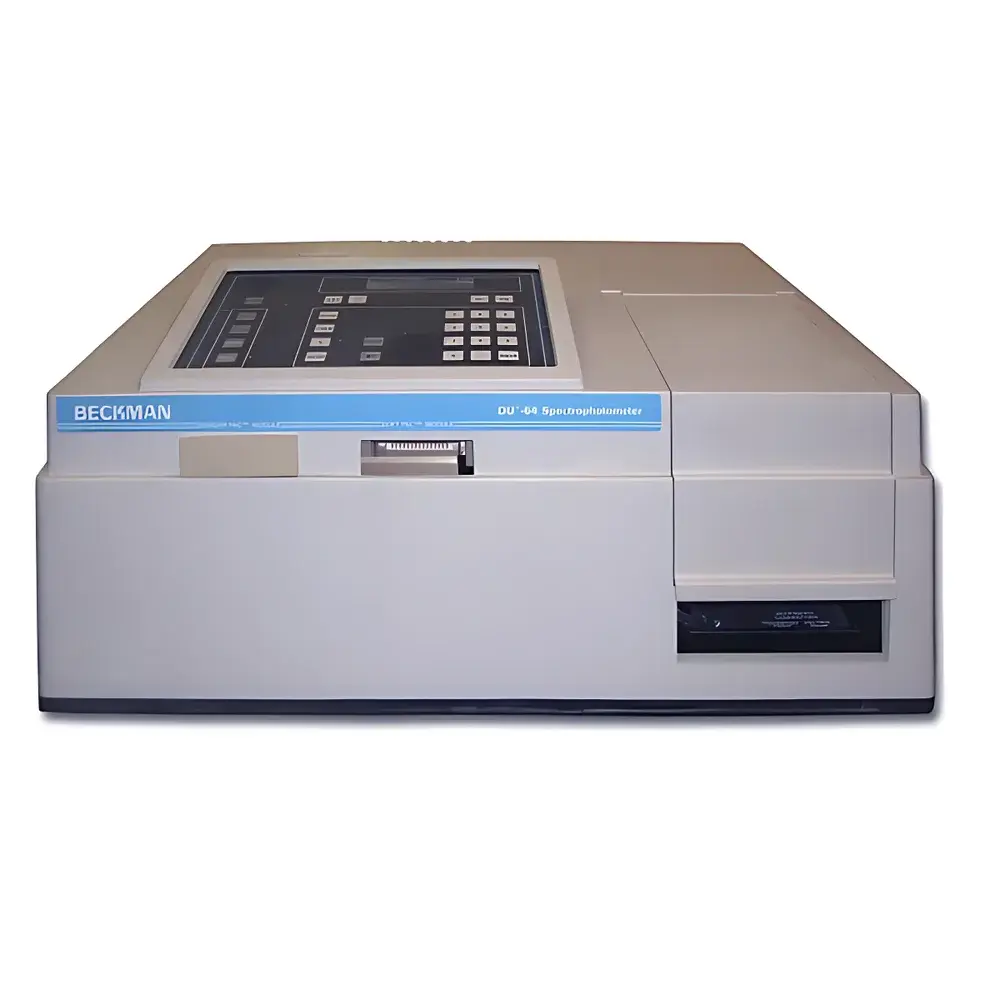
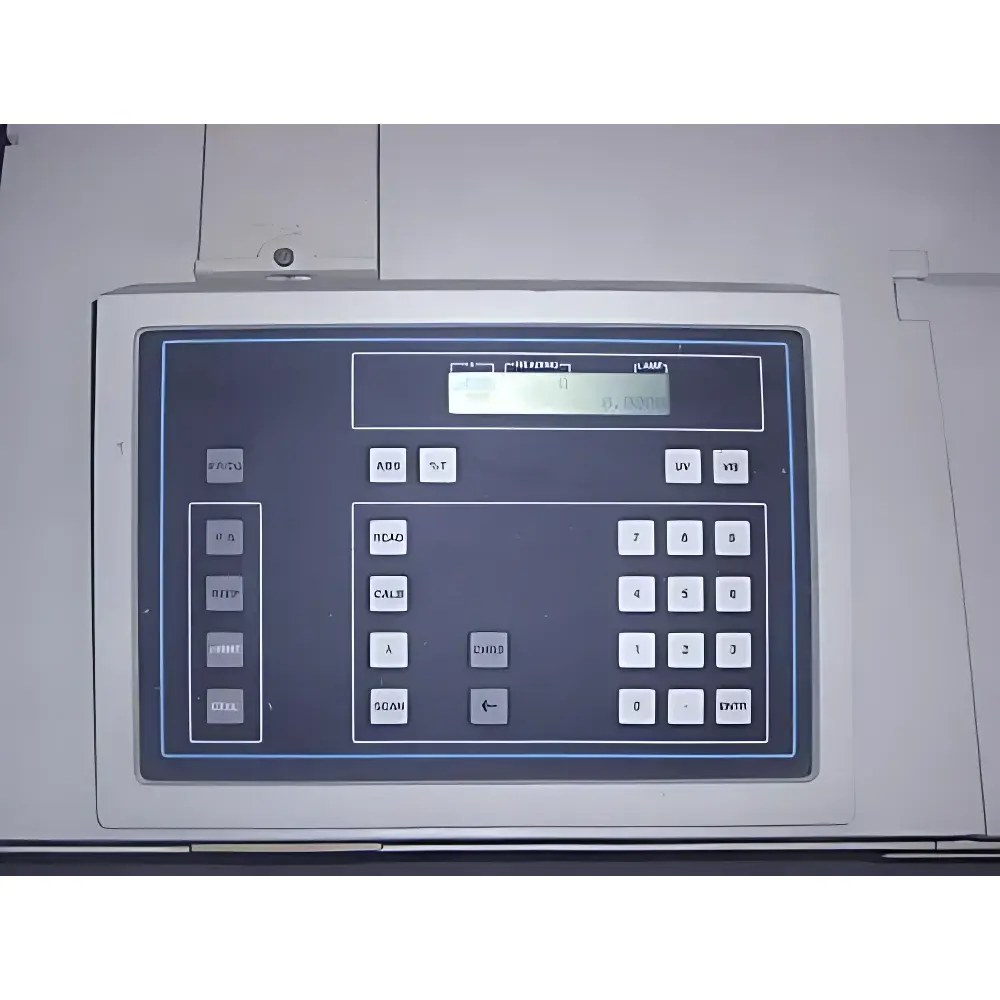
Beckman Coulter DU-64 UV-Vis Spectrophotometer (Refurbished)
| Origin | USA |
|---|---|
| Manufacturer Type | Authorized Distributor |
| Instrument Category | Imported Analytical Instrument |
| Model | DU-64 |
| Spectral Range | 190–1100 nm |
| Optical Resolution | 1.0 nm (typical) |
| Photometric Accuracy | ±0.005 A (at 0.5 A, 546 nm) |
| Stray Light | <0.05% T at 220 nm and 340 nm |
| Detector | Silicon photodiode |
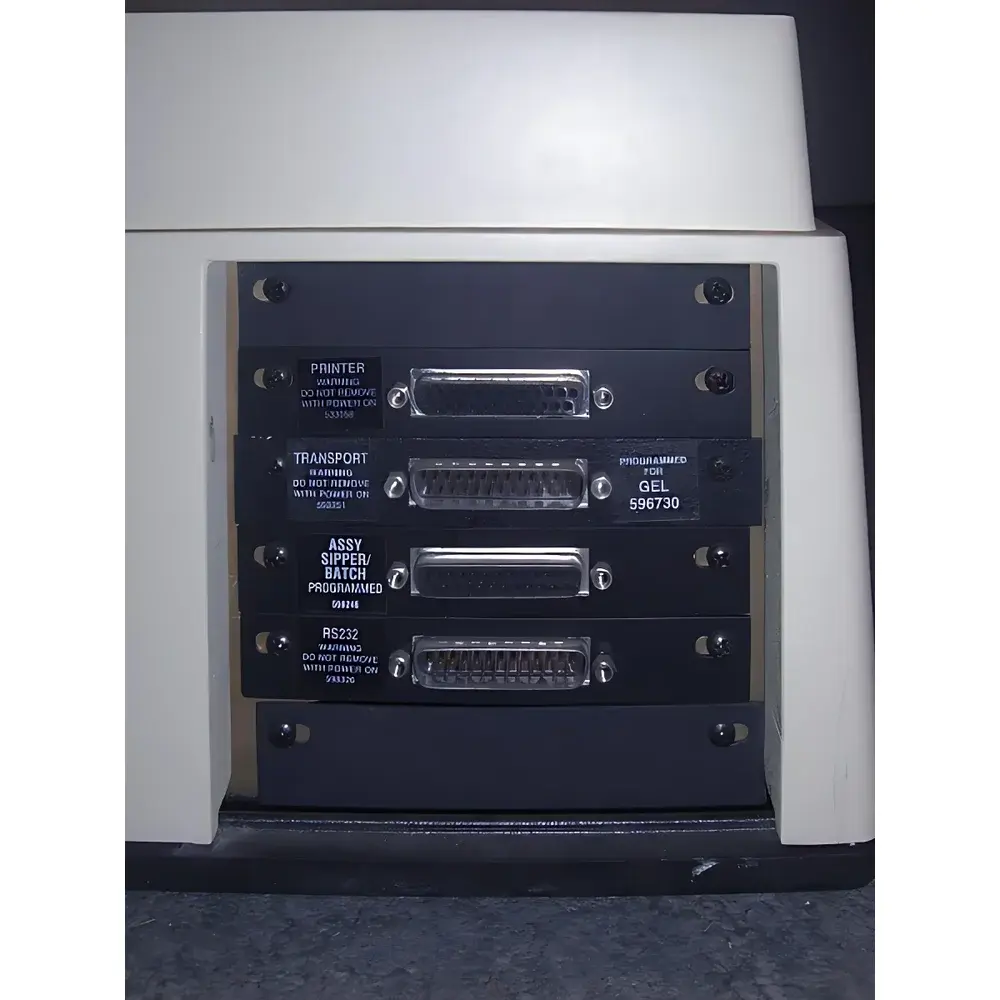
| Data Interface | RS-232 |
| Sample Compartment | Standard 10-mm cuvette holder |
| Software Compatibility | Beckman DU Series PC Software (DOS/Windows 3.1 legacy environment) |
| Operational Age | ~4 years |
| Warranty | 6 months limited hardware warranty |
Overview
The Beckman Coulter DU-64 UV-Vis spectrophotometer is a benchtop single-beam scanning instrument engineered for routine quantitative and qualitative analysis in academic, pharmaceutical, and industrial quality control laboratories. Based on classical grating monochromator architecture with a fixed-slit optical design, the DU-64 delivers stable baseline performance and high photometric reproducibility across its full spectral range of 190–1100 nm. Its silicon photodiode detector ensures low-noise signal acquisition, while the precision stepper-motor-driven wavelength drive enables accurate spectral scanning at 1.0 nm nominal resolution. Designed for robust daily operation, the DU-64 complies with fundamental optical metrology principles defined in ASTM E275 and ISO 6223 standards for spectrophotometer performance verification. This refurbished unit has undergone full functional validation—including wavelength accuracy calibration using holmium oxide and didymium filters, photometric linearity verification via neutral density filters, and stray light assessment—at SpectraLab Scientific’s ISO/IEC 17025-accredited service facility.
Key Features
- Single-beam optical path with manually operated sample compartment—optimized for simplicity, mechanical stability, and minimal alignment drift over extended use
- Grating monochromator with fixed entrance and exit slits, providing consistent spectral bandwidth and long-term wavelength fidelity
- Integrated RS-232 serial interface enabling direct data export to legacy DOS or early Windows-based acquisition software
- Dedicated analog output (0–1 V) for connection to chart recorders or external analog data loggers
- Front-panel keypad with dedicated function keys for absorbance/transmittance mode switching, zeroing, and wavelength setting
- Self-diagnostic startup sequence verifying lamp status, detector response, and motor positioning integrity
- Reconditioned halogen and deuterium dual-lamp source with documented intensity profiles and operational hours logged during refurbishment
Sample Compatibility & Compliance
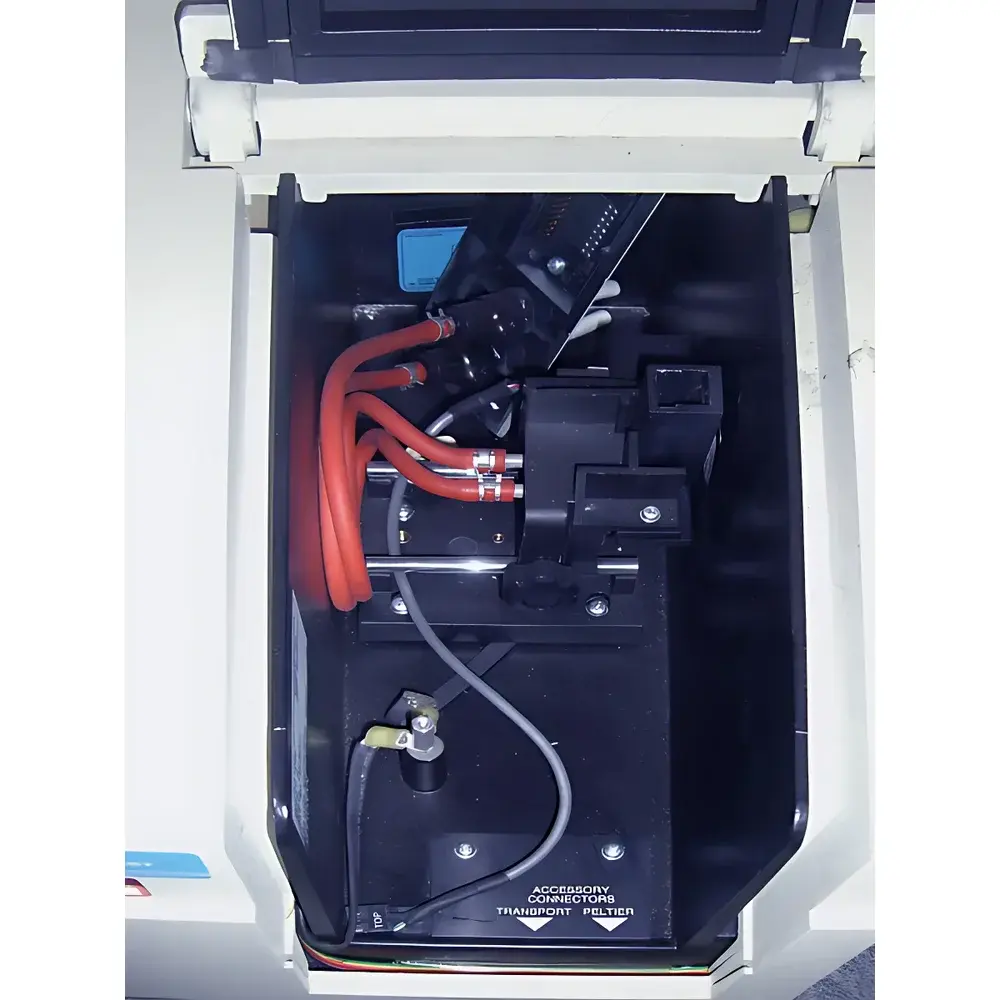
The DU-64 accommodates standard 10 mm pathlength quartz, glass, or plastic cuvettes and supports both liquid and solid transmission measurements. Its open sample compartment allows integration with optional accessories including variable-pathlength cells, temperature-controlled holders (−10 °C to +100 °C), and fiber-optic probes for remote sampling. All refurbished units conform to IEC 61010-1 safety requirements for laboratory electrical equipment and meet electromagnetic compatibility (EMC) Class B limits per CISPR 11. While the original firmware does not support 21 CFR Part 11 electronic signatures, audit trail functionality can be implemented externally through validated third-party data acquisition systems compliant with GLP and GMP documentation practices.
Software & Data Management
The DU-64 operates natively with Beckman’s proprietary DU Series software suite, originally developed for MS-DOS and compatible with Windows 3.1–XP via emulation layers. This software provides full scan control, peak identification, multi-wavelength quantitation, and basic kinetic measurement capabilities. Raw spectral data are exported in ASCII format (.DAT) for post-processing in MATLAB, Origin, or Python-based analytical pipelines. SpectraLab Scientific supplies each unit with a verified software installation diskette or CD-ROM, along with configuration documentation detailing COM port settings, baud rate (9600), and handshake protocol (XON/XOFF). For modern lab environments, USB-to-serial adapters with signed drivers are recommended to ensure plug-and-play connectivity under Windows 10/11.
Applications
- Quantitative determination of nucleic acid concentration (A260/A280 ratio analysis) and protein purity assessment using Bradford or Lowry methods
- Enzyme kinetics monitoring via time-resolved absorbance changes at characteristic wavelengths (e.g., NADH at 340 nm)
- Pharmaceutical assay development and release testing per USP and EP 2.2.25 guidelines
- Water quality analysis including nitrate, phosphate, and heavy metal speciation using colorimetric reagents
- Educational use in undergraduate chemistry and biochemistry laboratories for Beer–Lambert law validation and spectral interpretation exercises
- Raw material identity confirmation through reference spectrum matching against NIST SRM databases
FAQ
Is this DU-64 unit fully calibrated prior to shipment?
Yes. Each instrument undergoes full optical and electronic calibration using NIST-traceable standards, with a certificate of calibration and test report provided.
Can the DU-64 be integrated into a LIMS environment?
Direct LIMS integration is not native, but ASCII data export and RS-232 command protocols enable middleware-based ingestion into most modern LIMS platforms via custom scripting or commercial drivers.
What is included in the 6-month warranty?
The warranty covers all internal electronic modules, optical components, lamp assemblies, and mechanical drive systems—excluding consumables such as cuvettes, desiccants, and user-replaceable fuses.
Are replacement lamps and fuses available?
Yes. SpectraLab maintains an inventory of genuine Beckman Coulter deuterium (6050-027) and tungsten-halogen (6050-028) lamps, as well as OEM-compatible fuses and alignment tools.
Does the system support kinetic measurements?
Yes—up to 100 time points per run at user-defined intervals, with absorbance or transmittance recorded at one or two selectable wavelengths simultaneously.