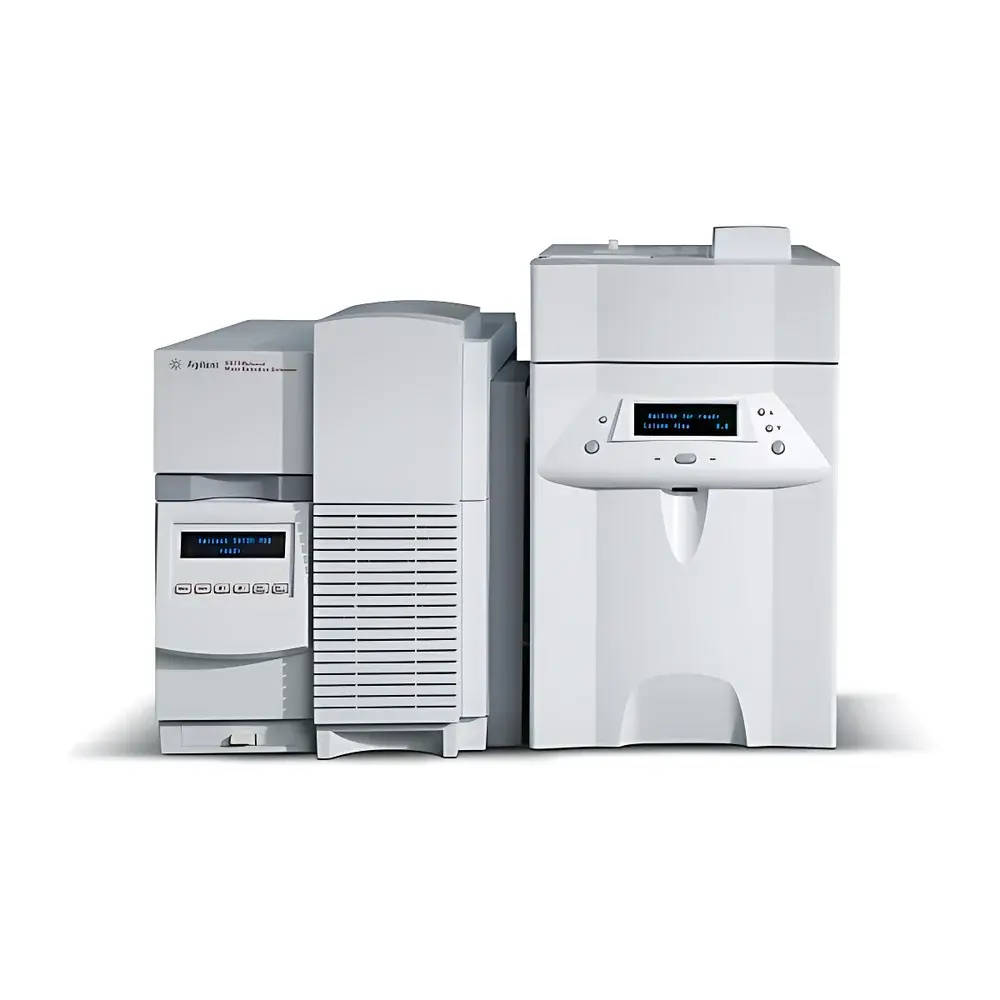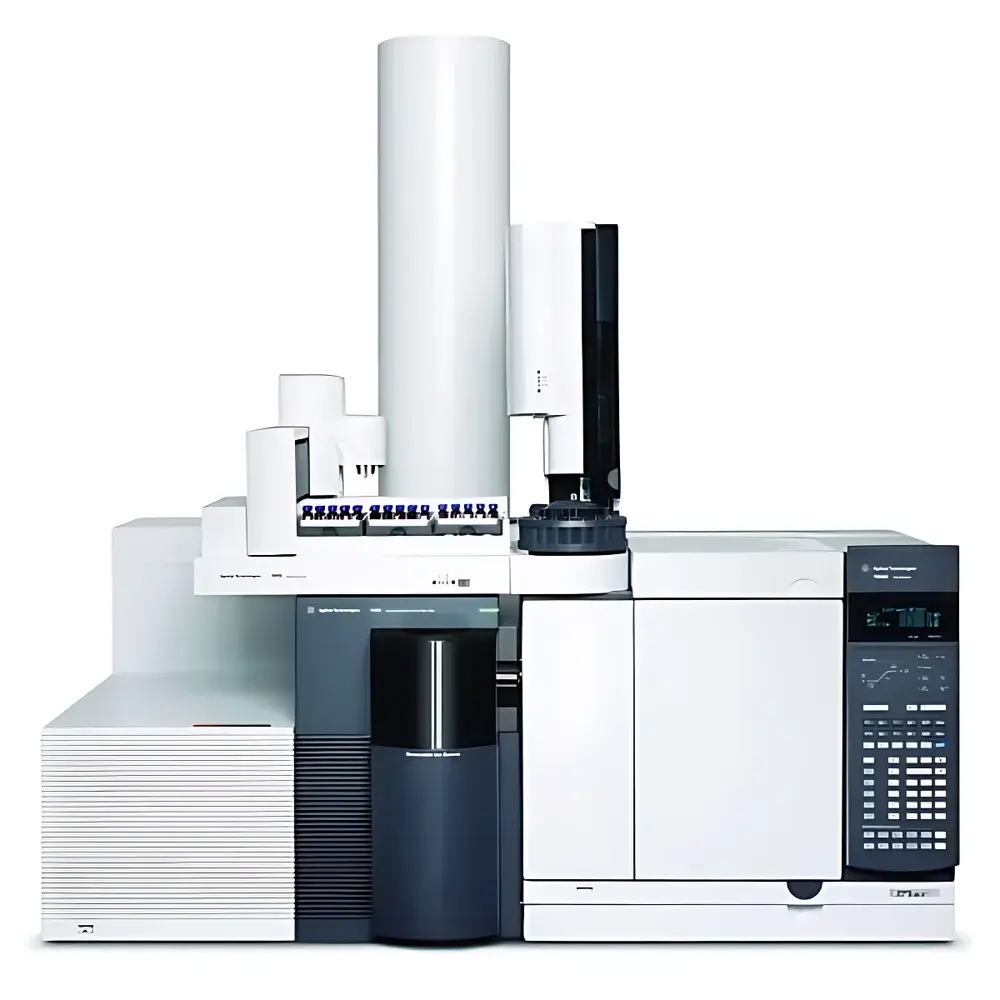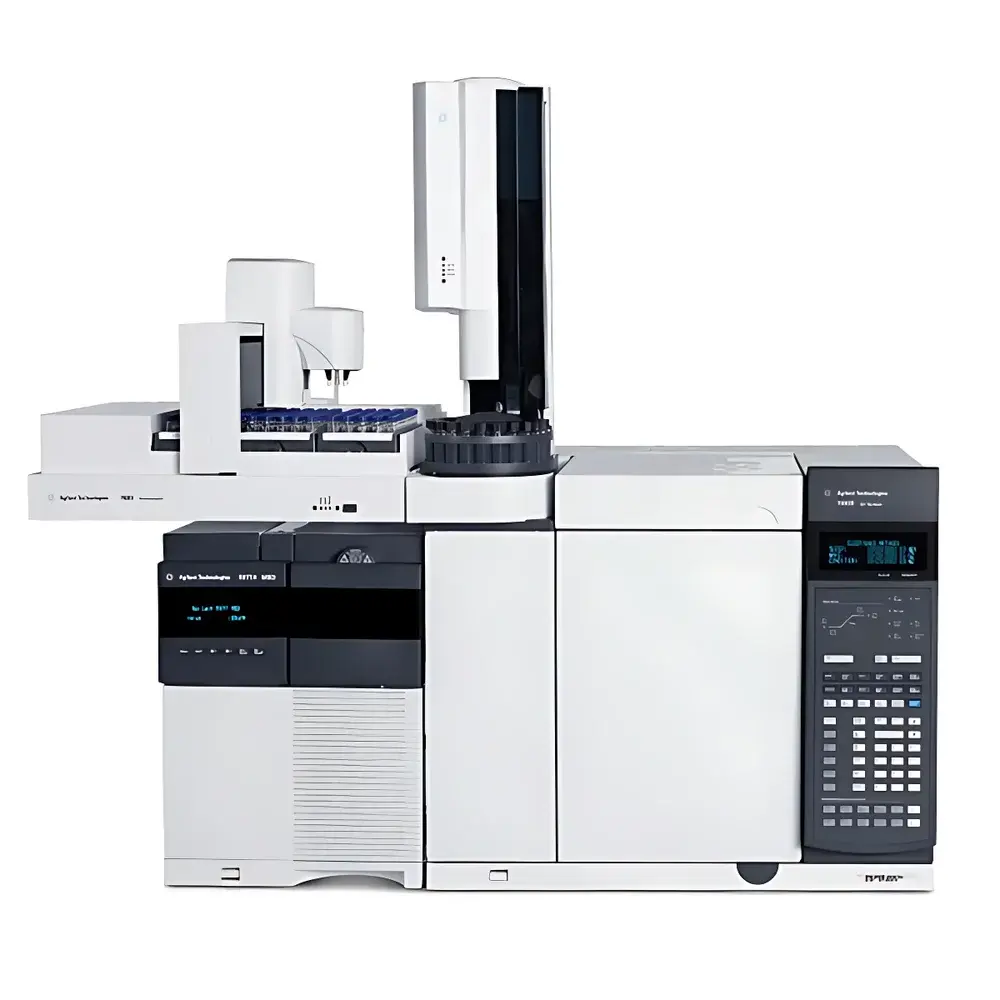
Agilent 7890B-5977A Gas Chromatography Mass Spectrometry (GC-MS) System
| Brand | Agilent Technologies |
|---|---|
| Origin | USA |
| Model | 7890B GC / 5977A MSD |
| Configuration | G4513A + G4514A (7693A) Autosamplers (150-position tray), Edwards Turbo Pump, MassHunter Software Suite |
| Warranty | 90-day comprehensive hardware warranty |
| Condition | Refurbished & fully validated by SpectraLab Scientific |
Overview
The Agilent 7890B-5977A GC-MS system is a high-performance, integrated gas chromatography–mass spectrometry platform engineered for robustness, sensitivity, and method reproducibility in regulated and research laboratory environments. Combining the industry-standard Agilent 7890B gas chromatograph with the 5977A mass selective detector (MSD), this configuration delivers trace-level quantitation and compound identification capabilities across environmental, pharmaceutical, food safety, and forensic applications. The system operates on electron ionization (EI) and optional chemical ionization (CI) modes, with quadrupole mass filtering enabling unit-mass resolution across the m/z 10–1050 range. Its core architecture supports continuous GC-MSD synchronization—enabling real-time instrument status exchange, coordinated temperature ramping, and unified method execution—thereby minimizing manual intervention and enhancing analytical throughput.
Key Features
- Extractor Ion Source: Patented push-pull geometry increases ion transmission efficiency to the quadrupole mass filter, improving signal intensity and lowering method detection limits without compromising spectral fidelity.
- Heated Gold-Plated Quadrupole: Monolithic fused-silica quadrupole rod assembly, gold-coated and capable of sustained operation at 200 °C. Maintains mass resolution and calibration stability under prolonged thermal stress—critical for high-throughput or high-boiling-point analyte analysis.
- Triple-Axis Detector (TAD): Off-axis electron multiplier design with three discrete dynode stages; suppresses neutral particle noise while amplifying ion current, yielding improved signal-to-noise ratios (S/N) and extended dynamic range (up to 106).
- MassHunter Data Analysis Platform: Fully integrated software supporting both GC/MSD and standalone GC workflows. Includes MSD ChemStation compatibility mode, automated library search (NIST/EPA/Wiley), quantitative report generation, and audit-trail-enabled data handling compliant with 21 CFR Part 11 requirements when configured with appropriate security settings.
- Helium Conservation Module: Programmable carrier-gas switching logic allows automatic substitution of nitrogen or hydrogen during standby periods—reducing helium consumption by up to 85% without affecting method validity or column conditioning integrity.
- Sleep/Wake Scheduling: System-level power management enables scheduled shutdown and pre-analytical warm-up cycles; ensures optimal detector vacuum and inlet temperature stabilization prior to run initiation.
Sample Compatibility & Compliance
The 7890B-5977A accommodates volatile and semi-volatile organic compounds (VOCs/SVOCs) with boiling points up to ~350 °C and molecular weights below 1000 Da. Compatible with standard 0.18–0.53 mm ID capillary columns (e.g., DB-5ms, HP-5MS, VF-WAXms). Validated per ASTM D5845 (petroleum hydrocarbons), EPA Method 8270D (SVOCs), and USP for residual solvent analysis. Meets GLP/GMP documentation requirements when operated with MassHunter’s electronic signature and audit trail modules enabled. All refurbished units undergo full functional verification—including tune report validation (autotune pass criteria: peak width ≤ 0.7 amu at m/z 502, S/N ≥ 2000:1 at m/z 69), leak testing (<1×10⁻⁸ atm·cc/sec He), and retention time repeatability assessment (RSD < 0.05% over 10 injections).
Software & Data Management
MassHunter Workstation (version B.09.00 or later) provides unified control of GC oven, inlet, detector, and autosampler. Raw data files (.D format) are stored with embedded metadata (instrument parameters, sequence logs, tune reports). Batch processing supports automated peak integration, calibration curve fitting (linear, quadratic, weighted), and compliance-ready reporting. Optional MassWorks add-on enables exact mass correction and formula prediction using patented spectral deconvolution algorithms—enhancing confidence in unknown identification workflows. Data archives comply with ISO/IEC 17025 clause 7.5.2 for record retention and traceability.
Applications
- Environmental analysis: PAHs, PCBs, pesticides, chlorinated hydrocarbons in soil, water, and air matrices.
- Pharmaceutical QC: Residual solvents (ICH Q3C), extractables/leachables, degradation product profiling.
- Food & flavor chemistry: Volatile aroma compounds, adulteration screening, pesticide residue monitoring.
- Forensic toxicology: Drug metabolite identification in biological fluids (urine, blood) following derivatization.
- Materials science: Outgassing characterization of polymers, coatings, and electronic components.
FAQ
Is this system certified for regulatory use?
Yes—when deployed with MassHunter’s 21 CFR Part 11-compliant configuration (user authentication, electronic signatures, audit trails), it meets FDA, EMA, and PMDA expectations for GLP/GMP environments.
What validation documentation is included?
Each unit ships with a full Factory Acceptance Test (FAT) report, post-refurbishment performance qualification (PQ) summary, autotune report, and 90-day hardware warranty certificate.
Can hydrogen be used safely as carrier gas?
Yes—the system includes automatic GC gas shutoff logic triggered by MSD vacuum loss, preventing uncontrolled H2 flow during detector fault conditions.
Are consumables and spare parts available?
All original Agilent consumables (ion sources, quadrupoles, filaments, columns) and replacement kits are supported via Agilent’s global supply chain and SpectraLab’s parts lookup tool.
Does the system support method transfer from older 5975/5977 series instruments?
Yes—MassHunter maintains backward compatibility with methods developed on 5975C/5977B platforms; minor parameter adjustments may be required for optimal peak shape and sensitivity.
Related Products