
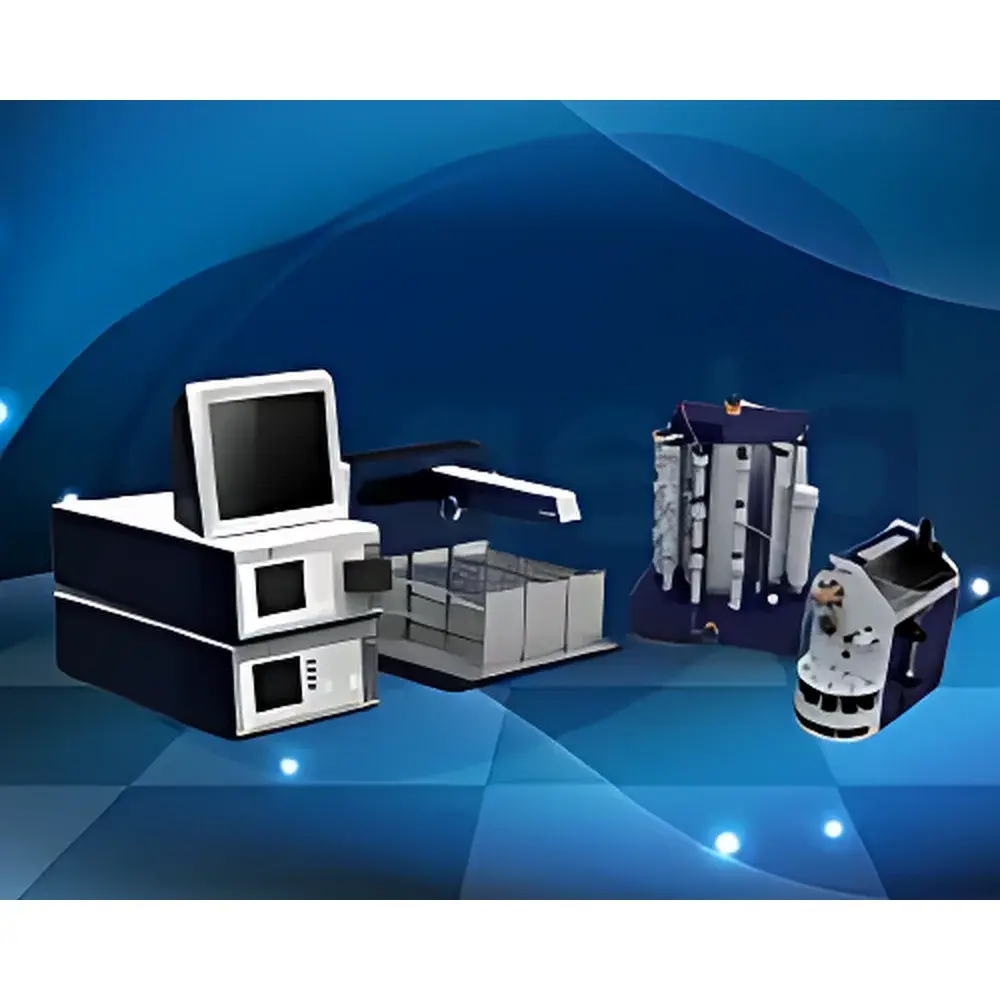
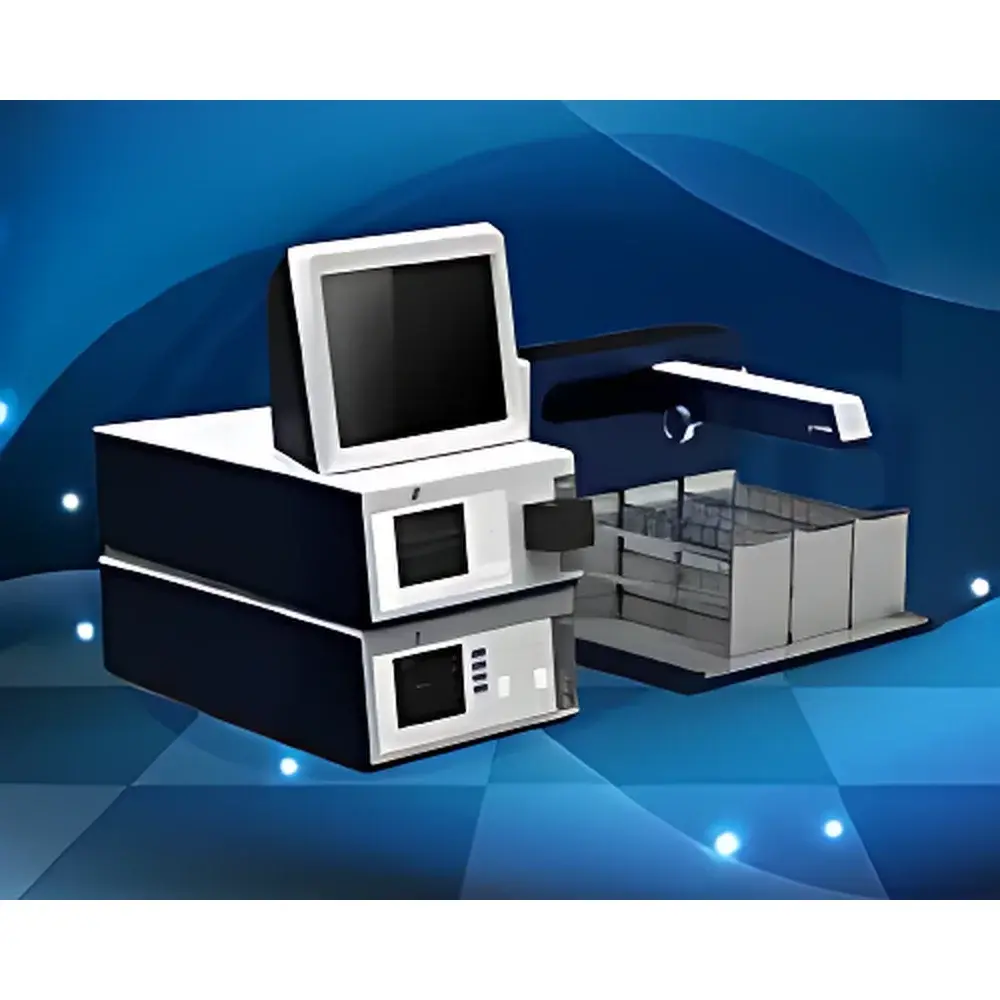
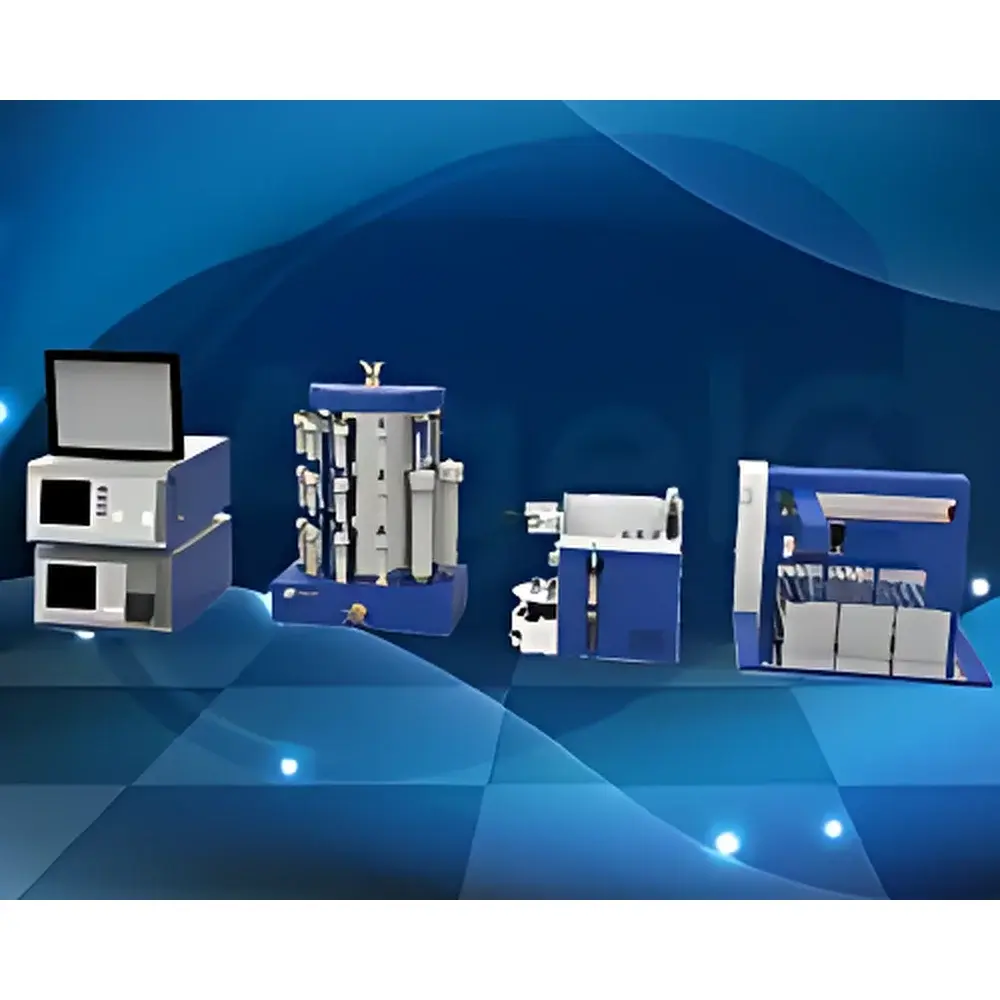
FLEXA Modular Preparative Liquid Chromatography System
| Origin | Tianjin, China |
|---|---|
| Manufacturer Type | Distributor |
| Origin Category | Domestic |
| Model | FLEXA |
| Price Range | USD 14,000–28,000 (FOB) |
| Application Level | Laboratory-Scale |
| Instrument Type | High-Pressure Preparative LC |
| Flow Rate Range | 1–50/100 mL/min |
| Flow Accuracy | ±0.5% |
| Flow Precision | ±0.1% |
| Maximum Pressure | 30/20 MPa |
| Wavelength Range | ±1 nm |
| Wavelength Repeatability | ±0.2 nm |
| Baseline Noise | ±0.75 × 10⁻⁵ AU |
| Data Acquisition Frequency | 3 Hz |
Overview
The FLEXA Modular Preparative Liquid Chromatography System is an engineered platform for scalable, reproducible purification of synthetic intermediates, natural product isolates, and pharmaceutical reference standards in academic, contract research, and early-stage development laboratories. Built on high-pressure liquid chromatography (HPLC) principles—specifically gradient-elution reversed-phase and normal-phase chromatography—the system employs a dual-pump binary gradient architecture to deliver precise solvent composition control across variable flow rates. Its modular design allows users to configure core modules—including dual-gradient pumps, UV-Vis detection, fraction collection, autosampling, and column switching—according to method complexity, throughput requirements, and budget constraints. All subsystems operate under centralized control via an integrated industrial-grade touch-screen PC, supporting real-time method editing, spectral overlay, and automated fraction triggering based on peak thresholds or time windows.
Key Features
- Modular architecture with six interoperable components: binary high-pressure gradient pumps, dual-beam UV-Vis detector, programmable fraction collector, 5-port autosampler, 6-position column selector valve, and embedded industrial PC with intuitive HMI.
- High-fidelity fluidic performance: flow accuracy ±0.5%, precision ±0.1% over 1–100 mL/min range; maximum pressure rating up to 30 MPa (4350 psi) for demanding silica- or polymer-based preparative columns.
- UV-Vis detection with dual-lamp source (deuterium + tungsten), wavelength scanning from 200–800 nm, ±1 nm absolute accuracy, and ±0.2 nm repeatability; baseline noise <0.75 × 10⁻⁵ AU at 254 nm (1 s time constant).
- Intelligent fraction collection: dual-channel valve enables simultaneous collection and waste diversion; position-synchronized collection linked directly to chromatogram peaks; support for multi-vial racks, test tubes, and custom trays.
- Autosampler with 5 sample ports and dedicated wash channel; injection volume range 1–25 mL; low carryover design validated per USP guidelines.
- Column selector valve rated for 1–200 mL/min flow and 200 psi (14 bar); 1/8″ fluidic path; 6 independent inlet positions for method scouting, orthogonal separation, or guard column integration.
Sample Compatibility & Compliance
The FLEXA system accommodates a broad spectrum of sample matrices—including crude reaction mixtures, plant extracts, fermentation broths, and peptide digests—without requiring extensive prefiltration when paired with appropriate guard columns and inline filters (0.45 µm or 0.22 µm). It supports standard preparative column dimensions (10–50 mm i.d., up to 250 mm length) and common stationary phases (C18, C8, phenyl-hexyl, amino, cyano, silica). All electronic modules comply with IEC 61000-4 electromagnetic compatibility standards. Data handling and audit trail functionality align with GLP and GMP expectations: method parameters are stored with timestamps, user IDs, and version history; PDF report export includes raw chromatograms, integration tables, and system suitability metrics (e.g., resolution, tailing factor, %RSD of retention time). While not certified for 21 CFR Part 11 out-of-the-box, the software architecture permits configuration for electronic signature and audit trail extension upon validation.
Software & Data Management
Control and data acquisition are managed through a Windows-based embedded HMI with a 320 × 240 graphical interface. The software supports real-time modification of flow rate, gradient profile, detection wavelength, and collection logic during active runs. Chromatographic data—including analog detector output, pump status, valve positions, and fraction triggers—are acquired at 3 Hz and logged in proprietary binary format with lossless compression. Export options include ASCII (.csv), AIA (.cdf), and PDF reports containing annotated chromatograms, peak tables, and summary statistics. Method files are digitally signed and version-controlled; system logs record all operator actions, parameter changes, and hardware events for traceability. Optional network connectivity enables remote monitoring and centralized data archiving via FTP or SMB protocols.
Applications
- Purification of synthetic organic compounds (e.g., APIs, catalysts, ligands) following Suzuki, Heck, or amidation reactions.
- Isolation of bioactive constituents (alkaloids, flavonoids, terpenes) from botanical extracts using step-gradient or isocratic elution.
- Desalting and buffer exchange of peptides and oligonucleotides prior to MS analysis or biological assay.
- Method development for analytical-to-preparative scale-up, leveraging identical chemistries and retention behavior across instrument classes.
- Quality control of reference standards where purity assessment requires >95% recovery yield and documented mass balance.
FAQ
What column dimensions and packing materials are compatible with the FLEXA system?
Standard preparative columns with inner diameters of 10–50 mm and lengths up to 250 mm are supported. Common packings include fully porous and superficially porous silica-based C18, C8, phenyl, amino, cyano, and bare silica, as well as polymeric resins for pH-stable applications.
Does the system support method transfer from analytical HPLC to preparative scale?
Yes—retention time normalization, linear velocity scaling, and gradient dwell volume compensation tools are embedded in the software to facilitate robust analytical-to-preparative translation while maintaining selectivity and resolution.
Can the FLEXA be integrated into a laboratory information management system (LIMS)?
Raw data files (.cdf, .csv) and PDF reports can be exported to shared network drives; API-level integration requires third-party middleware or custom scripting via COM/DCOM interfaces provided in the SDK.
Is maintenance training and service documentation available in English?
Comprehensive English-language operation manuals, preventive maintenance schedules, and troubleshooting guides are supplied with each system; on-site or virtual technical training is available upon request.
What is the expected lifetime of the high-pressure pump seals and UV lamp under typical usage?
With proper mobile phase filtration and degassing, pump seals typically last 12–18 months at ≤20 MPa average pressure; deuterium lamps exhibit ≥1000 hours of stable output, and tungsten lamps ≥5000 hours, per manufacturer specifications.




