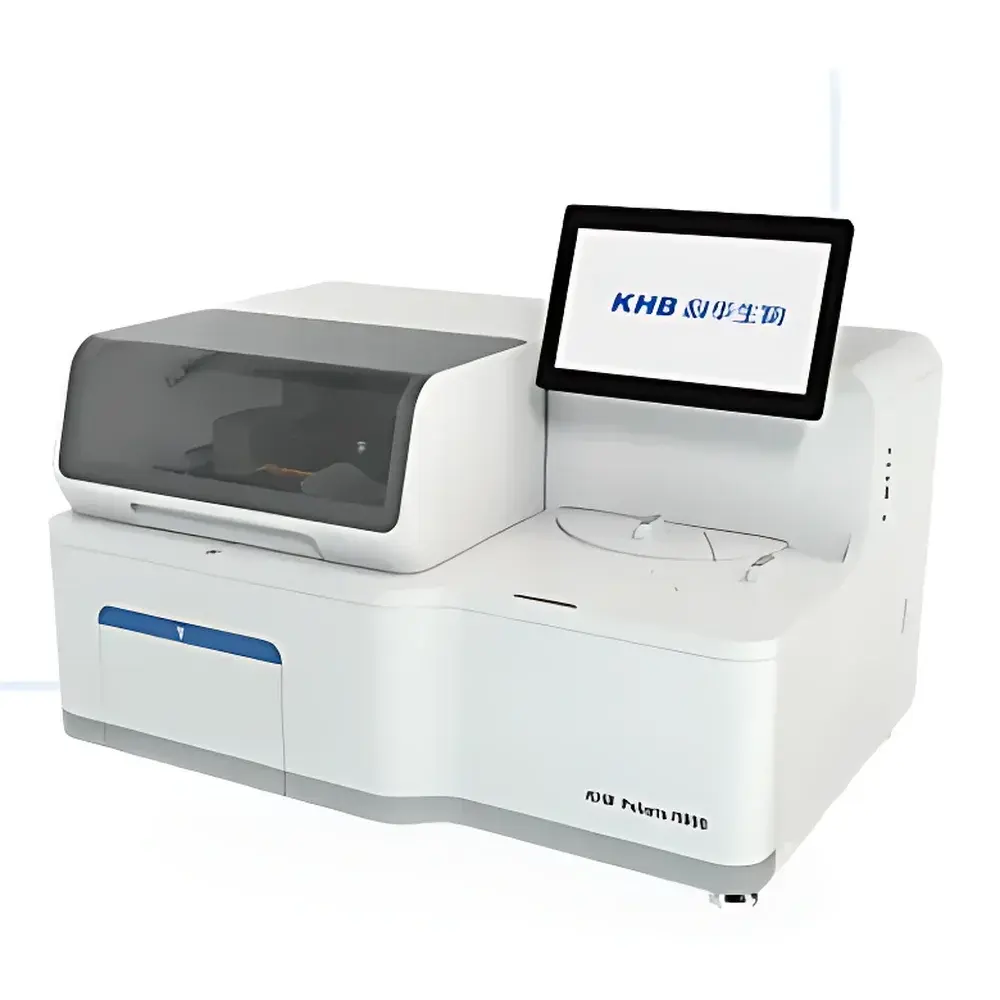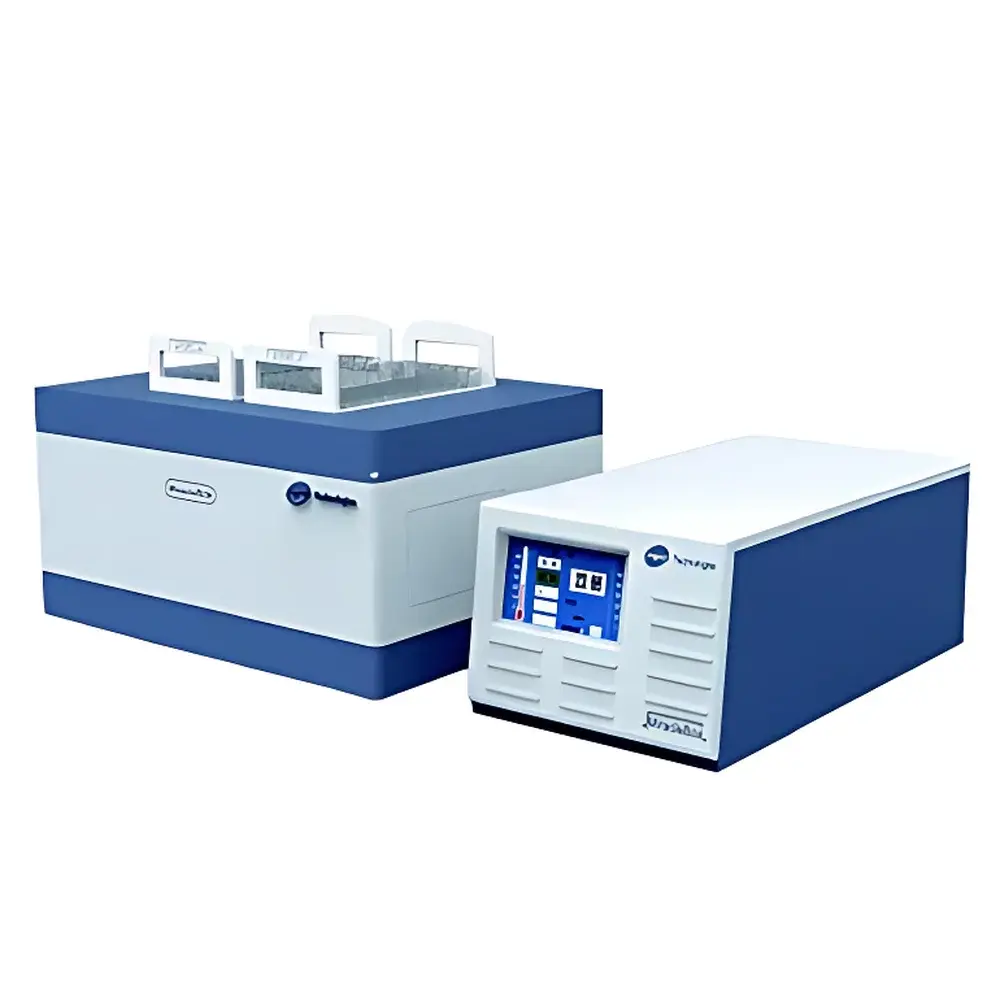
MiracleBox Bio-Sample Thawing and Cold-Holding Incubator
| Brand | Agela |
|---|---|
| Origin | Tianjin, China |
| Manufacturer Type | Authorized Distributor |
| Country of Origin | China |
| Model | MiracleBox |
| Pricing | Available Upon Request |
| Temperature Range | 0°C to Ambient |
| Temperature Accuracy | ±1°C |
| Thawing Time (Bovine Serum) | ≤20 min |
| Cooling-to-Setpoint Time (Bovine Serum) | ≤12 min |
| Sample Compatibility | Standard Racks, Tube Holders, 96-Well Collection Plates |
| Control Method | Dry-Programmed Heating/Cooling |
| Interface | Touchscreen with Real-Time Sample Temperature Display |
| Multi-Zone Temperature Control | Yes |
| Modular Integration Capability | Yes |
Overview
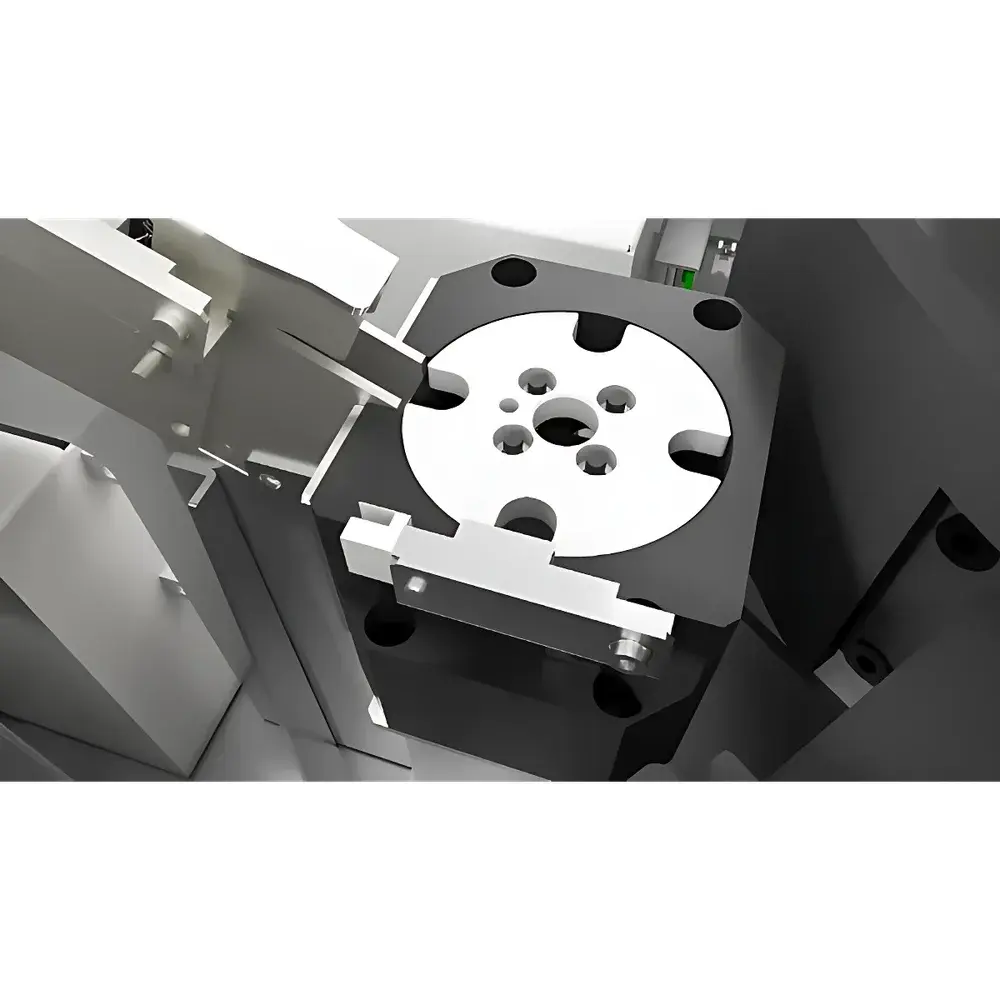
The MiracleBox Bio-Sample Thawing and Cold-Holding Incubator is an engineered solution for controlled, water-free thermal processing of sensitive biological specimens. Unlike conventional water-bath thawing systems—which introduce contamination risk, condensation artifacts, and inconsistent thermal transfer—the MiracleBox employs a dry, programmable heating and cooling architecture based on Peltier-based thermoelectric modules and precision air-circulation management. This design ensures repeatable, contactless temperature transitions across the full operational range of 0°C to ambient temperature, with certified accuracy of ±1°C (verified per ISO/IEC 17025 traceable calibration protocols). The system operates on a dual-mode principle: rapid, uniform thawing followed by precise low-temperature holding—enabling seamless transition from frozen storage to assay-ready state without intermediate handling or thermal shock. It is specifically validated for use with cryopreserved human plasma, bovine serum, PBMC suspensions, and other temperature-sensitive biologics where moisture exposure, cross-contamination, or thermal gradient-induced protein denaturation must be avoided.
Key Features
- Dry-programmed thermal control eliminates water contact, preventing sample dilution, microbial ingress, and surface condensation during thawing and holding.
- Multi-point temperature sensing and active air redistribution ensure spatial uniformity ≤±0.8°C across all sample positions (validated using ASTM E2251-compliant thermal mapping).
- Touchscreen HMI with real-time graphical display of chamber setpoint, average sample temperature (via optional embedded NTC probe array), and process timeline.
- Configurable dual-phase protocol: independent ramp rate, hold duration, and target temperature for both thawing and post-thaw cold-holding stages.
- Modular chassis design supports integration with adjacent Agela sample preparation platforms—including centrifugation docks, pipetting stations, and barcode-linked tracking modules—enabling walkaway workflow continuity under GLP-compliant environments.
- No external coolant or refrigerant required; thermoelectric operation enables silent, maintenance-light operation with low power draw (≤350 W peak).
Sample Compatibility & Compliance
The MiracleBox accommodates standard laboratory consumables without adapter modification: ANSI/SLAS-compliant 96-well collection plates (flat-bottom and V-bottom), 15 mL and 50 mL conical tubes in universal rack formats, and microcentrifuge tube holders (0.5–2.0 mL). All internal surfaces are constructed from medical-grade stainless steel (ASTM F86 passivated) and non-outgassing polymer composites compliant with USP Class VI and ISO 10993-5 cytotoxicity standards. The device meets IEC 61010-1:2010 safety requirements for laboratory equipment and supports audit-ready documentation including electronic log files with timestamped temperature events, user ID tagging, and change history—fully compatible with FDA 21 CFR Part 11-compliant data integrity frameworks when deployed with Agela’s optional LIMS interface module.
Software & Data Management
Firmware v3.2 includes embedded process logging with automatic CSV export via USB-C port or optional Ethernet/Wi-Fi connection. Each run generates a tamper-evident .log file containing start/end timestamps, setpoint profile, mean measured temperature per zone, deviation alerts, and operator login metadata. Audit trail functionality records all parameter modifications with pre- and post-change values. Optional Agela Connect software provides remote monitoring, multi-unit fleet management, and automated report generation aligned with ISO/IEC 17025 quality assurance templates. All data structures conform to MIAME and ISA-Tab metadata standards for seamless integration into ELN systems.
Applications
- Routine thawing of cryopreserved clinical biospecimens (serum, plasma, CSF) prior to ELISA, mass spectrometry, or flow cytometry analysis.
- Controlled cold-holding of pre-analytical samples during batch processing to minimize enzymatic degradation or exosome aggregation.
- Standardization of sample equilibration steps in ISO 15189-accredited clinical laboratories.
- Supporting Good Manufacturing Practice (GMP) workflows for cell therapy material handling, where environmental consistency directly impacts viability metrics.
- Integration into automated biobanking pipelines requiring deterministic thermal staging between -80°C storage and downstream instrumentation.
FAQ
Does the MiracleBox require water or external refrigerant?
No—it operates exclusively via solid-state thermoelectric modules and forced-air thermal management, eliminating consumables and service intervals associated with compressor- or glycol-based systems.
Can temperature profiles be saved and recalled for different sample types?
Yes—up to 32 user-defined protocols can be stored onboard, each with unique ramp rates, hold durations, and dual-stage targets, accessible via touchscreen or Agela Connect software.
Is validation support available for regulatory submissions?
Agela provides IQ/OQ documentation packages, DQ templates aligned with GAMP5, and on-site installation qualification services upon request.
What is the maximum sample load capacity per cycle?
The standard chamber accommodates one full 96-well plate plus two 15-mL tube racks simultaneously, or up to eight 50-mL conical tubes—optimized for throughput without compromising thermal homogeneity.
How is temperature uniformity verified across the chamber?
Thermal mapping is performed at time-zero and steady-state using nine calibrated PT100 sensors per ICH Q5C guidance; final reports include contour plots and statistical summary per ISO/IEC 17025 Annex A.3.